
University Scholarship
China Scholarship Council Scholarship — School of International Students’ Education
ClosedNot verified
To promote mutual understanding and friendship between the Chinese people and people worldwide, and develop exchanges and cooperation in all fields, the Chinese Government established scholarships for outstanding students, teachers and scholars from around the world to study or conduct research at Chinese universities. The Ministry of Education entrusts the China Scholarship Council (CSC) with scholarship student recruitment, admission and administration. The source states that 279 Chinese universities currently train Chinese Government Scholarship students, covering science, engineering, agriculture,... [source ends here]
Medical insurance
- Scholarship type
- University Scholarship
- Degree level
- Bachelor / Master / PhD
- Location
- Guangdong · Guangzhou
- Application deadline
- 2026-05-03
Overview
To promote mutual understanding and friendship between the Chinese people and people worldwide
and develop exchanges and cooperation in all fields
the Chinese Government established scholarships for outstanding students
teachers and scholars from around the world to study or conduct research at Chinese universities. The Ministry of Education entrusts the China Scholarship Council (CSC) with scholarship student recruitment
admission and administration. The source states that 279 Chinese universities currently train Chinese Government Scholarship students
covering science
Funding coverage
Funding tiers
Eligibility may differ by tier. Check the applicable degree and requirements.
Full scholarship
- Eligible degree
- Bachelor’s / Master’s / Doctoral
- Funding
- Tuition and on-campus accommodation fee waivers, comprehensive medical insurance and a monthly living allowance
- Tier requirements
- Excellent academic performance and eligibility for university admission
Partial scholarship
- Eligible degree
- Bachelor’s / Master’s / Doctoral
- Funding
- Full tuition waiver or a partial tuition reduction
- Tier requirements
- Good academic performance and eligibility for university admission
Requirements & documents
Application dates & process
Application Opens: 12/1 Application Deadline: 5/3 Review Cycle: 1-2 months
Universities & programs
Universities
About the university
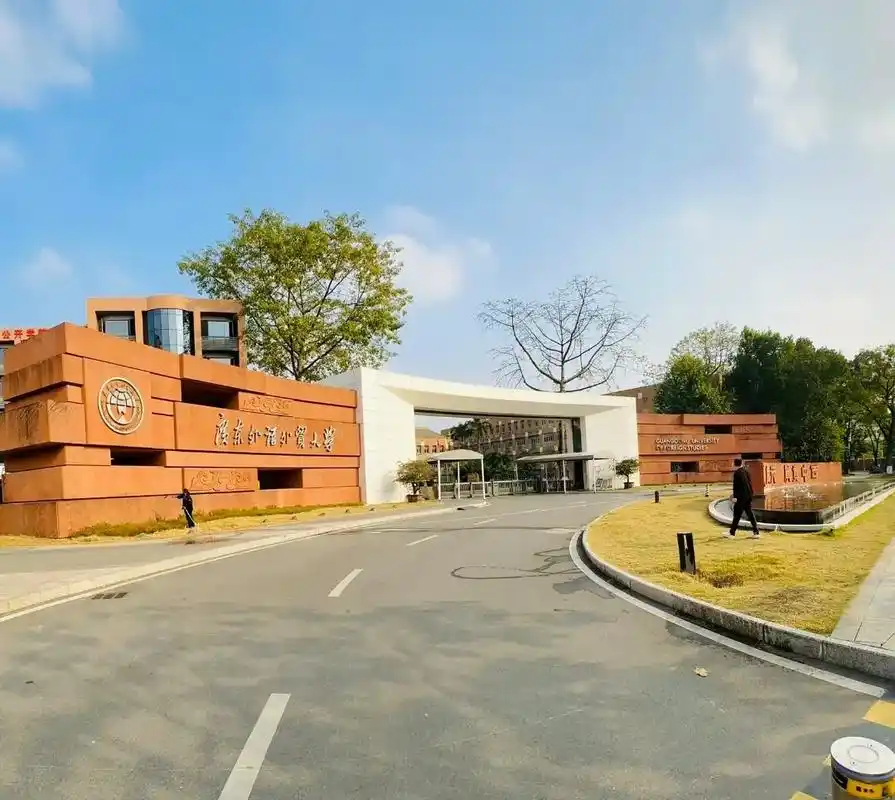
Guangdong University of Foreign Studies (GDUFS), located in Guangzhou, Guangdong Province, is a key institution under the Guangdong Provincial Department of Education. It is a key university in the Guangdong Province High-Level University Development Initiative and a founding member of the World Interpreter and Translator Training Association (WITTA). It has been selected for the Guangdong Province 211 Project Phase III Key Discipline Construction Program. The university traces its origins to the Guangzhou Institute of Foreign Languages, established in November 1964 and officially enrolling students in July 1965, and the Guangzhou Institute of Foreign Trade, founded in December 1980. The Guangzhou Institute of Foreign Trade and the Guangzhou Institute of Foreign Languages were transferred to the management of Guangdong Province by the Ministry of Foreign Trade and Economic Cooperation and the State Education Commission in September 1994 and January 1995, respectively. In 1978, the university began enrolling master's students in English. In 1986, the Linguistics and Applied Linguistics program was authorized to confer doctoral degrees. In May 1995, the People's Government of Guangdong Province merged the two institutes to form Guangdong University of Foreign Studies. In October 2008, the Guangdong Provincial Government incorporated the Guangdong Vocational College of Finance and Economics, established in April 1996, into GDUFS. In 2011, the university was selected for the Ministry of Education's '2011 Plan'. As of December 2024, the university has three campuses: Baiyun Mountain, University Town, and Dalang, covering a total area of 2,292 mu (approximately 152.8 hectares). It comprises 26 teaching units, one independent college (Nan Guo Business School), and 74 undergraduate programs. The university has 3 post-doctoral research stations, 1 post-doctoral workstation, 3 first-level doctoral degree programs, 24 second-level doctoral degree programs, 13 first-level master's degree programs, 59 second-level master's degree programs, and 21 professional master's degree programs. It has a total of 2,183 faculty and staff, including 1,403 full-time teachers. There are 21,176 full-time undergraduate students, 5,773 doctoral and master's students, and over 10,000 students in various adult education, continuing education, and training programs. Five disciplines have been selected as key construction disciplines for high-level university development. Social Sciences (General) and Engineering rank among the top 1% globally in ESI. In 1964, the central government decided to establish the Guangzhou Institute of Foreign Languages, to be run by Guangdong Province; in November of that year, the institute was approved. In July 1965, the Guangzhou Institute of Foreign Languages officially enrolled students. In October 1970, the Guangdong Provincial Revolutionary Committee made decisions to 'adjust, merge, relocate, and reform' higher education institutions in the province: the Department of Foreign Languages (English, French, German, Russian) of Sun Yat-sen University, the Department of Foreign Languages (English, Russian) and the Department of Foreign Trade of Jinan University, and the Guangzhou Foreign Languages School were merged into the Guangzhou Institute of Foreign Languages, which was renamed 'Guangdong Institute of Foreign Languages' and relocated to the former site of the Central South Forestry College in Huangpodong, northern suburbs of Guangzhou. In 1977, the national college entrance examination system was restored; in November of that year, with approval from higher authorities, the institute resumed the name 'Guangzhou Institute of Foreign Languages' and was placed back under the management of the Ministry of Education. In December 1980, with the approval of the State Council, the Guangzhou Institute of Foreign Trade was established. In 1981, two programs—Linguistics and Applied Linguistics, and English Language and Literature—were authorized to confer master's degrees, making the university one of the first institutions to receive master's degree authorization. In 1986, German Language and Literature, Russian Language and Literature, and Indonesian Language and Literature (trial) were authorized to confer master's degrees, and Linguistics and Applied Linguistics was authorized to confer doctoral degrees. In 1987, the Department of Chinese as a Foreign Language was established to admit international students. In 1988, Linguistics and Applied Linguistics was designated by the State Education Commission as one of the five key foreign language disciplines nationwide, and the Institute of Foreign Cultures (renamed the Institute of International Studies in 1992) was established. In 1989, the Department of Foreign Trade (renamed the Department of International Trade in 1991) and the Department of Foreign-Related Secretarial Studies were established. In 1992, the Board of Directors of the Guangzhou Institute of Foreign Languages was established. In December 1980, the Guangzhou Institute of Foreign Trade was officially established in Dalang, northern suburbs of Guangzhou, with one department, two divisions, and two teaching and research offices. (In 1979, with approval from the Ministry of Foreign Trade and Economic Cooperation, preparatory work for the Guangzhou Institute of Foreign Trade began.) In 1981, the institute officially enrolled students from the central, southern, and southwestern provinces and regions, including Tibet, admitting 80 new students. In 1984, the Department of Foreign Trade Enterprise Management was added. In 1985, a pilot system of presidential responsibility was implemented, and an evening university was established to admit two-year associate degree students. In 1990, the institute's structure was adjusted to include three departments and two divisions. In 1991, the Department of Adult Education was established, and the Board of Directors of the Guangzhou Institute of Foreign Trade was formed. From September 1, 1994, the institute was officially placed under the management of Guangdong Province. In 1995, it had three departments, five undergraduate programs, one undergraduate program direction, and two associate degree programs. In mid-January 1995, the Standing Committee of the People's Government of Guangdong Province decided to merge the Guangzhou Institute of Foreign Languages and the Guangzhou Institute of Foreign Trade to form Guangdong University of Foreign Studies; in May of that year, GDUFS was officially established; in August, it enrolled students under the new name for the first time, admitting 676 undergraduates and 164 associate degree students; in October, the first University Affairs Committee, Degree Committee, Academic Committee, and Professional Technical Title Evaluation Committee of the new university were successively established; on November 14, the Board of Directors of Guangdong University of Foreign Studies was established. In June 1999, the Open College was established.
Sources & verification
- Verification
- Not verified
- Verified on
- 2026-09-22
- Last updated
- 2026-11-06
- Source link
- iie.gdufs.edu.cn ↗
- Source notes
- From an official admissions announcement by the international education school at Guangdong University of Foreign Studies
Confirm requirements, funding and deadlines in the admissions office’s current announcement.