
University Scholarship
Heilongjiang Provincial Government Scholarship Program for International Students in China
ClosedNot verified
To develop international education, Heilongjiang Province establishes its Government Scholarship for Study in China, mainly supporting outstanding international bachelor’s, master’s and doctoral applicants at authorized provincial institutions. Our university receives and trains these scholarship students. It is an engineering-oriented institution combining science and engineering with economics, management, philosophy, literature, law and education... [source ends here]
Medical insurance
- Scholarship type
- University Scholarship
- Degree level
- Bachelor / Master / PhD
- Location
- Heilongjiang · Harbin
- Application deadline
- 2026-05-03
Overview
To develop international education
Heilongjiang Province establishes its Government Scholarship for Study in China
mainly supporting outstanding international bachelor’s
master’s and doctoral applicants at authorized provincial institutions. Our university receives and trains these scholarship students. It is an engineering-oriented institution combining science and engineering with economics
management
philosophy
Funding coverage
Funding tiers
Eligibility may differ by tier. Check the applicable degree and requirements.
Standard funding
- Eligible degree
- All eligible study levels
- Funding
- Funding amounts are determined by that year’s assessment results from the university or funder
- Tier requirements
- Chinese proficiency at HSK Level 5
Requirements & documents
Application dates & process
Application Opens: 12/1 Application Deadline: 5/3 Review Cycle: 1-2 months
Universities & programs
Universities
About the university
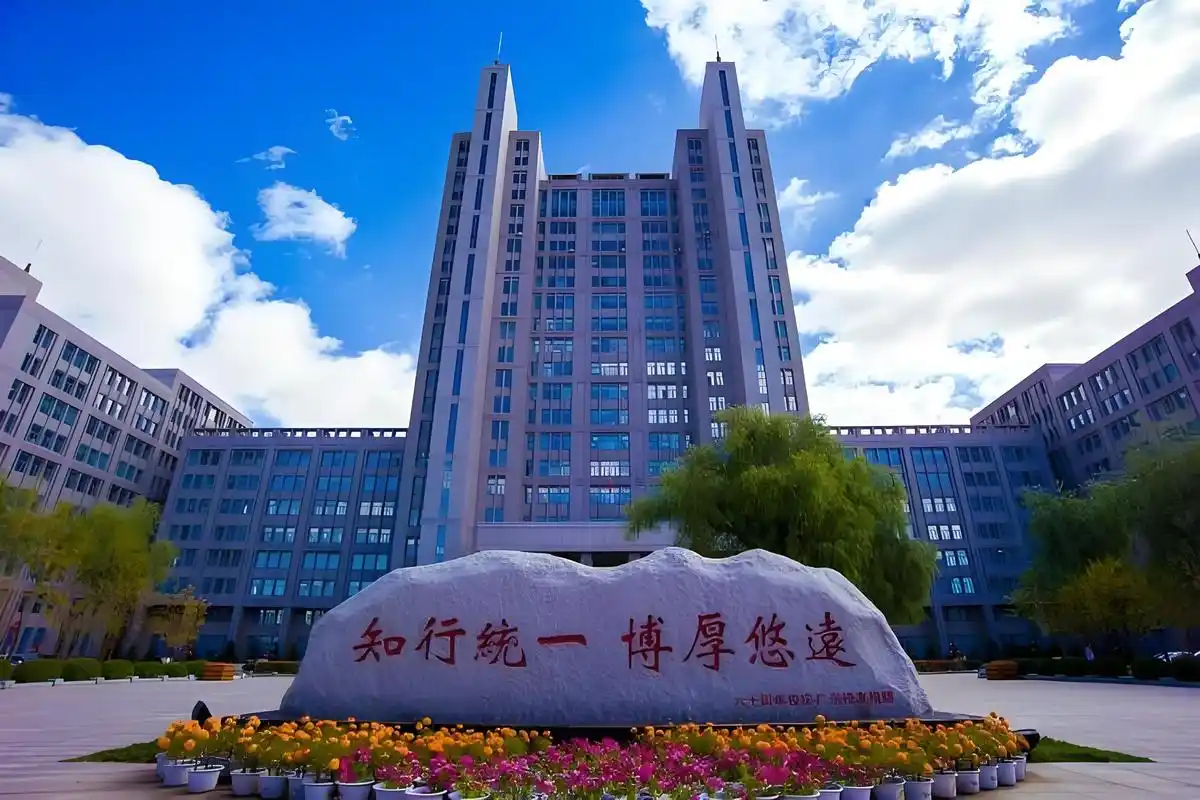
Harbin University of Science and Technology (HUST), located in Harbin, is under the administration of Heilongjiang Province. It is a national "Double First-Class" university in Heilongjiang and the largest provincial science and engineering university. The university was initiated by Wang Daheng, a recipient of the "Two Bombs, One Satellite Meritorious Medal" and an academician of both the Chinese Academy of Sciences and the Chinese Academy of Engineering. HUST undertakes projects under the National Basic Research Program (973) and the National High-Tech R&D Program (863). It is renowned as the "Cradle of Modern Engineers" and the "Whampoa Military Academy" of the wire and cable industry. The university was formed in 1995 through the merger of the former Harbin University of Science and Technology (affiliated with the Ministry of Machine-Building Industry and the Chinese Academy of Sciences), Harbin Electrical Engineering Institute, and Harbin Industrial College. In 1998, it was transferred to the jurisdiction of Heilongjiang Province, adopting a management system of central-local co-construction with local government as the main body. Its Engineering, Materials Science, and Chemistry disciplines rank among the global top 1% in the ESI rankings. In 2011, it was approved as a university under the Ministry of Education's "Excellent Engineer Education and Training Program." In 2015, it became a co-constructed university between the Heilongjiang Provincial Government and the State Administration of Science, Technology and Industry for National Defense. In 2017, a HUST research team experimentally confirmed the physical reality of wave functions for the first time in the field of international quantum mechanics. In 2018, it was selected as a domestic "Double First-Class" university in Heilongjiang. In 2025, 19 scholars from HUST were included in Stanford University's 2025 list of the world's top 2% scientists. In 2026, it was approved as a national pilot for building a strong education country, focusing on the national strategy of manufacturing power. As of March 2025, the university has four campuses, covering a total area of 1,644,400 square meters, with teaching infrastructure covering 935,500 square meters. It comprises 15 colleges, 1 teaching department, and 69 undergraduate programs. It has 7 postdoctoral research stations, 8 first-level doctoral degree authorization disciplines, 23 first-level master's degree authorization disciplines, and 11 professional master's degree authorization categories. The university has over 2,400 faculty and staff members and 32,200 full-time students. In May 1948, with the approval of the Northeast Administrative Committee, Harbin Technical Specialized School was established. On January 26, 1950, the Electrical Industry Administration Bureau of the Northeast People's Government took over the former Fushun No. 2 Middle School and renamed it Northeast Electrical Industry Advanced Vocational School. It officially opened on March 12, 1950, with seven majors: electrical machinery, telecommunications, mechanics, factory management, factory accounting, cables, and electrical applied chemistry. At that time, the school had 39 faculty members and 449 first-term students, all from Fushun No. 2 Middle School. In October 1952, the school moved from Fushun to Harbin, settling at Machang, Xiangfang District (now Sandadongli Road, Xiangfang District, Harbin), and was renamed Harbin Electrical Machinery Industry School. In April 1953, it was renamed Harbin Electrical Industry Technical School. In 1954, its affiliation shifted from the Northeast People's Government to the First Ministry of Machine-Building Industry of the Central People's Government, and the electrical machinery program from Beijing Machinery Manufacturing School was merged in. For a long time thereafter, its electrical machinery program was on par with those of Tsinghua University and Zhejiang University, and together with wire and cable, it remained a nationally renowned flagship program. In 1956, the school was renamed Harbin Electrical Machinery Manufacturing School. In June 1958, it was upgraded to a university and renamed Harbin Electrical Engineering Institute, beginning undergraduate enrollment. In 1962, its secondary school division was merged into Harbin No. 1 Electrical Machinery Manufacturing School, which later developed into Harbin Industrial College. In the spring of 1970, following higher-level instructions, Harbin Electrical Engineering Institute, Heilongjiang Institute of Technology, and Harbin Institute of Technology merged to form a new Harbin Institute of Technology, with Harbin Electrical Engineering Institute formally incorporated. In 1973, Harbin Electrical Engineering Institute was separated from Harbin Institute of Technology and reestablished. That year, it began enrolling three-year worker-peasant-soldier students, a practice that continued until 1977 when it resumed college entrance examination enrollment and began recruiting graduate students. By then, after significant development, its electrical engineering programs ranked third nationally after Tsinghua University and Xi'an Jiaotong University. Notable masters in the field included Li Zhesheng, Tang Yunqiu, Shi Nai, and Shen Wenbao, earning the acclaim "Tsinghua, Jiaotong, Harbin Electrical Engineering" in the industry and academia. In April 1995, Harbin Electrical Engineering Institute merged with Harbin University of Science and Technology and Harbin Industrial College to form Harbin University of Science and Technology. Since its establishment, HUST has achieved substantial development over more than 20 years. Electrical engineering, including cables, remains its flagship program, along with strong disciplines in mechanical engineering, metal materials, polymer materials, and measurement and control instruments. On April 5, 1995, with the decision of the Ministry of Machine-Building Industry and approval from the State Education Commission, the three institutions merged to form Harbin University of Science and Technology. In 1998, it was transferred to Heilongjiang Province, adopting a central-local co-construction management system with local government as the main body. In 2006, with approval from the Shandong and Heilongjiang provincial governments, HUST cooperated with Rongcheng Municipal Government to establish the Rongcheng Campus. In 2008, it was designated as one of ten key high-level universities in Heilongjiang's higher education strengthening plan. In 2011, it was selected for the first batch of the "Midwest Basic Capacity Building Project" and was awarded the title of "National Typical University for Graduate Employment" by the Ministry of Education, also being approved as a university under the "Excellent Engineer Education and Training Program." In September 2013, it gained eligibility to admit international students under the Chinese Government Scholarship. In 2015, it became a co-constructed university between the Heilongjiang Provincial Government and the State Administration of Science, Technology and Industry for National Defense. In 2018, it was selected as a domestic "Double First-Class" university in Heilongjiang. In 2020, it was named one of the first batch of demonstration universities for curriculum ideological and political construction in Heilongjiang. In 2022, it was again selected as a domestic "Double First-Class" university in Heilongjiang. On November 11, 2023, it initiated the establishment of the Longjiang Graduate Enrollment Base Alliance. On September 10, 2025, the HUST School of Engineering was inaugurated. In 2025, 19 scholars from HUST were included in Stanford University's 2025 list of the world's top 2% scientists.
Sources & verification
- Verification
- Not verified
- Verified on
- 2026-09-22
- Last updated
- 2026-11-06
- Source link
- studyinhust.hrbust.edu.cn ↗
- Source notes
- From an official admissions announcement by the international education school at Harbin University of Science and Technology
Confirm requirements, funding and deadlines in the admissions office’s current announcement.