
Local Government Scholarship
Southern Medical University Guangdong Provincial Government Freshman Scholarship for International Students in Guangdong
ClosedVerified
To attract and encourage more outstanding international students to pursue degrees at Southern Medical University, and to provide rewards and financial support to students with excellent academic performance, our university offers the Freshman Scholarship for International Students for eligible applicants to apply. I. Open Majors The Southern Medical University Guangdong Provincial Government Freshman Scholarship for International Students in Guangdong is open to self-funded applicants of all majors. II. Scholarship Standards 1. Doctoral Freshmen: Scholarship standard is 30,000 RMB per person (one-time). 2. Master's Freshmen: Scholarship standard is 20,000 RMB per person (one-time). 3. Undergraduate Freshmen: Scholarship standard is 10,000 RMB per person (one-time). III. Application Requirements 1. Hold foreign nationality, possess a valid foreign passport, and meet the relevant requirements for international students in China. 2. Age Requirements: 1) Applicants for doctoral p
Funding details pending.
- Scholarship type
- Local Government Scholarship
- Degree level
- Bachelor / Master / PhD
- Location
- Guangdong · Guangzhou
- Application deadline
- 2026-06-03
Overview
To attract and encourage more outstanding international students to pursue degrees at Southern Medical University
and to provide rewards and financial support to students with excellent academic performance
our university offers the Freshman Scholarship for International Students for eligible applicants to apply.
I. Open Majors
The Southern Medical University Guangdong Provincial Government Freshman Scholarship for International Students in Guangdong is open to self-funded applicants of all majors.
II. Scholarship Standards
Funding coverage
Funding tiers
Eligibility may differ by tier. Check the applicable degree and requirements.
Standard funding
- Eligible degree
- Bachelor’s, Master’s, Doctoral
- Funding
- Guangdong Provincial Government Scholarship for New International Students in Guangdong (one-time award): 1. New doctoral students: CNY 30,000 per person. 2. New master's students: CNY 20,000 per person. 3. New undergraduate students: CNY 10,000 per person.
- Tier requirements
- 1. Non-Chinese nationality, valid foreign passport. Applicants born with foreign nationality whose parents/one parent are Chinese citizens settled abroad, and emigrants from mainland China, Hong Kong, Macao or Taiwan, must have held valid foreign passport or the source’s “international proof documents” for at least 4 years(inclusive) and actually resided abroad at least 2 of the latest4 years up to April 30 of the enrollment year [source document wording is unclear]. 2. Good physical/mental health, meeting Chinese study-visa/residence medical standards. 3. Age and qualifications: (1) Undergraduate: 30 or younger, equivalent of Chinese high school qualification. (2) Master’s: 35 or younger, equivalent of Chinese university bachelor’s degree. (3) Doctoral: 40 or younger, equivalent of Chinese university master’s degree. 4. Diligent, good character, law-abiding, no university violations, public security penalties or criminal record. 5. Excellent grades, clear objectives; master’s/doctoral preceding GPA≥3.0, no failed/repeated courses; undergraduate3-year high school average≥75%, no failed subjects. 6. Good Chinese or English, specifically: (1) Chinese-taught undergraduate: HSK Level 4, at least 180, or equivalent Chinese test evidence. Applicants whose highest qualification was entirely Chinese-taught may omit test results but must provide instruction-language evidence from their graduating institution. (2) English-taught undergraduate: non-native English speakers require IELTS Academic≥6.0 (each component≥5.5), TOEFL iBT≥80 (each component≥15), or equivalent English evidence. Native English speakers or applicants whose highest qualification was entirely English-taught may omit test results but must provide instruction-language evidence from their graduating institution. (3) Chinese-taught graduate programs: HSK Level 5, at least 180, or equivalent Chinese test evidence. (4) English-taught graduate programs: non-native English speakers require IELTS Academic≥6.5 (each component≥6.0), TOEFL iBT≥90 (each component≥20), or equivalent English evidence. Native English speakers or applicants whose highest qualification was entirely English-taught may omit test results but must provide instruction-language evidence from their graduating institution. 7. No concurrent Chinese Government Scholarship.
Requirements & documents
Application dates & process
Application Deadline: 6/3 Review Cycle: Document review and interviews / expert review take approximately 4–6 weeks
Universities & programs
Universities
About the university
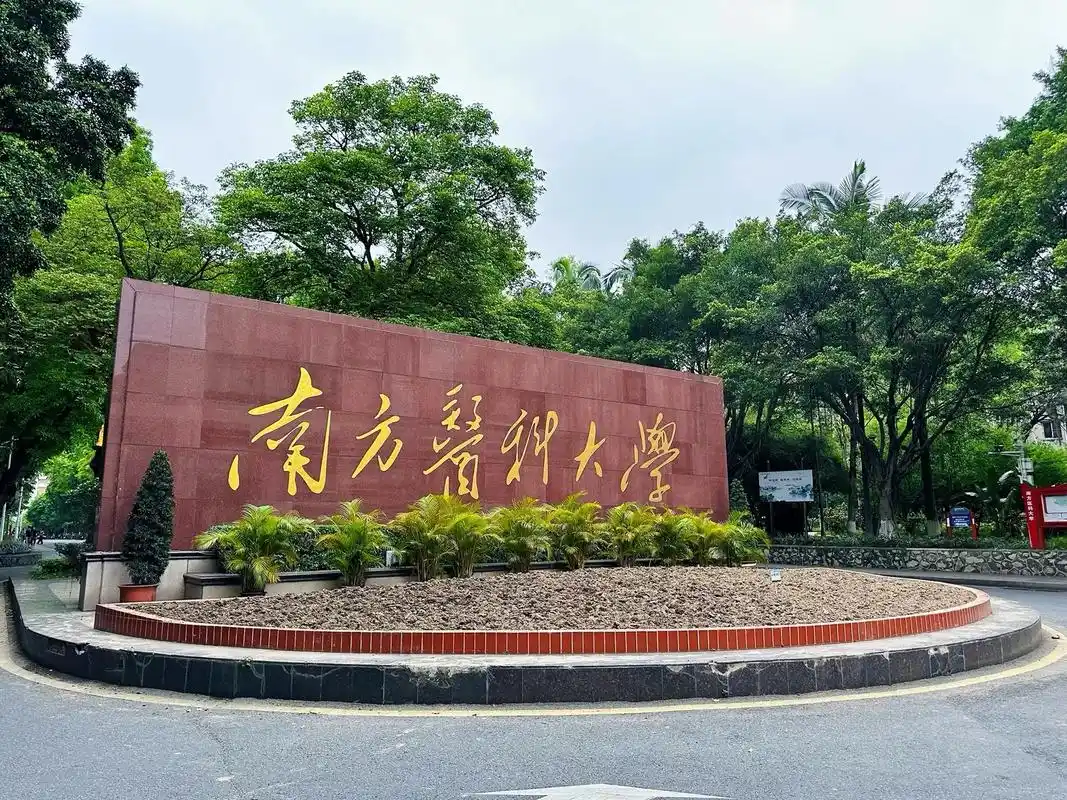
Southern Medical University, legally located at Shatai South Road, Guangzhou, Guangdong Province, is a national key university jointly established by the People's Government of Guangdong Province, the National Health Commission, and the Ministry of Education. It is the only medical school among the first five high-level universities in Guangdong Province under key construction, one of the first batch of medical universities jointly built by the ministry, province, and commission in China, one of the eight universities offering the first eight-year clinical medicine program (bachelor's and doctoral degrees combined), a pilot university for the first batch of the National Excellent Doctor Education and Training Program and the Excellent Doctor (Traditional Chinese Medicine) Education and Training Program, a base for the National Top-notch Student Training Program in Basic Disciplines 2.0, and a university under the Ministry of Education's "101 Plan." The university originated from the First Military Medical University of the People's Liberation Army, founded in 1951. In 1979, it was designated as a national key university and began enrolling master's students. In 1987, it started enrolling doctoral students. In 1998, it was approved as one of the first pilot units for the professional master's degree in clinical medicine in China. In 2000, it was approved as a pilot unit for the professional doctoral degree in clinical medicine. In August 2004, it was transferred entirely to Guangdong Province and renamed Southern Medical University. In 2013, it was recognized as one of the first pilot universities for the reform of the training model for professional master's degree students in clinical medicine in China. The university has been listed in the Times Higher Education World University Rankings top 500 for three consecutive years and entered the global top 400 in 2023. As of May 2023, the university has two campuses, Guangzhou and Shunde. As of May 2021, it covers an area of 1.68 million square meters, with a building area of 1.146 million square meters. As of June 2025, the university has 22 faculties and departments and 29 undergraduate programs. As of March 2025, it has 16 first-level master's degree authorization disciplines, 4 professional doctoral degree authorization categories, 11 first-level doctoral degree authorization disciplines, 15 professional master's degree authorization categories, and 10 postdoctoral research stations. As of 2017, it had 1,867 full-time teachers. As of September 2023, it enrolled 3,062 undergraduate students in the 2023 cohort. On October 19, 1950, the Chinese People's Volunteers crossed the Yalu River and began the War to Resist U.S. Aggression and Aid Korea. To adapt to the situation, the Central Military Commission proposed to gradually build the People's Liberation Army into a modern, regularized revolutionary army and decided to establish a number of military academies to train various talents needed by the army. In early August 1951, the Northeast Military Region officially decided: "In Qiqihar City, based on the human and material resources of the Second Army Hospital of the People's Liberation Army (the predecessor of Nanfang Hospital), a military medical school shall be established." On October 30, 1951, the Hospital of the Northeast Military Region of the People's Liberation Army held its founding and opening ceremony. At that time, the school had no formal establishment, with a temporary school headquarters, teaching committee, education department, and political department. The education department had eight academic departments, and there was a student brigade with four squadrons responsible for student management. On December 14, the Northeast Military Region issued an official order for the establishment of the school, with the designation "Northeast Military Region Military Medical School of the People's Liberation Army." On January 3, 1953, according to the new organizational regulations of the Central Military Commission and the order of the Northeast Military Region, the school was renamed "The 11th Military Medical Middle School of the People's Liberation Army," and the Second Army Hospital of the Northeast Military Region was renamed "The Affiliated Hospital of the 11th Military Medical Middle School of the People's Liberation Army." On May 20, 1954, the General Staff Department issued the "Reorganization Plan for Military Medical Middle Schools," and the school was renamed "The 11th Military Medical School of the People's Liberation Army," with the Second Army Hospital also reorganized and renamed "The 216th Hospital of the People's Liberation Army." On January 28, 1956, the school was transferred from the leadership of the Northeast Military Region to the General Logistics Department. On June 6, 1958, the Ministry of Health and the General Logistics Department issued the "Decision on the Handover of Medical Schools and Hospitals," and the school was transferred to the Ministry of Health, specifically under the leadership of the People's Government of Heilongjiang Province. On July 20, 1958, the school was collectively transferred to civilian status and placed under the leadership of the People's Government of Heilongjiang Province. The 11th Military Medical School merged with the 2164th Hospital and was renamed "Qiqihar Medical College," with the academic system changed from three years to five years. On January 3, 1962, to meet the needs of the military in training military medical officers, the State Council decided to transfer Qiqihar Medical College (formerly the 11th Military Medical School) back to military leadership under the General Logistics Department. On January 22, a handover ceremony was held for its return to the military establishment, and the school was designated "Qiqihar Medical College of the People's Liberation Army," entering the ranks of higher medical colleges and universities of the entire army.
Sources & verification
- Verification
- Verified
- Verified on
- 2026-09-20
- Last updated
- 2026-09-24
- Source link
- istudy.smu.edu.cn ↗
- Source notes
- Southern Medical University — 2026 application guide and funding details for Guangdong Provincial Government Scholarship for New International Students in Guangdong (verified by the user)
Confirm requirements, funding and deadlines in the admissions office’s current announcement.