
Local Government Scholarship
Liaoning Provincial Government Scholarship for International Students at Dalian Maritime University
ClosedPartly verified
1. Scholarship Content and Standards The "Liaoning Provincial Government Scholarship for International Students" is a full scholarship. The student category is doctoral students, with a study duration of 4 years and a scholarship coverage period of 4 years. It includes: registration fee, tuition fee, experiment fee, internship fee, basic textbook fee, on-campus accommodation fee, comprehensive insurance, basic living allowance, supervisor allowance, etc. International travel expenses are borne by the students themselves. The living allowance for scholarship students is paid monthly at the standard of 3,500 RMB per person per month. 2. Open Majors Doctoral Programs: | College | No. | Major | Duration (Academic Years) | | --- | --- | --- | --- | | Navigation College | 1 | Traffic Information Engineering and Control* | 4 | | | 2 | Navigation Science and Technology* | 4 | | | 3 | Maritime Traffic Engineering* | 4 | | Marine Engineering College | 4 | Marine Engineering* | 4 | | Colleg
TuitionAccommodationMedical insurance
- Scholarship type
- Local Government Scholarship
- Degree level
- Bachelor / Master / PhD / Visiting Students
- Location
- Liaoning · Dalian
- Application deadline
- 2026-04-03
Overview
1. Scholarship Content and Standards
The Liaoning Provincial Government Scholarship for International Students is a full scholarship. The student category is doctoral students
with a study duration of 4 years and a scholarship coverage period of 4 years. It includes: registration fee
tuition fee
experiment fee
internship fee
Funding coverage
Funding tiers
Eligibility may differ by tier. Check the applicable degree and requirements.
Full funding
- Eligible degree
- Bachelor’s, Master’s, Doctoral, Visiting students
- Funding
- 1. Scholarship Coverage and Standards The Liaoning Provincial Government Scholarship for International Students is a full scholarship for doctoral students. Major study and funding both last four years. Coverage includes registration and tuition, laboratory, internship, basic textbook and on-campus accommodation fees, comprehensive insurance, basic living expenses and supervisor allowance. International travel is self-funded. Living allowances are paid monthly at: RMB 3,500 per person per month. 2. Available Majors Doctoral Majors: | School | No. | Major | Duration (Academic... [source table ends here]
- Tier requirements
- (1) Foreign citizens in good health; (2) Compliance with Chinese government laws/regulations and university rules; (3) Master’s degree recognized by China’s Ministry of Education, no older than 40; (4) Graduation from a world-renowned university or one cooperating with Dalian Maritime University, excellent grades, recommendations from two professors; (5) Chosen major in the same discipline category as the highest qualification; (6) Not concurrently receiving another Chinese Government Scholarship. 4. Application dates Deadline: April 30. 5. Application process/pathway (1) Applicants must submit the scholarship [source ends here]
Requirements & documents
Application dates & process
Application Deadline: 4/3 Review Cycle: Joint review by the China Scholarship Council and host university takes approximately 6–8 weeks
Universities & programs
Universities
About the university
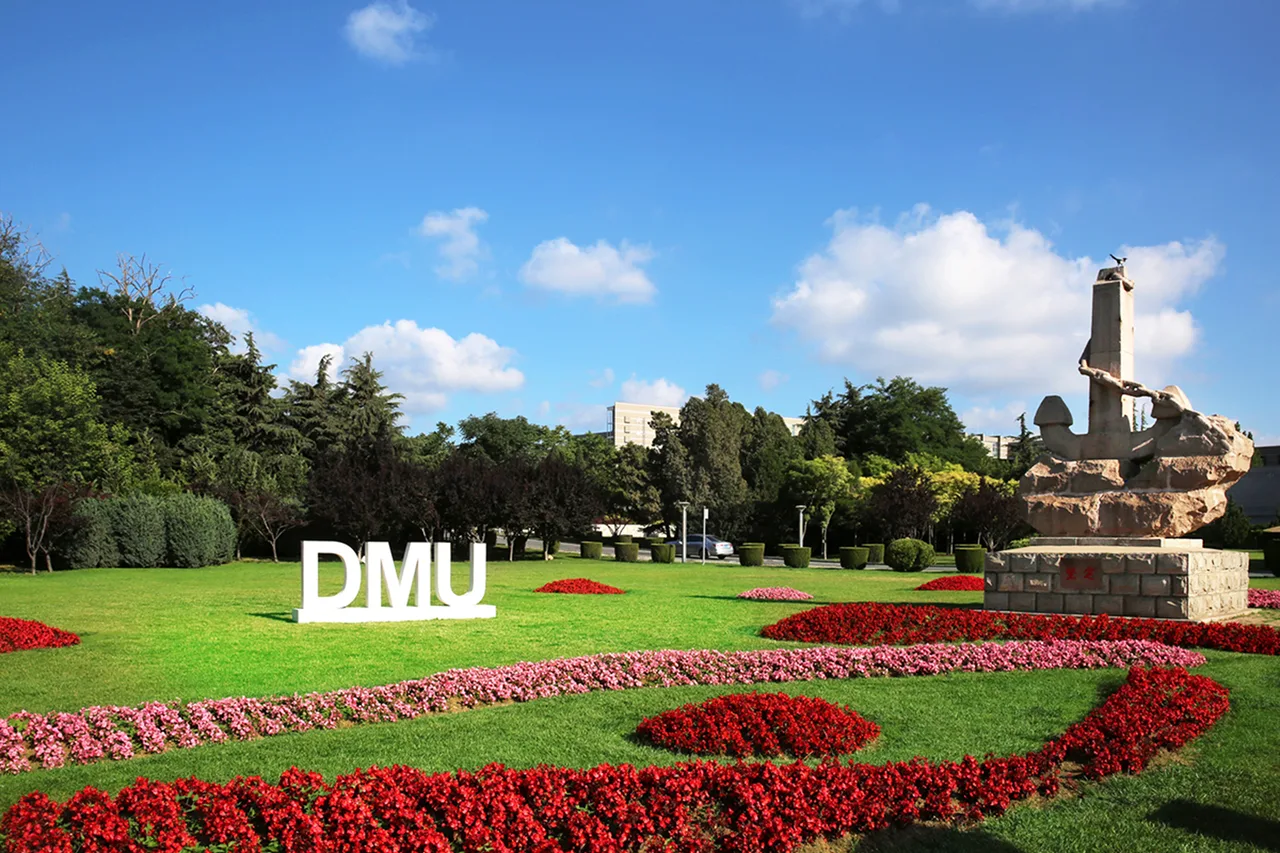
Dalian Maritime University (DMU), also known as Hai Da or Dalian Hai Da, is located in Dalian, Liaoning Province. It is a national key university directly under the Ministry of Transport, and a full-time regular undergraduate institution jointly established by the Ministry of Transport, the Ministry of Education, the People's Government of Liaoning Province, and the People's Government of Dalian. It is a member of the national "211 Project" and "Double First-Class" initiative. Dalian Maritime University originated from the Navigation Department of the Shanghai Higher Industrial School of the Ministry of Posts and Communications, founded by Zhang Jian and others in 1909. Over the next four decades, it underwent several name changes and closures. In 1950, it merged with the Navigation Management Department of Jiaotong University to form the Shanghai Navigation College. In 1953, the Dalian Maritime College was established through the merger of the Northeast Navigation College, Shanghai Navigation College, and Fujian Navigation Vocational School. In 1954, the school began piloting graduate classes. It was granted the authority to award doctoral degrees in 1984. In 1994, Dalian Maritime College was renamed Dalian Maritime University. Starting in 2003, Dalian Maritime University implemented a "school rank system" within its semi-military management corps. As of December 2024, the university's main campus consists of three areas: Dongshan, Xishan, and Linghai, covering an area of 1,443,100 square meters, with a building area of 945,700 square meters. It has 21 teaching and research institutions, offering 54 undergraduate programs. It has 10 first-level doctoral degree authorization disciplines, 24 first-level master's degree authorization disciplines, 7 postdoctoral research stations, and 16 professional master's degree categories. The university has 1,706 full-time teachers, 17,935 full-time undergraduates, 8,128 graduate students, and 7,539 other students including international students. Dalian Maritime University traces its roots to the Navigation Department of the Shanghai Higher Industrial School of the Ministry of Posts and Communications, established in 1909. In 1911, the specialized institution for Chinese maritime education, the Higher Merchant Marine School of the Ministry of Posts and Communications, was officially established, with Tang Wenzhi as supervisor and Xia Sunpeng as academic dean. It emulated naval management, with strict admission requirements, uniform dress codes, and military training. In 1912, after the founding of the Republic of China, Tang Wenzhi resigned. The Ministry of Communications appointed Admiral Sa Zhenbing as president, and with a substantial donation from Vice President Li Yuanhong, the Wusong campus was built. The school moved from Xujiahui to Wusong and was renamed the Wusong Merchant Marine School of the Ministry of Communications. The first class graduated in 1914, and in the same semester, the school began enrolling students in the marine engineering program. Only about 60 students graduated in the first three cohorts, yet job placement remained difficult. Due to insufficient funding, the school was ordered to close in 1915, and it was taken over by the Navy Department to become a naval school, named "Wusong Naval School." The Wusong Naval School closed in 1921. In 1929, the Wusong Merchant Marine Vocational School was reestablished, offering only a navigation program and admitting high school graduates. In the fall of 1930, a marine engineering program was added, and a practice workshop was built. In the spring of 1933, the Wusong campus was repaired and classes resumed, and a vocational school was approved as an affiliate. The Merchant Marine Vocational School offered navigation and marine engineering programs, admitting junior high school graduates under 17 for a three-year program. In 1937, during the August 13 Incident, the Japanese launched a war of aggression against China, and the people of Shanghai and Wusong rose in resistance. As the school was located in the combat zone, its buildings, books, and instruments were destroyed by the Japanese, forcing it to close. In 1939, following a decision by the Supreme National Defense Council, the merchant marine school was rebuilt in Chongqing and renamed the National Chongqing Merchant Marine Vocational School, under the Ministry of Education, with Wu Junsheng, Director of the Higher Education Department, serving concurrently as president. The assets of the Wusong Merchant Marine Vocational School were taken over by a preparatory committee of the Chongqing Merchant Marine Vocational School, which appointed Song Jianxun and two others as receivers. In 1943, the school was merged into the National Jiaotong University in Chongqing. It was reestablished in Shanghai in 1946 and renamed the National Wusong Merchant Marine Vocational School. In 1950, it merged with the Navigation Management Department of Jiaotong University to form the Shanghai Navigation College. In 1953, the Central People's Government decided to merge the Shanghai Navigation College with the Northeast Navigation College, which originated from the Northeast Merchant Marine School established in 1927, to form the Dalian Maritime College. In 1952, the Fujian Private Jimei Aquatic Products and Merchant Marine Vocational School merged with the Navigation Department of Xiamen University to form the Fujian Navigation Vocational School. In November 1953, the Fujian Navigation Vocational School was merged into Dalian Maritime College. Thus, China's higher maritime education was revitalized. In 1955, Dalian Maritime University began accepting international students as one of the first Chinese government scholarship institutions. In 1960, it was designated a national key university. In 1963, the State Council approved the implementation of semi-military management for the university's maritime programs. In 1983, the United Nations Development Programme (UNDP) and the International Maritime Organization (IMO) established the Asia-Pacific Regional Maritime Training Center at the university. In 1985, to implement the Military Service Law, the state began piloting military training at some universities nationwide, and the university was selected as one of the first pilot institutions. In the same year, the World Maritime University established a branch at the university, making it the first branch of the World Maritime University.
Sources & verification
- Verification
- Partly verified
- Verified on
- 2026-05-10
- Last updated
- 2026-09-24
- Source link
- www.campuschina.org ↗
- Source notes
- Official CampusChina guide (program code: 343552)
Confirm requirements, funding and deadlines in the admissions office’s current announcement.