
Confucius Institute Scholarship
Northeast Normal University Confucius Institute Scholarship
Application status unknownPartly verified
**I. Eligible Applicants** 1. Non-Chinese citizens. 2. In good physical and mental health, with excellent academic performance and moral character. 3. Aspiring to engage in Chinese language education, teaching, and international promotion of Chinese language. 4. Aged between 16 and 35 (as of September 1, 2018). In-service Chinese language teachers may be up to 45 years old. Applicants for undergraduate scholarships generally should not exceed 25 years old. **II. Scholarship Categories and Application Requirements** **1. Master's Degree in Teaching Chinese to Speakers of Other Languages (MTCSOL)** Duration: 2 years. Applicants must hold a bachelor's degree. HSK score of at least 210 (Level 5) and HSKK score of at least 60 (Intermediate). Priority will be given to those who provide a work agreement or relevant certification from the institution where they intend to teach after graduation. **2. Bachelor's Degree in Teaching Chinese to Speakers of Other Languages** Duration: 4 years
Funding details pending.
- Scholarship type
- Confucius Institute Scholarship
- Degree level
- Bachelor / Master / PhD / Visiting Students
- Location
- Jilin · Changchun
- Application deadline
- Date to be confirmed
Overview
**I. Eligible Applicants**
1. Non-Chinese citizens.
2. In good physical and mental health
with excellent academic performance and moral character.
3. Aspiring to engage in Chinese language education
teaching
Funding coverage
Funding tiers
Eligibility may differ by tier. Check the applicable degree and requirements.
Standard funding
- Eligible degree
- Bachelor’s, Master’s, Doctoral, Visiting students
- Funding
- **I. Eligible Applicants** 1. Non-Chinese nationals. 2. Good physical and mental health, character and academic performance. 3. Intention to work in Chinese language education, teaching or international promotion. 4. Ages 16–35 as of September 1, 2018. Employed Chinese teachers may be up to 45; undergraduate scholarship applicants are generally no older than 25. **II. Scholarship Categories and Requirements** **1. Master’s in Teaching Chinese to Speakers of Other Languages** 2 years’ funding. Undergraduate qualification required. Chinese results must reach HSK Level 5 [source ends with an incomplete parenthesis]
- Tier requirements
- ** **1. Master’s in Teaching Chinese to Speakers of Other Languages** 2 years’ funding. Undergraduate qualification; HSK5,210 and HSKK Intermediate,60; intended teaching-institution work agreement/evidence preferred. **2. Undergraduate Teaching Chinese to Speakers of Other Languages** 4 years’ funding. High school qualification; HSK4,210 and HSKK Intermediate,60. **3. One-academic-year study** 11 months’ funding; current students in China ineligible. **3.1 Teaching Chinese to Speakers of Other Languages** HSK3,270, with HSKK results. **3.2 Chinese Language and Literature, Chinese History, Chinese Philosophy** HSK4,180 and HSKK Intermediate,60. **3.3 Chinese language study** HSK3,180. **4. One-semester study** 5 months’ funding; passport X1/X2 visa holders ineligible. HSK3,210, with HSKK results. **5. Four-week study** 4 weeks’ funding; passport X1/X2 visa holders ineligible. **
Requirements & documents
Application dates & process
Review Cycle: Joint review by the China Scholarship Council and host university takes approximately 6–8 weeks
Universities & programs
Universities
About the university
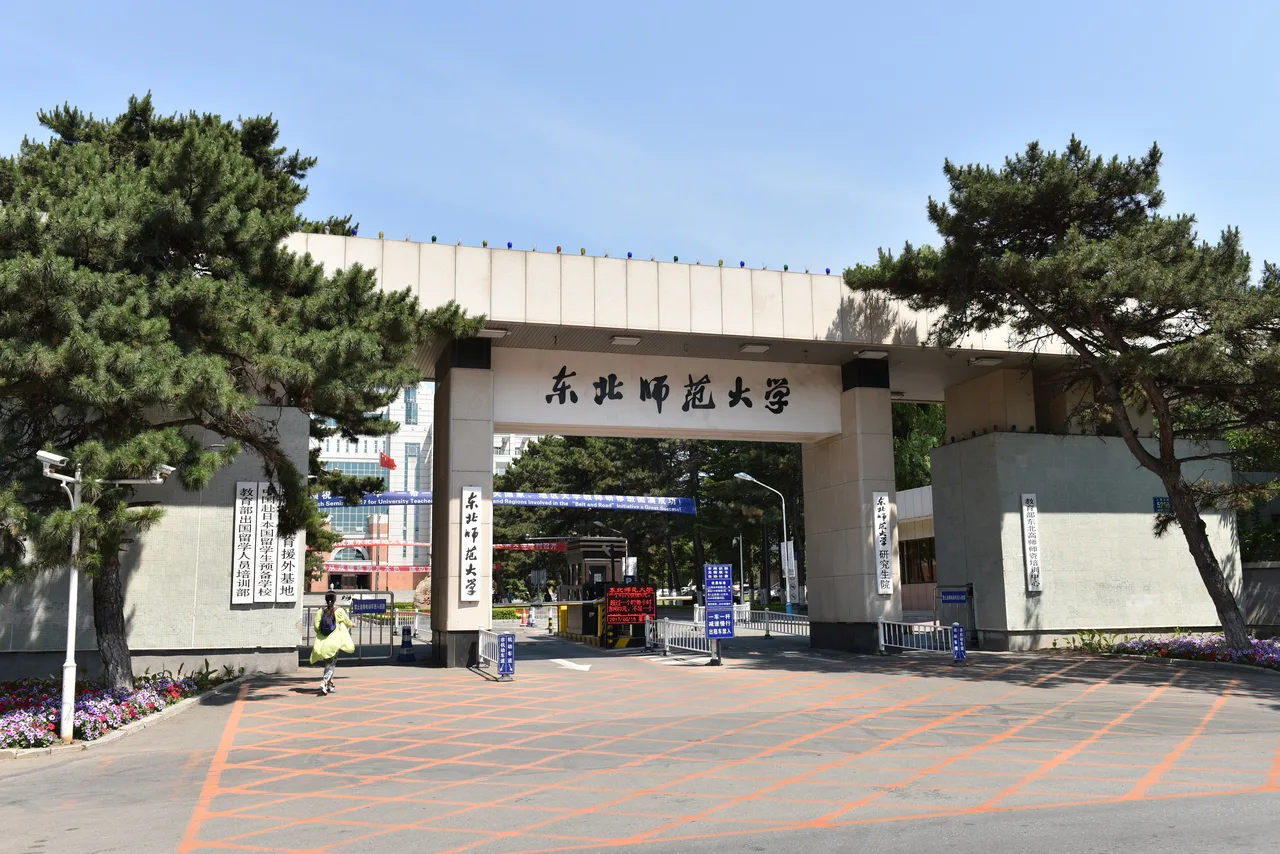
Northeast Normal University (NENU), also known as Northeast Normal University, is located in Changchun City, Jilin Province. It is a comprehensive research university directly under the Ministry of Education of the People's Republic of China, jointly established by the Ministry of Education and the People's Government of Jilin Province. It is also the first comprehensive university founded by the Communist Party of China in Northeast China. In 2007, it was selected as a university under the National '985 Project' for the construction of advantageous disciplines in teacher education innovation platforms. In September 2017, it was among the first batch of universities selected for the national 'Double First-Class' initiative, and was also included in the 'Pilot Program for Training Top-Notch Students in Basic Sciences', 'National Teacher Training Program', '111 Project', and 'National College Student Innovation and Entrepreneurship Training Program'. The predecessor of Northeast Normal University was Northeast University. It was founded in February 1946 in Benxi, Liaoning Province. Between 1948 and 1949, the original Shenyang Northeast University, Changchun University, and Changbai Normal College were successively merged into Northeast University. In July 1949, the university was permanently located in Changchun, Jilin. In April 1950, it was renamed Northeast Normal University. In September 1996, it became one of the first batch of key universities under the national '211 Project'. In June 2004, the Graduate School was established with approval from the Ministry of Education. As of December 2024, Northeast Normal University has two campuses: Renmin Street Campus and Jingyue Street Campus. The university comprises 21 colleges (departments), 72 undergraduate programs, 24 first-level doctoral degree authorization disciplines, 6 professional doctoral degree categories, 35 first-level master's degree authorization disciplines, 25 professional master's degree categories, and 24 postdoctoral research stations. It has over 15,000 full-time undergraduate students, over 15,000 master's students, over 3,000 doctoral students, over 700 international students, and over 3,000 faculty and staff members. In August 1945, Japan surrendered, marking the victorious conclusion of the Chinese People's War of Resistance Against Japanese Aggression. The Central Committee of the Communist Party of China and Mao Zedong decided to advance into Northeast China. On October 25, 1945, Chairman Mao Zedong met with key leaders of Yan'an University and instructed the university to move to the Northeast to establish a 'new-type Northeast University'. Zhang Xuesi served as President of Northeast University, Bai Xiqing as Vice President, Shu Qun as Vice President, and Zhang Songru (Gong Mu) as Dean of Education. Around the New Year of 1946, the Northeast Bureau instructed the renowned writer Shu Qun to establish 'Northeast Public School', which began enrolling students in February of the same year. Subsequently, the Northeast Bureau decided to rename 'Northeast Public School' as 'Northeast University', appointing Zhang Xueliang's younger brother and Vice Chairman of the Northeast Administrative Committee, Zhang Xuesi, as concurrent president, with the campus located in Benxi. On March 15, 1946, the university moved to Andong (now Dandong), then continued relocating through Tonghua, Meihekou, and Jilin, arriving in Changchun on April 26. The campus was set in one of Changchun's famous buildings at the time, the 'Marine Building'. In May of the same year, the university moved north again, arriving in Harbin on May 27. After leaving some faculty and students to take over Harbin Medical University, the rest continued north. On June 1, the last group of faculty and students arrived in Jiamusi, a base area in northern Manchuria, where the university was located in the 'Manchuria Red Cross Hospital'. In July 1948, the Northeast Bureau of the Central Committee of the Communist Party of China decided to relocate Northeast University to Jilin City and merge it with Jilin University, which was founded by the Party in Jilin City, naming it Northeast University. On March 15, 1949, a group of 2,976 faculty, staff, and students from various universities and middle schools in Northeast China who had gone to Beiping and Tianjin before liberation returned to Shenyang. Among them were 314 faculty and staff from the original Northeast University, National Changchun University, and Changbai Normal College, 1,915 college students (including those in specialized fields), and 747 middle school students. College students in liberal arts and law were assigned to study at Northeast University. On March 28, 1950, the Ministry of Education of the Northeast People's Government issued an order: 'In accordance with the order of the Northeast People's Government and with the consent of the Ministry of Education, effective April 1, the original Northeast University shall be renamed Northeast Normal University. The original President of Northeast University, Zhang Ruxin, and Vice President, Zhang Dexin, shall remain as President and Vice President of Northeast Normal University.' Northeast University was renamed Northeast Normal University, placed under the Ministry of Education, and became a higher normal institution aimed at cultivating new-type secondary school teachers.
Sources & verification
- Verification
- Partly verified
- Verified on
- 2026-05-10
- Last updated
- 2026-09-24
- Source link
- www.campuschina.org ↗
- Source notes
- Official CampusChina guide (program code: 338881)
Confirm requirements, funding and deadlines in the admissions office’s current announcement.