
Local Government Scholarship
Southeast University Nanjing Municipal Government Scholarship
ClosedPartly verified
I. Scholarship Content and Standards Graduate students: 20,000 RMB per academic year; undergraduate students: 10,000 RMB per academic year. Non-degree students receive a one-time award of 5,000 RMB per half year. II. Eligibility Requirements 1. Applicants must be citizens of a foreign country, friendly to China, and in good health. 2. Applicants must comply with Chinese laws and regulations, maintain good conduct, and meet the admission requirements of the applying institution. 3. Academic and age requirements: For undergraduate programs, applicants must have a high school diploma and generally be under 28 years of age; for master's programs, applicants must hold a bachelor's degree and generally be under 35 years of age; for doctoral programs, applicants must hold a master's degree and generally be under 40 years of age. 4. Foreign nationals who have obtained a bachelor's degree or equivalent and intend to pursue further studies or receive non-degree education for more than six mon
Funding details pending.
- Scholarship type
- Local Government Scholarship
- Degree level
- Bachelor / Master / PhD / Visiting Students
- Location
- Jiangsu · Nanjing
- Application deadline
- 2026-10-01
Overview
I. Scholarship Content and Standards
Graduate students: 20
000 RMB per academic year
undergraduate students: 10
000 RMB per academic year. Non-degree students receive a one-time award of 5
000 RMB per half year.
Funding coverage
Funding tiers
Eligibility may differ by tier. Check the applicable degree and requirements.
Standard funding
- Eligible degree
- Bachelor’s, Master’s, Doctoral, Visiting students
- Funding
- I. Scholarship coverage and standards Graduate students: CNY 20,000 per academic year; undergraduate students: CNY 10,000 per academic year. Non-degree students: a lump-sum award of CNY 5,000 every half-year. II. Eligibility 1. Foreign citizens who are friendly toward China and in good health. 2. Comply with Chinese laws and regulations, have good conduct and meet the target university's admission requirements. 3. Education and age: undergraduate applicants must have graduated from high school and generally be aged 28 or younger; master's applicants must hold a bachelor's degree and generally be aged 35 or younger.
- Tier requirements
- ** 1. Healthy foreign citizens, friendly toward China. 2. Compliance with Chinese government laws/regulations, good conduct, meeting chosen university conditions. 3. Undergraduate: high school graduation, generally no older than 28; master’s: bachelor’s already obtained, generally no older than 35; doctoral: master’s already obtained, generally no older than 40; 4. Foreign nationals with bachelor’s/equivalent, intending visiting or non-degree study at relevant city universities for at least 6 months. 5. Proper learning attitude, no university rule violations, good grades. 6. No other Chinese government scholarship. 7. Chinese proficiency with HSK/other study/test evidence; some directly English-taught majors may relax conditions. **III. Dates** Annual deadline: October 1 **IV. Application process/pathway** Please send [source ends here]
Requirements & documents
Application dates & process
Application Deadline: 10/1 Review Cycle: Joint review by the China Scholarship Council and host university takes approximately 6–8 weeks
Universities & programs
Universities
About the university
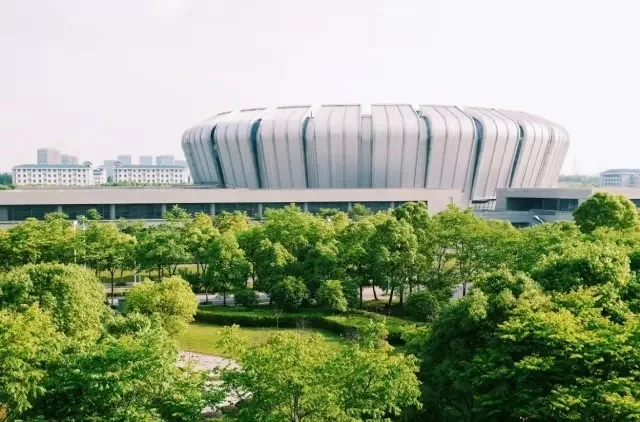
Southeast University (SEU), located in Jiangsu Province, is a comprehensive, research-oriented national key university directly under the Ministry of Education and administered by the central government. It is a key university under the "211 Project" and "985 Project," one of the first batch of "Double First-Class" construction universities (Category A), and has been selected for the "2011 Plan," "111 Plan," "101 Plan," "Peak Plan," and "Strong Foundation Plan." It is an autonomous degree-granting institution. Southeast University traces its origins to the Sanjiang Normal School founded in 1902, and has undergone several name changes: Liangjiang Excellent Normal School, National Nanjing Higher Normal School, National Southeast University, National Fourth Sun Yat-sen University, National Jiangsu University, Jiangsu University, National Central University, National Nanjing University, and Nanjing University. In 1952, during the nationwide restructuring of higher education institutions, the School of Engineering of Nanjing University served as the main body, incorporating relevant departments from Jinling University, Fudan University, and Jiaotong University, and established the Nanjing Institute of Technology on the original site of National Central University. Between 1955 and 1960, some departments were relocated. In May 1988, it was renamed Southeast University. In February 2000, Nanjing Geological School merged into Southeast University; in April of the same year, Southeast University, Nanjing Railway Medical College, and Nanjing College of Communications merged to form the new Southeast University. In September 2017 and February 2022, it was twice selected as a "Double First-Class" construction university. As of March 2026, the university has seven campuses: Sipailou, Jiulonghu, Dingjiaqiao, Jiangbei, Wuxi, Suzhou, and Nantong (under construction). The Jiulonghu campus covers an area of 3,752.35 mu (approximately 250 hectares) with a total building area of about 1,087,700 square meters. It has 39 schools and departments, 85 undergraduate programs, 39 postdoctoral research stations, 49 first-level doctoral degree authorization points, 52 first-level master's degree authorization points, 13 categories of professional doctoral degree authorization points, and 32 categories of professional master's degree authorization points. The university has 43,651 full-time students and 3,070 full-time faculty members. At the end of the 19th century, the national crisis was unprecedented, and the pursuit of strength and change, along with the establishment of schools to cultivate talent, became a common aspiration among patriotic individuals. The Sanjiang Normal School, established in the early 20th century, was one of the earliest modern higher education institutions in China. In 1902, Liu Kunyi, the Governor-General of Liangjiang, submitted a memorial proposing the establishment of a school, advocating that education should start with normal schools. In 1903, Zhang Zhidong submitted another memorial to the Qing court, proposing to replace the old Jiangning Prefecture School with a normal school that would nurture civilization, and established the Sanjiang Normal School on the site of the former Imperial Academy (Guozijian) of the Ming Dynasty. In September 1903, the Sanjiang Normal School was officially opened, enrolling students in 1904, and was renamed "Liangjiang Excellent Normal School" (abbreviated as Liangjiang Normal School) in 1905. The Liangjiang Normal School adopted the policy of "Chinese learning as the foundation, Western learning for practical use," emphasizing loyalty to the emperor and classical studies while introducing Western culture, science, and technology. It hired Japanese instructors and adopted Japanese educational methods, representing a transitional phase from the old Chinese academy education system to the modern school education system. National Nanjing Higher Normal School (1915-1921) → National Southeast University & National Nanjing Higher Normal School (1921-1923) → National Southeast University (1923-1927). On August 30, 1914, Jiang Qian, a renowned Confucian scholar and former Director of the Jiangsu Education Department, was appointed president of the National Nanjing Higher Normal School, which was established on the original site of the Liangjiang Normal School. On August 11, 1915, the National Nanjing Higher Normal School (abbreviated as Nanjing Higher Normal School or Nangao) began public enrollment, becoming one of the first six national higher normal schools in China. When Nangao was founded in 1915, it had two departments (Chinese and Science) and one specialized program in Chinese. By 1920, the school had eight departments, with the Faculty of Arts and Sciences comprising eight departments. Pioneers such as Jiang Qian, Guo Bingwen, Liu Boming, Tao Xingzhi, and Yang Xingfo reformed and planned extensively, enabling Nangao to transcend the boundaries of normal education, integrating teacher training, basic education, and practical education, and taking the initial shape of a comprehensive university.
Sources & verification
- Verification
- Partly verified
- Verified on
- 2026-05-10
- Last updated
- 2026-09-24
- Source link
- www.campuschina.org ↗
- Source notes
- Official CampusChina guide (program code: 117609)
Confirm requirements, funding and deadlines in the admissions office’s current announcement.