
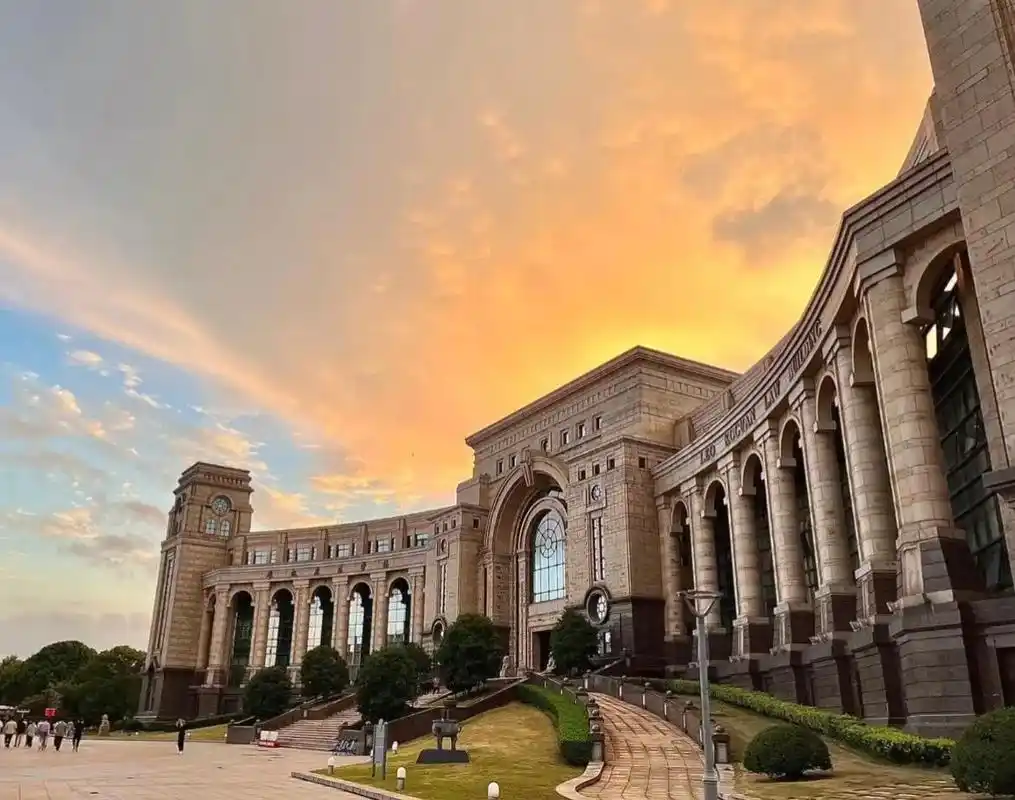
Government/University Scholarship
Chinese Government Scholarship — University Independent Enrollment Program
ClosedVerified
Chinese Government Scholarship — University Independent Enrollment Program. Eligible study levels: Master’s, Doctoral. Funding: Tuition waiver, free on-campus accommodation or an off-campus accommodation subsidy, comprehensive medical insurance fee waiver; living allowance of RMB 3,000 per month for master’s students and RMB 3,500 per month for doctoral students
TuitionAccommodationMedical insurance
- Scholarship type
- Government/University Scholarship
- Degree level
- Master / PhD
- Location
- Shanghai · Shanghai
- Application deadline
- 2025-12-01
Overview
Chinese Government Scholarship — University Independent Enrollment Program. Eligible study levels: Master’s
Doctoral. Funding: Tuition waiver
free on-campus accommodation or an off-campus accommodation subsidy
comprehensive medical insurance fee waiver
living allowance of RMB 3
000 per month for master’s students and RMB 3
Funding coverage
Funding tiers
Eligibility may differ by tier. Check the applicable degree and requirements.
Standard funding
- Eligible degree
- Master’s, Doctoral
- Funding
- Tuition waiver, free on-campus accommodation or an off-campus accommodation subsidy, comprehensive medical insurance fee waiver; living allowance of RMB 3,000 per month for master’s students and RMB 3,500 per month for doctoral students
- Tier requirements
- 1. Non-Chinese citizens in good physical and mental health; 2. Master’s applicants no older than 35; doctoral applicants no older than 40; 3. Not concurrently receiving any other Chinese Government Scholarship
Requirements & documents
Application dates & process
Application Opens: 10/1 Application Deadline: 12/1 Review Cycle: Document review and interviews / expert review take approximately 4–6 weeks
Universities & programs
Universities
About the university
Fudan University, located in Shanghai, is a comprehensive and research-oriented national key university established by the state, directly under the Ministry of Education of the People's Republic of China, and jointly built with Shanghai Municipality. It is a central-level university, one of the first batch of universities under the "985 Project" and "211 Project," a first-class construction university under the national "Double First-Class" initiative (Category A), and one of the first institutions authorized to independently grant degrees. It has been selected for the Everest Plan, the Strong Foundation Plan, the 101 Plan, the 111 Plan, the 2011 Plan, the Excellent Doctor Education and Training Plan, the Excellent Legal Talent Education and Training Plan, and the National High-Level University Public-Sponsored Graduate Program. It is a member of the C9 League, the Association of Pacific Rim Universities, the Medical "Double First-Class" Construction Alliance, the Yangtze River Delta Research University Alliance, the Yangtze River Delta University Think Tank Alliance, and the Sino-Russian Comprehensive University Alliance. The university's history can be traced back to the establishment of Fudan Public School in 1905, which later went through stages such as Private Fudan University and National Fudan University. After the nationwide restructuring of higher education institutions, Fudan University became a nationally important comprehensive university in 1954. Shanghai Medical University originated from the Medical College of the Fourth National Sun Yat-sen University established in 1927, and later went through stages such as the Medical College of National Central University, National Shanghai Medical College, and Shanghai Medical College, before being renamed Shanghai Medical University in May 1985. On April 27, 2000, Fudan University merged with Shanghai Medical University to form the new Fudan University. As of May 2025, the university has four campuses: Handan, Fenglin, Zhangjiang, and Jiangwan. It has 40 directly affiliated schools (departments), 18 affiliated hospitals, 8 affiliated schools, and offers 83 undergraduate programs. It has 40 postdoctoral research stations, 3,647 teaching and research staff, 15,420 undergraduate students, 36,012 graduate students, and 2,011 international students pursuing degrees. As of October 2025, it has 46 first-level doctoral degree authorization disciplines, 49 first-level master's degree authorization disciplines, 10 doctoral professional degree authorization categories, and 41 master's professional degree authorization categories. In the winter of 1894, China suffered a disastrous defeat in the First Sino-Japanese War. Insightful individuals in and out of the government proposed abolishing the imperial examination system and establishing modern schools. Ma Xiangbo, "lamenting the Qing government's diplomatic incompetence, being ignorant of international law and manufacturing," intended to cultivate translation talents for the country. In 1896, Liang Qichao came to Shanghai to run the "Current Affairs Journal" and learned Latin from Ma Xiangbo and his brother Ma Jianzhong. During the Hundred Days' Reform, Liang Qichao proposed the establishment of a translation school and invited Ma Xiangbo to take charge, but the plan was abandoned due to the failure of the reform. In August 1900, Ma Xiangbo donated 3,000 mu of fertile land from his properties in Songjiang and Qingpu to the Catholic Church's "Jiangnan Diocese for the future establishment of a Sino-Western university, specifically to support talented but financially disadvantaged youth." Ma Xiangbo believed that "individual efforts cannot last long, so I entrust it to the Jesuit organization for permanence." However, the Jesuits did not start a school after receiving the land. Later, Ma Xiangbo lived in Tushanwan, Xujiahui, Shanghai. Cai Yuanpei, who was teaching at Nanyang Public School nearby, often visited Ma Xiangbo to learn Latin and introduced 24 outstanding students to study Latin, French, and mathematics under Ma Xiangbo, preparing to establish a translation society. In November 1902, over 200 students at Nanyang Public School, opposing the feudal oppression of the authorities, shouted "Long live the motherland" and collectively left the school. The dropouts requested Cai Yuanpei, the chief instructor of the special class at Nanyang Public School and head of the Chinese Education Society, to help organize a "Republican School." In addition to assisting in the establishment of the Patriotic School with the Education Society, Cai Yuanpei also introduced some students to study under Ma Xiangbo. In early 1903, Cai Yuanpei and two other instructors led some former Nanyang Public School students to visit Ma Xiangbo, asking him to establish a school. Ma Xiangbo gladly agreed and founded an academy (Académie), naming it "Aurora" (Zhendan), using the ancient Indian name for China. The character "Zhen" in the Eight Trigrams represents the east, and "Dan" pictographically depicts the sun rising above the horizon, meaning the dawn of China. The English and French names of the school were Aurora and L'Aurore, respectively. On March 1, the Aurora Academy held its opening ceremony. Ma Xiangbo delivered a speech opposing the imperial examination system and the "slave" and "for others" learning since the Qin and Han dynasties, advocating for the study of "investigating things to acquire knowledge" and "independent" learning. After the Aurora Academy achieved success, the French Jesuit missionaries, using Ma Xiangbo's illness as an excuse, forced him into hospitalization and sent French priest Nanzhoucong to manage the school, abolishing the original rules and regulations and changing the curriculum.
Sources & verification
- Verification
- Verified
- Verified on
- 2026-09-20
- Last updated
- 2026-11-06
- Source link
- iso.fudan.edu.cn ↗
- Source notes
- Fudan University — 2025 application guide and funding details for Chinese Government Scholarship — University Independent Enrollment Program (verified by the user)
Confirm requirements, funding and deadlines in the admissions office’s current announcement.