
Chinese Government Scholarship Youth of Excellence Scheme of China — Master of International Economic Cooperation (MIEC)

Government/University Scholarship

Chinese Government Scholarship Youth of Excellence Scheme of China — Master of International Economic Cooperation (MIEC)

ClosedVerified

Chinese Government Scholarship — Youth of Excellence Scheme: Master of International Economic Cooperation (MIEC). Funding: full scholarship for one year

Funding details pending.
Scholarship type
Government/University Scholarship
Degree level
Not specified on the official website
Location
Beijing · Beijing
Application deadline
2026-03-02

Overview

Chinese Government Scholarship — Youth of Excellence Scheme: Master of International Economic Cooperation (MIEC). Funding: full scholarship for one year

Funding coverage

Scholarship TypeGovernment/University Scholarship
UniversityUniversity of International Business and Economics
ProvinceBeijing
TuitionNot specified
AccommodationNot specified
Medical InsuranceNot specified
Subsidy StandardFull scholarship, valid for one year
Other BenefitsNot specified on the official website
Coverage ScopeFull scholarship, valid for one year
Application Linkhttps://sie.uibe.edu.cn/xwgg2/tzgg2/333bcda9e9f84bb0a15208e952dfc77a.htm

Funding tiers

Eligibility may differ by tier. Check the applicable degree and requirements.

Full funding

Eligible degree
Not specified on the official website
Funding
Full scholarship, valid for one year
Tier requirements
Applicants should meet the following basic conditions: 1) Non-Chinese nationality, no older than 45, good physical and mental health; 2) Undergraduate qualification or above, at least three years’ work experience; relevant study/work background preferred; 3) Government public officials at division-head/equivalent level or above, senior institutional/enterprise managers, university/research administrators, or people with international organization work/internship experience; 4) Good English sufficient for subject courses; non-native speakers require IELTS 6.0/TOEFL 86 or higher equivalent proficiency; 5) Career development potential in the field and intention to advance friendly exchange/cooperation between their country and China.

Requirements & documents

Application RequirementsApplicants should meet the following basic conditions: 1) Non-Chinese nationality, no older than 45, good physical and mental health; 2) Undergraduate qualification or above, at least three years’ work experience; relevant study/work background preferred; 3) Government public officials at division-head/equivalent level or above, senior institutional/enterprise managers, university/research administrators, or people with international organization work/internship experience; 4) Good English sufficient for subject courses; non-native speakers require IELTS 6.0/TOEFL 86 or higher equivalent proficiency; 5) Career development potential in the field and intention to advance friendly exchange/cooperation between their country and China.
Major RestrictionsMaster of International Economic Cooperation (MIEC)
GPASubject to excellent academic performance and the host institution’s requirements
Language RequirementsGood English, sufficient to undertake subject courses in English. Non-native English speakers require proficiency equivalent to IELTS 6.0 or TOEFL 86 or above;
Teaching LanguagePrograms taught entirely in English are exempt from HSK; IELTS / TOEFL or proof of English-medium instruction is required
Required Materials1) Chinese Government Scholarship Application Form. This form can be downloaded after submitting the CSC application (applicants may first submit their CSC application without a pre-admission notice to obtain the application form; after receiving the pre-admission notice, click “Return” to add the document); 2) The applicant’s passport information page (the passport must be an ordinary personal passport valid beyond September 30, 2026). If the current passport does not meet the validity requirement, renew it promptly; 3) Personal statement (including, but not limited to, relevant work experience and a research plan; at least 1,000 characters); 4) Curriculum vitae (in English); 5) Notarized certificate of highest educational qualification (in Chinese or English); 6) Notarized academic transcripts (in Chinese or English); 7) Two recommendation letters from heads of the applicant’s workplace or scholars with the rank of associate professor or higher (the recommenders’ telephone numbers and email addresses must be provided); 8) Employment certificate (in English); 9) Proof of English proficiency: TOEFL 86 or IELTS 6.0 or higher; an official letter certifying English proficiency; 10) Foreigner Physical Examination Form, downloadable from the attachments and to be completed in English. Applicants must undergo all examinations required by the form. Forms with missing examination items, without the applicant’s photograph or a seal across the photograph, or without the signatures and seals of the physician and hospital are invalid. Examination results are valid for six months; applicants should schedule their examination accordingly; 11) Certificate of no criminal record (individuals in some countries or regions cannot apply for this certificate and may download the Declaration of No Criminal Record from the attachments. All other applicants must provide a certificate of no criminal record. [The source leaves the parenthesis unclosed.]
Sourcehttps://lh65breby7.feishu.cn/wiki/TAxpwuS1TiFoeZklj20caqHnnte?sheet=1dnfky&range=A41
Source NotesUniversity of International Business and Economics — 2024 application guide and funding details for Chinese Government Scholarship Youth of Excellence Scheme of China — Master of International Economic Cooperation (MIEC) (verified by the user)
Noteshttps://sie.uibe.edu.cn/xwgg2/tzgg2/333bcda9e9f84bb0a15208e952dfc77a.htm 2024
University groupingFirst group of additional universities for the Vietnamese market
Application materials1) Chinese Government Scholarship Application Form. This form can be downloaded after submitting the CSC application (applicants may first submit their CSC application without a pre-admission notice to obtain the application form; after receiving the pre-admission notice, click “Return” to add the document); 2) The applicant’s passport information page (the passport must be an ordinary personal passport valid beyond September 30, 2026). If the current passport does not meet the validity requirement, renew it promptly; 3) Personal statement (including, but not limited to, relevant work experience and a research plan; at least 1,000 characters); 4) Curriculum vitae (in English); 5) Notarized certificate of highest educational qualification (in Chinese or English); 6) Notarized academic transcripts (in Chinese or English); 7) Two recommendation letters from heads of the applicant’s workplace or scholars with the rank of associate professor or higher (the recommenders’ telephone numbers and email addresses must be provided); 8) Employment certificate (in English); 9) Proof of English proficiency: TOEFL 86 or IELTS 6.0 or higher; an official letter certifying English proficiency; 10) Foreigner Physical Examination Form, downloadable from the attachments and to be completed in English. Applicants must undergo all examinations required by the form. Forms with missing examination items, without the applicant’s photograph or a seal across the photograph, or without the signatures and seals of the physician and hospital are invalid. Examination results are valid for six months; applicants should schedule their examination accordingly; 11) Certificate of no criminal record (individuals in some countries or regions cannot apply for this certificate and may download the Declaration of No Criminal Record from the attachments. All other applicants must provide a certificate of no criminal record. [The source leaves the parenthesis unclosed.]
Application requirementsApplicants should meet the following basic conditions: 1) Non-Chinese nationality, no older than 45, good physical and mental health; 2) Undergraduate qualification or above, at least three years’ work experience; relevant study/work background preferred; 3) Government public officials at division-head/equivalent level or above, senior institutional/enterprise managers, university/research administrators, or people with international organization work/internship experience; 4) Good English sufficient for subject courses; non-native speakers require IELTS 6.0/TOEFL 86 or higher equivalent proficiency; 5) Career development potential in the field and intention to advance friendly exchange/cooperation between their country and China.
CoverageFull scholarship, valid for one year
Language requirementsGood English, sufficient to undertake subject courses in English. Non-native English speakers require proficiency equivalent to IELTS 6.0 or TOEFL 86 or above;
Eligible majorsMaster of International Economic Cooperation (MIEC)
Scholarship typeChinese Government Scholarship
University name in Chinese*University of International Business and Economics
Application opening dateJanuary 18
Application deadlineMarch 25, 2026
Scholarship name in Chinese*Chinese Government Scholarship Youth of Excellence Scheme of China — Master of International Economic Cooperation (MIEC)
Eligible study levels*Not specified on the official website
Scholarship verification status*Verified (confirmed by user)
Whether a separate application is requiredYes
Rules on holding other scholarships concurrentlyNot specified on the official website
Application Rule 1name: Coverage; description: Full scholarship, valid for one year
Application Rule 2name: Application opening date; description: January 18
Application Rule 3name: Application deadline; description: March 25, 2026
Application Rule 4name: Whether a separate application is required; description: Yes

Application dates & process

Application Opens: 1/1 Application Deadline: 3/2 Review Cycle: Document review and interviews / expert review take approximately 4–6 weeks

Universities & programs

Universities

About the university

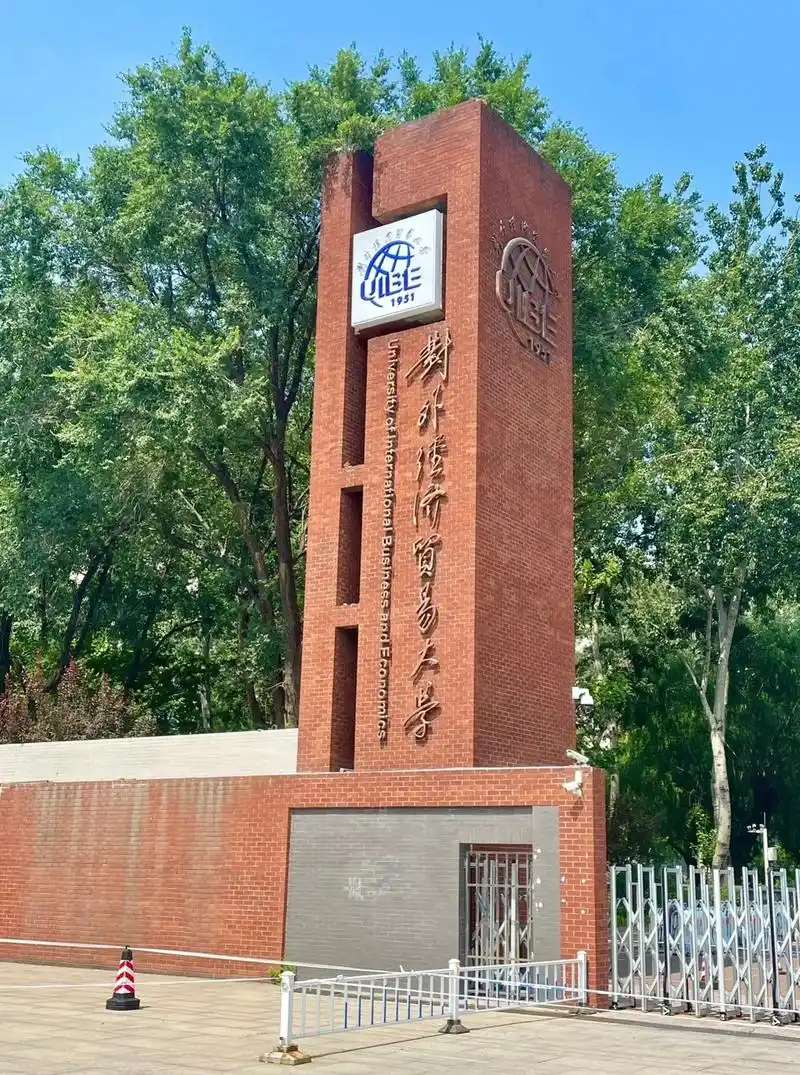
University of International Business and Economics (UIBE), also known as "University of International Business and Economics" or "UIBE", is located in Chaoyang District, Beijing. It is a full-time regular institution of higher education directly under the Ministry of Education, jointly established by the Ministry of Education and the Ministry of Commerce. The university is among the first batch of national "Double First-Class" construction universities, the first batch of "Project 211" key universities, and a national key university. It has been selected for the National "2011 Plan", "101 Plan", the Outstanding Legal Talent Education and Training Plan, the National High-Level University Graduate Program for Public-Sponsored Students, and the National College Student Innovation and Entrepreneurship Training Program. It is a host institution for Chinese Government Scholarship international students, a university under the "Ministry of Education Education Strategy and Planning Research Center", and the only finance and economics university in China to have received EQUIS, AACSB, CAMEA, and AMBA accreditations. UIBE is the first higher education institution in New China dedicated to cultivating specialized foreign trade talents. It was founded in 1951, originally as the Advanced Commercial Cadre School under the Ministry of Trade of the Central People's Government. In 1953, it was renamed Beijing Foreign Trade Specialized School. In 1954, the foreign trade program of Renmin University of China was merged into the school, and it was renamed Beijing Institute of Foreign Trade. In 1960, it was designated as a national key university. In 1978, Beijing Institute of Foreign Trade became a unit directly under the Ministry of Foreign Trade. In 1983, the school merged with the International Economic Management Institute, which was under the State Import and Export Management Commission. In 1984, it was renamed the University of International Business and Economics. In 1997, it was selected as a key university under the national "Project 211". In 1987, China Financial College was established, directly under the People's Bank of China. In 2000, the University of International Business and Economics and China Financial College merged to form the new University of International Business and Economics, directly under the Ministry of Education. In 2010, the Ministry of Education and the Ministry of Commerce jointly signed an agreement to co-build the University of International Business and Economics. In 2017, the university was selected as one of the first batch of national "Double First-Class" construction universities. In July 1951, the Advanced Commercial Cadre School of the Central People's Government Ministry of Trade was established by the Central Trade Ministry. On November 11 of the same year, the school officially opened, with German and Russian departments. In January 1953, according to the national adjustment plan for higher education institutions, the Advanced Commercial Cadre School was renamed Beijing Foreign Trade Specialized School. In October of the same year, the school became a higher education institution under the leadership and management of the Ministry of Foreign Trade, entrusted by the Central Ministry of Higher Education. In January 1954, the foreign trade program of the Trade Department of Renmin University of China merged with Beijing Foreign Trade Specialized School, and on the basis of the latter, Beijing Institute of Foreign Trade was established. On August 25, 1954, Beijing Institute of Foreign Trade was officially established. In October 1960, according to the spirit of the Central Committee's "Decision on Increasing National Key Higher Education Institutions", Beijing Institute of Foreign Trade was listed as one of the 44 newly added key institutions. In the same year, the school began to enroll graduate students under the tutorial system. In October 1969, Beijing Institute of Foreign Trade was relocated to Gushi County, Henan Province, and the Ministry of Foreign Trade announced the dissolution of the school on site. It was not until March 1973 that the State Council agreed to restore Beijing Institute of Foreign Trade. On April 24 of the same year, the school began to use its official seal. In January 1983, to meet the needs of national institutional reform and the development of foreign economic and trade affairs, the State Council decided to merge the International Economic Management Institute with Beijing Institute of Foreign Trade to form Beijing Institute of Foreign Trade, and added the Department of International Economic Cooperation. In January of the following year, with the approval of the Academic Degrees Committee of the State Council, the trade program of Beijing Institute of Foreign Trade was authorized to confer doctoral degrees in economics, and the international economics program was authorized to confer doctoral degrees in law. In September 1984, Beijing Institute of Foreign Trade was officially renamed the University of International Business and Economics, and the Graduate School and the Department of International Economic Law were added. In 1986, the school added the Department of Humanities. In 1988, the school established the Department of Foreign Trade German. In November of the same year, the authoritative U.S. educational evaluation agency, the State University of New York Board of Trustees, issued a certificate of recognition to the UIBE's Master of Business Administration in International Trade and Business Administration.

Sources & verification

Verification
Verified
Verified on
2026-09-20
Last updated
2026-11-06
Source notes
University of International Business and Economics — 2024 application guide and funding details for Chinese Government Scholarship Youth of Excellence Scheme of China — Master of International Economic Cooperation (MIEC) (verified by the user)

Confirm requirements, funding and deadlines in the admissions office’s current announcement.