
Chinese Government Scholarship High-Level Postgraduate Program

Government/University Scholarship

Chinese Government Scholarship High-Level Postgraduate Program

ClosedVerified

Chinese Government Scholarship “High-Level Postgraduate” Program. Eligible study levels: Master’s and Doctoral. Funding: tuition waiver, accommodation, living allowance and comprehensive medical insurance for international students in China

TuitionAccommodationMedical insurance
Scholarship type
Government/University Scholarship
Degree level
Master / PhD
Location
Shaanxi · Xi'an
Application deadline
2026-02-02

Overview

Chinese Government Scholarship “High-Level Postgraduate” Program. Eligible study levels: Master’s and Doctoral. Funding: tuition waiver

accommodation

living allowance and comprehensive medical insurance for international students in China

Funding coverage

Scholarship TypeGovernment/University Scholarship
UniversityXi'an Jiaotong University
ProvinceShaanxi
TuitionCovered
AccommodationCovered
Medical InsuranceCovered
Subsidy StandardTuition waived; accommodation, living expenses and comprehensive medical insurance for international students in China provided.
Other BenefitsOnly applicants who are not receiving another scholarship are eligible to apply
Coverage ScopeTuition waived; accommodation, living expenses and comprehensive medical insurance for international students in China provided.
Application Linkhttps://sie.xjtu.edu.cn/info/1265/4987.htm

Funding tiers

Eligibility may differ by tier. Check the applicable degree and requirements.

Standard funding

Eligible degree
Master’s, Doctoral
Funding
Tuition waived; accommodation, living expenses and comprehensive medical insurance for international students in China provided.
Tier requirements
Non-Chinese citizens in good health; master’s applicants must hold a bachelor’s degree and be no older than 35; doctoral applicants must hold a master’s degree and be no older than 40; not receiving another scholarship

Requirements & documents

Application RequirementsNon-Chinese citizens in good health; master’s applicants must hold a bachelor’s degree and be no older than 35; doctoral applicants must hold a master’s degree and be no older than 40; not receiving another scholarship
Major RestrictionsMaterials Science and Engineering (School of Materials Science and Engineering); Electrical Engineering; Computer Science and Technology (Faculty of Electronic and Information Engineering—School of Computer Science and Technology); Electronic Science and Technology (same faculty—School of Electronic Science and Engineering); Electronic Science and Technology (same faculty—School of Microelectronics); Information and Communication Engineering; Control Science and Engineering; Cyberspace Security; Computer Science and Technology (Faculty of Electronic and Information Engineering—School of Software); Law; Law (Chinese Law and International Commercial Law); Public Administration; Business Administration; Mechanics; Aeronautical and Astronautical Science and Technology; Chemical Engineering and Technology (School of Chemical Engineering and Technology); Power Engineering and Engineering Thermophysics (School of Chemical Engineering and Technology); Chemistry (School of Chemistry); Chemical Engineering and Technology (School of Chemistry); Mechanical Engineering; Applied Economics; Power Engineering and Engineering Thermophysics (School of Energy and Power Engineering); Nuclear Science and Technology; Environmental Science and Engineering (School of Energy and Power Engineering); Chemistry (Frontier Institute of Science and Technology); Materials Science and Engineering (Frontier Institute of Science and Technology); Biomedical Engineering (Frontier Institute of Science and Technology); Civil Engineering; Architecture; Environmental Science and Engineering (School of Human Settlements and Civil Engineering); Journalism and Communication (Chinese Cultural Studies); Philosophy; Sociology; Journalism and Communication (School of Humanities and Social Sciences); Design Studies; Biomedical Engineering (School of Life Science and Technology); Biology; Foreign Languages and Literature; International Chinese Language Education; Marxist Theory; Physics; Materials Science and Engineering (School of Physics); Journalism and Communication (School of Journalism and New Media); Instrument Science and Technology; Physiology; Neurobiology; Genetics; Cell Biology; Biochemistry and Molecular Biology; Biophysics; Human Anatomy, Histology and Embryology; Immunology; Pathogen Biology; Pathology and Pathophysiology; Pharmacology (Health Science Center—School of Basic Medical Sciences); Epidemiology and Health Statistics; Child and Adolescent Health and Maternal and Child Health; Occupational and Environmental Health; Medicinal Chemistry; Pharmaceutics; Pharmacognosy; Pharmaceutical Analysis; Pharmacology (Health Science Center—School of Pharmacy); Natural Medicinal Chemistry; Pharmacy Administration; Forensic Medicine; Nursing. Professional degrees: Health Science Center—First School of Clinical Medicine: Internal Medicine; Pediatrics; Geriatrics; Neurology; Psychiatry and Mental Health; Dermatology and Venereology; Emergency Medicine; Critical Care Medicine; General Practice; Rehabilitation Medicine and Physical Therapy; Surgery; Orthopedics; Obstetrics and Gynecology; Ophthalmology; Otorhinolaryngology; Anesthesiology; Clinical Pathology; Clinical Laboratory Diagnostics; Oncology; Radiation Oncology; Radiology; Ultrasound Medicine; Nuclear Medicine; Stomatology. Health Science Center—Second School of Clinical Medicine: Internal Medicine; Pediatrics; Rehabilitation Medicine and Physical Therapy; Surgery; Orthopedics; Ophthalmology; Otorhinolaryngology; Oncology; Ultrasound Medicine. Health Science Center—School of Stomatology: Stomatology
GPASubject to excellent academic performance and the host institution’s requirements
Language RequirementsEnglish-taught applicants require English evidence: IELTS 6.0, TOEFL 80 or Duolingo 110 or above, or equivalent evidence accepted by the university. Chinese-taught applicants require valid HSK4, at least 180, or equivalent recognized Chinese evidence. Applicants with a Chinese-taught degree from a Chinese university may omit HSK.
Teaching LanguagePrograms taught entirely in English are exempt from HSK; IELTS / TOEFL or proof of English-medium instruction is required
Required MaterialsChinese Government Scholarship Application Form; Xi’an Jiaotong University Application Form for International Student Admission (complete it online in the university’s international student application system); original Foreigner Physical Examination Record and blood test report, completed in English or Chinese (records with missing items, without the applicant’s photograph or a seal across the photograph, or without the signatures and seals of the physician and hospital are invalid; results are valid for six months); original valid certificate of no criminal record; originals and notarized copies of highest educational qualification and degree certificates (graduating students must submit an official expected graduation certificate from their institution); originals and notarized copies of academic transcripts from undergraduate studies onward; two recommendation letters from professors or associate professors (applicants who have established preliminary contact with a university supervisor should request a Xi’an Jiaotong University Supervisor Recommendation Letter for International Students as one of the two letters); a study or research plan for study in China, written in Chinese or English, with at least 1,000 Chinese characters or English words; research achievements such as published papers, award certificates and patents demonstrating academic achievements and research ability; proof of language proficiency (English-taught programs require IELTS 6.0, TOEFL 80, Duolingo 110 or higher, or other equivalent English evidence recognized by the university; Chinese-taught programs require valid HSK Level 4 results of at least 180 or equivalent Chinese evidence recognized by the university); copy of a valid ordinary passport, valid beyond March 2027.
Sourcehttps://lh65breby7.feishu.cn/wiki/TAxpwuS1TiFoeZklj20caqHnnte?sheet=1dnfky&range=A47
Source NotesXi'an Jiaotong University — 2026 application guide and funding details for Chinese Government Scholarship High-Level Postgraduate Program (verified by the user)
Noteshttps://sie.xjtu.edu.cn/info/1265/4987.htm; https://sie.xjtu.edu.cn/info/1224/4969.htm; 2026; accessed August 13, 2026.
University groupingFirst group of additional institutions for the Vietnamese market
Application materialsChinese Government Scholarship Application Form; Xi’an Jiaotong University Application Form for International Student Admission (complete it online in the university’s international student application system); original Foreigner Physical Examination Record and blood test report, completed in English or Chinese (records with missing items, without the applicant’s photograph or a seal across the photograph, or without the signatures and seals of the physician and hospital are invalid; results are valid for six months); original valid certificate of no criminal record; originals and notarized copies of highest educational qualification and degree certificates (graduating students must submit an official expected graduation certificate from their institution); originals and notarized copies of academic transcripts from undergraduate studies onward; two recommendation letters from professors or associate professors (applicants who have established preliminary contact with a university supervisor should request a Xi’an Jiaotong University Supervisor Recommendation Letter for International Students as one of the two letters); a study or research plan for study in China, written in Chinese or English, with at least 1,000 Chinese characters or English words; research achievements such as published papers, award certificates and patents demonstrating academic achievements and research ability; proof of language proficiency (English-taught programs require IELTS 6.0, TOEFL 80, Duolingo 110 or higher, or other equivalent English evidence recognized by the university; Chinese-taught programs require valid HSK Level 4 results of at least 180 or equivalent Chinese evidence recognized by the university); copy of a valid ordinary passport, valid beyond March 2027.
Application requirementsNon-Chinese citizens in good health; master’s applicants must hold a bachelor’s degree and be no older than 35; doctoral applicants must hold a master’s degree and be no older than 40; not receiving another scholarship
CoverageTuition waived; accommodation, living expenses and comprehensive medical insurance for international students in China provided.
Language requirementsEnglish-taught applicants require English evidence: IELTS 6.0, TOEFL 80 or Duolingo 110 or above, or equivalent evidence accepted by the university. Chinese-taught applicants require valid HSK4, at least 180, or equivalent recognized Chinese evidence. Applicants with a Chinese-taught degree from a Chinese university may omit HSK.
Eligible majorsMaterials Science and Engineering (School of Materials Science and Engineering); Electrical Engineering; Computer Science and Technology (Faculty of Electronic and Information Engineering—School of Computer Science and Technology); Electronic Science and Technology (same faculty—School of Electronic Science and Engineering); Electronic Science and Technology (same faculty—School of Microelectronics); Information and Communication Engineering; Control Science and Engineering; Cyberspace Security; Computer Science and Technology (Faculty of Electronic and Information Engineering—School of Software); Law; Law (Chinese Law and International Commercial Law); Public Administration; Business Administration; Mechanics; Aeronautical and Astronautical Science and Technology; Chemical Engineering and Technology (School of Chemical Engineering and Technology); Power Engineering and Engineering Thermophysics (School of Chemical Engineering and Technology); Chemistry (School of Chemistry); Chemical Engineering and Technology (School of Chemistry); Mechanical Engineering; Applied Economics; Power Engineering and Engineering Thermophysics (School of Energy and Power Engineering); Nuclear Science and Technology; Environmental Science and Engineering (School of Energy and Power Engineering); Chemistry (Frontier Institute of Science and Technology); Materials Science and Engineering (Frontier Institute of Science and Technology); Biomedical Engineering (Frontier Institute of Science and Technology); Civil Engineering; Architecture; Environmental Science and Engineering (School of Human Settlements and Civil Engineering); Journalism and Communication (Chinese Cultural Studies); Philosophy; Sociology; Journalism and Communication (School of Humanities and Social Sciences); Design Studies; Biomedical Engineering (School of Life Science and Technology); Biology; Foreign Languages and Literature; International Chinese Language Education; Marxist Theory; Physics; Materials Science and Engineering (School of Physics); Journalism and Communication (School of Journalism and New Media); Instrument Science and Technology; Physiology; Neurobiology; Genetics; Cell Biology; Biochemistry and Molecular Biology; Biophysics; Human Anatomy, Histology and Embryology; Immunology; Pathogen Biology; Pathology and Pathophysiology; Pharmacology (Health Science Center—School of Basic Medical Sciences); Epidemiology and Health Statistics; Child and Adolescent Health and Maternal and Child Health; Occupational and Environmental Health; Medicinal Chemistry; Pharmaceutics; Pharmacognosy; Pharmaceutical Analysis; Pharmacology (Health Science Center—School of Pharmacy); Natural Medicinal Chemistry; Pharmacy Administration; Forensic Medicine; Nursing. Professional degrees: Health Science Center—First School of Clinical Medicine: Internal Medicine; Pediatrics; Geriatrics; Neurology; Psychiatry and Mental Health; Dermatology and Venereology; Emergency Medicine; Critical Care Medicine; General Practice; Rehabilitation Medicine and Physical Therapy; Surgery; Orthopedics; Obstetrics and Gynecology; Ophthalmology; Otorhinolaryngology; Anesthesiology; Clinical Pathology; Clinical Laboratory Diagnostics; Oncology; Radiation Oncology; Radiology; Ultrasound Medicine; Nuclear Medicine; Stomatology. Health Science Center—Second School of Clinical Medicine: Internal Medicine; Pediatrics; Rehabilitation Medicine and Physical Therapy; Surgery; Orthopedics; Ophthalmology; Otorhinolaryngology; Oncology; Ultrasound Medicine. Health Science Center—School of Stomatology: Stomatology
Scholarship typeChinese Government Scholarship
University name in Chinese*Xi'an Jiaotong University
Application opening dateNovember 3, 2025
Application deadlineFebruary 28, 2026 (Beijing time)
Scholarship name in Chinese*Chinese Government Scholarship High-Level Postgraduate Program
Eligible study levels*Master’s, Doctoral
Scholarship verification status*Verified (confirmed by user)
Whether a separate application is requiredNot specified on the official website
Rules on holding other scholarships concurrentlyOnly applicants who are not receiving another scholarship are eligible to apply
Application Rule 1name: Coverage; description: Tuition waived; accommodation, living expenses and comprehensive medical insurance for international students in China provided.
Application Rule 2name: Application opening date; description: November 3, 2025
Application Rule 3name: Application deadline; description: February 28, 2026 (Beijing time)
Application Rule 4name: Rules on holding other scholarships concurrently; description: Only applicants who are not receiving another scholarship are eligible to apply

Application dates & process

Application Opens: 11/3 Application Deadline: 2/2 Review Cycle: Document review and interviews / expert review take approximately 4–6 weeks

Universities & programs

Universities

About the university

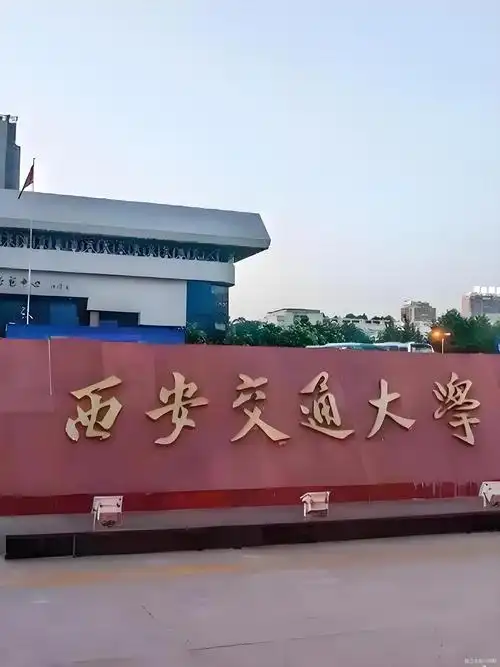
Xi'an Jiaotong University (XJTU), also known as Xi'an Jiaotong University, is located in Xi'an, Shaanxi Province. It is a national key comprehensive research university sponsored by the state, directly under the Ministry of Education of the People's Republic of China, and jointly established with the Shaanxi Provincial People's Government. It is a university directly under the central management, a key construction unit during the Seventh and Eighth Five-Year Plans, one of the first batch of universities under the "211 Project", "985 Project", and "Double First-Class" Category A initiative, one of the first institutions authorized to independently grant degrees, and a member of the C9 League. It has been selected for the national "111 Plan", "Summit Plan", "Strong Foundation Plan", the Excellent Engineer Education and Training Program, the Excellent Doctor Education and Training Program, and is the leading university for the "2011 Plan". The university originated from Nanyang Public School founded in Shanghai in 1896, and after going through stages such as Shanghai Higher Industrial School and the Ministry of Communications Shanghai Industrial Specialized School, it merged with three other specialized schools under the ministry in 1921 to form Jiaotong University. In 1956, the main body of Jiaotong University was relocated to Xi'an; in 1957, it was divided into two parts: Xi'an and Shanghai, under unified leadership; in 1959, the Xi'an part was officially named Xi'an Jiaotong University and was listed as one of the sixteen key universities in the country. In 2000, the State Council of the People's Republic of China decided to merge Xi'an Jiaotong University, Xi'an Medical University, and Shaanxi College of Finance and Economics to form the new Xi'an Jiaotong University. As of May 2025, the university has four campuses: Xingqing, Yanta, Qujiang, and the China Western Science and Technology Innovation Port, covering an area of approximately 5,000 mu. It has 35 colleges (departments, centers), offers 77 undergraduate programs, employs 6,754 faculty and staff, and has 25,595 undergraduate students, 32,565 graduate students, and 3,929 international students. There are 34 postdoctoral research stations. As of September 2025, it has 45 first-level doctoral degree authorization disciplines, 45 first-level master's degree authorization disciplines, 10 professional doctoral degree authorization categories, and 32 professional master's degree authorization categories. In 1894, the Qing army suffered a disastrous defeat in the Sino-Japanese War. Around the time of the war, some insightful individuals proposed learning from the West and Japan and establishing new-style schools to strengthen China. In 1895, Sheng Xuanhuai founded the Beiyang Western School while serving as the Tianjin Customs Daotai. The following year, he left Tianjin to oversee railway affairs in Shanghai. With the approval of Liu Kunyi, the Governor-General of Liangjiang and Minister of Nanyang, he planned to establish another new school, Nanyang Public School, along with an attached Dacheng Hall. In early November of the following year, Sheng Xuanhuai submitted a memorial to the Qing court titled "Request to Establish a School", proposing to model the new school after the Beiyang University he had founded while serving as Tianjin Customs Daotai, and to establish Nanyang Public School in Shanghai. In March 1897, Nanyang Public School established a Normal School, the first formal normal school in modern Chinese history. At the same time, it set up an External School (elementary school) taught by normal students, and the following year opened a Second-Class School (also called Middle School, i.e., secondary school). On April 8, 1897, Nanyang Public School officially opened, becoming the second modern university in China. In 1898, Nanyang Public School established a Translation Institute attached to the school, becoming the earliest private institution in China to engage in translating foreign books and periodicals. In 1899, Nanyang Public School launched a "Special Class", which selected adult scholars who had taken the imperial examinations through exams, focusing on teaching Chinese and Western politics, literature, law, and ethics, to cultivate talents for the economic special examination. On September 6, 1903, the Business School attached to Nanyang Public School officially opened, offering courses in finance, public law, commercial law, constitutional law, business, history, commerce, correspondence, French, business mathematics, and experimental chemistry. On September 29, Sheng Xuanhuai submitted a memorial to the Qing government titled "Request to Establish a Higher Business School", proposing to convert the upper school of Nanyang Public School into a business school, to promote graduates of the middle school to the upper school to study business for quicker results, and to request graduation diplomas for graduates. In October 1903, Nanyang Public School was proposed to be renamed "Nanyang Higher Business School", which was approved by the Qing government the following year, but the name was not actually used, and the school continued to be called Nanyang Public School.

Sources & verification

Verification
Verified
Verified on
2026-09-20
Last updated
2026-11-06
Source notes
Xi'an Jiaotong University — 2026 application guide and funding details for Chinese Government Scholarship High-Level Postgraduate Program (verified by the user)

Confirm requirements, funding and deadlines in the admissions office’s current announcement.