
Local Government Scholarship
Shanghai University of Traditional Chinese Medicine Shanghai Government Scholarship for International Students
Application status unknownPartly verified
In order to implement the Ministry of Education's "Study in China Plan" and the "Shanghai Medium- and Long-Term Education Reform and Development Plan (2010-2020)", to serve Shanghai's need for international talent in accelerating the construction of a globally influential science and technology innovation center, to further promote Shanghai's international cooperation and exchange in education, to advance the development of international student education, and to fund outstanding students from around the world to study and conduct research in Shanghai, Shanghai University of Traditional Chinese Medicine has established the "Shanghai Government Scholarship for International Students" (hereinafter referred to as the "Scholarship") specifically for outstanding international students studying at our university. The following regulations apply to the application targets, methods, procedures, and eligibility criteria for Category A and Category B scholarships for higher education programs in
TuitionAccommodationMedical insurance
- Scholarship type
- Local Government Scholarship
- Degree level
- Bachelor / Master / PhD / Visiting Students
- Location
- Shanghai · Shanghai
- Application deadline
- Date to be confirmed
Overview
In order to implement the Ministry of Education's Study in China Plan and the Shanghai Medium- and Long-Term Education Reform and Development Plan (2010-2020)
to serve Shanghai's need for international talent in accelerating the construction of a globally influential science and technology innovation center
to further promote Shanghai's international cooperation and exchange in education
to advance the development of international student education
and to fund outstanding students from around the world to study and conduct research in Shanghai
Shanghai University of Traditional Chinese Medicine has established the Shanghai Government Scholarship for International Students (hereinafter referred to as the Scholarship) specifically for outstanding international students studying at our university. The following regulations apply to the application targets
Funding coverage
Funding tiers
Eligibility may differ by tier. Check the applicable degree and requirements.
Standard funding
- Eligible degree
- Bachelor’s, Master’s, Doctoral, Visiting students
- Funding
- and Funding Rates [source begins mid-heading] Outstanding international students in undergraduate preparatory, undergraduate, master’s, doctoral and other higher education programs, with rates based on the Shanghai Government Scholarship for International Students Funding Standards: Category A covers tuition (excluding thesis defense fees), basic accommodation during the program (one bed in a double room), comprehensive medical insurance and a monthly living allowance. Category B covers tuition (excluding thesis defense fees) and comprehensive medical insurance. Undergraduate preparatory scholarship students receive the undergraduate Category I-A funding standard. IV. Scholarship Application Procedures (I) Application Route Apply through Study in Shanghai ([http://www.study-shanghai.org/index.asp](http://www.study-shanghai.org/index.asp)), following the website’s procedures. (II) Application Period Applications are generally accepted from February to April each year. (III) Application Materials (submitted materials will not be returned) 1. Certificate of highest educational qualification and academic transcripts; current students must also submit a certificate of expected graduation issued by their institution; 2. A study or research plan for study in China (including a personal statement; written in Chinese for Chinese-taught majors and English for English-taught majors; at least 1,000 Chinese characters or English words); 3. Recommendation letters; 4. HSK results (optional for applicants of Chinese descent). V. Review and Selection (I) Shanghai University of Traditional Chinese Medicine’s Shanghai Government Scholarship for International Students working group is responsible for... [source ends here]
- Tier requirements
- and other provisions are as follows: [source begins mid-sentence] I. Recipients and duration (1) Outstanding undergraduates: 4-5 academic years (medical majors such as Chinese Medicine and Acupuncture and Tuina: 5 years; non-medical majors such as Chinese Materia Medica and Rehabilitation Therapy: 4 years); (2) Outstanding master’s students: 3 academic years; (3) Outstanding doctoral students: 3 academic years; (4) Outstanding undergraduate preparatory students: 1 academic year.
Requirements & documents
Application dates & process
Review Cycle: Joint review by the China Scholarship Council and host university takes approximately 6–8 weeks
Universities & programs
Universities
About the university
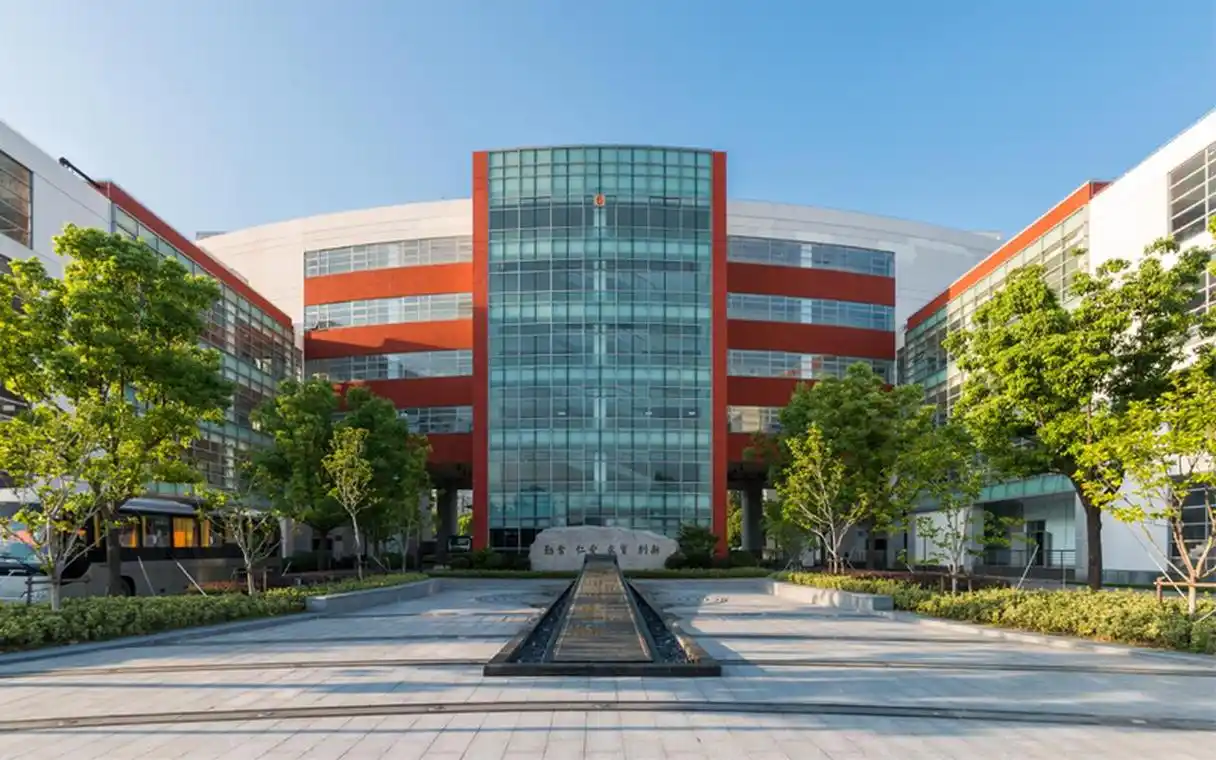
Shanghai University of Traditional Chinese Medicine (SHUTCM), abbreviated as "Shangzhongyi" (SHUTCM), is one of the first four traditional Chinese medicine (TCM) higher education institutions established after the founding of the People's Republic of China. It is a university jointly built by the Ministry of Education, the National Administration of Traditional Chinese Medicine, and the Shanghai Municipal People's Government. It is a "Double First-Class" discipline construction university, a key high-level university in Shanghai, and has been selected for the Excellent Doctor (TCM) Education and Training Plan reform pilot program, the "111 Plan," the National Basic Science Research and Teaching Talent Training Base, the National High-Level University Public-Sponsored Graduate Program, the "Characteristic Key Discipline Project" construction university, the Chinese Government Scholarship institution, the Ministry of Education's "Talent Training Model Innovation Experimental Zone" construction university, and the National New Engineering Research and Practice Project. It is a member of the World-Class TCM University Construction Alliance and the Yangtze River Delta TCM Higher Education Alliance. Shanghai University of Traditional Chinese Medicine was established on September 1, 1956, initially named "Shanghai College of Traditional Chinese Medicine." In 1958, it officially moved to the Lingling Road campus in Xuhui District. In 1981, it became one of the first universities in China authorized to confer doctoral and master's degrees. In 1984, the Shanghai Research Institute of Traditional Chinese Medicine was established and co-located with the university. In December 1993, the university was renamed "Shanghai University of Traditional Chinese Medicine." In 2000, the former Shanghai Medical College was merged into the university. In 2003, the university relocated entirely to Zhangjiang Hi-Tech Park in Pudong New Area. In September 2017, it was selected as one of the first batch of national "Double First-Class" discipline construction universities. As of June 2025, the university covers an area of over 500 mu (approximately 33.3 hectares); it has 15 teaching units, 9 affiliated hospitals, 16 undergraduate programs, 3 first-level doctoral degree authorization points and 1 professional doctoral degree category (field), 6 first-level master's degree authorization points, 3 second-level master's degree authorization points and 7 professional master's degree categories (fields), and 3 postdoctoral research stations. It has 9,072 full-time students and over 1,300 faculty and staff. In January 1956, the Ministry of Health proposed in the "Key Points of the National Health Work Plan for 1956-1957" to establish four TCM colleges starting from 1956. In March, the Ministry of Health and the Ministry of Education jointly formulated the establishment plan and teaching plan for the four TCM colleges. On May 2, the preparatory group for the establishment of Shanghai College of Traditional Chinese Medicine was formed at the Shanghai Eleventh People's Hospital. On May 21, part of the Riverside Building on North Suzhou Road was leased as a temporary campus, and the preparatory group moved in for office work. On August 6, the State Council approved the establishment of four TCM colleges in Beijing, Shanghai, Guangzhou, and Chengdu. On September 1, 1956, Shanghai College of Traditional Chinese Medicine was officially inaugurated, and the first opening ceremony was held at the Guohua Building on Henan Road. Shanghai Vice Mayor Jin Zhonghua attended and announced the decision of the Municipal People's Committee, appointing Cheng Menxue as the first president, under the management of the Municipal Health Bureau. On July 12, 1957, the Shanghai Municipal People's Committee decided that the administrative leadership of the school would be under the Municipal Higher Education Bureau, while the allocation of TCM and Western medicine faculty and guidance on TCM teaching would remain under the Municipal Health Bureau. On February 5, 1958, the Ministry of Health clarified that Shanghai College of Traditional Chinese Medicine would be under the leadership of Shanghai. From February of the same year, the school's administrative leadership was transferred to the Municipal Higher Education Bureau, while teaching affairs were guided by the Municipal Health Bureau. In March, the school officially moved to the Lingling Road campus in Xuhui District. In April 1960, the Shanghai Eleventh People's Hospital merged with the adjacent Tenth People's Hospital and became the Shuguang Hospital affiliated with Shanghai College of Traditional Chinese Medicine. In July, the Longhua Hospital affiliated with Shanghai College of Traditional Chinese Medicine was completed.
Sources & verification
- Verification
- Partly verified
- Verified on
- 2026-05-10
- Last updated
- 2026-09-24
- Source link
- www.campuschina.org ↗
- Source notes
- Official CampusChina guide (program code: 111006)
Confirm requirements, funding and deadlines in the admissions office’s current announcement.