
Ministry of Education–Guangxi Zhuang Autonomous Region Joint Scholarship for ASEAN Students

Government/University Scholarship

Ministry of Education–Guangxi Zhuang Autonomous Region Joint Scholarship for ASEAN Students

Application status unknownVerified

Ministry of Education–Guangxi Zhuang Autonomous Region Joint Scholarship for ASEAN Students. Levels: undergraduate, master’s and doctoral.

Funding details pending.
Scholarship type
Government/University Scholarship
Degree level
Bachelor / Master / PhD
Location
Guangxi · Nanning
Application deadline
Date to be confirmed

Overview

Ministry of Education–Guangxi Zhuang Autonomous Region Joint Scholarship for ASEAN Students. Levels: undergraduate

master’s and doctoral.

Funding coverage

Scholarship TypeGovernment/University Scholarship
UniversityGuangxi University of Chinese Medicine
ProvinceGuangxi
TuitionNot specified
AccommodationNot specified
Medical InsuranceNot specified
Subsidy StandardNot specified on the official website
Other BenefitsChinese Government Scholarship recipients may not concurrently receive other scholarships from Chinese governments at any level or the admitting institution, excluding one-time awards.
Coverage ScopeNot specified on the official website
Application Linkhttps://www.gxtcmu.edu.cn/fie/zsjz/gxzyydx2023nlxszsjz/content_85732

Funding tiers

Eligibility may differ by tier. Check the applicable degree and requirements.

Standard funding

Eligible degree
Bachelor’s, Master’s, Doctoral
Funding
Not specified on the official website
Tier requirements
ASEAN students. Undergraduate: high school graduation/equivalent qualification, excellent grades, generally no older than 25; master’s: bachelor’s/equivalent, excellent grades, generally no older than 35; doctoral: master’s/equivalent, excellent grades, generally no older than 40. Also meet university academic, language and other requirements.

Requirements & documents

Application RequirementsASEAN students. Undergraduate: high school graduation/equivalent qualification, excellent grades, generally no older than 25; master’s: bachelor’s/equivalent, excellent grades, generally no older than 35; doctoral: master’s/equivalent, excellent grades, generally no older than 40. Also meet university academic, language and other requirements.
Major RestrictionsPrimarily science, engineering, agriculture, medicine and artificial intelligence; no language or literature majors
GPASubject to excellent academic performance and the host institution’s requirements
Language RequirementsFrom 2026–2027, bachelor’s applicants to China must take CSCA before application and upload valid results to the information system; results are required for each university’s admission review. Chinese-taught master’s/doctoral applicants should in principle reach HSK4, 180 or above; remedial Chinese may be arranged as appropriate for those below their major’s requirement, normally at the institution of major study. Under Chinese Government Scholarship rules, this program may not admit English-taught undergraduates. English-taught master’s/doctoral applicants must meet the university major’s training-related English requirements.
Teaching LanguagePrograms taught entirely in English are exempt from HSK; IELTS / TOEFL or proof of English-medium instruction is required
Required MaterialsPassport information page; notarized certificate of highest educational qualification (current students must submit a certificate of expected graduation or enrollment issued by their institution); academic transcripts from the undergraduate level onward, with scans covering undergraduate, master’s (if any) and doctoral (if any) studies through the most recent semester, issued and stamped by the institution’s academic affairs office, graduate school or relevant student administration department. Chinese or English transcripts may be provided; for languages other than English, an additional notarized English translation is required [the source also permits Chinese transcripts]; proof of language proficiency (applicants to Chinese-taught majors must provide a valid HSK score report); study plan for study in China, written only in Chinese or English, with at least 1,000 Chinese characters or English words and, for doctoral applicants, signed by the Chinese supervisor; recommendation letters from two professors or associate professors, written only in Chinese or English, focusing on the applicant’s objectives and requirements for study in China, cooperation between the Chinese institution or supervisor and overseas supervisors or inter-university exchanges, and an assessment of the student’s overall ability and future development; a copy of the Foreigner Physical Examination Form; certificate of no criminal record.
Sourcehttps://lh65breby7.feishu.cn/wiki/TAxpwuS1TiFoeZklj20caqHnnte?sheet=1dnfky&range=A108
Source NotesGuangxi University of Chinese Medicine 2026 Application Guide and Funding Rules for the Ministry of Education–Guangxi Zhuang Autonomous Region Joint Scholarship for ASEAN Students (user-verified)
Noteshttps://www.gxtcmu.edu.cn/fie/zsjz/gxzyydx2023nlxszsjz/content_85732 2026
University groupingFirst group of additional universities for the Vietnamese market
Application materialsPassport information page; notarized certificate of highest educational qualification (current students must submit a certificate of expected graduation or enrollment issued by their institution); academic transcripts from the undergraduate level onward, with scans covering undergraduate, master’s (if any) and doctoral (if any) studies through the most recent semester, issued and stamped by the institution’s academic affairs office, graduate school or relevant student administration department. Chinese or English transcripts may be provided; for languages other than English, an additional notarized English translation is required [the source also permits Chinese transcripts]; proof of language proficiency (applicants to Chinese-taught majors must provide a valid HSK score report); study plan for study in China, written only in Chinese or English, with at least 1,000 Chinese characters or English words and, for doctoral applicants, signed by the Chinese supervisor; recommendation letters from two professors or associate professors, written only in Chinese or English, focusing on the applicant’s objectives and requirements for study in China, cooperation between the Chinese institution or supervisor and overseas supervisors or inter-university exchanges, and an assessment of the student’s overall ability and future development; a copy of the Foreigner Physical Examination Form; certificate of no criminal record.
Application requirementsASEAN students. Undergraduate: high school graduation/equivalent qualification, excellent grades, generally no older than 25; master’s: bachelor’s/equivalent, excellent grades, generally no older than 35; doctoral: master’s/equivalent, excellent grades, generally no older than 40. Also meet university academic, language and other requirements.
CoverageNot specified on the official website
Language requirementsFrom 2026–2027, bachelor’s applicants to China must take CSCA before application and upload valid results to the information system; results are required for each university’s admission review. Chinese-taught master’s/doctoral applicants should in principle reach HSK4, 180 or above; remedial Chinese may be arranged as appropriate for those below their major’s requirement, normally at the institution of major study. Under Chinese Government Scholarship rules, this program may not admit English-taught undergraduates. English-taught master’s/doctoral applicants must meet the university major’s training-related English requirements.
Eligible majorsPrimarily science, engineering, agriculture, medicine and artificial intelligence; no language or literature majors
Scholarship typeChinese Government Scholarship
University name in Chinese*Guangxi University of Chinese Medicine
Application opening dateNot specified on the official website
Application deadlineNot specified on the official website
Scholarship name in Chinese*Ministry of Education–Guangxi Zhuang Autonomous Region Joint Scholarship for ASEAN Students
Eligible study levels*Bachelor’s, Master’s, Doctoral
Scholarship verification status*Verified (confirmed by user)
Whether a separate application is requiredYes
Rules on holding other scholarships concurrentlyChinese Government Scholarship recipients may not concurrently receive other scholarships from Chinese governments at any level or the admitting institution, excluding one-time awards.
Application Rule 1name: Whether a separate application is required; description: Yes
Application Rule 2name: Rules on holding other scholarships concurrently; description: Chinese Government Scholarship recipients may not concurrently receive other scholarships from Chinese governments at any level or the admitting institution, excluding one-time awards.

Application dates & process

Review Cycle: Document review and interviews / expert review take approximately 4–6 weeks

Universities & programs

Universities

About the university

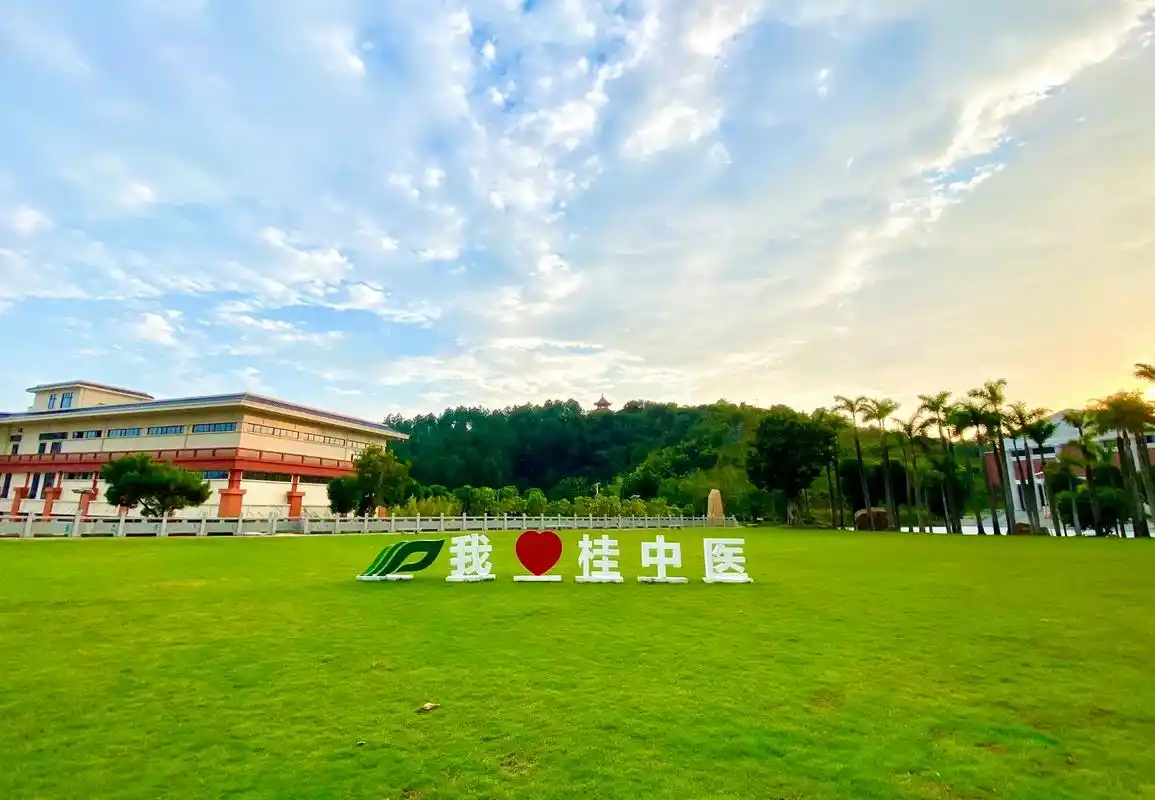
Guangxi University of Chinese Medicine, located in Nanning, the capital of Guangxi Zhuang Autonomous Region, is jointly established by the People's Government of Guangxi Zhuang Autonomous Region and the National Administration of Traditional Chinese Medicine. It has been selected into the National 'Double Ten Thousand Plan', the Basic Capacity Building Project for Universities in Central and Western China, the Excellent Doctor (Traditional Chinese Medicine) Education and Training Plan, the Guangxi 2011 Plan, and the Guangxi First-Class Discipline Construction University. It is a member of the World Manipulative Medicine Alliance, the China-Russia Traditional Chinese Medicine Innovation and Development Alliance, the Western China Traditional Chinese Medicine University Alliance, and the Beibu Gulf Marine Big Health Industry Innovation and Development Alliance. The university focuses on traditional Chinese medicine (TCM) while developing multiple disciplines including medicine, science, engineering, and management. Guangxi University of Chinese Medicine originated from the Guangxi Provincial Nanning District Medical Research Institute established in 1934. In 1941, the three provincial medical research institutes in Nanning, Wuzhou, and Guilin merged into the Guangxi Provincial Medical Research Institute. The school was suspended in December 1949 and resumed in 1956 with the establishment of Nanning Chinese Medicine School. In 1957, Wuzhou Chinese Medicine School merged into it to form Guangxi Chinese Medicine School, which was renamed Guangxi Chinese Medicine College in 1958, upgraded to Guangxi College of Traditional Chinese Medicine in 1964, and merged with Nanning Medical College in 1970 to form a new Guangxi College of Traditional Chinese Medicine. In March 2012, it was officially renamed Guangxi University of Chinese Medicine with approval from the Ministry of Education. In December 2015, it became a university jointly established by the National Administration of Traditional Chinese Medicine and the Guangxi Zhuang Autonomous Region. In June 2022, the Guangxi Administration of Traditional Chinese Medicine designated it as the 'Guangxi Traditional Chinese Medicine Cultural Publicity and Education Base'. On November 29 of the same year, it was awarded the honorary title of 'Advanced Unit for Health in Guangxi Zhuang Autonomous Region'. As of December 2024, the university has two campuses, Xianhu and Mingxiu, covering a total area of over 1,300 mu. It has 17 secondary colleges, 28 undergraduate programs, 1 first-level doctoral degree authorization discipline, 6 first-level master's degree authorization disciplines, 1 doctoral professional degree category, 5 master's professional degree categories, and 43 second-level master's degree authorization disciplines. There are 816 full-time teachers. In March 1934, the Guangxi Provincial Nanning District Medical Research Institute was established, with Liu Huining, a director of the Central National Medical Museum, appointed as its director. In October of the same year, the Guangxi Provincial Wuzhou District Medical Research Institute was established, with Liao Shouluan, a second-term director of the Central National Medical Museum, appointed as its director. In the autumn of 1941, the provincial government merged the medical research institutes of Nanning, Wuzhou, and Guilin into the Guangxi Provincial Medical Research Institute, with Wei Laixiang as its director. Although these institutions were named 'medical research institutes', they were actually vocational schools for Chinese medicine. Research shows that the Guangxi Provincial Nanning District Medical Research Institute was the earliest public Chinese medicine school in modern China. In 1942, the Guangxi Provincial Hospital of Chinese Medicine and a medicinal plant garden were established as internship bases for students. In 1945, the Guangxi Provincial Nanning Senior Vocational School of Chinese Medicine was established. In September 1945, the Guangxi Provincial Medical Research Institute was reorganized into the Guangxi Provincial Nanning Senior Vocational School of Chinese Medicine, with former director Wei Laixiang appointed as principal and concurrently director of the affiliated Chinese medicine hospital. It was the only public Chinese medicine school in the country at that time, marking a significant advancement in modern Chinese medicine education in Guangxi. In 1956, the school resumed operations, with Nanning Chinese Medicine School and Wuzhou Chinese Medicine School established successively. In February of the following year, the two schools merged to form Guangxi Chinese Medicine School.

Sources & verification

Verification
Verified
Verified on
2026-09-20
Last updated
2026-11-06
Source notes
Guangxi University of Chinese Medicine 2026 Application Guide and Funding Rules for the Ministry of Education–Guangxi Zhuang Autonomous Region Joint Scholarship for ASEAN Students (user-verified)

Confirm requirements, funding and deadlines in the admissions office’s current announcement.