
Chinese Government Scholarship Chinese University Independent Enrollment Program (Type B)

Government/University Scholarship

Chinese Government Scholarship Chinese University Independent Enrollment Program (Type B)

Application status unknownVerified

Chinese Government Scholarship — Chinese University Independent Enrollment Program (Category B). Levels: undergraduate, master's and doctoral. Coverage: tuition waived; free dormitory accommodation provided by the university; comprehensive medical insurance premium waived; living allowance of CNY 2,500/month for undergraduate students, CNY 3,000/month for master's students and CNY 3,500/month for doctoral students.

TuitionAccommodationMedical insurance
Scholarship type
Government/University Scholarship
Degree level
Bachelor / Master / PhD
Location
Hainan · Haikou
Application deadline
Date to be confirmed

Overview

Chinese Government Scholarship — Chinese University Independent Enrollment Program (Category B). Levels: undergraduate

master's and doctoral. Coverage: tuition waived

free dormitory accommodation provided by the university

comprehensive medical insurance premium waived

living allowance of CNY 2

500/month for undergraduate students

Funding coverage

Scholarship TypeGovernment/University Scholarship
UniversityHainan University
ProvinceHainan
TuitionCovered
AccommodationCovered
Medical InsuranceCovered
Subsidy StandardTuition: waived. Accommodation: the university provides a free dormitory. Comprehensive medical insurance premium: waived. Living allowance: CNY 2,500/month for undergraduate students; CNY 3,000/month for master's students; CNY 3,500/month for doctoral students.
Other BenefitsNot specified on the official website
Coverage ScopeTuition: waived. Accommodation: the university provides a free dormitory. Comprehensive medical insurance premium: waived. Living allowance: CNY 2,500/month for undergraduate students; CNY 3,000/month for master's students; CNY 3,500/month for doctoral students.
Application Linkhttps://sie.hainanu.edu.cn/info/1559/6364.htm

Funding tiers

Eligibility may differ by tier. Check the applicable degree and requirements.

Standard funding

Eligible degree
Bachelor’s, Master’s, Doctoral
Funding
Tuition: waived. Accommodation: the university provides a free dormitory. Comprehensive medical insurance premium: waived. Living allowance: CNY 2,500/month for undergraduate students; CNY 3,000/month for master's students; CNY 3,500/month for doctoral students.
Tier requirements
1. Non-Chinese citizens holding a valid foreign passport, in good physical and mental health, with excellent character and grades, friendly toward China, compliant with Chinese laws and Hainan University rules, respectful of Chinese culture and customs, and meeting Chinese entry/exit conditions. 2. Educational and age requirements: Bachelor’s: high school diploma, no older than 25; Master’s: bachelor’s degree, no older than 35; Doctoral: master’s degree, no older than 40.

Requirements & documents

Application Requirements1. Non-Chinese citizens holding a valid foreign passport, in good physical and mental health, with excellent character and grades, friendly toward China, compliant with Chinese laws and Hainan University rules, respectful of Chinese culture and customs, and meeting Chinese entry/exit conditions. 2. Educational and age requirements: Bachelor’s: high school diploma, no older than 25; Master’s: bachelor’s degree, no older than 35; Doctoral: master’s degree, no older than 40.
Major RestrictionsNot specified on the official website
GPASubject to excellent academic performance and the host institution’s requirements
Language RequirementsChinese-taught programs: HSK Level 4, at least 180; English-taught programs: IELTS 6.0 or above (no component below 6.0), or TOEFL at least 560/new TOEFL iBT at least 78. Students from countries where English is a native or official language may omit an English certificate.
Teaching LanguagePrograms taught entirely in English are exempt from HSK; IELTS / TOEFL or proof of English-medium instruction is required
Required Materials1. Chinese Government Scholarship Application Form and Hainan University Application Form for Study in China (completed in Chinese or English). Complete the Chinese Government Scholarship Application Form in the Chinese Government Scholarship Information System for Study in China; Complete the Hainan University Application Form for Study in China on Hainan University’s international student application platform. 2. Information page of a valid passport. If the current passport does not meet the requirement (validity must extend beyond September 2027), renew it promptly. 3. Notarized certificate of highest educational qualification. Current students must submit a certificate of expected graduation or enrollment issued by their institution. 4. Academic transcripts. Scans must cover undergraduate, master’s (if any) and doctoral (if any) studies through the most recent semester, and must be issued and stamped by the institution’s academic affairs office, graduate school or relevant student administration department. Chinese or English transcripts may be provided; for languages other than English, an additional notarized English translation is required [the source also permits Chinese transcripts]. 5. Proof of language proficiency. Applicants to Chinese-taught majors must provide a valid HSK score report meeting the corresponding Chinese proficiency requirement. Applicants to majors taught in a foreign language must provide the corresponding proof as required, such as IELTS or TOEFL results. 6. Pre-admission documents. (1) Pre-admission documents issued by the intended Chinese institution, such as a formal admission notice, pre-admission notice, or supervisor’s invitation letter recognized by the Chinese university’s international student admissions department. Pre-admission notices and formal invitations must be printed on the Chinese institution’s letterhead, issued by the department responsible for international student admission at the Chinese university, and bear its official seal. (2) The admission notice or invitation letter must include the following information (in Chinese or English): a. Basic applicant information: name, nationality, date of birth, name of the institution for the previous qualification, and other relevant details; b. Status for study in China: master’s student or doctoral student; c. Expected period in China: specify the starting and ending year and month; enrollment must be no earlier than September 2026; d. Information on the applicant’s supervisor at the Chinese university (if any); e. Description of the applicant’s study or research in China; f. Language of instruction (Chinese or a foreign language); g. A supervisor’s invitation letter must include the signature and contact details of the head of the international student admissions department and bear the official seal; 7. Study plan for study in China. Submit a plan of at least 1,000 Chinese characters or English words, written only in Chinese or English. Doctoral applicants’ plans must be signed by the Chinese supervisor. 8. Recommendation letters from two professors or associate professors, written only in Chinese or English, focusing on the applicant’s objectives and requirements for study in China, cooperation between the Chinese institution or supervisor and overseas supervisors or inter-university exchanges, and an assessment of the student’s overall ability and future development. 9. A copy of the Foreigner Physical Examination Form (retain the original; this standard form is issued by China’s health and quarantine authorities and must be completed in English). Applicants must undergo all examinations required by the form. Forms with missing examination items, without the applicant’s photograph or a seal across the photograph, or without the signatures and seals of the physician and hospital are invalid. Results are valid for six months. 10. Certificate of no criminal record. Applicants must submit a valid certificate issued by the local public security authorities, generally issued within the six months preceding application submission. 11. Foreign nationals working in China who apply to study at our university must provide a valid visa or residence document and work permit. 12. Curriculum vitae. Attach any papers, books, creative works or similar work previously published or written. 13. Applicants who held foreign nationality at birth but have one or both parents who are Chinese citizens, or who were formerly Chinese citizens and have held foreign nationality for at least four years, must provide proof of residence outside China for the most recent four years and passport pages bearing stamps for entry to and exit from China.
Sourcehttps://lh65breby7.feishu.cn/wiki/TAxpwuS1TiFoeZklj20caqHnnte?sheet=1dnfky&range=A132
Source NotesHainan University — 2026 application guide and funding details for Chinese Government Scholarship Chinese University Independent Enrollment Program (Type B) (verified by the user)
Noteshttps://sie.hainanu.edu.cn/info/1559/6364.htm 2026
University groupingFirst group of additional universities for the Vietnamese market
Application materials1. Chinese Government Scholarship Application Form and Hainan University Application Form for Study in China (completed in Chinese or English). Complete the Chinese Government Scholarship Application Form in the Chinese Government Scholarship Information System for Study in China; Complete the Hainan University Application Form for Study in China on Hainan University’s international student application platform. 2. Information page of a valid passport. If the current passport does not meet the requirement (validity must extend beyond September 2027), renew it promptly. 3. Notarized certificate of highest educational qualification. Current students must submit a certificate of expected graduation or enrollment issued by their institution. 4. Academic transcripts. Scans must cover undergraduate, master’s (if any) and doctoral (if any) studies through the most recent semester, and must be issued and stamped by the institution’s academic affairs office, graduate school or relevant student administration department. Chinese or English transcripts may be provided; for languages other than English, an additional notarized English translation is required [the source also permits Chinese transcripts]. 5. Proof of language proficiency. Applicants to Chinese-taught majors must provide a valid HSK score report meeting the corresponding Chinese proficiency requirement. Applicants to majors taught in a foreign language must provide the corresponding proof as required, such as IELTS or TOEFL results. 6. Pre-admission documents. (1) Pre-admission documents issued by the intended Chinese institution, such as a formal admission notice, pre-admission notice, or supervisor’s invitation letter recognized by the Chinese university’s international student admissions department. Pre-admission notices and formal invitations must be printed on the Chinese institution’s letterhead, issued by the department responsible for international student admission at the Chinese university, and bear its official seal. (2) The admission notice or invitation letter must include the following information (in Chinese or English): a. Basic applicant information: name, nationality, date of birth, name of the institution for the previous qualification, and other relevant details; b. Status for study in China: master’s student or doctoral student; c. Expected period in China: specify the starting and ending year and month; enrollment must be no earlier than September 2026; d. Information on the applicant’s supervisor at the Chinese university (if any); e. Description of the applicant’s study or research in China; f. Language of instruction (Chinese or a foreign language); g. A supervisor’s invitation letter must include the signature and contact details of the head of the international student admissions department and bear the official seal; 7. Study plan for study in China. Submit a plan of at least 1,000 Chinese characters or English words, written only in Chinese or English. Doctoral applicants’ plans must be signed by the Chinese supervisor. 8. Recommendation letters from two professors or associate professors, written only in Chinese or English, focusing on the applicant’s objectives and requirements for study in China, cooperation between the Chinese institution or supervisor and overseas supervisors or inter-university exchanges, and an assessment of the student’s overall ability and future development. 9. A copy of the Foreigner Physical Examination Form (retain the original; this standard form is issued by China’s health and quarantine authorities and must be completed in English). Applicants must undergo all examinations required by the form. Forms with missing examination items, without the applicant’s photograph or a seal across the photograph, or without the signatures and seals of the physician and hospital are invalid. Results are valid for six months. 10. Certificate of no criminal record. Applicants must submit a valid certificate issued by the local public security authorities, generally issued within the six months preceding application submission. 11. Foreign nationals working in China who apply to study at our university must provide a valid visa or residence document and work permit. 12. Curriculum vitae. Attach any papers, books, creative works or similar work previously published or written. 13. Applicants who held foreign nationality at birth but have one or both parents who are Chinese citizens, or who were formerly Chinese citizens and have held foreign nationality for at least four years, must provide proof of residence outside China for the most recent four years and passport pages bearing stamps for entry to and exit from China.
Application requirements1. Non-Chinese citizens holding a valid foreign passport, in good physical and mental health, with excellent character and grades, friendly toward China, compliant with Chinese laws and Hainan University rules, respectful of Chinese culture and customs, and meeting Chinese entry/exit conditions. 2. Educational and age requirements: Bachelor’s: high school diploma, no older than 25; Master’s: bachelor’s degree, no older than 35; Doctoral: master’s degree, no older than 40.
CoverageTuition: waived. Accommodation: the university provides a free dormitory. Comprehensive medical insurance premium: waived. Living allowance: CNY 2,500/month for undergraduate students; CNY 3,000/month for master's students; CNY 3,500/month for doctoral students.
Language requirementsChinese-taught programs: HSK Level 4, at least 180; English-taught programs: IELTS 6.0 or above (no component below 6.0), or TOEFL at least 560/new TOEFL iBT at least 78. Students from countries where English is a native or official language may omit an English certificate.
Eligible majorsNot specified on the official website
Scholarship typeChinese Government Scholarship
University name in Chinese*Hainan University
Application opening dateNot specified on the official website
Application deadlineNot specified on the official website
Scholarship name in Chinese*Chinese Government Scholarship Chinese University Independent Enrollment Program (Type B)
Eligible study levels*Bachelor’s, Master’s, Doctoral
Scholarship verification status*Verified (confirmed by user)
Whether a separate application is requiredYes
Rules on holding other scholarships concurrentlyNot specified on the official website
Application Rule 1name: Coverage; description: Tuition: waived. Accommodation: the university provides a free dormitory. Comprehensive medical insurance premium: waived. Living allowance: CNY 2,500/month for undergraduate students; CNY 3,000/month for master's students; CNY 3,500/month for doctoral students.
Application Rule 2name: Whether a separate application is required; description: Yes

Application dates & process

Review Cycle: Document review and interviews / expert review take approximately 4–6 weeks

Universities & programs

Universities

About the university

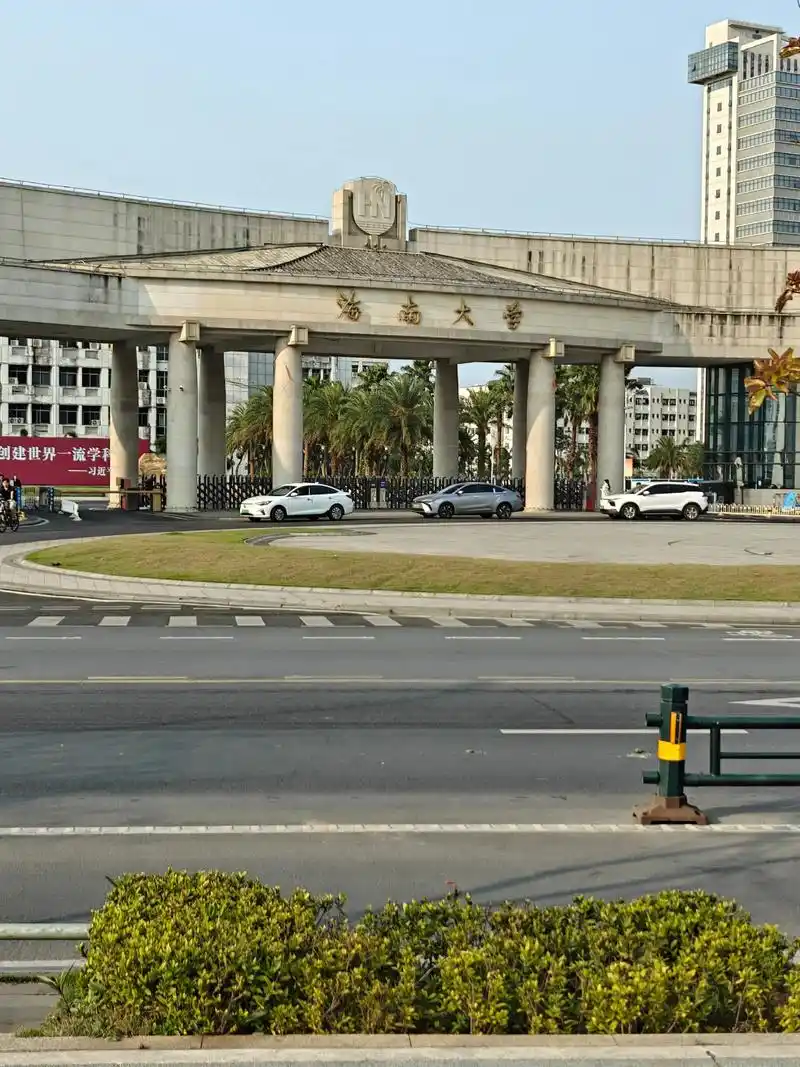
Hainan University, located in Haikou City, Hainan Province, is a co-constructed university by the Hainan Provincial People's Government, the Ministry of Education, and the Ministry of Finance. It is a key university under the national "211 Project" and a world-class discipline construction university. It has been selected for the Discipline Innovation and Talent Introduction Plan for Higher Education Institutions and serves as a Chinese Language Education Base of the State Council. It is a member of the "One Province, One University" National Key Construction University (Z14) Alliance for Central and Western China and the CDIO Engineering Education Alliance. The university's predecessors were the South China Tropical Agricultural University, founded in 1958, and the original Hainan University, established in 1983 with the approval of the State Council and the Ministry of Education, based on the former Hainan Normal College, Hainan Medical College, and Hainan Agricultural College (Hainan Agricultural College). In August 2007, the two institutions merged to form the new Hainan University. The university is a national "Double First-Class" construction university and a co-constructed university by the Ministry of Education and Hainan Province. As of September 2025, it has campuses in Haidian, Danzhou, Mission Hills (including Chengxi teaching point), and Yazhou, covering an area of 6,011 mu (about 990 acres) with a building area of 1.73 million square meters. It has 31 secondary colleges, 16 residential colleges, and 83 undergraduate programs. It also has 10 postdoctoral research stations, 16 first-level doctoral programs, 2 professional doctoral programs, 37 first-level master's programs, and 28 professional master's programs. The university has 3,809 faculty and staff, including 3,053 full-time teachers, and 46,685 full-time students, comprising 34,243 undergraduates, 9,888 master's students, and 2,554 doctoral students. In May 1958, the Hainan Branch of South China Agricultural College was established, with 70 teachers transferred from South China Agricultural College, offering two agricultural classes and enrolling 100 junior college students. The school was founded under the personal care of Premier Zhou Enlai, with central approval, to break the imperialist blockade of natural rubber in the early days of the People's Republic of China. It was a specialized institution focusing on tropical crops such as rubber, operating under the same leadership as the South China Tropical Crops Research Institute. On September 18 of the same year, the school officially opened. On July 8, 1959, the Hainan Branch of South China Agricultural College was officially renamed South China Tropical Crops College. At that time, it was directly under the leadership of the Ministry of Agriculture and Reclamation, with six departments: Rubber, Tropical Crop Cultivation, Plant Protection, Tropical Agriculture and Animal Husbandry, Tropical Product Processing, and Mechanization and Electrification. The campus was located in Baodao Yucun Village, Dan County. In the early days, the "Two Institutes" (the college and the research institute) broke through the internationally recognized "rubber planting exclusion zone" north of 15°N, creating a miracle of large-scale rubber planting in the 18-24°N region, making China the only country in the world to successfully plant rubber on a large scale at the northernmost latitudes. On February 9, 1960, Premier Zhou Enlai inspected the "Two Institutes," encouraging teachers and students to work hard and serve the country, and inscribed the words "Establishing a career in Danzhou, taking root in Baodao." In April 1969, the school was taken over by the Production and Construction Corps of the Guangzhou Military Region, renamed the "Tropical Crops School of the Production and Construction Corps of the Guangzhou Military Region," and held short-term training courses, with scientific and educational personnel sent to state farms for labor. On October 10, 1996, the State Education Commission approved the renaming of South China Tropical Crops College to South China Tropical Agricultural University; on October 18 of the same year, the university held a renaming and plaque-unveiling ceremony. Key historical visits include: on February 3, 1983, then-General Secretary of the CPC Central Committee Hu Yaobang visited the botanical garden; on April 2, 1996, then-Politburo Standing Committee member Hu Jintao visited the university history museum; and in the early days, teachers and students built school buildings with local materials, including thatched classrooms completed in 1958.

Sources & verification

Verification
Verified
Verified on
2026-09-20
Last updated
2026-11-06
Source notes
Hainan University — 2026 application guide and funding details for Chinese Government Scholarship Chinese University Independent Enrollment Program (Type B) (verified by the user)

Confirm requirements, funding and deadlines in the admissions office’s current announcement.