
Government/University Scholarship
Chinese Government Scholarship Country-Specific Bilateral Program
Application status unknownVerified
Chinese Government Scholarship Bilateral Program. Eligible study levels: Bachelor’s, Master’s and Doctoral.
Funding details pending.
- Scholarship type
- Government/University Scholarship
- Degree level
- Bachelor / Master / PhD
- Location
- Zhejiang · Jinhua
- Application deadline
- Date to be confirmed
Overview
Chinese Government Scholarship Bilateral Program. Eligible study levels: Bachelor’s
Master’s and Doctoral.
Funding coverage
Funding tiers
Eligibility may differ by tier. Check the applicable degree and requirements.
Standard funding
- Eligible degree
- Bachelor’s, Master’s, Doctoral
- Funding
- Not specified on the official website
- Tier requirements
- Not specified on the official website
Requirements & documents
Application dates & process
Review Cycle: Document review and interviews / expert review take approximately 4–6 weeks
Universities & programs
Universities
About the university
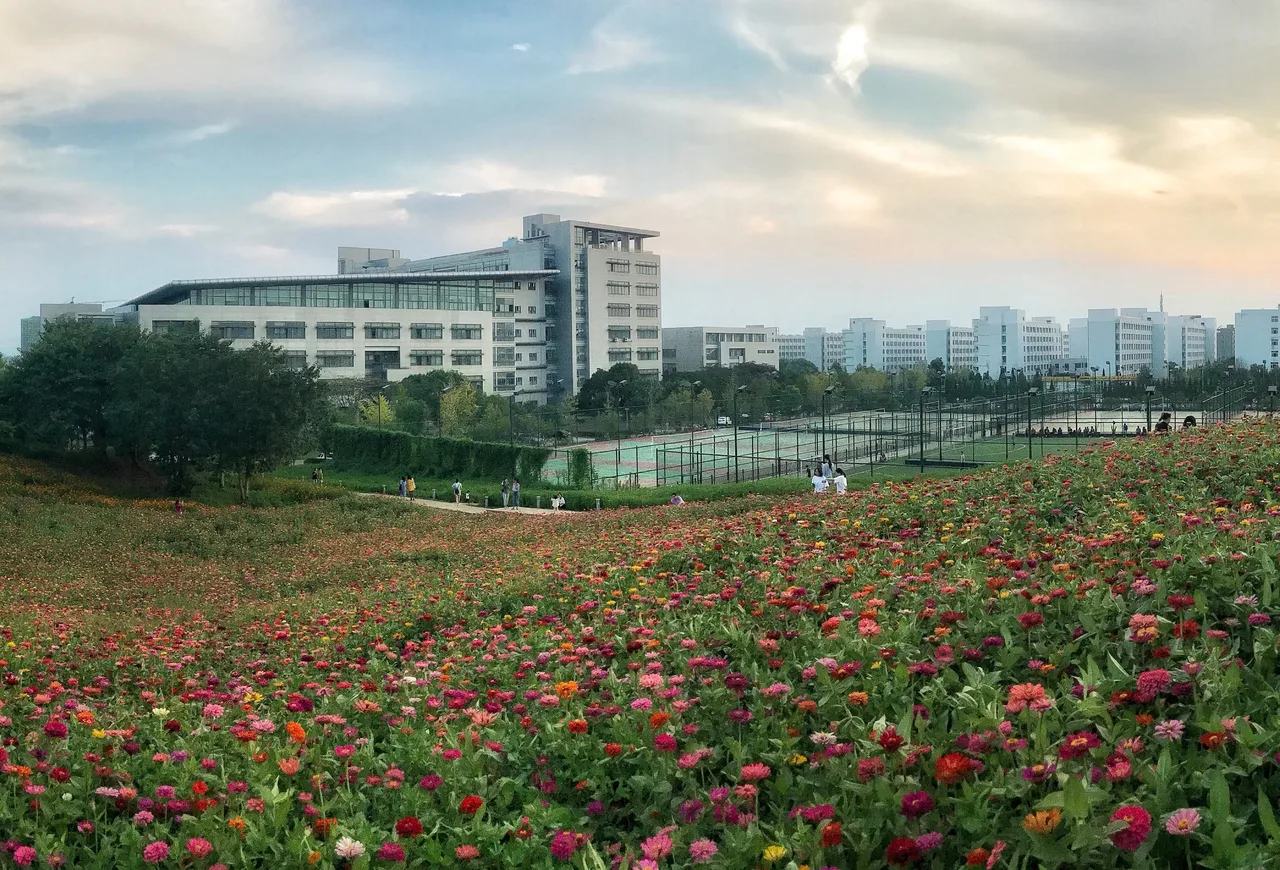
Zhejiang Normal University (ZJNU), also known as Zhejiang Normal University, is a provincial public university located in Jinhua City, Zhejiang Province. It is sponsored by the People's Government of Zhejiang Province and is characterized by teacher education. The university serves as an "Education Aid Base for Foreign Countries," a "China-South Africa Humanities Exchange Research Center," a "Practice and Research Base for Chinese Language Education in Africa," an executing unit of the "China-Africa Universities 20+20 Cooperation Plan," a "China-ASEAN Education and Training Center," a "China Basic Education Aid Research and Training Base for Foreign Countries," a "Research Institute of the China-Africa University Alliance Exchange Mechanism," one of the "Top Ten International Cooperation Units in Zhejiang Province," one of the first batch of "International Characteristic Universities in Zhejiang Province," a first-batch provincial-level international humanities exchange base, and the "Zhejiang Province Confucius Institute Teacher Selection and Training Center." The university traces its origins to Hangzhou Normal Junior College, established on April 16, 1956. It was upgraded to Hangzhou Normal College in 1958. In 1962, Hangzhou Normal College merged with Zhejiang Education College and Zhejiang Physical Education College to become Zhejiang Normal College. It was renamed Zhejiang Normal University in 1985. In 2000, 2001, and 2004, Zhejiang Finance School, Zhejiang Preschool Normal School, and Jinhua Railway Driver School were successively merged into the university. As of September 2025, the university has four campuses: Jinhua Campus, Hangzhou Campus, West Lake Campus, and Lanxi Campus. It comprises 25 colleges (including independent colleges) and offers 71 undergraduate programs. The university has 15 first-level doctoral degree programs, 3 professional doctoral degree categories, 29 first-level master's degree programs, 23 professional master's degree categories, and 11 postdoctoral research stations. It has over 3,200 faculty and staff members, more than 31,000 full-time undergraduate and junior college students (including those from independent colleges), over 11,000 graduate students, more than 1,400 international students, and a total student population of over 42,000. On April 16, 1956, the Ministry of Education approved the establishment of Hangzhou Normal Junior College in Zhejiang Province, which became the origin of Zhejiang Normal University's anniversary celebration. At the end of May 1956, the preparatory group for Hangzhou Normal Junior College was officially formed, with Huang Shaoxi, Director of the Hangzhou Education Bureau, serving as the group leader, and Wang Shaogen, Deputy Party Secretary of Zhejiang Academy of Fine Arts and former director of the In-service Teacher Training Department of Zhejiang Normal College (predecessor of Hangzhou University), responsible for specific preparations. The university temporarily used the old campus of Hangzhou Normal School at No. 98 Nanshan Road, Hangzhou (now the site of China Academy of Art) as its main campus, and borrowed buildings from Hangzhou Preschool Normal School for the Chinese language department's teaching and living facilities. In October 1956, Hangzhou Normal Junior College officially opened. The university had nearly 900 faculty, staff, and students, including 735 students, most of whom came from three eastern provinces, enrolled in five two-year specialized training programs: 202 in Chinese Language and Literature, 210 in Mathematics, 140 in Physics, 32 in Chemistry, and 151 in History. The faculty and staff totaled 145, including 31 lecturers and 43 teaching assistants, mainly composed of teachers transferred from Zhejiang Teacher Training School by the Provincial Education Department, key secondary school teachers recruited from within the province, and newly assigned college graduates. In February 1957, the university moved to the former Zhejiang Normal College branch campus at Tiyuchang Road, Hangzhou (now the location of Zhejiang Daily). In June 1958, the Zhejiang Provincial Party Committee and Provincial People's Committee decided to upgrade Hangzhou Normal Junior College to a normal college (with the name to be determined). It was later named "Jinhua Normal College" and relocated to Jinhua, a city in central Zhejiang. The original four specialized programs—Chinese, Mathematics, Physics, and History—were converted into departments, and starting from the fall of 1958, all departments began enrolling undergraduate students in four-year programs.
Sources & verification
- Verification
- Verified
- Verified on
- 2026-09-20
- Last updated
- 2026-11-06
- Source link
- iso.zjnu.edu.cn ↗
- Source notes
- Zhejiang Normal University — 2026 application guide and funding details for Chinese Government Scholarship Country-Specific Bilateral Program (verified by the user)
Confirm requirements, funding and deadlines in the admissions office’s current announcement.