
Chinese Government Scholarship High-Level Postgraduate Program

Government/University Scholarship

Chinese Government Scholarship High-Level Postgraduate Program

ClosedVerified

Chinese Government Scholarship High-Level Postgraduate Program. Eligible study levels: Master’s and Doctoral. Funding: includes tuition, accommodation, living expenses and comprehensive medical insurance fees

TuitionAccommodationMedical insurance
Scholarship type
Government/University Scholarship
Degree level
Master / PhD
Location
Chongqing · Chongqing
Application deadline
2026-01-03

Overview

Chinese Government Scholarship High-Level Postgraduate Program. Eligible study levels: Master’s and Doctoral. Funding: includes tuition

accommodation

living expenses and comprehensive medical insurance fees

Funding coverage

Scholarship TypeGovernment/University Scholarship
UniversitySichuan International Studies University
ProvinceChongqing
TuitionCovered
AccommodationCovered
Medical InsuranceCovered
Subsidy StandardIncludes tuition, accommodation, living expenses and comprehensive medical insurance fees
Other BenefitsNot specified on the official website
Coverage ScopeIncludes tuition, accommodation, living expenses and comprehensive medical insurance fees
Application Linkhttps://studyinsisu.sisu.edu.cn/jxj/zgzfjxj/ec2a83707ffe4c369af53bbb42fb589b.htm

Funding tiers

Eligibility may differ by tier. Check the applicable degree and requirements.

Standard funding

Eligible degree
Master’s, Doctoral
Funding
Includes tuition, accommodation, living expenses and comprehensive medical insurance fees
Tier requirements
(1) Non-Chinese citizens, good physical and mental health (2) Qualification, age and language 1. Bachelor’s: equivalent high school academic ability, excellent grades, generally≤25; Chinese Language and Literature has no Chinese requirement; other majors in principle HSK5≥180; exceptional subject competence may allow HSK4≥180 with one year remedial Chinese added as appropriate. 2. Master’s: bachelor’s/equivalent, excellent grades, generally≤35; in principle HSK5≥180, exceptional competence may allow HSK4≥180 plus possible remedial year. 3. Doctoral: master’s/equivalent, excellent grades, generally≤40; in principle HSK6≥180, exceptional competence may allow HSK5≥180 plus possible remedial year. 4. General visiting: high school graduation or above, generally≤45, no Chinese requirement. (3) CSCA requirements 1. Test participants From2026-2027, undergraduates take CSCA before applying; results required for admission review. 2. Subjects Results important for academic review; prepare carefully, take early and submit promptly to allow review time. Professional Chinese and mathematics compulsory; Chinese Language undergraduates with valid HSK4 may omit Professional Chinese. 3. Test language Mathematics available in Chinese and English; choose according to teaching-language requirements. (4) Also meet academic and other university entry requirements.

Requirements & documents

Application Requirements(1) Non-Chinese citizens, good physical and mental health (2) Qualification, age and language 1. Bachelor’s: equivalent high school academic ability, excellent grades, generally≤25; Chinese Language and Literature has no Chinese requirement; other majors in principle HSK5≥180; exceptional subject competence may allow HSK4≥180 with one year remedial Chinese added as appropriate. 2. Master’s: bachelor’s/equivalent, excellent grades, generally≤35; in principle HSK5≥180, exceptional competence may allow HSK4≥180 plus possible remedial year. 3. Doctoral: master’s/equivalent, excellent grades, generally≤40; in principle HSK6≥180, exceptional competence may allow HSK5≥180 plus possible remedial year. 4. General visiting: high school graduation or above, generally≤45, no Chinese requirement. (3) CSCA requirements 1. Test participants From2026-2027, undergraduates take CSCA before applying; results required for admission review. 2. Subjects Results important for academic review; prepare carefully, take early and submit promptly to allow review time. Professional Chinese and mathematics compulsory; Chinese Language undergraduates with valid HSK4 may omit Professional Chinese. 3. Test language Mathematics available in Chinese and English; choose according to teaching-language requirements. (4) Also meet academic and other university entry requirements.
Major RestrictionsMaster’s: International Chinese Language Education, Chinese Philology, Linguistics and Applied Linguistics, Modern and Contemporary Chinese Literature, Ancient Chinese Literature, Literary and Art Theory, Comparative Literature and World Literature, Russian Translation, Russian Interpreting, Russian Language and Literature, Korean Translation, Korean Interpreting, Arabic Language and Literature, Arabic Translation, Asian and African Languages and Literature, Vietnamese Translation, Finance, International Business, French Language and Literature, French Translation, French Interpreting, European Languages and Literature, Spanish Language and Literature, Spanish Translation, German Language and Literature, German Translation, German Interpreting, Japanese Language and Literature, Japanese Translation, Japanese Interpreting, Journalism and Communication Studies, Journalism and Communication, English Translation, English Interpreting, English Language and Literature, Education, Subject Teaching (English), Comparative Institutional Studies, Public Administration, Foreign Linguistics and Applied Linguistics, English Language and Literature, Law (for non-law graduates), Social Work, Marxist Theory, Auditing. Doctoral: English Language and Literature, Foreign Linguistics and Applied Linguistics, Russian Language and Literature, French Language and Literature, German Language and Literature, Japanese Language and Literature, Translation Studies
GPASubject to excellent academic performance and the host institution’s requirements
Language RequirementsMaster’s applicants in principle require HSK Level 5, at least 180. For exceptional subject competence, this may be relaxed to HSK Level 4, at least 180, with one year of remedial Chinese added as appropriate. Doctoral applicants in principle require HSK Level 6, at least 180; exceptional subject competence may allow HSK Level 5, at least 180, with one year of remedial Chinese added as appropriate.
Teaching LanguagePrograms taught entirely in English are exempt from HSK; IELTS / TOEFL or proof of English-medium instruction is required
Required Materials1. Chinese Government Scholarship Application Form (completed online in Chinese or English); 2. Scan of the passport information page. Passport validity must extend beyond the expected graduation or completion date (September 2030). Submit a clear scan of the information page of an ordinary personal passport. If its validity is less than 12 months from the expected start of study, obtain a new passport promptly and use it for the scholarship application. Applicants objectively unable to obtain a passport before applying may, with the receiving agency’s permission, submit a valid identity document or certificate containing their English name, sex, nationality, date of birth and other relevant information; 3. Notarized certificate of highest educational qualification. Current students must submit an expected graduation or enrollment certificate issued by their institution (in Chinese or English; documents in other languages require an additional notarized Chinese or English translation); 4. Academic transcripts, issued and stamped by the institution’s academic affairs office, graduate school or relevant student administration department (in Chinese or English; documents in languages other than English require an additional notarized Chinese or English translation); (1) Bachelor’s applicants must provide transcripts from high school through the most recent semester; (2) Master’s applicants must provide transcripts from undergraduate studies through the most recent semester; (3) Doctoral applicants must provide complete undergraduate transcripts and master’s transcripts through the most recent semester; 5. Proof of language proficiency. Applicants to Chinese-taught master’s, doctoral, general visiting student and senior visiting scholar programs must provide a valid HSK score report meeting the corresponding Chinese proficiency requirement; 6. China Scholastic Competency Assessment (CSCA) score report. Bachelor’s applicants must register for and take the CSCA and obtain a valid score report before the application deadline. See the attachment for the compulsory test subjects required for the intended major; 7. A study or research plan for study in China, written only in Chinese or English, with at least 1,000 Chinese characters or English words. Doctoral applicants’ plans must be signed by the Chinese supervisor; 8. Recommendation letters, written only in Chinese or English; (1) Master’s and doctoral applicants must submit letters from two professors or associate professors, stating their institutions, professional titles, positions and contact details. Letters should focus on the applicant’s objectives and requirements for study in China, cooperation between the Chinese institution or supervisor and overseas supervisors or inter-university exchanges, and an assessment of the student’s overall ability and future development; (2) Bachelor’s applicants must submit a recommendation letter issued by their high school; 9. Applicants under 18 must submit relevant legal documents concerning their legal guardian in China; 10. Foreigner Physical Examination Form. Applicants must undergo all examinations required by the form. Forms with missing items, without the applicant’s photograph or a seal across the photograph, or without the signatures and seals of the physician and hospital are invalid. Results are valid for six months; 11. Personal identification photograph without headwear. 12. Certificate of no criminal record. Submit a valid certificate issued by the local public security authorities, generally issued within the six months preceding application submission. Documents in languages other than Chinese or English must include notarized Chinese or English translations.
Sourcehttps://lh65breby7.feishu.cn/wiki/TAxpwuS1TiFoeZklj20caqHnnte?sheet=1dnfky&range=A183
Source NotesSichuan International Studies University — 2026 application guide and funding details for Chinese Government Scholarship High-Level Postgraduate Program (verified by the user)
Noteshttps://studyinsisu.sisu.edu.cn/jxj/zgzfjxj/ec2a83707ffe4c369af53bbb42fb589b.htm 2026
University groupingFirst group of additional universities for the Vietnamese market
Application materials1. Chinese Government Scholarship Application Form (completed online in Chinese or English); 2. Scan of the passport information page. Passport validity must extend beyond the expected graduation or completion date (September 2030). Submit a clear scan of the information page of an ordinary personal passport. If its validity is less than 12 months from the expected start of study, obtain a new passport promptly and use it for the scholarship application. Applicants objectively unable to obtain a passport before applying may, with the receiving agency’s permission, submit a valid identity document or certificate containing their English name, sex, nationality, date of birth and other relevant information; 3. Notarized certificate of highest educational qualification. Current students must submit an expected graduation or enrollment certificate issued by their institution (in Chinese or English; documents in other languages require an additional notarized Chinese or English translation); 4. Academic transcripts, issued and stamped by the institution’s academic affairs office, graduate school or relevant student administration department (in Chinese or English; documents in languages other than English require an additional notarized Chinese or English translation); (1) Bachelor’s applicants must provide transcripts from high school through the most recent semester; (2) Master’s applicants must provide transcripts from undergraduate studies through the most recent semester; (3) Doctoral applicants must provide complete undergraduate transcripts and master’s transcripts through the most recent semester; 5. Proof of language proficiency. Applicants to Chinese-taught master’s, doctoral, general visiting student and senior visiting scholar programs must provide a valid HSK score report meeting the corresponding Chinese proficiency requirement; 6. China Scholastic Competency Assessment (CSCA) score report. Bachelor’s applicants must register for and take the CSCA and obtain a valid score report before the application deadline. See the attachment for the compulsory test subjects required for the intended major; 7. A study or research plan for study in China, written only in Chinese or English, with at least 1,000 Chinese characters or English words. Doctoral applicants’ plans must be signed by the Chinese supervisor; 8. Recommendation letters, written only in Chinese or English; (1) Master’s and doctoral applicants must submit letters from two professors or associate professors, stating their institutions, professional titles, positions and contact details. Letters should focus on the applicant’s objectives and requirements for study in China, cooperation between the Chinese institution or supervisor and overseas supervisors or inter-university exchanges, and an assessment of the student’s overall ability and future development; (2) Bachelor’s applicants must submit a recommendation letter issued by their high school; 9. Applicants under 18 must submit relevant legal documents concerning their legal guardian in China; 10. Foreigner Physical Examination Form. Applicants must undergo all examinations required by the form. Forms with missing items, without the applicant’s photograph or a seal across the photograph, or without the signatures and seals of the physician and hospital are invalid. Results are valid for six months; 11. Personal identification photograph without headwear. 12. Certificate of no criminal record. Submit a valid certificate issued by the local public security authorities, generally issued within the six months preceding application submission. Documents in languages other than Chinese or English must include notarized Chinese or English translations.
Application requirements(1) Non-Chinese citizens, good physical and mental health (2) Qualification, age and language 1. Bachelor’s: equivalent high school academic ability, excellent grades, generally≤25; Chinese Language and Literature has no Chinese requirement; other majors in principle HSK5≥180; exceptional subject competence may allow HSK4≥180 with one year remedial Chinese added as appropriate. 2. Master’s: bachelor’s/equivalent, excellent grades, generally≤35; in principle HSK5≥180, exceptional competence may allow HSK4≥180 plus possible remedial year. 3. Doctoral: master’s/equivalent, excellent grades, generally≤40; in principle HSK6≥180, exceptional competence may allow HSK5≥180 plus possible remedial year. 4. General visiting: high school graduation or above, generally≤45, no Chinese requirement. (3) CSCA requirements 1. Test participants From2026-2027, undergraduates take CSCA before applying; results required for admission review. 2. Subjects Results important for academic review; prepare carefully, take early and submit promptly to allow review time. Professional Chinese and mathematics compulsory; Chinese Language undergraduates with valid HSK4 may omit Professional Chinese. 3. Test language Mathematics available in Chinese and English; choose according to teaching-language requirements. (4) Also meet academic and other university entry requirements.
CoverageIncludes tuition, accommodation, living expenses and comprehensive medical insurance fees
Language requirementsMaster’s applicants in principle require HSK Level 5, at least 180. For exceptional subject competence, this may be relaxed to HSK Level 4, at least 180, with one year of remedial Chinese added as appropriate. Doctoral applicants in principle require HSK Level 6, at least 180; exceptional subject competence may allow HSK Level 5, at least 180, with one year of remedial Chinese added as appropriate.
Eligible majorsMaster’s: International Chinese Language Education, Chinese Philology, Linguistics and Applied Linguistics, Modern and Contemporary Chinese Literature, Ancient Chinese Literature, Literary and Art Theory, Comparative Literature and World Literature, Russian Translation, Russian Interpreting, Russian Language and Literature, Korean Translation, Korean Interpreting, Arabic Language and Literature, Arabic Translation, Asian and African Languages and Literature, Vietnamese Translation, Finance, International Business, French Language and Literature, French Translation, French Interpreting, European Languages and Literature, Spanish Language and Literature, Spanish Translation, German Language and Literature, German Translation, German Interpreting, Japanese Language and Literature, Japanese Translation, Japanese Interpreting, Journalism and Communication Studies, Journalism and Communication, English Translation, English Interpreting, English Language and Literature, Education, Subject Teaching (English), Comparative Institutional Studies, Public Administration, Foreign Linguistics and Applied Linguistics, English Language and Literature, Law (for non-law graduates), Social Work, Marxist Theory, Auditing. Doctoral: English Language and Literature, Foreign Linguistics and Applied Linguistics, Russian Language and Literature, French Language and Literature, German Language and Literature, Japanese Language and Literature, Translation Studies
Scholarship typeChinese Government Scholarship
University name in Chinese*Sichuan International Studies University
Application opening dateNot specified on the official website
Application deadlineJanuary 31, 2026
Scholarship name in Chinese*Chinese Government Scholarship High-Level Postgraduate Program
Eligible study levels*Master’s, Doctoral
Scholarship verification status*Verified (confirmed by user)
Whether a separate application is requiredYes
Rules on holding other scholarships concurrentlyNot specified on the official website
Application Rule 1name: Coverage; description: Includes tuition, accommodation, living expenses and comprehensive medical insurance fees
Application Rule 2name: Application deadline; description: January 31, 2026
Application Rule 3name: Whether a separate application is required; description: Yes

Application dates & process

Application Deadline: 1/3 Review Cycle: Document review and interviews / expert review take approximately 4–6 weeks

Universities & programs

Universities

About the university

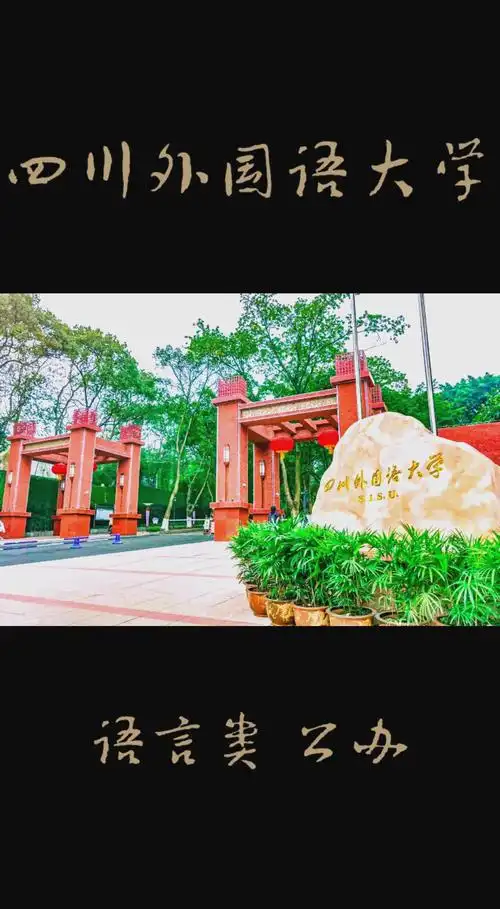
Sichuan International Studies University (SISU), located in Chongqing, China, is a full-time public undergraduate institution under the administration of Chongqing Municipality. It is one of the first four foreign language institutions of higher education established in China. The university focuses on foreign language and literature studies, while also coordinating the development of disciplines such as literature, education, and economics, making it a multi-disciplinary foreign language university. It is a high-level new liberal arts construction university in Chongqing and a construction unit for internationalization characteristic universities in Chongqing. SISU was founded in 1950, originally as the Russian Language Training Corps of the Southwest Military and Political University of the People's Liberation Army. In January 1951, it was renamed the Russian Language Battalion attached to the Second Advanced Infantry School of the People's Liberation Army. In May 1953, the Southwest Russian Language College was established. In May 1959, it was expanded into Sichuan Institute of Foreign Languages. In March 1982, it became one of the first institutions in China authorized to confer bachelor's degrees. In 1986, it was approved as a master's degree-granting institution. In 1997, after Chongqing became a municipality directly under the central government, the university was placed under the leadership of the Chongqing Municipal People's Government. In April 2013, it was renamed Sichuan International Studies University. In the same year, it was approved as a doctoral degree-granting institution. In 2017, it was selected as a first-class discipline construction university in Chongqing. In 2019, it was approved to establish a postdoctoral research station. As of June 2024, according to the university's official website, the campus covers an area of 71 hectares, with a total of 1.3 million paper books in 22 languages and 1.85 million e-books. It has 22 teaching units, one affiliated middle school, and one affiliated primary school, offering 55 undergraduate programs. It has one postdoctoral research station, one first-level doctoral discipline authorization point, 13 second-level doctoral discipline authorization points, five first-level master's discipline authorization points, 19 second-level master's discipline authorization points, 10 professional master's degree authorization categories, and 49 professional master's degree authorization fields. The university has 1,354 faculty and staff members, with over 17,000 full-time students. SISU was founded in 1950 under the care and guidance of older-generation proletarian revolutionaries such as Deng Xiaoping, Liu Bocheng, and He Long. In March 1950, following the central government's directive on training Russian language cadres, the Southwest Military Region decided to establish the Russian Language Training Corps. In April, the Russian Language Training Corps was formally established in Chongqing Shandong. In January 1951, the Southwest Military and Political University was restructured into the Second Advanced Infantry School of the People's Liberation Army, and the Russian Language Training Corps was renamed the Russian Language Battalion, directly under the leadership of the school headquarters. In May 1952, students from the Guizhou Military Region's Russian Language Class arrived in Chongqing and were incorporated into the Russian Language Battalion. On May 21, 1953, the Southwest Russian Language College was officially established. In October 1954, the Southwest Higher Education Administration was dissolved along with the Southwest Military and Political Committee, and the college was placed under the leadership of the Central Ministry of Higher Education. On May 25, 1959, the Sichuan Provincial People's Committee decided to rename the Southwest Russian Language College as "Sichuan Institute of Foreign Languages," offering four-year Russian and English programs, and subsequently adding French and German programs. Guo Moruo inscribed the name for the institute. In May 1963, due to an increase in programs and enrollment, insufficient campus facilities led the Sichuan Provincial Higher Education Bureau to temporarily borrow the campus of the Beibei Xiemachang Agricultural Machinery School. The English Department was relocated for classes. In September, following the Ministry of Education's plan, Sichuan decided to establish Chongqing Foreign Language School, and the institute was designated as one of the 12 institutions of higher education to accept graduates from foreign language schools.

Sources & verification

Verification
Verified
Verified on
2026-09-20
Last updated
2026-11-06
Source notes
Sichuan International Studies University — 2026 application guide and funding details for Chinese Government Scholarship High-Level Postgraduate Program (verified by the user)

Confirm requirements, funding and deadlines in the admissions office’s current announcement.