
Government/University Scholarship
Chinese Government Scholarship Silk Road Program
Application status unknownVerified
Chinese Government Scholarship Silk Road Program. Eligible study levels: Bachelor’s, Master’s, Doctoral. Funding: Tuition waiver + accommodation fee waiver / accommodation subsidy + comprehensive medical insurance of RMB 800 per year + living allowance (RMB 2,500 per month for undergraduates, RMB 3,000 for master’s students and RMB 3,500 for doctoral students)
TuitionAccommodationLiving allowance 2500 CNYMedical insurance
- Scholarship type
- Government/University Scholarship
- Degree level
- Bachelor / Master / PhD
- Location
- Beijing · Beijing
- Application deadline
- Date to be confirmed
Overview
Chinese Government Scholarship Silk Road Program. Eligible study levels: Bachelor’s
Master’s
Doctoral. Funding: Tuition waiver + accommodation fee waiver / accommodation subsidy + comprehensive medical insurance of RMB 800 per year + living allowance (RMB 2
500 per month for undergraduates
RMB 3
000 for master’s students and RMB 3
Funding coverage
Funding tiers
Eligibility may differ by tier. Check the applicable degree and requirements.
Standard funding
- Eligible degree
- Bachelor’s, Master’s, Doctoral
- Funding
- Tuition waiver + accommodation fee waiver / accommodation subsidy + comprehensive medical insurance of RMB 800 per year + living allowance (RMB 2,500 per month for undergraduates, RMB 3,000 for master’s students and RMB 3,500 for doctoral students)
- Tier requirements
- Outstanding students from Silk Road countries. Priority funding countries: Vietnam, Indonesia, Malaysia, Singapore, Turkmenistan, Thailand, Kazakhstan, Iran, Hungary and Serbia. Educational and age requirements are the same as for the Chinese Government Scholarship.
Requirements & documents
Application dates & process
Review Cycle: Document review and interviews / expert review take approximately 4–6 weeks
Universities & programs
Universities
About the university
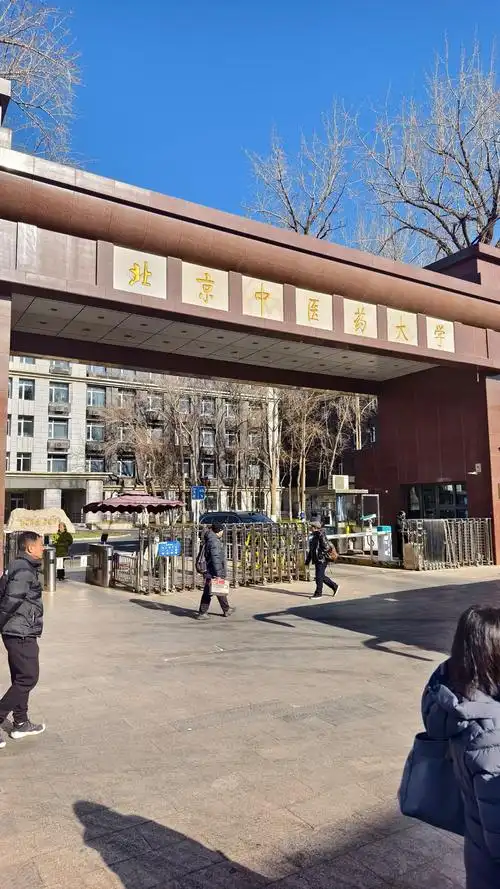
Beijing University of Chinese Medicine (BUCM), located in Beijing, China, is a national key university jointly established by the Ministry of Education, the National Health Commission, the National Administration of Traditional Chinese Medicine, and the Beijing Municipal Government. It is a comprehensive institution with traditional Chinese medicine (TCM) as its core discipline, directly under the Ministry of Education, a key university under the national "211 Project," and a member of the "985 Project Advantage Discipline Innovation Platform." Founded in 1956 as Beijing College of Traditional Chinese Medicine, it was designated a national key university in 1960. In 1978, it pioneered postgraduate education in TCM, and in 1981, it became the first institution authorized to grant doctoral degrees in TCM. The university was renamed Beijing University of Chinese Medicine in 1993. It was selected for the "211 Project" in 1996. In 2000, it merged with Beijing College of Acupuncture, Orthopedics, and Traumatology to form the new Beijing University of Chinese Medicine. In 2011, it was included in the "985 Project Advantage Discipline Innovation Platform." In September 2017, it was selected as a "Double First-Class" discipline construction university. As of December 2025, the university has three campuses: Liangxiang, Hepingjie, and Wangjing. It comprises 14 teaching units, offers 15 undergraduate programs, and hosts 45 provincial- and ministerial-level research platforms, including national international science and technology cooperation bases and key laboratories of the Ministry of Education. It has three postdoctoral research stations, three first-level doctoral degree authorization points, seven first-level master's degree authorization points, three "Double First-Class" disciplines (Chinese medicine, integrated Chinese and Western medicine, and Chinese materia medica), and 48 key disciplines designated by the National Administration of Traditional Chinese Medicine. The university (including its directly affiliated hospitals) has 6,489 faculty and staff, including 1,822 full-time teachers, three academicians of the Chinese Academy of Engineering, and five national TCM masters. It has 17,000 full-time students. In 1956, the State Council of China officially established Beijing College of Traditional Chinese Medicine and three other TCM colleges, marking the beginning of higher education in TCM in New China. In 1960, it was designated a national key university by the central government. In 1971, it merged with the China Academy of Chinese Medical Sciences, but the two separated in 1977, and the university resumed independent operation. The following year, it pioneered postgraduate education in TCM. In November 1981, it became the first institution authorized to grant doctoral degrees in TCM. In 1993, it was renamed Beijing University of Chinese Medicine. In 1996, it was selected as a key university under the national "211 Project," further elevating its academic status and educational level. In April 1983, the Ministry of Health submitted a proposal to the State Council to establish Beijing College of Acupuncture, which was to be prepared by the China Academy of Chinese Medical Sciences. In March 1986, the State Education Commission approved the establishment of the college. In August of the same year, Chen Shaowu was appointed president and acting party secretary of the college. In September 1986, the college held its inaugural ceremony. In October 1987, it was renamed Beijing College of Acupuncture, Orthopedics, and Traumatology. In July 1991, with approval from the Academic Degrees Committee of the State Council and the State Education Commission, the college became a bachelor's degree-granting institution in orthopedics and traumatology of Chinese medicine and acupuncture. In March 1995, the State Education Commission held a meeting on undergraduate teaching evaluation, and the college was listed among 108 institutions to be evaluated nationwide. In 2000, the original Beijing University of Chinese Medicine merged with Beijing College of Acupuncture, Orthopedics, and Traumatology to form the new Beijing University of Chinese Medicine, which became a university directly under the Ministry of Education. In September 2006, Beijing Metallurgical Hospital was transferred to Beijing University of Chinese Medicine, and the Third Affiliated Hospital of Beijing University of Chinese Medicine was established. The following year, the Ministry of Education, the Ministry of Health, and the National Administration of Traditional Chinese Medicine jointly supported the university, integrating resources from the education and health systems to promote its development. In July 2008, the university was selected for the second batch of the National College Student Innovative Experiment Program. In 2011, it was included in the "985 Project Advantage Discipline Innovation Platform." In the same year, the Beijing municipal government joined in supporting the university, and the groundbreaking ceremony for the Liangxiang campus was held, further highlighting its disciplinary strengths, capital advantages, and improved facilities.
Sources & verification
- Verification
- Verified
- Verified on
- 2026-09-20
- Last updated
- 2026-11-06
- Source link
- iec.bucm.edu.cn ↗
- Source notes
- Beijing University of Chinese Medicine — 2025 application guide and funding details for Chinese Government Scholarship Silk Road Program (verified by the user)
Confirm requirements, funding and deadlines in the admissions office’s current announcement.