
Chinese Government Scholarship Country Program (Type A)

Government/University Scholarship

Chinese Government Scholarship Country Program (Type A)

ClosedVerified

Chinese Government Scholarship — Country Program (Type A). Levels: undergraduate, master's and doctoral. Coverage: full and partial scholarships. Full scholarship includes waived tuition and accommodation fees, insurance premiums, and a living allowance of CNY 2,500/month for undergraduate students, CNY 3,000/month for master's students and CNY 3,500/month for doctoral students. Partial scholarship coverage depends on the specific circumstances.

TuitionAccommodationLiving allowance 2500 CNYMedical insurance
Scholarship type
Government/University Scholarship
Degree level
Bachelor / Master / PhD
Location
Beijing · Beijing
Application deadline
2026-03-03

Overview

Chinese Government Scholarship — Country Program (Type A). Levels: undergraduate

master's and doctoral. Coverage: full and partial scholarships. Full scholarship includes waived tuition and accommodation fees

insurance premiums

and a living allowance of CNY 2

500/month for undergraduate students

CNY 3

Funding coverage

Scholarship TypeGovernment/University Scholarship
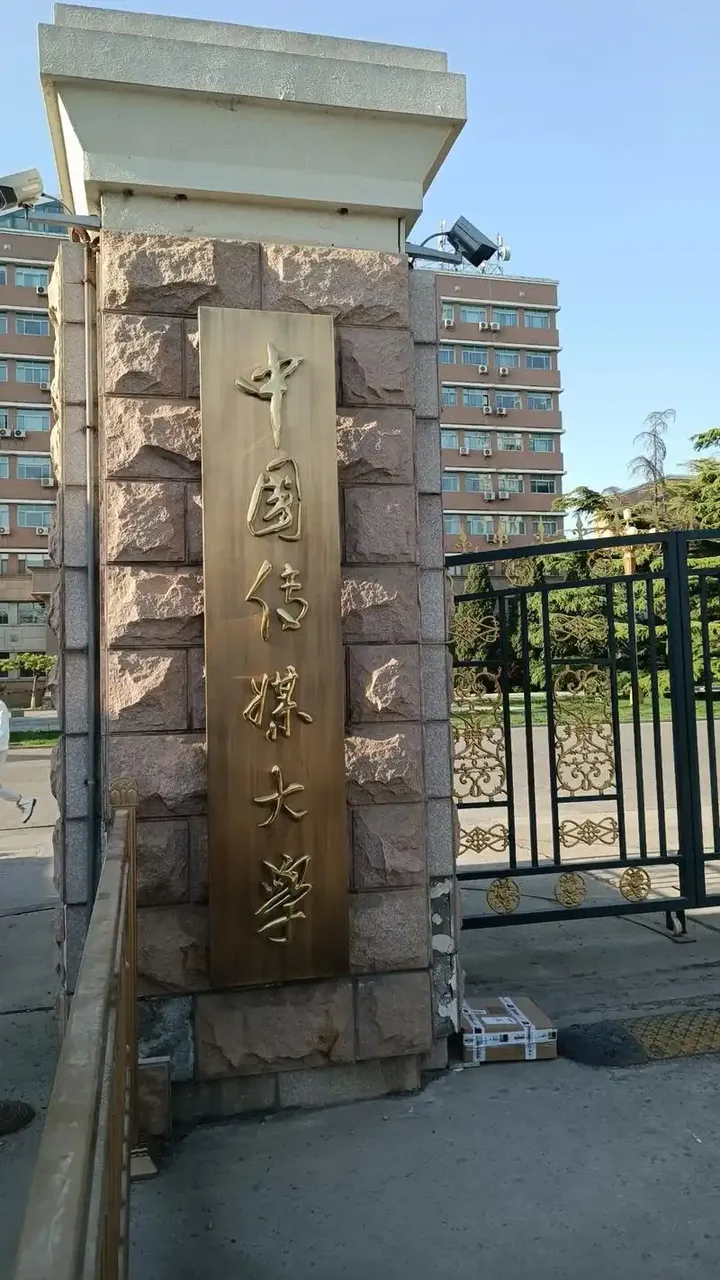
UniversityCommunication University of China
ProvinceBeijing
TuitionCovered
AccommodationCovered
Medical InsuranceCovered
Subsidy StandardFull and partial scholarships are available. Full scholarship: tuition and accommodation fees waived, insurance premiums covered, and a living allowance of CNY 2,500/month for undergraduate students, CNY 3,000/month for master's students and CNY 3,500/month for doctoral students. Partial scholarship coverage depends on the specific circumstances.
Other BenefitsEach applicant may submit only one Chinese Government Scholarship application in the same admissions year; recipients cannot concurrently receive another scholarship established by any level of Chinese government or the admitting university, excluding one-time awards
Monthly Allowance2500 CNY
Coverage ScopeFull and partial scholarships are available. Full scholarship: tuition and accommodation fees waived, insurance premiums covered, and a living allowance of CNY 2,500/month for undergraduate students, CNY 3,000/month for master's students and CNY 3,500/month for doctoral students. Partial scholarship coverage depends on the specific circumstances.
Application Linkhttps://icuc.cuc.edu.cn/2026/0213/c7291a267000/page.htm

Funding tiers

Eligibility may differ by tier. Check the applicable degree and requirements.

Full scholarship

Eligible degree
Bachelor’s, Master’s, Doctoral
Funding
Full and partial scholarships
Tier requirements
Non-Chinese citizens; good physical and mental health; good character; meeting the chosen program’s educational, age and language requirements; undergraduates may apply only for the Chinese Government Scholarship Bilateral Program

Full scholarship

Eligible degree
Doctoral
Funding
Full scholarships include tuition waiver + accommodation fee waiver + insurance fees + living allowance (RMB 2,500 per month for undergraduates, RMB 3,000 per month for master’s students and RMB 3,500 per month for doctoral students); partial scholarships depend on the specific circumstances
Tier requirements
Non-Chinese citizens; good physical and mental health; good character; meeting the chosen program’s educational, age and language requirements; undergraduates may apply only for the Chinese Government Scholarship Bilateral Program

Requirements & documents

Application RequirementsNon-Chinese citizens; good physical and mental health; good character; meeting the chosen program’s educational, age and language requirements; undergraduates may apply only for the Chinese Government Scholarship Bilateral Program
Major RestrictionsAll admitting majors at the university are eligible
GPASubject to excellent academic performance and the host institution’s requirements
Language RequirementsUndergraduate (pre-admission): HSK Level 4 (each component ≥60) + HSKK Intermediate, 60 or above Master’s (pre-admission): Chinese-taught: HSK Level 5, at least 180 + HSKK Advanced, 60 or above; English-taught: IELTS≥6.5 or TOEFL iBT≥85 or TOEIC≥750
Teaching LanguagePrograms taught entirely in English are exempt from HSK; IELTS / TOEFL or proof of English-medium instruction is required
Required Materials1. Scan of the passport information page. The passport must be valid beyond November 2026. 2. Highest educational qualification and degree certificates in English or Chinese (graduating students may first provide an expected graduation certificate), as originals or notarized copies. Originals in other languages must include notarized Chinese or English translations. 3. A study or research plan of at least 800 Chinese characters or English words, written in the language of instruction. Clearly state the full names of the degree and major applied for. 4. Bachelor’s applicants must provide scans of original certificates for HSK Level 4 (at least 60 in each section) and HSKK Intermediate (at least 60), with results valid within two years. 5. Master’s and doctoral applicants to Chinese-taught majors must provide scans of original HSK Level 5 certificates with at least 180 overall and at least 60 in each section, and original HSKK Advanced certificates with at least 60; both results must be valid within two years. Applicants whose highest qualification was taught in Chinese may omit HSK and HSKK certificates but must provide proof of the language of instruction issued by that institution. 6. Master’s and doctoral applicants to English-taught majors whose native language is English are exempt from English proficiency evidence. Those whose native language is not English must provide valid IELTS results of at least 6.5, TOEFL iBT of at least 85, TOEIC of at least 750, or other proof of equivalent English proficiency. Non-native English speakers whose highest qualification was taught in English need not provide IELTS, TOEFL or similar test evidence but must submit proof of the language of instruction issued by that institution. 7. Academic transcripts. Scans must cover all courses in undergraduate, master’s (if any) and doctoral (if any) studies through the most recent semester, bearing the institution’s official seal. Originals in languages other than Chinese or English must include notarized Chinese or English translations. 8. The university makes minor adjustments to available majors each year. See: International undergraduate programs: https://icuc.cuc.edu.cn/2026/0206/c7289a266964/page.htm; international master’s programs: https://icuc.cuc.edu.cn/2026/0212/c7291a266999/page.htm; international doctoral programs: https://icuc.cuc.edu.cn/2026/0212/c7291a266998/page.htm
Sourcehttps://lh65breby7.feishu.cn/wiki/TAxpwuS1TiFoeZklj20caqHnnte?sheet=1dnfky&range=A223
Source NotesCommunication University of China — 2026 application guide and funding details for Chinese Government Scholarship Country Program (Type A) (verified by the user)
Noteshttps://icuc.cuc.edu.cn/2026/0213/c7291a267000/page.htm 2026
University groupingFirst group of additional universities for the Vietnamese market
Application materials1. Scan of the passport information page. The passport must be valid beyond November 2026. 2. Highest educational qualification and degree certificates in English or Chinese (graduating students may first provide an expected graduation certificate), as originals or notarized copies. Originals in other languages must include notarized Chinese or English translations. 3. A study or research plan of at least 800 Chinese characters or English words, written in the language of instruction. Clearly state the full names of the degree and major applied for. 4. Bachelor’s applicants must provide scans of original certificates for HSK Level 4 (at least 60 in each section) and HSKK Intermediate (at least 60), with results valid within two years. 5. Master’s and doctoral applicants to Chinese-taught majors must provide scans of original HSK Level 5 certificates with at least 180 overall and at least 60 in each section, and original HSKK Advanced certificates with at least 60; both results must be valid within two years. Applicants whose highest qualification was taught in Chinese may omit HSK and HSKK certificates but must provide proof of the language of instruction issued by that institution. 6. Master’s and doctoral applicants to English-taught majors whose native language is English are exempt from English proficiency evidence. Those whose native language is not English must provide valid IELTS results of at least 6.5, TOEFL iBT of at least 85, TOEIC of at least 750, or other proof of equivalent English proficiency. Non-native English speakers whose highest qualification was taught in English need not provide IELTS, TOEFL or similar test evidence but must submit proof of the language of instruction issued by that institution. 7. Academic transcripts. Scans must cover all courses in undergraduate, master’s (if any) and doctoral (if any) studies through the most recent semester, bearing the institution’s official seal. Originals in languages other than Chinese or English must include notarized Chinese or English translations. 8. The university makes minor adjustments to available majors each year. See: International undergraduate programs: https://icuc.cuc.edu.cn/2026/0206/c7289a266964/page.htm; international master’s programs: https://icuc.cuc.edu.cn/2026/0212/c7291a266999/page.htm; international doctoral programs: https://icuc.cuc.edu.cn/2026/0212/c7291a266998/page.htm
Application requirementsNon-Chinese citizens; good physical and mental health; good character; meeting the chosen program’s educational, age and language requirements; undergraduates may apply only for the Chinese Government Scholarship Bilateral Program
CoverageFull and partial scholarships are available. Full scholarship: tuition and accommodation fees waived, insurance premiums covered, and a living allowance of CNY 2,500/month for undergraduate students, CNY 3,000/month for master's students and CNY 3,500/month for doctoral students. Partial scholarship coverage depends on the specific circumstances.
Language requirementsUndergraduate (pre-admission): HSK Level 4 (each component ≥60) + HSKK Intermediate, 60 or above Master’s (pre-admission): Chinese-taught: HSK Level 5, at least 180 + HSKK Advanced, 60 or above; English-taught: IELTS≥6.5 or TOEFL iBT≥85 or TOEIC≥750
Eligible majorsAll admitting majors at the university are eligible
Scholarship typeChinese Government Scholarship
University name in Chinese*Communication University of China
Application opening dateUsually December 1
Application deadlineUsually March 30 of the following year
Scholarship name in Chinese*Chinese Government Scholarship Country Program (Type A)
Eligible study levels*Bachelor’s, Master’s, Doctoral
Scholarship verification status*Verified (confirmed by user)
Whether a separate application is requiredYes
Rules on holding other scholarships concurrentlyEach applicant may submit only one Chinese Government Scholarship application in the same admissions year; recipients cannot concurrently receive another scholarship established by any level of Chinese government or the admitting university, excluding one-time awards
Application Rule 1name: Coverage; description: Full and partial scholarships are available. Full scholarship: tuition and accommodation fees waived, insurance premiums covered, and a living allowance of CNY 2,500/month for undergraduate students, CNY 3,000/month for master's students and CNY 3,500/month for doctoral students. Partial scholarship coverage depends on the specific circumstances.
Application Rule 2name: Application opening date; description: Usually December 1
Application Rule 3name: Application deadline; description: Usually March 30 of the following year
Application Rule 4name: Whether a separate application is required; description: Yes
Application Rule 5name: Rules on holding other scholarships concurrently; description: Each applicant may submit only one Chinese Government Scholarship application in the same admissions year; recipients cannot concurrently receive another scholarship established by any level of Chinese government or the admitting university, excluding one-time awards

Application dates & process

Application Opens: 12/1 Application Deadline: 3/3 Review Cycle: Document review and interviews / expert review take approximately 4–6 weeks

Universities & programs

Universities

About the university

Communication University of China (CUC), abbreviated as "CUC", is one of the first batch of "Double First-Class" construction universities directly under the Ministry of Education, a key university under the "Project 211", and a key university under the "Platform for Advantageous Discipline Innovation under Project 985". Founded in 1954, it was the first media university established by the Communist Party after the founding of the People's Republic of China. In August 2004, it was renamed from Beijing Broadcasting Institute to Communication University of China. Adhering to the motto "Cultivate Virtue, Dedicate to Work, Pursue Knowledge, Strive for Excellence," the university is committed to cultivating media professionals who "Promote the Way and Uphold Virtue, Serve the World and Apply Knowledge." It has made significant contributions to the Party and the country's media industry and economic and social development, and is known as the "Cradle of Chinese Radio, Television, and Media Talents," "Renowned Institution in the Field of Information Communication," and "Key Educational Base for the Party's Propaganda, Ideology, and Cultural Undertakings." Guided by the "Double First-Class" initiative, the university strengthens its "small comprehensive" disciplinary characteristics in information communication, pursues an integrated development path of new engineering and new liberal arts, and builds a coordinated and sustainable disciplinary system centered on journalism and communication, media arts, and information science and technology, with emerging interdisciplinary fields as key points, and coordinated development of liberal arts, engineering, arts, management, and other disciplines. The university hosts CSSCI-source journals such as Modern Communication, Modern Publishing, Chinese Journalism and Communication Research, Art Communication Research, and Journal of Journalism and Communication, as well as the ESCI journal Global Media and China; it co-hosts CSSCI-source journals Contemporary Cinema and Chinese Television. The university covers an area of 463,700 square meters; currently has over 18,100 full-time students and 1,989 faculty and staff; it has 21 teaching and research units (including one national key laboratory) and 3 directly affiliated teaching units; offers 91 undergraduate programs; and has 7 postdoctoral research stations, 6 first-level doctoral degree authorization points, 16 first-level master's degree authorization points, 4 professional doctoral degree authorization categories, and 14 professional master's degree authorization categories. On September 25, 2024, General Secretary of the Communist Party of China Central Committee, President of the People's Republic of China, and Chairman of the Central Military Commission Xi Jinping replied to all faculty and students of Communication University of China, extending congratulations and greetings to all faculty, staff, and alumni on the occasion of the 70th anniversary of the university's founding. In his reply, Xi Jinping emphasized that in the new era and new journey, he hopes the university will fulfill the fundamental task of fostering virtue and nurturing talent, focus on the needs of news and public opinion work, highlight its distinctive features, deepen reforms and innovations, continuously improve teaching and research levels, and strive to cultivate more high-quality journalism and communication talents, making new contributions to the development of the Party's propaganda, ideology, and cultural undertakings. The predecessor of Communication University of China was the Central Broadcasting Bureau Technical Personnel Training Class, established in 1954, and the Beijing Broadcasting College, established in 1958. In 1953, the extreme shortage of radio technical personnel hindered the development of China's broadcasting industry. The Central Broadcasting Bureau decided to launch the "Central Broadcasting Bureau Technical Personnel Training Class" in 1954 to train technical personnel with theoretical knowledge of broadcasting. The bureau appointed Xie Jianfeng, Deputy Director of the Bureau's Personnel Department, and Sun Zhenxian, Section Chief of the Business Department, to oversee the preparation of the training class. On March 3, 1954, the first class of the Central Broadcasting Bureau Technical Personnel Training Class held its opening ceremony at the No. 12 Transmitter Station in Liangxiang, southwest of Beijing. This was a secondary technical school specifically training personnel for broadcasting technology maintenance. The training class ran for six sessions, enrolling 922 students. The first batch of instructors. To strengthen the teaching staff, the school tapped into various resources. By June 30, 1956, the faculty and staff had grown to 26. On July 28, the training class continued to expand, reaching 35 faculty and staff. By the end of December 1956, the number had increased to 53. On March 24, 1958, during the period of "Great Leap Forward" and "National Steelmaking Campaign," classes were suspended for labor education, with over 200 students participating in labor. On May 9, the training class moved to a four-story gray building of over 1,300 square meters opposite the Children's Hospital on Nanlishi Road in Beijing's urban area.

Sources & verification

Verification
Verified
Verified on
2026-09-20
Last updated
2026-11-06
Source notes
Communication University of China — 2026 application guide and funding details for Chinese Government Scholarship Country Program (Type A) (verified by the user)

Confirm requirements, funding and deadlines in the admissions office’s current announcement.