
Government/University Scholarship
Chinese Government Scholarship Country Program (Type A)
ClosedVerified
Chinese Government Scholarship Country Program (Type A). Eligible study levels: Bachelor’s, Master’s, Doctoral. Funding: Tuition waiver + free dormitory accommodation or an accommodation subsidy + living allowance (RMB 2,500 per month for undergraduates, RMB 3,000 for master’s students and RMB 3,500 for doctoral students) + comprehensive medical insurance of RMB 800 per year
TuitionAccommodationLiving allowance 2500 CNYMedical insurance
- Scholarship type
- Government/University Scholarship
- Degree level
- Bachelor / Master / PhD
- Location
- Beijing · Beijing
- Application deadline
- 2026-05-03
Overview
Chinese Government Scholarship Country Program (Type A). Eligible study levels: Bachelor’s
Master’s
Doctoral. Funding: Tuition waiver + free dormitory accommodation or an accommodation subsidy + living allowance (RMB 2
500 per month for undergraduates
RMB 3
000 for master’s students and RMB 3
Funding coverage
Funding tiers
Eligibility may differ by tier. Check the applicable degree and requirements.
Standard funding
- Eligible degree
- Bachelor’s, Master’s, Doctoral
- Funding
- Tuition waiver + free dormitory accommodation or an accommodation subsidy + living allowance (RMB 2,500 per month for undergraduates, RMB 3,000 for master’s students and RMB 3,500 for doctoral students) + comprehensive medical insurance of RMB 800 per year
- Tier requirements
- Non-Chinese citizens in good physical and mental health; undergraduate ≤25, master’s ≤35, doctoral ≤40; relevant preceding educational qualification required
Requirements & documents
Application dates & process
Application Deadline: 5/3 Review Cycle: Document review and interviews / expert review take approximately 4–6 weeks
Universities & programs
Universities
About the university
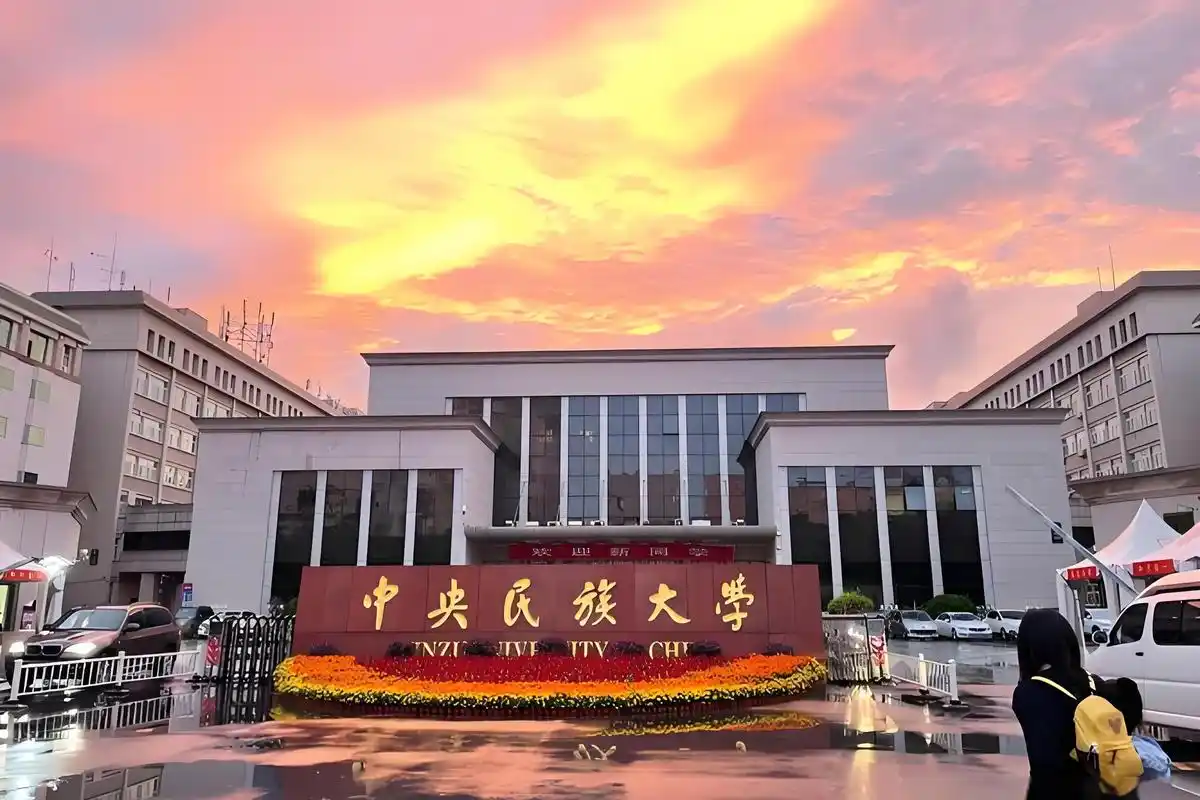
Minzu University of China (MUC), also known as Central Minzu University, is located at No. 27 Zhongguancun South Street, Haidian District, Beijing. It is under the administration of the State Ethnic Affairs Commission. The university is adjacent to the National Library of China to the south and Zhongguancun Science Park to the north. It is a comprehensive national key university jointly established by the National Ethnic Affairs Commission, the Beijing Municipal People's Government, and the Ministry of Education of the People's Republic of China. It is ranked as a Class A Double First-Class university, a Project 985 university, and a Project 211 university. It is also part of the National Strong Foundation Plan, the High-Level Ethnic Minority Talents Training Program, the Outstanding Legal Talent Education and Training Base, and the National High-Level University Graduate Program. The predecessor of Minzu University of China was the Yan'an Ethnic College, founded in 1941. With the approval of the central government, the Central Institute of Ethnic Minorities was established in Beijing in 1951. In November 1993, it was renamed Minzu University of China. The university was included in Project 211 in 1999 and Project 985 in 2004, and it became a Class A Double First-Class university in 2017. As of October 2024, the university has three campuses: Haidian, Fengtai, and Hainan, covering an area of over 1,800 mu. It holds more than 5 million books and electronic resources. It has 1 faculty, 27 teaching and research units, and 71 undergraduate programs. As of February 2026, the university has nearly 26,000 full-time students, including nearly 17,000 undergraduate and preparatory students and nearly 9,000 graduate students. As of June 2025, the university has 28 first-level master's degree authorization points, 26 professional master's degree categories, 10 first-level doctoral degree authorization points, 4 professional doctoral degree authorization points, and 6 postdoctoral research stations. The predecessor of Minzu University of China was the Ethnic College established in Yan'an in September 1941. The Yan'an Ethnic College primarily trained ethnic minority cadres and Han cadres working in ethnic affairs. In June 1950, the Central People's Government decided to establish a new university in Beijing, the Central Institute of Ethnic Minorities, and assigned some former Yan'an Ethnic College staff to prepare for its establishment. In November of the same year, Premier Zhou Enlai presided over the 60th Government Affairs Council meeting, approving the 'Trial Plan for Training Ethnic Minority Cadres' and the 'Trial Plan for Establishing the Central Institute of Ethnic Minorities' proposed by the Central Ethnic Affairs Commission. The university was temporarily located at the Imperial College (Guozijian) in the city, with over 280 faculty and staff and more than 260 students in military and political cadre classes and Tibetan language classes. In 1951, the Central Institute of Ethnic Minorities was established in Beijing, with Ulanhu as its first president. In 1952, during the national adjustment of departments and disciplines, the Sociology Department of Tsinghua University, some programs of the Eastern Languages Department of Peking University, and the Sociology Department of Yenching University (the predecessor of Peking University) were merged into the Central Institute of Ethnic Minorities. The campus was moved from the Imperial College to near Baishiqiao in the western suburbs. Subsequently, teaching and research units such as the Department of Ethnic Languages, Department of History, Department of Political Science, Department of Arts, Department of Chinese, Research Department, and Preparatory Department were established. The Central Ethnic Affairs Commission's Counselor Office was also merged into the institute. From September 1978 to October 1993, the university developed into a comprehensive university with a focus on liberal arts and distinctive ethnic studies, encompassing liberal arts, sciences, engineering, arts, and management. In February 1978, it was designated as a national key university. On November 30, 1993, with the approval of the State Education Commission, the Central Institute of Ethnic Minorities was renamed Minzu University of China. Then-President Jiang Zemin inscribed the new name for the university. In 1999, it was designated as a key university under Project 211. In June 2001, Comrade Zhu Rongji visited Minzu University of China and, on behalf of the central government, proposed the goal of 'building Minzu University of China into a world-class ethnic university.' In the same year, leaders including Hu Jintao and Li Lanqing personally approved the 'Request for Further Improvement of Minzu University of China' jointly submitted by the State Ethnic Affairs Commission, the Ministry of Education, the State Planning Commission, and the Ministry of Finance.
Sources & verification
- Verification
- Verified
- Verified on
- 2026-09-20
- Last updated
- 2026-11-06
- Source link
- cie.muc.edu.cn ↗
- Source notes
- Minzu University of China — 2026 application guide and funding details for Chinese Government Scholarship Country Program (Type A) (verified by the user)
Confirm requirements, funding and deadlines in the admissions office’s current announcement.