
Government/University Scholarship
What is China Link
Application status unknownNot verified
China Link CSC Scholarship — Short-Term Academic Exchange 2026
TuitionAccommodationMedical insurance
- Scholarship type
- Government/University Scholarship
- Degree level
- Bachelor / Master / PhD
- Location
- Zhejiang · Hangzhou
- Application deadline
- Date to be confirmed
Overview
China Link CSC Scholarship — Short-Term Academic Exchange 2026
Funding coverage
Funding tiers
Eligibility may differ by tier. Check the applicable degree and requirements.
Standard funding
- Eligible degree
- Bachelor’s, Master’s, Doctoral
- Funding
- What Is the China Link Scholarship? Established by the China Scholarship Council in 2023, China Link promotes academic friendship and understanding between young people in China and abroad. It funds non-degree academic exchanges lasting one to twelve months. Two categories: general visiting students, undergraduate or master’s students; senior visiting scholars, doctoral students or faculty/staff. Key Information Duration: one to twelve months, determined by the Chinese institution. Majors: all except Chinese Language. Age: general visiting students no older than 45; senior visiting scholars no older than 50. Funding: tuition waived, free accommodation, medical insurance and monthly living allowances of RMB 3,000 for general visitors or RMB 3,500 for senior visitors. Application requirements Applicants must both be full-time students or faculty/staff at a CSC-recognized overseas partner institution and hold a pre-admission notice or invitation from a Chinese institution. The source states that no Vietnamese university is currently among the 213 partner institutions listed by Donghua University.
- Tier requirements
- Meets the visa, health and academic requirements for study in China
Requirements & documents
Application dates & process
Review Cycle: As specified in each host university’s admissions brochure
Universities & programs
Universities
About the university
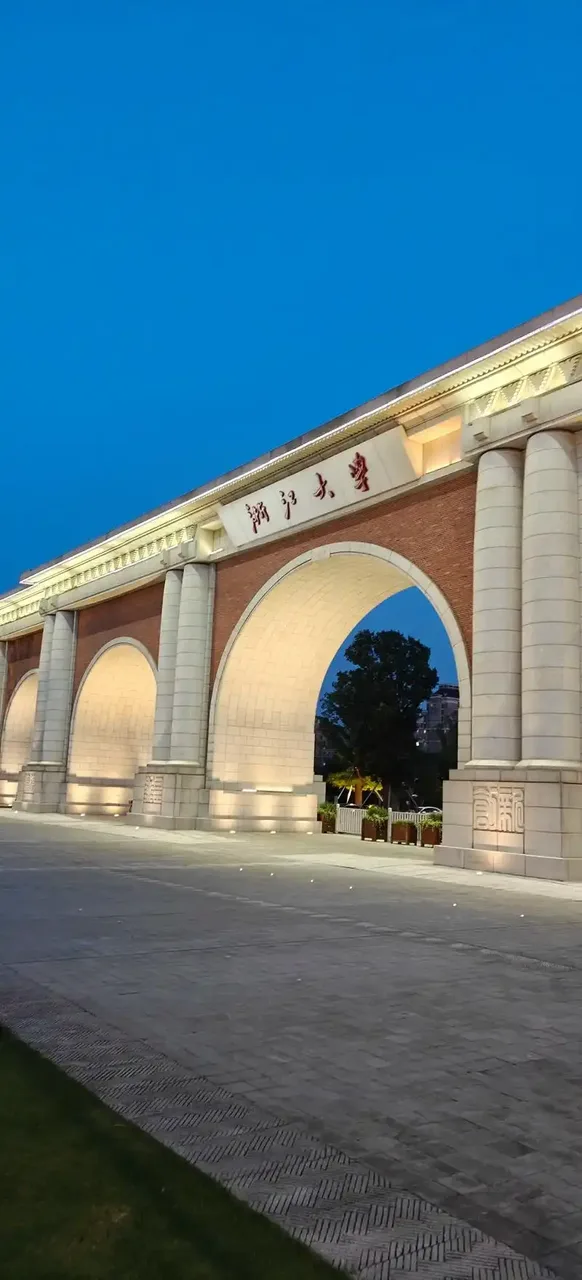
Zhejiang University, abbreviated as ZJU, is located in Hangzhou, Zhejiang Province. It is a national key university directly under the central government, administered by the Ministry of Education of the People's Republic of China and jointly established with the People's Government of Zhejiang Province. It is a member of the national "Double First-Class" initiative, "Project 211," and "Project 985." It has been selected for the Everest Plan, the Outstanding Talent Plan, the 101 Plan, the Strengthening Basic Disciplines Plan, the 2011 Plan, the Excellence in Engineering Education Training Plan, the Excellence in Medical Education Training Plan, the Excellence in Legal Education Training Plan, the Excellence in Agriculture and Forestry Education Training Plan, and is among the first batch of demonstration universities for deepening innovation and entrepreneurship education reform. It is a member of the C9 League, the Association of Pacific Rim Universities, the International Alliance for Engineering Education under the Belt and Road Initiative, the China University Planetary Science Alliance, and the Medical "Double First-Class" Construction Alliance. Its predecessor was Qiushi Academy, founded in 1897, which closed in 1914. In 1928, National Zhejiang University was established on the original site of Qiushi Academy. In 1937, the university moved westward to Zunyi and Meitan for operation. In the autumn of 1946, it moved back to Hangzhou. In 1952, some departments were transferred to the Chinese Academy of Sciences and other universities, while the main body was reorganized into several institutions in Hangzhou, which later developed into the original Zhejiang University, Hangzhou University, Zhejiang Agricultural University, and Zhejiang Medical University. In 1998, these four universities merged to form the new Zhejiang University. As of December 2025, the university has 7 campuses, covering an area of 7,392,273 square meters, with a building area of 4,701,128 square meters and a collection of 8.22 million books. It comprises 7 faculties, 41 professional colleges (departments), and offers 103 undergraduate programs. It has 59 postdoctoral research stations, 62 first-level doctoral degree authorization points, 18 professional doctoral degree authorization categories, 62 first-level master's degree authorization points, and 35 professional master's degree authorization categories. There are 70,918 full-time students and 9,787 faculty and staff members. In March 1911, Zhejiang Secondary Industrial School officially opened, located at Baoguo Temple (formerly the Copper Yuan Bureau) in Yangguan Lane, Puchang Lane. In October of the same year, it was temporarily closed due to war. In 1845, the American Presbyterian Mission (a foreign missionary organization of the American Christian church) founded Chongxin Yishu (Chongxin Charity School) in Ningbo, Zhejiang, under the leadership of medical doctor and missionary D.B. McCartee. In the autumn of 1867, Chongxin Yishu moved from Ningbo to Pishi Lane in Hangzhou (and two years later to Da Ta'er Lane), and was renamed Hangzhou Yuying Yishu (Presbyterian Boys' School). In February 1911, 117 students of Yuying College moved from the old campus on Da Ta'er Lane to the new campus, and the school was renamed Zhijiang Academy. In 1914, the Northern and Southern Presbyterian Missions and the university board unanimously passed a resolution to upgrade Zhijiang Academy to a university, officially naming it Zhijiang University.
Sources & verification
- Verification
- Not verified
- Verified on
- 2026-09-21
- Last updated
- 2026-09-24
- Source link
- studyinchina.net ↗
- Source notes
- Compiled from public StudyInChina information (source ID: d6fa46fb-5749-4ffd-8aac-0136703614cf)
Confirm requirements, funding and deadlines in the admissions office’s current announcement.