
Government/University Scholarship
Guizhou University Scholarship
Application status unknownNot verified
Guizhou University Scholarship
TuitionAccommodation
- Scholarship type
- Government/University Scholarship
- Degree level
- Bachelor / Master / PhD
- Location
- Guizhou · Guiyang
- Application deadline
- Date to be confirmed
Overview
Guizhou University Scholarship
Funding coverage
Funding tiers
Eligibility may differ by tier. Check the applicable degree and requirements.
Standard funding
- Eligible degree
- Bachelor’s, Master’s, Doctoral
- Funding
- Guizhou University Scholarship: tuition and accommodation fee waivers. The scholarship generally covers the standard study period; continued eligibility in the following year depends on the annual scholarship assessment
- Tier requirements
- Meets the visa, health and academic requirements for study in China
Requirements & documents
Application dates & process
Review Cycle: As specified in each host university’s admissions brochure
Universities & programs
Universities
About the university
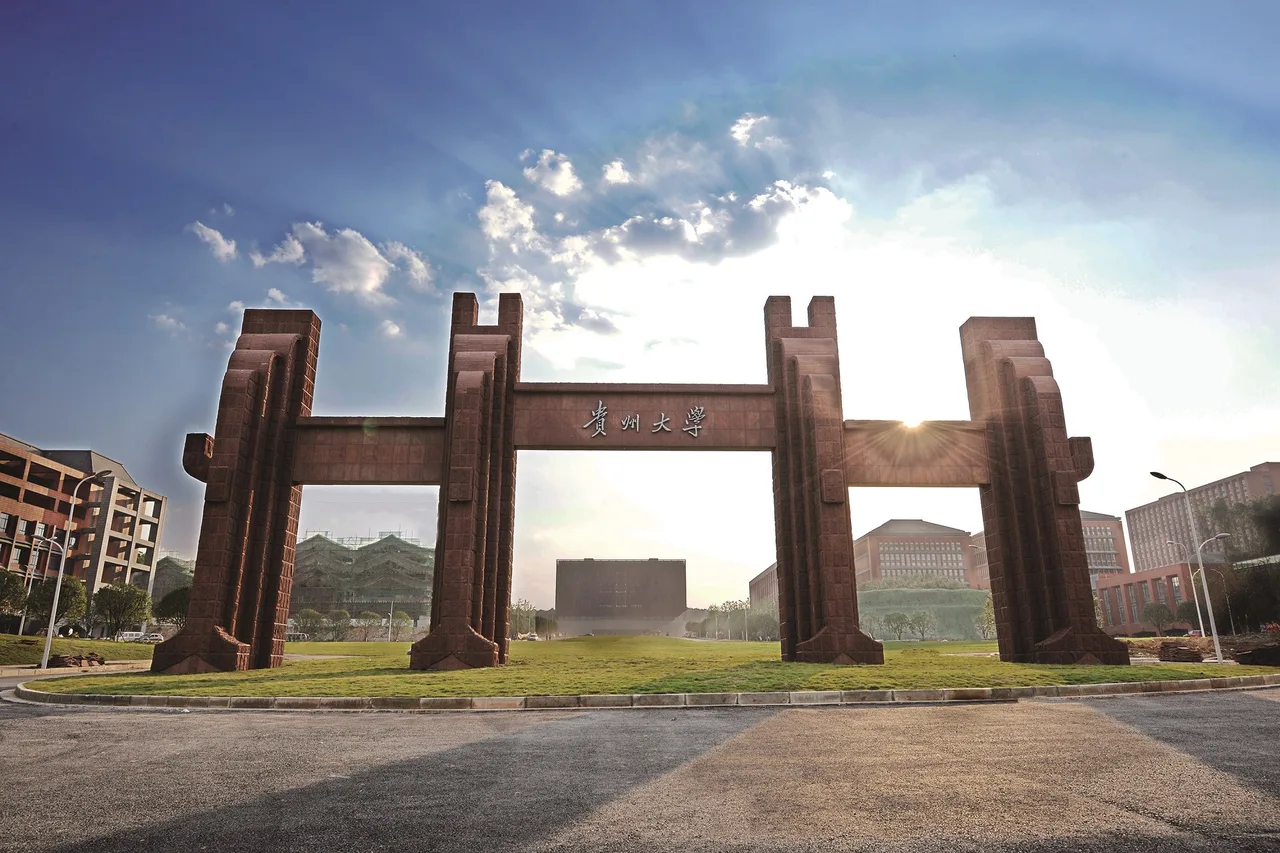
Guizhou University (abbreviated as GZU) is located in Guiyang, Guizhou Province. It is a "province-ministry co-built university" approved by the Ministry of Education of the People's Republic of China and under the administration of Guizhou Province. It is a national "211 Project" university and a national "Double First-Class" construction university. It is also among the first batch of "National Model Universities for Party Building", the first "National Civilized Campus", and a pilot unit for the Ministry of Education's "Three Comprehensive Education" comprehensive reform. Guizhou University was founded in 1902, going through periods such as Guizhou University Hall, Provincial Guizhou University, National Guizhou Agricultural and Engineering College, and National Guizhou University. In October 1950, it was officially named Guizhou University. In November 1951, Chairman Mao Zedong personally inscribed the university's name. In August 1997, the university merged with Guizhou Agricultural College and other institutions. In August 2004, it merged with Guizhou University of Technology. In September 2005, it was approved as a key national "211 Project" university. In September 2012, it was listed as one of 14 universities in the national "Comprehensive Strength Improvement Project for Universities in Central and Western China". In 2016, it was listed as a national key construction university under the "One Province, One University" policy for central and western regions. In November 2017, it received the first "National Civilized Campus" award. In 2018, it became a co-built university by the Ministry of Education and the People's Government of Guizhou Province. As of March 2025, the university covers an area of 4,645.83 mu (approximately 309.72 hectares), with an additional 1,181.26 mu (approximately 78.75 hectares) for teaching and experimental farms. It has 10 postdoctoral research stations, 22 first-level doctoral degree authorization points, 4 professional doctoral degree categories, 50 first-level master's degree authorization points, and 28 professional master's degree categories. There are over 4,200 faculty and staff, including over 2,800 full-time teachers. The university has 34,740 full-time undergraduate students and over 17,000 graduate students. It comprises 40 colleges. As of June 2025, the university offers 106 undergraduate programs. As of August 2025, it has three campuses. In 1735, Yuan Zhancheng, the Governor of Guizhou, rebuilt Guishan Academy on the original site of Yangming Academy. Following imperial orders, he used 1,000 taels of silver to add 50 study rooms, purchased over 1,000 volumes of books covering classics, history, philosophy, and literature, and set up school fields to provide funds for students' living expenses. He renamed Yangming Academy as Guishan Academy, marking the beginning of Guishan Academy. The academy's headmasters were often appointed by the emperor upon recommendation from local officials, and were chosen from among important scholars. The academy gradually evolved into part of the "official education" system. In early 1902, Deng Huaxi, then Governor of Guizhou, received an imperial edict and decided to establish Guizhou University Hall based on Guishan Academy. In August of the same year, Deng Huaxi submitted to the Qing court the "Memorial of the Governor of Guizhou on the Provisional Regulations for the Trial Establishment of the University Hall", along with the "Provisional Regulations for the Trial Establishment of the University Hall in Guizhou Province" and the "Detailed Rules of Guizhou University Hall". At the beginning, the university enrolled 120 students in its first cohort. It offered preparatory and regular courses. The preparatory course focused on basic studies, primarily teaching foreign languages, supplemented by classics, history, literature, and mathematics, with a two-year duration. The regular course taught general studies, mainly covering classics, history, Chinese and foreign politics, mathematics, and Western arts, supplemented by foreign languages, with a four-year duration. In 1904, Cao Hongxun, then Governor of Guizhou, following the "Memorial on the Establishment of School Regulations" issued by the Qing court, changed Guizhou University Hall to Guizhou Higher School. In December 1911, Huang Zelin, the new Governor and President of the Defense Army of Guizhou, sent troops to occupy the Mining Middle School and forced students to graduate early. In May 1912, the Mining Middle School was forced to close, and its students were transferred to the Guizhou Provincial Agriculture and Forestry School (renamed Guiyang First Agricultural School in 1916).
Sources & verification
- Verification
- Not verified
- Verified on
- 2026-09-21
- Last updated
- 2026-09-24
- Source link
- studyinchina.net ↗
- Source notes
- Compiled from public StudyInChina information (source ID: 3dd40ea3-12d1-4642-8e59-84f7f14a8660)
Confirm requirements, funding and deadlines in the admissions office’s current announcement.