
Government/University Scholarship
Bejing University of Technology Scholarship
Application status unknownNot verified
Bejing University of Technology Scholarship
Tuition
- Scholarship type
- Government/University Scholarship
- Degree level
- Bachelor / Master / PhD
- Location
- Beijing · Beijing
- Application deadline
- Date to be confirmed
Overview
Bejing University of Technology Scholarship
Funding coverage
Funding tiers
Eligibility may differ by tier. Check the applicable degree and requirements.
Standard funding
- Eligible degree
- Bachelor’s, Master’s, Doctoral
- Funding
- Beijing Institute of Technology (BIT) is presented as an ideal international study destination for its educational quality and offers various scholarships, including university awards. This article shares basic information compiled by studyinchina.net on BIT’s International Student Scholarship. Note: This scholarship information was updated in 2024 and is for reference. Policies, eligibility and funding may change with university or awarding-body arrangements. Consult the official university website or scholarship administrator for current, accurate information. What Is BIT’s International Student Scholarship? Located in Beijing, BIT participates in Project 985 and Project 211 and offers first-class education and comprehensive teaching facilities. BIT offers Chinese Government, Confucius Institute, Beijing Government and other scholarships. It established its International Student Scholarship to attract more outstanding international students for study and research. Prospective students may consider this program. Scholarship type University Scholarship Eligible Applicants In 2025, admission is limited to undergraduates Scholarship Coverage Recipients receive a tuition waiver Application and Enrollment Dates Application period: usually November of the preceding year through June 15 of the following year Note: dates may change with the annual admissions plan. Check the latest notice or contact the university to confirm. Enrollment: September Application requirements Non-Chinese nationality and good physical and mental health; No criminal record and compliance with Chinese laws and university rules; High school graduation and aged 18–25; Chinese-taught applicants: HSK Level 5 with at least 180 points. English-taught applicants: TOEFL 85 or IELTS at least 6.0. Application materials Applicants must prepare: Scholarship application form completed at http://apply.isc.bit.ed [URL as supplied]; Passport; Identification photograph; High school graduation certificate, or current enrollment certification if not yet graduated, in a notarized Chinese–English or English version [source wording]; Transcripts in a notarized Chinese–English or English version [source wording]; Foreign language proficiency certificate; Study plan in Chinese or English; Certificate of no criminal record valid within six months, in a notarized Chinese–English or English version [source wording]; Foreigner physical examination form valid within six months. Note: applicants who completed an entirely English-taught high school curriculum may be exempt from language certification. Application Procedure During the application period, complete personal information and upload materials through http://apply.isc.bit.ed, the International Student Online Application System. The university may require an interview after material review. Results and related materials are sent after all reviews are complete. University Contact Information International Student Office, Beijing Institute of Technology Address: 5 Zhongguancun South Street, Haidian District, Beijing Postal code: 100081 Telephone: +86-10-68918272 Fax: +86-10-68914846 Websites: http://isc.bit.edu.cn — http://www.bit.edu.cn Facebook: @StudyInBIT How to Improve Your Chances of Receiving BIT’s International Student Scholarship If you lack time to research and handle materials, contact Riba, described here as Vietnam’s leading Chinese scholarship application support agency, for professional advice and assistance to improve your chances of success! Riba Study in China Contact Details Website: https://riba.vn Hotline: +84 888 666 350 / +84 888 666 152 This information was compiled by studyinchina.net. Visit Scholarship Search to learn about further types of Chinese scholarship!
- Tier requirements
- Meets the visa, health and academic requirements for study in China
Requirements & documents
Application dates & process
Review Cycle: As specified in each host university’s admissions brochure
Universities & programs
Universities
About the university
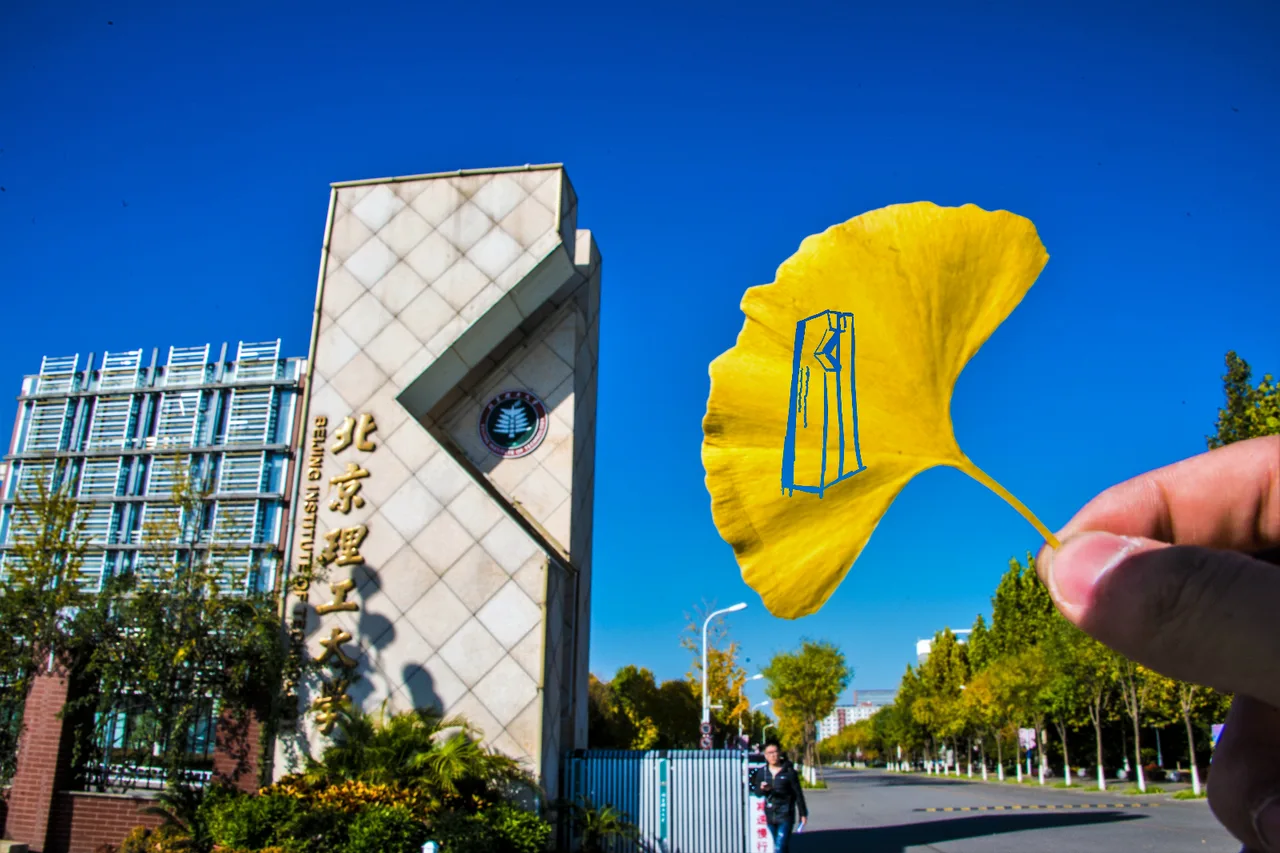
Beijing Institute of Technology (BIT), commonly referred to as BIT, is located in Beijing and is affiliated with the Ministry of Industry and Information Technology. It is a national key university under the direct administration of the central government, and is among the first batch of universities selected for the "211 Project," "985 Project," and the "World-Class Universities" construction (Category A), as well as the "Double First-Class" initiative. The university has been selected for the National Excellent Engineer Education and Training Program, the "2011 Collaborative Innovation Center," the Program of Introducing Talents of Discipline to Universities, the National High-Level University Graduate Scholarship Program, and the National College Student Innovation and Entrepreneurship Training Program. It is also one of the first pilot units for the National Excellent Engineer Academy. The predecessor of the university was the Natural Science Academy, founded in Yan'an in 1940, which was the first specialized institution in the history of the Communist Party of China dedicated to natural science teaching and research. In January 1946, the Yan'an Natural Science Academy was renamed the Shanxi-Chahar-Hebei Border Region Industrial Specialized School, and it moved around North China. In October 1948, the Shanxi-Chahar-Hebei Border Region Industrial Specialized School merged with the Engineering College of Northern University to form the Engineering College of North China University. On November 18, 1951, the Ministry of Education of the Central People's Government renamed the Engineering College of North China University as Beijing Institute of Technology. On April 2, 1988, Beijing Institute of Technology was renamed Beijing Institute of Technology (BIT). As of January 2025, the university has campuses in Zhongguancun, Liangxiang, Xishan, Zhuhai, and Qinhuangdao; campuses under construction include Huailai and Xiong'an (planned). As of May 2025, the campus area is 6.1 million square meters, with a total building area of 3.03 million square meters. As of June 2025, the university has 23 professional colleges, 74 undergraduate programs, 28 postdoctoral research stations, 35 first-level disciplines (all with doctoral degree authorization), and 19 professional degree categories (including 7 doctoral professional degree categories). It has over 6,400 faculty and staff, including over 2,600 full-time teachers, and over 35,000 full-time students. In March 2026, the Artificial Intelligence Practice Laboratory of Beijing Institute of Technology was launched. In 1939, as the War of Resistance Against Japan entered a stalemate, Comrade Li Fuchun, recognizing the urgent need for specialized scientific and technological talent to enhance productivity, proposed to the central government the establishment of the Yan'an Natural Science Research Institute. With the approval and support of the Secretariat of the Central Committee of the Communist Party of China, the Yan'an Natural Science Research Institute began preparations, with Li Fuchun serving as its director and German-trained scientist Chen Kangbai as deputy director and head of the preparatory group. In June 1939, the Yan'an Natural Science Research Institute was officially established and began operations in the office of the Border Region Finance Department. In March 1940, the Secretariat of the Central Committee agreed to rename the Yan'an Natural Science Research Institute as the Natural Science Academy. On September 1, 1940, the Natural Science Academy officially opened, with divisions for university, high school, and junior high school. The university division included departments of chemical engineering, mechanical engineering, civil engineering, agriculture, and forestry and animal husbandry. Over five years in Yan'an, the Natural Science Academy trained about 500 graduates, including scientists like Wu Heng and military generals like Li Lun. On November 15, 1945, the Central Committee of the Communist Party of China instructed over 120 faculty and students from the Natural Science Academy to depart from Yan'an and relocate to the northeast. Due to changes in the situation, the school was stranded in Zhangjiakou and merged with the Shanxi-Chahar-Hebei Border Region Industrial Vocational School, renamed the Shanxi-Chahar-Hebei Border Region Industrial Specialized School. In late September of the same year, Zhangjiakou was attacked, and the school moved to Nuanquan Town in Yu County. In early November, the school was ordered to move again to Bailing Town in Jianping County, where the Shanxi-Chahar-Hebei Border Region Industrial Specialized School merged with the Shanxi-Chahar-Hebei Border Region Railway College to form the Shanxi-Chahar-Hebei Industrial and Communications College. In November 1947, the preparatory class of the Shanxi-Chahar-Hebei Industrial and Communications College moved to Jingxing, Hebei, and was named the Shanxi-Chahar-Hebei Border Region Industrial School. The Shanxi-Hebei-Shandong-Henan Border Region established Northern University in early 1946, with its Engineering College founded in Xingtai in April 1946. In August 1948, the Shanxi-Chahar-Hebei North China United University merged with the Shanxi-Hebei-Shandong-Henan Northern University to form North China University. In September of the same year, the Engineering College of Northern University merged with the Shanxi-Chahar-Hebei Border Region Industrial School in Jingxing, Hebei, to form the Engineering College of North China University. In August 1949, the Engineering College of North China University was ordered to move to liberated Beijing. Based on existing classes such as mechanical and electrical engineering, metallurgy, preparatory classes, and higher vocational classes, the school added classes in physical prospecting and Russian language. In September 1950, the Ministry of Education of the Central People's Government decided to merge the headquarters of Sino-French University in Beijing and its three departments of mathematics, physics, and chemistry into the Engineering College of North China University. By the end of 1951, the college had established seven departments: aeronautical engineering, machine manufacturing, automotive engineering, electrical engineering, metallurgical engineering, chemical engineering, and mining engineering, along with eight programs (including mechanical, electrical, mining, smelting, chemical, Russian language, cadre training, and worker-peasant accelerated classes), one research institute, 25 professional teaching and research groups and specialized groups, and a practice factory and library. The student population increased from 899 the previous year to 1,749, with classes growing from 31 to 52, and courses and experiments offered rising from 43 to 77. In November 1951, the Ministry of Education decided to rename the Engineering College of North China University as Beijing Institute of Technology, effective January 1, 1952. In August 1952, the metallurgy, mining, and steel machinery departments of Beijing Institute of Technology, along with related departments from other institutions, jointly established the Beijing Institute of Iron and Steel. In October 1952, 43 faculty and students from the mining and metallurgy departments of Beijing Institute of Technology were transferred to the Central South Institute of Mining and Metallurgy. In November 1952, the aeronautical engineering department of Beijing Institute of Technology, together with aeronautical departments from other institutions, jointly established the Beijing Institute of Aeronautics, with 689 faculty and students from the aeronautical engineering department of Beijing Institute of Technology transferred there. At the same time, three departments of the Northeast Ordnance Specialized School, along with ordnance faculty, related instruments, equipment, and books, were merged into Beijing Institute of Technology. In 1959, the university was designated a national key university. In 1964, to serve national strategic needs, the university established a radar research institute and developed China's first phased-array radar. From June 1966 to May 1972, the university did not enroll students. After 1977, the university resumed normal teaching and research. On April 2, 1988, Beijing Institute of Technology was renamed Beijing Institute of Technology (BIT), transitioning from a single engineering institution to a comprehensive university with a focus on engineering, complemented by science, management, liberal arts, and other fields. At that time, the university had 16 departments (including flight engineering, automatic control, vehicle engineering, engineering optics, electronic engineering, chemical engineering, mechanical engineering, mechanics engineering, computer science and engineering, management engineering, applied mathematics, applied physics, applied mechanics, foreign languages, industrial design, and humanities and social sciences) with 33 programs, as well as 22 research institutes and 62 laboratories. In 1991, four disciplines—communication and electronic systems, armored vehicle engineering, explosion mechanics, and military optics—were designated as national key disciplines. On July 29, 1994, the institution specializing in degree and graduate education evaluation, the "Evaluation Institute for Degrees and Graduate Education of Higher Education Institutions and Research Institutes," was established at the university. In December 1995, Beijing Institute of Technology was selected as one of the first universities for the "211 Project." By 1995, the university had eight colleges (including the College of Mechatronics Engineering, College of Vehicle Engineering, College of Information Engineering, College of Chemical Engineering and Materials, College of Mechanical Engineering, College of Computer Science, College of Management, and College of Science and Technology) with 11 departments, as well as a Graduate School and a School of Continuing Education. The university established branch campuses in Qinhuangdao and Fangshan District in the suburbs of Beijing.
Sources & verification
- Verification
- Not verified
- Verified on
- 2026-09-21
- Last updated
- 2026-09-24
- Source link
- studyinchina.net ↗
- Source notes
- Compiled from public StudyInChina information (source ID: ed6db021-3e64-48d6-93aa-1ab261716ed8)
Confirm requirements, funding and deadlines in the admissions office’s current announcement.