
Government/University Scholarship
Zhejiang Gongshang University Chinese Language Scholarship
Application status unknownNot verified
If you're interested in studying Chinese for one year in Zhejiang, consider the Zhejiang Gongshang University Chinese Language Scholarship. This is an ideal program to enhance your Chinese language skills while exploring the culture and people of China.
Funding details pending.
- Scholarship type
- Government/University Scholarship
- Degree level
- Bachelor / Master / PhD
- Location
- Zhejiang · Hangzhou
- Application deadline
- Date to be confirmed
Overview
If you're interested in studying Chinese for one year in Zhejiang
consider the Zhejiang Gongshang University Chinese Language Scholarship. This is an ideal program to enhance your Chinese language skills while exploring the culture and people of China.
Funding coverage
Funding tiers
Eligibility may differ by tier. Check the applicable degree and requirements.
Partial funding
- Eligible degree
- Bachelor’s, Master’s, Doctoral
- Funding
- The following scholarship details are compiled by studyinchina.net. Note: Information was updated in 2025 and is for reference. Policies, eligibility and funding may change with university or awarding-body arrangements. Consult official websites or the scholarship administrator for current, accurate information. Introduction to the Zhejiang Gongshang University Chinese Language Scholarship This scholarship supports international students wishing to study Chinese at Zhejiang Gongshang University. Open to new and current students, with selection and review by the university’s scholarship committee. Scholarship Categories University scholarship Eligible Applicants Funding supports one-year Chinese language courses. Scholarship Coverage The funding structure is: New Students Category 1: RMB 4,000 Category 2: RMB 3,000 Category 3: RMB 2,000 Current Students For those who have studied Chinese at the university for at least one semester. Review occurs at the start of each semester, with selection beginning in the second semester. Two types are available: Outstanding Student and Outstanding HSK Performance scholarships. Outstanding Student Scholarship Category 1: RMB 2,000 Category 2: RMB 1,500 Category 3: RMB 1,000 Outstanding HSK Performance Scholarship HSK Level 7 or higher achieved during enrollment: RMB 7,000. HSK Level 5 or higher, improving one level from admission: RMB 4,000. HSK Level 4 or higher, improving one level from admission: RMB 2,000. HSK Level 3 or higher achieved during enrollment: RMB 1,000. Application Deadline and Enrollment Follow university notices and admission plans for exact dates. New-student applications are generally reviewed in January–February for March enrollment or July–August for September enrollment. Application requirements Non-Chinese nationality and compliance with Chinese law; Compliance with university rules; New applicants require an average grade of Good or higher or outstanding performance in another area, and must have paid relevant fees when applying. Current students require attendance of at least 90%, an average grade of Good or higher and no university rule violations. Required Materials New-student assessment is based on academic level. Submit the following to the School of International Education within the prescribed period: Scholarship application form; Students previously studying language at another Chinese university must provide transcripts or a study certificate from its international student office. Chinese language study in China must not exceed two years; Other evidence such as scholarships, awards and published papers. Current students must provide: Scholarship application form; Personal statement in English or Chinese summarizing study at the university and reasons for applying; Supervisor’s recommendation; HSK certificates, award certificates and other relevant materials, if any. Notes New-student scholarship applicants may apply for current-student awards from their second semester. Current-student recipients must maintain good results and comply with university rules. Application Procedure Step 1: Submit the Application Apply through the university’s official application system. Step 2: Submit Materials Include all required materials such as HSK certificates, personal statement and recommendation letters. Materials must be in Chinese or English; other-language documents require authenticated translations. Step 3: Review and Assessment The scholarship committee evaluates academic performance, attendance and language ability. Results are announced after each review cycle. Important Reminders Ensure eligibility and submit all materials before the deadline. Selection is competitive and merit-based; not all applicants receive funding. Places are limited and applications may close when funding is exhausted. Contact information** School of International Education, Zhejiang Gongshang University Address: 18 Xueyuan Road, Hangzhou, Zhejiang Postcode: 310018 Telephone: +86 571 8686 6880 Email: iec@zjgsu.edu.cn The university offers various scholarships, especially for language programs, encouraging international students to study in China and improve Chinese proficiency. This program provides relatively stable support for both new and current international students. Students planning a one-year Chinese course may consider it, with funding opportunities across Chinese proficiency levels. How to Apply If you lack time to handle the process, contact Riba Study Abroad, described here as Vietnam’s leading scholarship application support agency, for advice and assistance to maximize your chances. Riba Contact Information Website: https://riba.vn Hotline: +84 888 666 350 / +84 888 666 152 The above information is compiled by studyinchina.net. Visit the scholarship search section for more opportunities.
- Tier requirements
- Meets the visa, health and academic requirements for study in China
Requirements & documents
Application dates & process
Review Cycle: As specified in each host university’s admissions brochure
Universities & programs
Universities
About the university
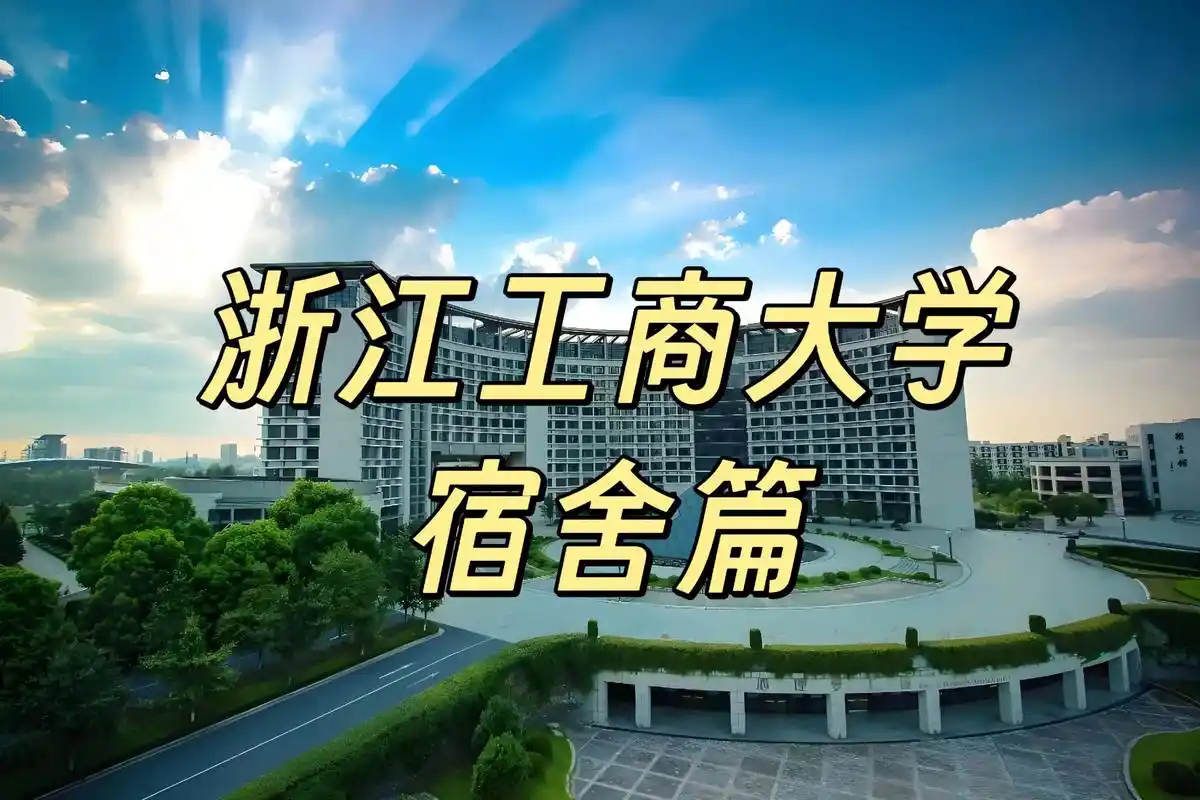
Zhejiang Gongshang University (abbreviated as ZJSU), located in Hangzhou, Zhejiang Province, is a full-time regular institution of higher education jointly established by the Zhejiang Provincial People's Government, the Ministry of Commerce, and the Ministry of Education. It is selected for the Excellent Agricultural and Forestry Talent Education and Training Program, one of the first national bases for Excellent Legal Talent Education, a member of the Belt and Road University Strategic Alliance, and a key construction university in Zhejiang Province. The predecessor of Zhejiang Gongshang University was the Hangzhou Secondary Commercial School founded in 1911. In 1980, it was approved by the State Council to establish Hangzhou Institute of Commerce. In 1990, the university obtained the right to confer master's degrees. In 1998, it was transferred from being directly under the former Ministry of Commerce to a 'central-local co-construction with local management as the mainstay' model. In 1999, Hangzhou Applied Engineering School and Hangzhou Chemical Industry School were merged into the university. In 2001, the law department of the university merged with the former Zhejiang Political Science and Law Management Cadre Institute to form the Law School of Hangzhou Institute of Commerce. In 2003, the university obtained the right to confer doctoral degrees. In 2004, it was renamed Zhejiang Gongshang University with approval from the Ministry of Education. In 2014, the university was selected for the Excellent Agricultural and Forestry Talent Education and Training Program. In 2015, it was designated as a university jointly built by the Zhejiang Provincial People's Government, the Ministry of Commerce, and the Ministry of Education. In 2017, it was identified as a key construction university in Zhejiang Province. As of November 2024, the university offers 61 undergraduate programs. As of January 2025, the university consists of three campuses: Xiasha, Jiaogong Road, and Tonglu, covering an area of 2,740 mu. It has 7 postdoctoral research stations, 9 first-level doctoral degree authorization points, 16 first-level master's degree authorization points, and 24 professional master's degree authorization categories. There are over 2,770 faculty and staff members, including over 2,150 full-time teachers. There are over 28,800 full-time undergraduate students (including independent colleges) and over 8,000 graduate students of various types. As of June 2025, there are 29 secondary colleges. In 1911, Jin Runquan, Zhou Qingyun, and others from the Hangzhou Chamber of Commerce raised funds to establish the Hangzhou Secondary Commercial School, one of the earliest specialized commercial schools in China. On March 15, 1911, the school was officially founded at Huangcuyuan Lane, Mashi Street, Hangzhou, offering general commercial courses, with patriotic gentry Zheng Zaichang serving as the school supervisor (principal). On January 19, 1912, the Ministry of Education of the Republic of China carried out preliminary reforms of the late Qing education system. In April, the school was renamed Zhejiang Public Secondary Commercial School. In the winter of 1913, the school was renamed Zhejiang Provincial Jiazhong Commercial School. In 1922, the Republic of China implemented a school system reform, and in 1923, the school was renamed Zhejiang Provincial Commercial School. In 1926, it was renamed Zhejiang Provincial Commercial Vocational School. In 1927, the school exchanged campuses with Zhejiang Provincial No.1 Middle School, moving to Zhidafangbo (now the Second Affiliated Hospital of Zhejiang University), and began admitting both male and female students. In August 1928, the school was renamed Zhejiang Provincial Senior Commercial Middle School, moving to the former site of the Qiantang Dao Yigong Office at Puchang Lane (now Daxue Road). With the development of higher education in China, strengthening high school education became imperative. To better connect high school and university, on May 17, 1929, the provincial government decided to merge the high school departments of Provincial No.1 and No.2 Middle Schools with the Provincial Senior Commercial Middle School to form Zhejiang Provincial Senior High School, serving as a model for high school education, offering liberal arts, science, teacher training, and commerce programs, located at the former site of Provincial No.1 Middle School at Gongyuanqian. In 1933, the school was renamed Zhejiang Provincial Hangzhou Senior High School. In 1937, the War of Resistance Against Japan broke out in full scale. In November of the same year, the school was forced to move south to Suoyuan, Jinhua County, and then in December to Bihu, Lishui County. In August 1938, the Zhejiang Provincial Department of Education established the Provincial Temporary United High School in Bihu, Lishui, accommodating over 1,000 teachers and students from seven schools, including the Provincial Hangzhou Normal College, Provincial Hangzhou Senior High School, and Provincial Hangzhou Junior High School. In August 1942, the Zhejiang Provincial Department of Education decided to separate the commerce program from the Provincial Temporary United High School and independently establish the Zhejiang Provincial Senior Vocational Commercial School. The school officially opened on September 26 of the same year. In the autumn of 1943, the school added an accounting program, and in the spring of 1945, a statistics program. After the victory of the War of Resistance Against Japan, the school moved back to Hangzhou in January 1946, temporarily renting the Silk Industry Guild Hall at Yindong Bridge, and accepting over 70 students from the junior commerce program of the Zhejiang Provincial Vocational Supplementary School. In October of the same year, the school moved back to the original site of the Zhejiang Provincial Jiazhong Commercial School at Ping'an Bridge. On May 7, 1949, the Military Control Commission of the East China Military Region of the People's Liberation Army was established in Hangzhou. In June of the same year, the Military Control Commission completed the takeover, and the school came under its management. In the summer of 1951, the school moved to the original site of Hangzhou Municipal Middle School at Jinshagang. In 1952, the Zhejiang Provincial Government decided to place the school under the joint leadership of the Provincial Department of Culture and Education and the Department of Commerce. In the same year, Zhejiang Bank School was established, and the banking program of the school was merged into Zhejiang Bank School.
Sources & verification
- Verification
- Not verified
- Verified on
- 2026-09-21
- Last updated
- 2026-09-24
- Source link
- studyinchina.net ↗
- Source notes
- Compiled from public StudyInChina information (source ID: ffcd5627-0c18-46e9-8ddf-d0fb39c3e578)
Confirm requirements, funding and deadlines in the admissions office’s current announcement.