
Government/University Scholarship
Xinjiang Uygur Autonomous Region Government Scholarship
Application status unknownNot verified
Xinjiang is the largest autonomous region in China, known for its beautiful landscapes, with Urumqi as its capital and the economic, cultural, and educational center of the region. The Xinjiang Uygur Autonomous Region Government Scholarship is one of the funding programs for outstanding international students who wish to study in this region.
TuitionAccommodationLiving allowance 1000 CNYMedical insurance
- Scholarship type
- Government/University Scholarship
- Degree level
- Bachelor / Master / PhD
- Location
- Xinjiang · Urumqi
- Application deadline
- Date to be confirmed
Overview
Xinjiang is the largest autonomous region in China
known for its beautiful landscapes
with Urumqi as its capital and the economic
cultural
and educational center of the region. The Xinjiang Uygur Autonomous Region Government Scholarship is one of the funding programs for outstanding international students who wish to study in this region.
Funding coverage
Funding tiers
Eligibility may differ by tier. Check the applicable degree and requirements.
Bachelor’s funding tier
- Eligible degree
- Bachelor’s
- Funding
- Bachelor’s
- Tier requirements
- Meets the visa, health and academic requirements for study in China
Master’s funding tier
- Eligible degree
- Master’s
- Funding
- Master’s
- Tier requirements
- Meets the visa, health and academic requirements for study in China
Doctoral funding tier
- Eligible degree
- Doctoral
- Funding
- Doctoral The following categories may receive preference: Outstanding students from Confucius Institutes or Chinese language development centers in neighboring countries; Outstanding students and teachers from educational institutions closely connected to the scholarship-awarding university; Applicants with excellent HSK results. Scholarship Coverage Tuition: fully waived Accommodation: fully waived Insurance: fully waived Living allowance, paid for ten months each year: RMB 1,000 per month for undergraduates, RMB 1,220 for master’s students and RMB 1,500 for doctoral students. Application Deadline and Enrollment The Xinjiang Uygur Autonomous Region People’s Government Scholarship generally accepts applications before the end of April each year. Consult the relevant university’s latest admissions notice for the specific deadline. Recipients enroll in September each year. Eligibility for the Xinjiang Uygur Autonomous Region People’s Government Scholarship Basic Requirements Applicants must be non-Chinese nationals and in good health; Comply with Chinese laws and university rules; Do not hold another scholarship concurrently. Age and Educational Qualification Requirements
- Tier requirements
- Meets the visa, health and academic requirements for study in China
Bachelor’s funding tier
- Eligible degree
- Bachelor’s
- Funding
- Undergraduate: must have completed high school and be no older than 25;
- Tier requirements
- Meets the visa, health and academic requirements for study in China
Master’s funding tier
- Eligible degree
- Master’s
- Funding
- Master’s: must hold a bachelor’s degree and be no older than 35;
- Tier requirements
- Meets the visa, health and academic requirements for study in China
Doctoral funding tier
- Eligible degree
- Doctoral
- Funding
- Doctoral: master’s degree and no older than 40. Language requirements Chinese-taught applicants must provide an HSK certificate; English-taught applicants must provide a valid IELTS or TOEFL certificate. Application materials Applicants for the Xinjiang Uygur Autonomous Region Government Scholarship must prepare: Passport; Passport photograph; Graduation certificate or provisional graduation certificate; Academic transcripts; The university’s International Student Application Form; Study/research plan for China; Language certificate; Master’s and doctoral applicants must provide two recommendation letters from professors or associate professors and a research plan of at least 800 characters; the source does not specify an English word-count equivalent; International student physical examination certificate, valid for six months; Certificate of no criminal record, valid for six months; Applicants under 18 must provide a legal guardian declaration signed by their guardian in China. Other supplementary materials, if any. Notes: All materials must be submitted in English or Chinese; Other-language materials require notarized English or Chinese translations. Xinjiang Uygur Autonomous Region Government Scholarship Application Procedure Step 1: Select a major and university, prepare all required materials, register online as required and submit paper materials if requested. Step 2: Take the entrance examination/interview. Step 3: Receive the scholarship result. The scholarship is described as offering stable, broad funding and a strong opportunity for international students with limited financial resources. The source describes Xinjiang as less bustling and less convenient for transportation, and potentially less suitable for those seeking a large developed city. For those interested in a culturally distinctive region with magnificent natural scenery, Xinjiang is presented as a good choice. Other scholarships applicable in the region include Chinese Government Scholarships and CIS scholarships. How to Apply for the Xinjiang Uygur Autonomous Region Government Scholarship? If you wish to study in China but lack time for the application, contact Riba, described here as Vietnam’s leading Chinese scholarship application support agency, for advice and assistance to maximize your chances of success. Riba Contact Information: Website: https://riba.vn Hotline: +84 888 666 350 / +84 888 666 152 The above information was compiled by studyinchina.net. Visit the School Scholarship Search section to explore further opportunities for study in China.
- Tier requirements
- Meets the visa, health and academic requirements for study in China
Requirements & documents
Application dates & process
Review Cycle: As specified in each host university’s admissions brochure
Universities & programs
Universities
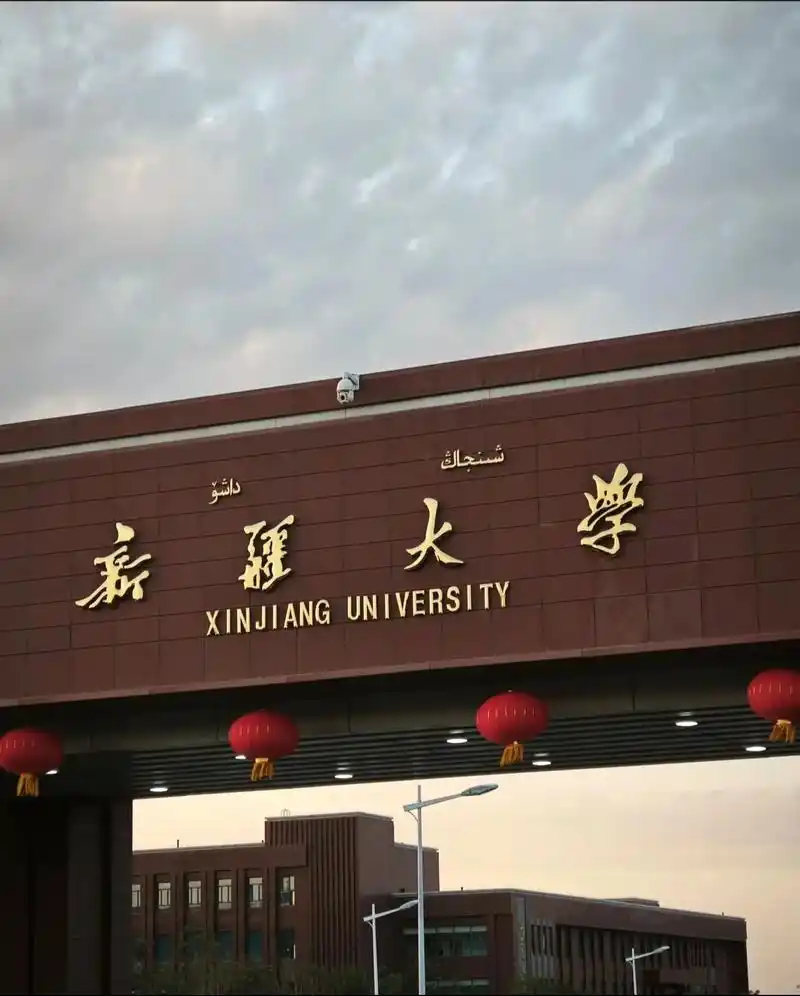
About the university
Xinjiang University (XJU), located in Urumqi, is the first institution of higher education in Xinjiang's history. It is a university co-established by the Ministry of Education of the People's Republic of China and the People's Government of Xinjiang Uygur Autonomous Region, a comprehensive research-oriented national key university, one of the first batch of universities in the national "Double First-Class" initiative (42 world-class universities), and one of the first batch of key universities under the national "Project 211". The university is a key institution under the national Western Development Strategy and has been selected for the "Plan 111", the Comprehensive Strength Improvement Project for Universities in Central and Western China, the National High-Level University Graduate Student Public Scholarship Program, the Chinese Government Scholarship Institution for International Students, the Excellent Engineer Education and Training Program, the Excellent Legal Talent Education and Training Program, the National Demonstration University for Deepening Innovation and Entrepreneurship Education Reform, one of the first batch of university bases for scientific and technological achievement transformation and technology transfer, the Z14 Alliance of National Key Universities under the "One Province, One University" Initiative for Central and Western China, a founding member of the China-Central Asia University Alliance, and a member of the Shanghai Cooperation Organization University. In 1924, the Xinjiang Russian Law and Politics School was established, marking the beginning of higher education in Xinjiang. In 1935, it was restructured into Xinjiang College. In 1947, it was planned to be restructured into "National Tianshan University". In 1950, Xinjiang College was renamed Xinjiang Nationalities College, later reverting to Xinjiang College. On October 1, 1960, Xinjiang University was formally established based on Xinjiang College. In 2000, Xinjiang University merged with the former Xinjiang Institute of Technology to form the new Xinjiang University. The university covers an area of 4,790 mu (approximately 319 hectares), with a total building area of 1.335 million square meters. It has 37 teaching and research institutions, 87 undergraduate programs, 16 first-level doctoral degree authorization points, 3 professional doctoral degree categories, 40 first-level master's degree authorization points, 22 professional master's degree categories, 13 postdoctoral research stations, 2,158 full-time teachers, and 41,428 students of various types. The historical origins of Xinjiang University can be traced back to the Sino-Russian School established in 1887, the Boda Academy established in 1891, the Xinjiang Higher School established in 1905, and the Xinjiang Law and Politics School established in 1906. In the late 19th century, the Westernization Movement gradually spread to Xinjiang. In the 13th year of the Guangxu reign of the Qing Dynasty (1887), Liu Jintang, the Governor of Xinjiang, following the charter of the Imperial College of Translators in Beijing, established the Sino-Russian School (also known as the Xinjiang Russian Language School) to train Russian-Chinese translators for Xinjiang, and also added English language courses with a five-year academic system. At the beginning of the 20th century, the Qing government began to implement the "New Policies". In 1905, Wu Yinsun, the Governor of Xinjiang, petitioned the Qing court to convert the Boda Academy (established in 1891) into the Xinjiang Higher School, and also established the "Official Training Institute", which was the prototype of modern higher education in Xinjiang. In 1906, Lian Kui, the Governor of Xinjiang, converted the Official Training Institute into the Xinjiang Law and Politics School, offering courses in Chinese law, history, geography, mathematics, education, and ethics, with a two-year academic system. In 1911, the Xinhai Revolution broke out. Yuan Dahua, the Governor of Xinjiang, diverted education funds for military use to stabilize Xinjiang, leading to the suspension of the Sino-Russian School, the Higher School, and the Law and Politics School.
Sources & verification
- Verification
- Not verified
- Verified on
- 2026-09-21
- Last updated
- 2026-09-24
- Source link
- studyinchina.net ↗
- Source notes
- Compiled from public StudyInChina information (source ID: fa5753be-b061-4484-92cb-bae743ba2c64)
Confirm requirements, funding and deadlines in the admissions office’s current announcement.