
Government/University Scholarship
ZUEL 'Study in Zhongnan' Scholarship Program for New International Students
Application status unknownNot verified
The Zhongnan University of Economics and Law "Study in Zhongnan" Scholarship supports new international students at Bachelor's, Master's, and Doctoral levels.
TuitionAccommodationMedical insurance
- Scholarship type
- Government/University Scholarship
- Degree level
- Bachelor / Master / PhD
- Location
- Hubei · Wuhan
- Application deadline
- Date to be confirmed
Overview
The Zhongnan University of Economics and Law Study in Zhongnan Scholarship supports new international students at Bachelor's
Master's
and Doctoral levels.
Funding coverage
Funding tiers
Eligibility may differ by tier. Check the applicable degree and requirements.
Bachelor’s funding tier
- Eligible degree
- Bachelor’s
- Funding
- Bachelor’s
- Tier requirements
- Meets the visa, health and academic requirements for study in China
Master’s funding tier
- Eligible degree
- Master’s
- Funding
- Master’s
- Tier requirements
- Meets the visa, health and academic requirements for study in China
Doctoral · Category B
- Eligible degree
- Doctoral
- Funding
- Category B and [source fragment]
- Tier requirements
- Meets the visa, health and academic requirements for study in China
Doctoral · Category C
- Eligible degree
- Doctoral
- Funding
- Category C:
- Tier requirements
- Meets the visa, health and academic requirements for study in China
Doctoral · Category B
- Eligible degree
- Doctoral
- Funding
- Type B: tuition, application, accommodation and insurance fee waivers, plus a monthly living allowance of RMB 1,500
- Tier requirements
- Meets the visa, health and academic requirements for study in China
Doctoral · Category C
- Eligible degree
- Doctoral
- Funding
- Type C: tuition, application, accommodation and insurance fee waivers. Scholarships for current students Scholarships for current students are divided into four categories:
- Tier requirements
- Meets the visa, health and academic requirements for study in China
Doctoral · Category A
- Eligible degree
- Doctoral
- Funding
- Type A scholarship: tuition, accommodation and insurance fee waivers, plus a monthly living allowance of RMB 2,500
- Tier requirements
- Meets the visa, health and academic requirements for study in China
Doctoral · Category B
- Eligible degree
- Doctoral
- Funding
- Type B scholarship: tuition, accommodation and insurance fee waivers, plus a monthly living allowance of RMB 1,500
- Tier requirements
- Meets the visa, health and academic requirements for study in China
Doctoral · Category C
- Eligible degree
- Doctoral
- Funding
- Type C scholarship: tuition, accommodation and insurance fee waivers
- Tier requirements
- Meets the visa, health and academic requirements for study in China
Doctoral · Category D
- Eligible degree
- Doctoral
- Funding
- Category D scholarship: tuition and insurance waived. Application Deadline and Enrollment Application deadline: May 15 Enrollment: September Scholarship Eligibility Basic Requirements Non-Chinese nationality and a valid ordinary passport; Friendly toward China, a clean personal record and no criminal record; Not receiving a Chinese Government Scholarship or funding from another organization. Educational Qualifications Undergraduate applicants: education equivalent to graduation from a Chinese senior high school and excellent academic performance; Master’s applicants: undergraduate education and GPA at least 3.0; Doctoral applicants: master’s-level education, a good academic and research background and GPA at least 3.0. Educational Qualifications Chinese-taught programs: HSK Level 4 or higher for undergraduate applicants; HSK Level 5 or higher for master’s and doctoral applicants. English-taught programs: IELTS 6.0 or TOEFL at least 80. Application materials Documents in languages other than Chinese and English require notarized Chinese or English translations: Passport identity page. Provide a clear scan of the identity page of your ordinary passport, valid beyond March 1, 2025. Renew your passport promptly if its validity does not meet this requirement; Identification photograph. Upload a color two-inch bareheaded identification photograph with a white background and no border, 100–500KB, in JPG format; Guardian guarantee for minors. Applicants under 18 must submit an authorization document signed by their guardian in China (Guardian Guarantee for Students under 18.docx); Proof of highest educational qualification (color scan of the original). Current students must provide expected graduation or enrollment certification from their school. Documents in languages other than Chinese and English must include notarized Chinese or English translations; Academic transcripts. Scans must cover high school, undergraduate studies (if applicable) and master’s studies (if applicable) through the latest semester. Transcripts must be issued and stamped by the school’s academic affairs office, graduate school or relevant student administration department. Documents in languages other than Chinese and English must include notarized Chinese or English translations; Study or research plan in China. Include basic application information, a personal statement, existing research results, research objectives and a detailed study plan (at least 1,000 Chinese characters or English words, according to the chosen writing language), and post-graduation plans. Write only in Chinese or English (Study Plan for International Student Applicants.docx); Recommendation letters. Master’s and doctoral applicants must submit letters from two professors or associate professors. These should focus on the applicant’s objectives and requirements for study in China, cooperation between the Chinese institution or supervisor and the overseas supervisor or institutional exchanges, and an assessment of the student’s overall abilities and future development. Write only in Chinese or English and include personal signatures and contact details; Language proficiency evidence. Chinese-taught applicants must provide an HSK certificate meeting the application requirements. English-taught applicants must provide IELTS or TOEFL results, or evidence that their preceding degree was taught entirely in English; Copy of the Foreigner Physical Examination Form (retain the original; this form is uniformly printed by China’s health and quarantine authorities and must be completed in English). Complete all examinations required by the form. Forms with missing items, without the applicant’s photograph or a seal across it, or without the physician’s and hospital’s signatures and stamps are invalid. Results are valid for six months (Physical Examination Form.doc); Certificate of no criminal record. Submit a certificate issued by the local public security authority within its validity period, normally issued within six months before the application submission date; Other materials, such as published papers, award certificates and proof of work or internships, if any. Self-introduction video. Include (1) a self-introduction, (2) your understanding of China and (3) your study plan in China. AVI, mov or mp4 formats are accepted. Use the instruction language of your proposed major. File size must be at most 50M and duration at most 180 seconds; Students graduating in China must submit their Chinese residence permit page and a performance certificate from their current institution. Note: All materials uploaded through the system must be clear, authentic and valid. Professional scanning equipment is recommended. Applicants bear the consequences of unclear or unreadable submissions; The university does not accept paper materials by post; Admission materials will be sent to the permanent address entered in the application form. Ensure accuracy and do not provide a post office address; Scholarship recipients must bring the originals of all the above materials at registration for on-site verification. Those who submitted expected graduation certificates must bring their formal graduation certificates; The university has not authorized any individual or intermediary to recruit scholarship students. Contact the university directly about scholarship applications. From 2024 onward, undergraduate admission requirements follow the latest national policies. Application Procedure Step 1: Register and log in to Zhongnan University of Economics and Law’s International Student Online Service System (http://iesmis.zuel.edu.cn/member/login.do). Step 2: Select the International Student Scholarship Program, complete the application information and upload materials as required. Step 3: The university reviews the materials. Step 4: Receive the scholarship result. Contact details Address: College of International Education, Zhongnan University of Economics and Law, 182 Nanhu Avenue, East Lake High-Tech Development Zone, Wuhan, Hubei, China Postal code: 430073 Contacts: Teacher Gan and Teacher Zhang Telephone: 0086-27-88387760 Email: admissions@zuel.edu.cn Website: http://ies.zuel.edu.cn How to Improve Your Chances of Receiving Zhongnan University of Economics and Law’s Study at Zhongnan Scholarship for New International Students If you lack time to research and handle an application for this scholarship or another CSC scholarship, contact RIBA International Cooperation Co., Ltd. for professional advice and application support to maximize your chances of success! RIBA Contact Information: Facebook: Du học Trung Quốc Riba.vn Website: https://riba.vn Hotline: +84 888 666 350 Hotline: +84 888 666 152 The above information on Zhongnan University of Economics and Law’s Study at Zhongnan Scholarship for New International Students was compiled by studyinchina.net. Visit Scholarship Search to explore other scholarship types.
- Tier requirements
- Meets the visa, health and academic requirements for study in China
Requirements & documents
Application dates & process
Review Cycle: As specified in each host university’s admissions brochure
Universities & programs
Universities
About the university
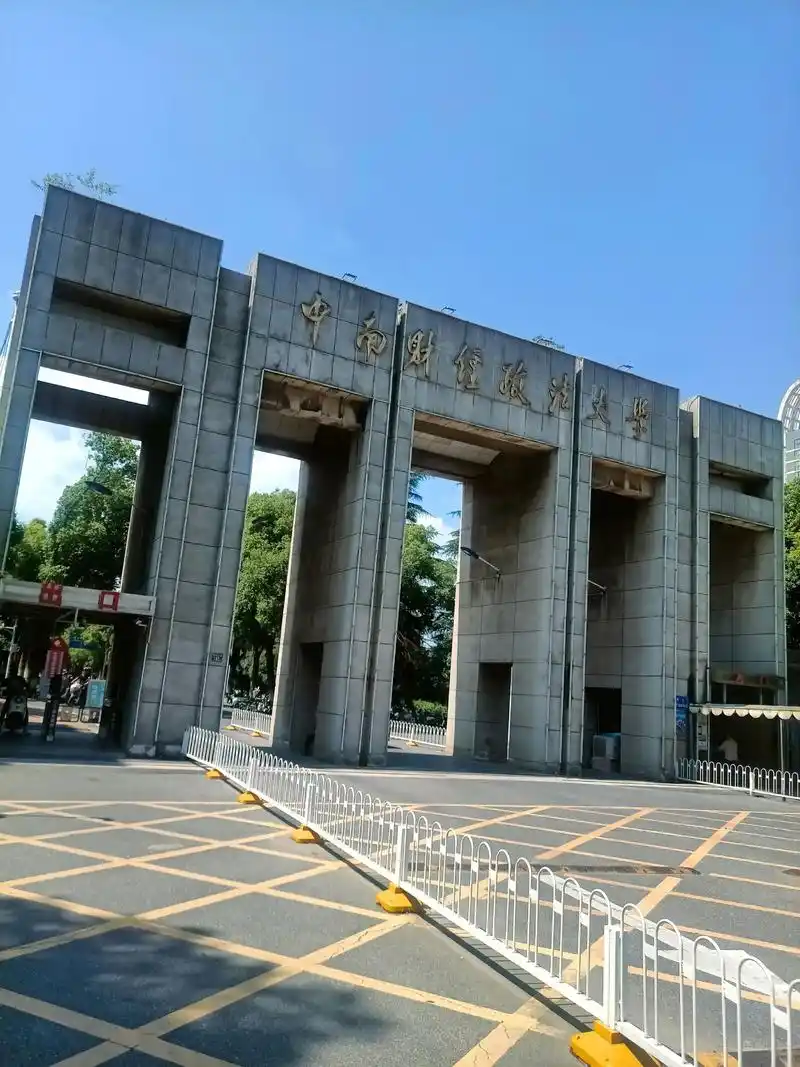
Zhongnan University of Economics and Law (ZUEL), located in Wuhan, Hubei Province, is a national key university directly under the Ministry of Education. It is a key institution in the national "211 Project" and "985 Project Advantage Discipline Innovation Platform", a national "Double First-Class" construction university, and a university jointly built by the Ministry of Education, the Ministry of Finance, and Hubei Province. The university traces its origins to the Central Plains University, founded in 1948 by the Central Plains Bureau of the Central Committee of the Communist Party of China, with Deng Xiaoping as its first secretary. In May 1953, the Central South Institute of Finance and Economics and the Central South Institute of Political Science and Law were established separately. In September 1958, the Central South Institute of Finance and Economics, the Central South Institute of Political Science and Law, the Central South Political Science and Law Cadre School, and the Law Department of Wuhan University merged to form Hubei University. In December 1971, Hubei University was renamed Hubei College of Finance and Economics. In January 1978, it was renamed Hubei Institute of Finance and Economics. In September 1985, Hubei Institute of Finance and Economics was renamed Zhongnan University of Finance and Economics. On May 26, 2000, Zhongnan University of Finance and Economics and the Central South Institute of Political Science and Law merged to form the new Zhongnan University of Economics and Law. In September 2005, it was selected as a key university under the national "211 Project"; in June 2011, it was selected as a key university under the national "985 Project Advantage Discipline Innovation Platform". In October 2012, the Ministry of Education, the Ministry of Finance, and the People's Government of Hubei Province signed an agreement to jointly build Zhongnan University of Economics and Law. In September 2017 and February 2022, it was selected for the first and second rounds of the national "Double First-Class" construction universities and disciplines list. As of June 2024, the university has two campuses, Nanhu and Shouyi, covering an area of over 2,800 mu; the library holds more than 3.48 million books; it has 21 colleges (departments), 61 undergraduate programs, 7 first-level doctoral degree authorization points, 17 first-level master's degree authorization points, 18 professional master's degree authorization points, and 7 postdoctoral research stations; it has over 2,500 faculty and staff, including over 1,500 full-time teachers; and over 20,000 full-time undergraduate students. In June 1948, the Central Plains Bureau of the Central Committee of the Communist Party of China, with Comrade Deng Xiaoping as its first secretary, decided and reported to the Central Committee of the Communist Party of China for approval to prepare for the establishment of Central Plains University. Comrade Chen Yi, the second secretary, served as the director of the preparatory committee. In August, Comrade Liu Bocheng, commander of the Central Plains Military Region, officially announced the establishment of Central Plains University in Henan, appointing Comrade Fan Wenlan as president and Comrade Pan Zinian as vice president. In December, Central Plains University moved to Kaifeng. In 1949, to support Wuhan and revitalize cultural and educational undertakings in the Central South region, Central Plains University moved south from Henan Province to Wuhan. On August 15, 1951, the Ministry of Education of the Central South Military and Political Committee decided to merge the Education College of Central Plains University with the private Huazhong University to form the public Huazhong University, which later grew into today's Central China Normal University. In September 1952, the Central South Bureau, urgently needing to train a group of public security and political-legal cadres, instructed Central Plains University to establish a Political Science and Law College based on the already dissolved Political College. The college was officially established on October 14. At that time, Central Plains University actually included three colleges: Finance and Economics, Political Science and Law, and Ethnic Studies (in preparation). In November of the same year, after the new dormitory of the Ethnic College was completed, the Central South Military and Political Committee instructed the college to become independent from Central Plains University and renamed it the Central South Institute for Nationalities, which later grew into today's Zhongnan University of Nationalities. During the nationwide adjustment of higher education institutions in 1953, the university, with the Finance and Economics College of Central Plains University as the main body, merged the faculty and library resources of finance and economics disciplines from Sun Yat-sen University, Hunan University, Nanchang University, Henan University, Guangxi University, Wuhan University, and Zhonghua University to form the Central South Institute of Finance and Economics. Ma Zhemin served as president, and Zhu Mingyuan served as party secretary and vice president. The Central South Institute of Finance and Economics was under the Ministry of Education. At the same time, with the Political Science and Law College of Central Plains University as the main body, merging the political science and law departments of National Sun Yat-sen University, National Hunan University, and National Guangxi University, the Central South Institute of Political Science and Law was established, directly under the Ministry of Justice, and was one of the famous "Five Institutes and Four Departments" in the Chinese legal field at that time. In 1958, Hubei Province took over the Central South Institute of Finance and Economics and the Central South Institute of Political Science and Law from the Ministry of Education and the Ministry of Justice, and merged them with the Central South Political Science and Law Cadre School and the Law Department of Wuhan University to form the provincial Hubei University. At the same time, it expanded literature, history, mathematics, and physics majors, intending to build Hubei University into a comprehensive university. The president was concurrently held by Meng Futang, vice governor of Hubei Province, with Zhu Shaotian as party secretary and Li Guangdou as vice president in charge of work. During the "Cultural Revolution," Hubei University was forced to be abolished and reduced to Hubei College of Finance and Economics. From 1971 to 1977, this was the most desolate six years in the university's development history. In January 1978, the school was renamed Hubei Institute of Finance and Economics, restoring four-year undergraduate education and graduate education, becoming one of the earliest higher education institutions to resume undergraduate and graduate enrollment after the "Cultural Revolution." In January 1979, the school's leadership system changed, and it was placed under the leadership of the Ministry of Finance, marking the beginning of a period of rapid development.
Sources & verification
- Verification
- Not verified
- Verified on
- 2026-09-21
- Last updated
- 2026-09-24
- Source link
- studyinchina.net ↗
- Source notes
- Compiled from public StudyInChina information (source ID: 0c5843b1-6a97-4770-88ad-944fb79f8a52)
Confirm requirements, funding and deadlines in the admissions office’s current announcement.