
Government/University Scholarship
DAFI Scholarship
Application status unknownNot verified
DAFI Scholarship is a sponsorship program jointly funded by SUFE and the University of California, Berkeley (UCB) - one of the most prestigious universities in the United States
Funding details pending.
- Scholarship type
- Government/University Scholarship
- Degree level
- Bachelor / Master / PhD
- Location
- Shanghai · Shanghai
- Application deadline
- Date to be confirmed
Overview
DAFI Scholarship is a sponsorship program jointly funded by SUFE and the University of California
Berkeley (UCB) - one of the most prestigious universities in the United States
Funding coverage
Funding tiers
Eligibility may differ by tier. Check the applicable degree and requirements.
Standard funding
- Eligible degree
- Bachelor’s, Master’s, Doctoral
- Funding
- The program offers outstanding students comprehensive funding and an intensive environment combining theory and practice at two leading educational centers. The following scholarship details are compiled by studyinchina.net. Note: Information was updated in 2025 and is for reference. Policies, eligibility and funding may change with university or awarding-body arrangements. Consult official websites or the scholarship administrator for current, accurate information. Introduction to the Shanghai University of Finance and Economics Master of Finance Scholarship (Recruitment has stopped) The scholarship is jointly established by SUFE and the University of California, Berkeley (UCB), with applications beginning in 2024. Jointly funded by SUFE’s advanced finance institute and UCB’s Haas School of Business, it offers core financial engineering courses annually. Successful completion and thesis defense earn a SUFE Master of Finance degree and UCB completion certificate. The DAFI Scholarship offers an advanced, specialized environment for finance students and has attracted substantial interest despite being new. Partner Institution University of California, Berkeley (UCB) UCB is a prominent US public university, placed in the global top ten in the 2024 QS ranking cited by the source. The source describes Haas as regularly among the world’s top ten business schools, with one of the leading US financial engineering programs. Faculty from leading business schools teach current finance topics including risk management, international capital and currency markets, digital finance and other advanced subjects. Scholarship type University Scholarship Eligibility The scholarship is specifically for the Dushui Lake Advanced Institute of Finance–Berkeley International Financial Engineering Program, the International Financial Engineering track within the Master of Finance [institution name retained as stated]. The bilingual Chinese-English program offers the following courses: Chinese-taught programs Mathematics for Financial Engineering Statistics for Financial Engineering Python Programming Investment Science Financial Statement Analysis Financial Derivatives Analysis Financial Institutions and Markets English-taught programs Empirical Methods Financial Data Science Risk Management International Equity and Currency Markets Fixed-Income Markets Dynamic Asset Management Digital Finance Scholarship Coverage Funding supports a two-year course, with amounts determined by qualifications and performance. Consult current admissions information or the university for benefit details. Application Deadline and Enrollment Application period: January 1–April 30 annually Enrollment: September Note: Deadlines may vary; follow current notices. DAFI Scholarship Eligibility General Requirements Non-Chinese citizenship and good health. Goodwill and friendship toward China. Good character, no criminal record and compliance with Chinese laws and university rules. Academic Requirements Bachelor’s degree, good academic results and no older than 35. Language requirements English-taught programs: TOEFL 80 or IELTS 6.5 or higher. Chinese-taught programs: HSK Level 5, minimum 180. Note: A formal graduation certificate is required before enrollment, or eligibility is canceled. Application materials Required Materials: ID photograph Passport copy Bachelor’s degree and relevant academic qualification certificates, where applicable; Academic transcripts; Language certificates valid within two years of issue; Study plan Two recommendation letters from professors or associate professors in Chinese or English, including institutions, positions, contact details and signatures; Foreigner Physical Examination Form, valid within six months; Certificate of no criminal record, valid within six months; Financial evidence; Other supplementary evidence such as academic or extracurricular certificates, awards or publications. Applicants in China must provide a valid visa or residence permit. Important Notes: Scan multiple documents into one PDF or Word file for upload. Non-English documents require Chinese or English translations with official notarization. Incomplete applications are not accepted. Additional materials may be requested during application. Application Procedure Step 1: Application Fee RMB 830 or equivalent foreign currency Payment by bank transfer Domestic Transfer Account name: Shanghai University of Finance and Economics Account number: 442959257313 Bank: Bank of China, Shanghai Wujiaochang Sub-branch International Transfer Account name: SHANGHAI UNIVERSITY OF FINANCE AND ECONOMICS Account number: 442959257313 Bank: BANK OF CHINA SHANGHAI BRANCH SWIFT code: BKCCNBJ300 [as stated in the source] Address: Bank of China Tower, 200 Yincheng Middle Road, Shanghai, China 200120 Note: Application fee is nonrefundable. Step 2: Online Application Complete the online SUFE international student application and upload scans. Step 3: Document Review The university reviews materials and may request supplements. Step 4: Interview Eligible applicants receive early-May email invitations to online interviews. Step 5: Results Results are generally announced at the end of May; successful applicants must confirm admission. Step 6: Admission Documents Receive the formal Admission Notice and related documents. Contact details College of International Cultural Exchange, Shanghai University of Finance and Economics Address: Room 620, 321 Wudong Road, Yangpu District, Shanghai 200433 Telephone: +86-21-65361944 Email: ices@sufe.edu.cn The source describes DAFI as a globally competitive, intellectually enriching environment for future finance professionals, combining SUFE and UCB strengths in academic and practical training. How to Apply for DAFI If you lack time to research and prepare materials, contact Riba, described here as Vietnam’s leading Chinese scholarship support service, for professional advice and assistance. Contact Riba Website: https://riba.vn Hotline: +84 888 666 350 | +84 888 666 152 Compiled by studyinchina.net. Explore the scholarship search section for more opportunities.
- Tier requirements
- Meets the visa, health and academic requirements for study in China
Requirements & documents
Application dates & process
Review Cycle: As specified in each host university’s admissions brochure
Universities & programs
Universities
About the university
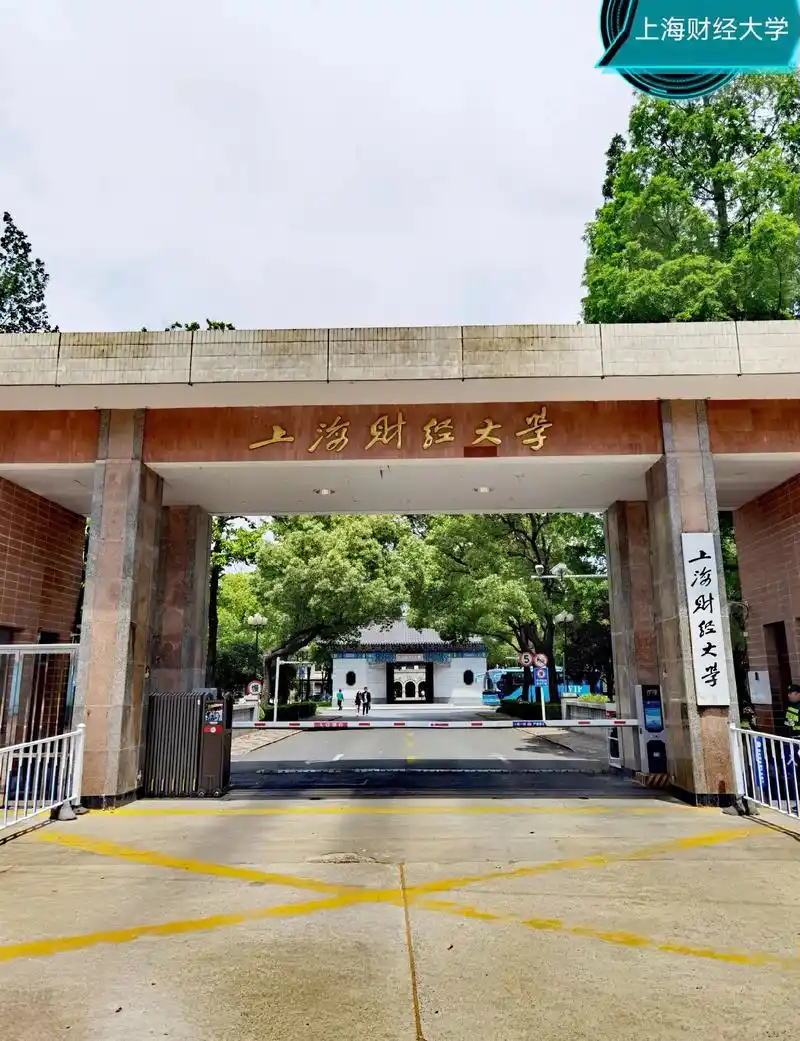
Shanghai University of Finance and Economics (SUFE), located in Shanghai, is a key national university directly under the Ministry of Education of the People's Republic of China. It is jointly established by the Ministry of Education, the Ministry of Finance of the People's Republic of China (hereinafter referred to as the Ministry of Finance), and the Shanghai Municipal People's Government. SUFE is a multidisciplinary key university with a focus on economics and management, while also coordinating the development of economics, management, law, literature, science, and engineering. It has been selected into the national "Double First-Class" initiative, "Project 211", and the "Innovation Platform for Advantageous Disciplines". SUFE traces its origins to the business program offered by Nanjing Higher Normal School in 1917. In 1921, the program was expanded, reorganized, and relocated to Shanghai, establishing the Shanghai College of Commerce as a branch of National Southeast University. In 1932, it became an independent institution and was named National Shanghai Institute of Commerce. In 1950, it was renamed Shanghai Institute of Finance and Economics. In 1985, it was renamed Shanghai University of Finance and Economics. In 1996, it became a key university under "Project 211". In 2000, the university was transferred from the Ministry of Finance to the leadership of the Ministry of Education. In 2006, it became a university under the "Innovation Platform for Advantageous Disciplines". In 2017, it entered the national "Double First-Class" construction sequence. As of November 2023, the university offers 40 undergraduate programs; as of October 2024, it has 10 first-level doctoral degree authorization points, 15 first-level master's degree authorization points, 17 professional master's degree authorization points, 1 professional doctoral degree authorization point, and 8 postdoctoral research stations. As of June 2025, it has three campuses, with the main campus located at No. 777 Guoding Road, covering an area of 812.9 mu (approximately 54.2 hectares). It comprises 28 schools and departments, with 987 full-time faculty members and a total student population of 18,299. SUFE originated from the business program of Nanjing Higher Normal School in 1917. Nanjing Higher Normal School itself evolved from the "Sanjiang Normal School" and "Liangjiang Normal School" established in the late Qing Dynasty. The "Sanjiang Normal School" was founded in May 1902 when Liangjiang Governor Liu Kunyi submitted a memorial to establish a normal school. In February 1903, Acting Liangjiang Governor Zhang Zhidong submitted another memorial, which was approved. The new Liangjiang Governor Wei Guangtao managed the process, leading to the establishment of Sanjiang Normal School. In July 1914, Jiang Qian became the president of Liangjiang Normal School. In August 1914, Jiang Qian became the president of Nanjing Higher Normal School, using the former campus of Liangjiang Normal School to prepare for the establishment of Nanjing Higher Normal School. In 1915, Nanjing Higher Normal School was officially established. In 1917, to meet the demand for business talent in national industry and commerce, Nanjing Higher Normal School established a business program, which is the origin of Shanghai University of Finance and Economics. In April 1920, then-President Guo Bingwen proposed the establishment of a new national university based on Nanjing Higher Normal School. In December of the same year, the proposal was approved by the Beiyang government. In September 1921, National Southeast University was established, with Guo Bingwen as president. In July 1922, the Shanghai College of Commerce was established as a branch of National Southeast University. In the spring of 1925, the Accounting Department students of Shanghai College of Commerce founded the "National Southeast University Shanghai College of Commerce Accounting Society" with the aim of "studying existing theories, investigating China's existing accounting systems, and seeking improvements." This was the first academic society at Shanghai College of Commerce. In the spring of 1926, the Gengwu class (class of 1930) of Shanghai College of Commerce organized an "Academic Research Society" that met every Friday. In July 1927, it was renamed the Business School of the Fourth National Sun Yat-sen University. In February 1928, it was renamed the Business School of Jiangsu University. In May of the same year, it was renamed the Business School of National Central University. In early July 1932, the Executive Yuan of the National Government established the Central University Reorganization Committee with Cai Yuanpei as chairman. On July 19, 1932, the committee made a decision to separate the Business and Medical Schools of National Central University located in Shanghai, change their departments, and define their administrative organizations, which was submitted to the Ministry of Education for approval. On August 16, 1932, the Ministry of Education issued a document ordering the Business School of National Central University to be renamed National Shanghai Institute of Commerce.
Sources & verification
- Verification
- Not verified
- Verified on
- 2026-09-21
- Last updated
- 2026-09-24
- Source link
- studyinchina.net ↗
- Source notes
- Compiled from public StudyInChina information (source ID: b46b7b33-3a40-4904-a0dc-83d9d32dd60a)
Confirm requirements, funding and deadlines in the admissions office’s current announcement.