
Government/University Scholarship
Yunnan University Scholarship
Application status unknownNot verified
Yunnan University Scholarship offers international students full tuition and dormitory coverage for undergraduate, master’s, and doctoral programs.
TuitionAccommodation
- Scholarship type
- Government/University Scholarship
- Degree level
- Bachelor / Master / PhD
- Location
- Yunnan · Kunming
- Application deadline
- Date to be confirmed
Overview
Yunnan University Scholarship offers international students full tuition and dormitory coverage for undergraduate
master’s
and doctoral programs.
Funding coverage
Funding tiers
Eligibility may differ by tier. Check the applicable degree and requirements.
Bachelor’s · Full scholarship
- Eligible degree
- Bachelor’s
- Funding
- Full scholarship and [source fragment]
- Tier requirements
- Meets the visa, health and academic requirements for study in China
Bachelor’s · Partial scholarship
- Eligible degree
- Bachelor’s
- Funding
- Partial scholarship:
- Tier requirements
- Meets the visa, health and academic requirements for study in China
Bachelor’s · Full scholarship
- Eligible degree
- Bachelor’s
- Funding
- Full scholarship: tuition and accommodation fee waivers
- Tier requirements
- Meets the visa, health and academic requirements for study in China
Bachelor’s · Partial scholarship
- Eligible degree
- Bachelor’s
- Funding
- Partial scholarship: 50% waiver of tuition and accommodation fees. Deadline and enrollment Application deadline: April 30 each year. Enrollment: September each year. Note: deadlines may change with annual enrollment plans; consult the latest information or contact the university. Yunnan University scholarship eligibility Non-Chinese nationality and good health; compliance with Chinese laws and regulations and respect for Chinese customs; good conduct and no criminal record; excellent academic results with GPA at least 2.8/4 or 70/100. Age and education requirements
- Tier requirements
- Meets the visa, health and academic requirements for study in China
Bachelor’s funding tier
- Eligible degree
- Bachelor’s
- Funding
- Undergraduate: high school graduation, ages 18–30; Master’s: bachelor’s degree, ages 20–40; Doctoral: master’s degree, ages 22–45. Language requirements Chinese-taught programs: valid HSK Level 4 certificate with at least 180, within its two-year validity; English-taught programs: meet the intended major’s specific language requirements. Note: Meet any other specific requirements of the intended major. Application materials Yunnan University Scholarship applicants must visit https://ynu.at0086.cn/StuApplication/Login.aspx and upload: Yunnan University International Student Admission Application Form, downloaded and completed in the system; Passport; Photograph; Foreigner Physical Examination Form, valid within six months; Certificate of no criminal record, valid within six months; Graduation certificate; those not yet graduated may provide graduation or enrollment evidence but must present the formal certificate upon enrollment; Transcripts or academic evidence; Study or research plan, at least 1,000 characters; writing language unspecified in the source; Two recommendation letters from professors or associate professors for master’s and doctoral applicants; Proof of language proficiency; Music applicants must provide a CD of their own work. Fine arts applicants must provide six color photographs of their own works: two sketches, two color paintings and two other works; Financial evidence. Notes: Use professional scanning equipment to upload clear, authentic documents. All other-language materials require notarized Chinese or English translations. Application Procedure Step 1: Register at https://ynu.at0086.cn/StuApplication/Login.aspx, complete information and upload materials. Step 2: Mail paper materials if required by the current admission plan. Step 3: The university reviews materials. Step 4: Receive scholarship results. University Contact Information Office of International Cooperation and Exchange, Yunnan University Email: lxsk@ynu.edu.cn Fax: +86-871-65183424 Telephone: +86-871-65032910 Kunming, Yunnan’s capital, is known for its pleasant climate, green environment and scenery. It is also a center of intercultural exchange among ethnic groups and countries, offering diverse international student experiences. Study in Yunnan offers knowledge and close experience of southwestern culture and lifestyles. The source describes reasonable living costs and scholarship support as reducing the burden to living expenses only, with convenient, quick and economical travel from Vietnam. For those seeking a green city with a spring-like climate year-round, this scholarship may be worth considering. How to Improve Scholarship Application Chances If you lack time to research or prepare materials, contact Riba Study in China, described here as a leading Vietnamese scholarship consulting service, for efficient professional guidance to maximize your chances. Riba Contact Information: Official website: https://riba.vn Hotline: +84 888 666 350 | +84 888 666 152 The above information is compiled by studyinchina.net. Explore our scholarship search section for more opportunities.
- Tier requirements
- Meets the visa, health and academic requirements for study in China
Requirements & documents
Application dates & process
Review Cycle: As specified in each host university’s admissions brochure
Universities & programs
Universities
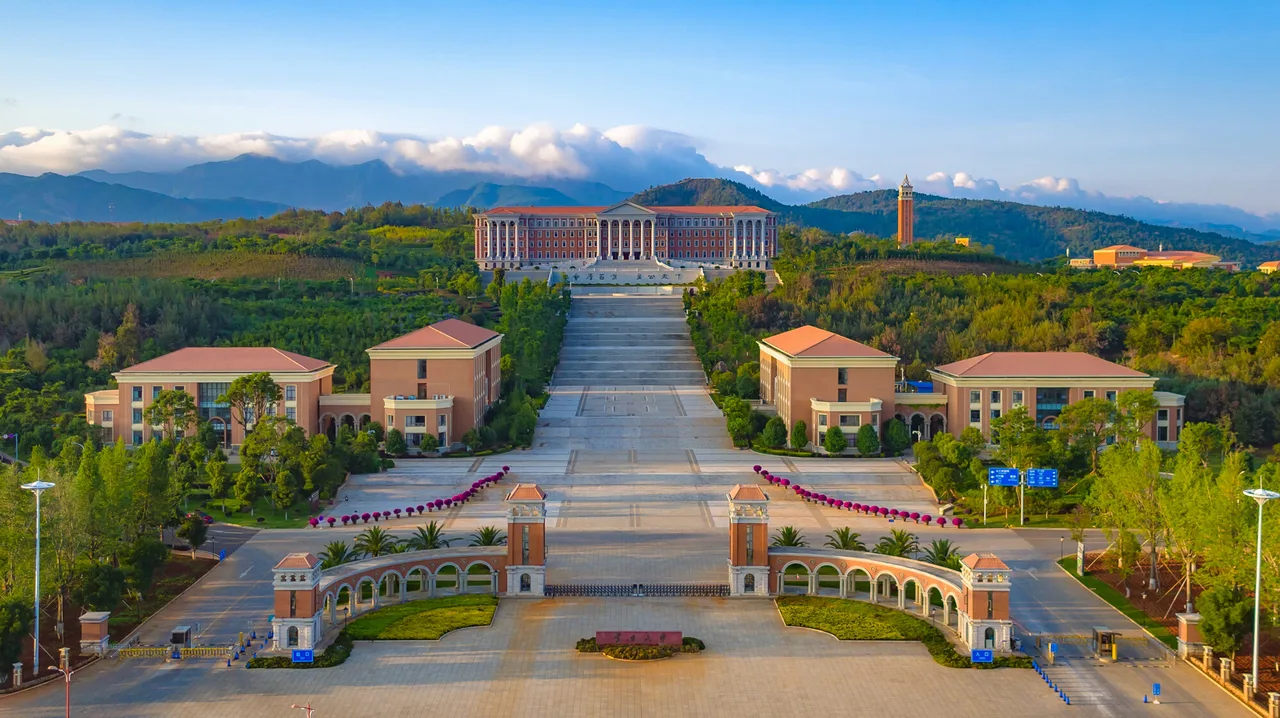
About the university
Yunnan University (YNU), located in Kunming, Yunnan Province, is a national key university jointly established by the Ministry of Education and the Yunnan Provincial Government. It is under the administration of the Yunnan Provincial Government. As a member of the national "Double First-Class" (first-class university) initiative, one of the first batch of universities under Project 211, and a key university supported by Yunnan Province for national first-class university development, YNU has been selected for programs such as "One Province, One University," the Basic Capacity Building Project for Central and Western Universities, the 111 Project, the Outstanding Legal Talent Education and Training Plan, the Outstanding Engineer Education and Training Plan, and the National High-Level University Graduate Scholarship Program. It is a host institution for Chinese Government Scholarship international students and a national demonstration university for deepening innovation and entrepreneurship education reform. YNU serves as the leading unit of the "One Province, One University" National Key Construction University (Z14) Alliance for Central and Western China and the South and Southeast Asia University Alliance. Founded in 1922 as private Donglu University, it was renamed provincial Donglu University in 1930, provincial Yunnan University in 1934, national Yunnan University in 1938, and officially Yunnan University in 1950. In 1978, it was designated by the State Council as one of the 88 national key universities; in 1996, it was among the first batch of universities under Project 211; in 2017, it became one of the first 42 universities in the national "First-Class University" construction; in 2018, it joined the 14 central and western universities under the "ministry-led, ministry-province co-construction" model; and in 2022, it was re-selected for the second round of the national "Double First-Class" construction. As of June 2025, the university covers an area of 4,351.88 mu, with Chenggong Campus and Donglu Campus, a building area of over 1.44 million square meters, teaching and research equipment valued at over 2 billion yuan, a library collection of over 4.45 million paper books, 29 schools, 85 undergraduate programs, 22 first-level doctoral degree authorization points, 4 professional doctoral degree authorization points, 43 first-level master's degree authorization points, 30 professional master's degree authorization points, over 3,700 faculty and staff (excluding affiliated hospitals), and nearly 18,000 full-time undergraduates. In 1912, following the establishment of universities in many Chinese provinces, the provincial military and civil authorities placed great emphasis on university construction. Governor and Military Commander Tang Jiyao decided to "abolish military governance, reduce troops, and promote culture and education," leading to the founding of Yunnan's first modern university. In 1915, the National Education Administration Conference approved Yunnan's plan to establish a university, but it was shelved due to funding shortages. In 1918, at a joint meeting of Yunnan, Sichuan, and Guizhou provinces, representatives proposed establishing a joint university in Yunnan, but cross-provincial challenges prevented its realization. In 1919, local dignitaries and intellectuals led by Gong Zizhi submitted a petition to the provincial council urging the establishment of a provincial university. In 1920, the first group of Yunnan students returning from abroad, including Dong Ze, Yang Kerong, Xiao Yangxun, He Yao, and Duan Wei, actively proposed founding a university to Tang Jiyao, who strongly supported the idea. In October of the same year, a university preparatory office was formally established, with Tang appointing provincial councilor Wang Jiuling and military government secretary Dong Ze to oversee preparations. Local ethnic capitalists donated funds in support. Wang and Dong set up the preparatory office at Cuihu Shuixuan and drafted the "Outline Plan for Donglu University," detailing methods for establishment, funding sources, and academic disciplines. However, in early 1921, the Second Army commander Gu Pinzhen rebelled against Tang, occupied Kunming, and forced Tang to flee to Hong Kong, with Dong accompanying him, halting preparations. In March 1922, Tang returned to Yunnan, regained power, and ordered Wang and Dong to resume the preparatory office. On July 1, Tang appointed Dong as director of the preparatory office, which moved to the provincial industrial school at Pingzheng Street Shuangta Temple. After Dong became director of the Education Department, the office moved again to the department premises for convenience. The new preparatory office formulated documents such as the "Preparatory Office Regulations" and the "Organizational Outline of Donglu University," establishing the university's mission: "Promote Eastern culture, study Western scholarship, and cultivate specialized talents." The university was named "Private Donglu University" after Tang's alias "Master of the Eastern Continent." The site chosen was the Yunnan Examination Hall, described as "located to the right of Gongchen Gate, backed by the city wall, facing south to Cuihai, commanding a view like a crouching tiger." On December 8, 1922, the provincial government approved the establishment of Donglu University, appointing Dong Ze as president and Tang Jiyao and Wang Jiuling as honorary presidents, and issued official seals. Thus, Donglu University was formally established. On April 20, 1923, the foundation-laying ceremony and opening ceremony were held, with April 20 designated as the university's anniversary. In spring 1925, Donglu University began offering undergraduate programs, initially in liberal arts and engineering. The liberal arts division included departments of political economy and education, while the engineering division included civil engineering and mining and metallurgy. In August 1930, Yunnan Provincial Chairman Long Yun proposed at the 177th provincial council meeting to reorganize the university into provincial Donglu University. The council approved the change from private to provincial status, renaming it provincial Donglu University. The following year, the university decided to discontinue preparatory courses and focus on undergraduate liberal arts and engineering. In 1932, the provincial government passed the "Plan for Reorganizing Higher Education in Yunnan," merging the provincial Normal College into provincial Donglu University as the College of Education, with an education department; expanding the College of Liberal Arts into the College of Liberal Arts and Sciences, adding a mathematics and physics department; and planning a medical college, but due to a lack of faculty and facilities, a medical preparatory program was established first.
Sources & verification
- Verification
- Not verified
- Verified on
- 2026-09-21
- Last updated
- 2026-09-24
- Source link
- studyinchina.net ↗
- Source notes
- Compiled from public StudyInChina information (source ID: eeb5f68c-fb6d-4e37-8a86-836ba543e77b)
Confirm requirements, funding and deadlines in the admissions office’s current announcement.