
Government/University Scholarship
Suzhou University Scholarship for International Students
Application status unknownNot verified
Discover the Suzhou University Scholarship for International Students that offers financial support and opportunities to study in Jiangnan city, Suzhou
TuitionAccommodationMedical insurance
- Scholarship type
- Government/University Scholarship
- Degree level
- Bachelor / Master / PhD
- Location
- Anhui · Suzhou
- Application deadline
- Date to be confirmed
Overview
Discover the Suzhou University Scholarship for International Students that offers financial support and opportunities to study in Jiangnan city
Suzhou
Funding coverage
Funding tiers
Eligibility may differ by tier. Check the applicable degree and requirements.
Full scholarship
- Eligible degree
- Bachelor’s, Master’s, Doctoral
- Funding
- Full scholarship and [source fragment]
- Tier requirements
- Meets the visa, health and academic requirements for study in China
Half scholarship
- Eligible degree
- Bachelor’s, Master’s, Doctoral
- Funding
- Half scholarships; two categories [source fragment]
- Tier requirements
- Meets the visa, health and academic requirements for study in China
Full scholarship
- Eligible degree
- Bachelor’s, Master’s, Doctoral
- Funding
- Full scholarship: tuition and accommodation fee waivers, comprehensive health insurance and a monthly living allowance at Chinese Government Scholarship rates
- Tier requirements
- Meets the visa, health and academic requirements for study in China
Half scholarship
- Eligible degree
- Doctoral
- Funding
- Half scholarship: tuition and accommodation waived, with comprehensive health insurance. Scholarship Categories Soochow University’s International Student Scholarship supports these degrees: Master’s Degree Doctoral Degree Scholarship Benefits Master’s Degree Tuition waived Free accommodation Health insurance support: RMB 600/year Monthly allowance: RMB 3,000 Doctoral Degree Tuition waived Free accommodation Health insurance support: RMB 600/year Monthly allowance: RMB 3,500 Application Deadline and Enrollment Application deadline: April 15, subject to annual admissions plan changes. Enrollment: September Note: unsuccessful scholarship applicants may choose self-funded study after results are announced. Eligibility for Soochow University’s International Student Scholarship Basic Requirements Non-Chinese nationality and a valid passport; Good physical and mental health; At application, applicants must not have received a scholarship from the Chinese Government or another recognized institution. Education and Age Requirements Master’s: undergraduate education or equivalent qualification, excellent academic performance and no older than 35; Doctoral: master’s-level education or equivalent qualification, excellent academic performance and generally no older than 40. Language requirements Chinese-taught programs: HSK Level 5 with at least 180 points. English-taught programs: IELTS 6.0, TOEFL 80 or another equivalent certificate recognized by the university. Applicants from English-speaking countries or who completed an English-taught bachelor’s degree may be exempt from language evidence, subject to university confirmation. Application materials Passport Recent passport photograph Highest educational qualification certificate; those who have not graduated must provide provisional proof of graduation or current enrollment; Transcripts Language evidence Two recommendation letters from professors or associate professors, including each referee’s professional title and contact details. Study plan of at least 1,000 characters; the source does not specify the writing language or an English word-count equivalent. Doctoral applicants must provide a Soochow University supervisor’s acceptance letter, signed by the supervisor and university president and bearing an official seal. Foreigner physical examination report, valid for six months No criminal record or civil verification, valid for six months [the second document’s source wording is unclear] Financial evidence, including a bank deposit certificate showing at least USD 5,000 and income certification. Applicants may provide additional materials such as awards, published papers, international conference participation and volunteering records for priority consideration. Notes: Materials in languages other than Chinese or English require notarized Chinese or English translations; Applicants are responsible for the authenticity of all submissions; Recipients must provide originals for verification after enrollment. Documents are checked within three months of enrollment. Forgery results in cancellation of admission with no refund of fees. Soochow University International Student Scholarship Application Procedure Step 1: Register and upload materials at https://suda.17gz.org or https://iaa.suda.edu.cn. Note: select the scholarship type during registration. Step 2: The university reviews materials. Regularly check application status, email and telephone for updates or requests for additional information. Step 3: Receive the scholarship result. Application and Other Fees Application fee: RMB 650, nonrefundable. Insurance: RMB 800/year, refundable to scholarship students after payment. Students pay for books, materials, laboratory charges, equipment and similar costs themselves. University Contact Information International Student Administration Office, Office of International Cooperation and Exchange, Soochow University Telephone: +86-512-67165752 Email: Studyinsuda@suda.edu.cn; include application number, passport name and inquiry topic Official website: http://apply.international.suda.edu.cn/main.htm How to Improve Your Chances of Receiving a Soochow University International Student Scholarship If you lack time to research and handle your application, contact Riba, described here as the leading brand for Chinese scholarship application support, for advice and assistance to improve your chances of success. Official website: https://riba.vn Hotline: +84 888 666 350 Hotline: +84 888 666 152 Visit studyinchina.net for further information on scholarships to study in China.
- Tier requirements
- Meets the visa, health and academic requirements for study in China
Requirements & documents
Application dates & process
Review Cycle: As specified in each host university’s admissions brochure
Universities & programs
Universities
About the university
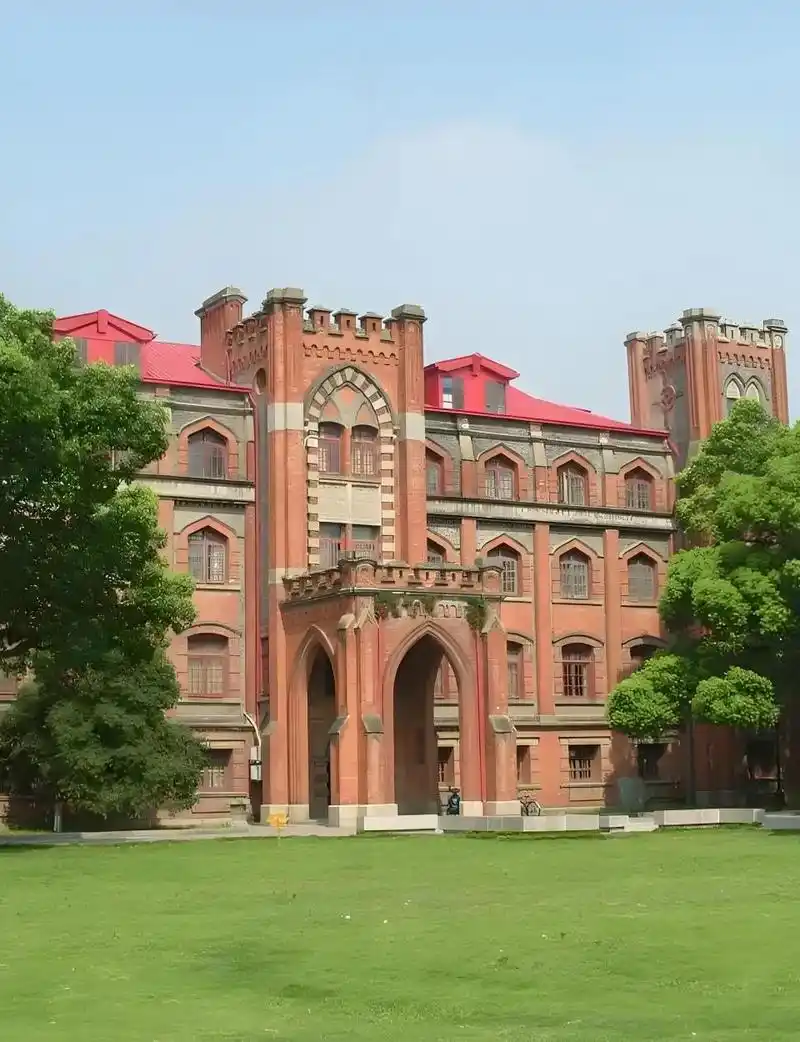
Soochow University (SUDA) is a key comprehensive university in Jiangsu Province, located in Suzhou, Jiangsu. It is administered by the People's Government of Jiangsu Province and is co-constructed by the Ministry of Education and the Jiangsu Provincial Government as a "Double First-Class" initiative university, as well as a co-constructed university with the China National Space Administration. It is among the first batch of universities included in the national "211 Project" and "2011 Plan." The university's predecessor, the private Soochow University, originated from the Soochow University College founded in 1900. In August 1952, the Chinese Language Department, Physics Department, Chemistry Department, and Biology Department of the private Soochow University, along with the Sunan College of Culture and Education and the Mathematics and Physics Department of the private Jiangnan University, merged to form Sunan Normal College, located on the original site of the private Soochow University. In December of the same year, it was renamed "Jiangsu Normal College." In February 1982, the Jiangsu Provincial People's Government approved the conversion of Jiangsu Normal College into a provincial comprehensive university named "Soochow University." In the same month, Suzhou Finance and Economics School merged into Soochow University. In June 1982, the State Council officially approved the change from Jiangsu Normal College to Soochow University. In 1995, Suzhou Sericulture College merged into Soochow University. In 1996, Soochow University was selected as a "211 Project" university. In 1997, 2000, and 2012, Suzhou Institute of Silk Textile Technology, Suzhou Medical College, and the Suzhou Campus of Nanjing Railway Vocational and Technical College successively merged into Soochow University. In 2017 and 2022, Soochow University was successively selected as a first-batch and second-round "Double First-Class" initiative university. As of May 2025, the university has four campuses: Tiancizhuang, Dushu Lake, Yangcheng Lake, and Weilai, covering an area of 4,586 mu (approximately 305.7 hectares) with a building area of over 1.66 million square meters. It has 37 colleges (departments), 132 undergraduate programs, 47 first-level master's degree programs, 35 professional master's degree programs, 31 first-level doctoral degree programs, 1 professional doctoral degree program, 30 postdoctoral research stations, 5,983 faculty and staff members, 27,881 full-time undergraduates, 14,870 master's students, 2,019 doctoral students, and 1,064 international students. The predecessor of Soochow University was Soochow University (founded in 1900 as Soochow University College), located in Tiancizhuang, southeast of Suzhou's ancient city. The private Soochow University pioneered Western-style education, blending Chinese and Western cultures, and was one of the earliest universities in China to adopt a modern university disciplinary system. In the history of Chinese higher education, the private Soochow University was the first to offer legal education (Anglo-American law), the first to offer graduate education and confer master's degrees, and the first to establish a university journal. During the 1952 restructuring of colleges and departments, the Chinese Language Department, Physics Department, Chemistry Department, and Biology Department of the private Soochow University, along with the Sunan College of Culture and Education and the Mathematics and Physics Department of the private Jiangnan University, merged to form Sunan Normal College, which was renamed "Jiangsu Normal College" later that year. In February 1982, the university resumed the name "Soochow University." Subsequently, Suzhou Finance and Economics School (1982), Suzhou Sericulture College (1995), Suzhou Institute of Silk Textile Technology (1997), Suzhou Medical College (2000), and the Suzhou Campus of Nanjing Railway Vocational and Technical College (2012) successively merged into Soochow University. Historical evolution of Soochow University: In 1871, the American Methodist Episcopal Church, South (hereinafter referred to as the "Mission") established the Yang Memorial School on Shiquan Street in Suzhou. In 1879, it moved to Tiancizhuang and was renamed "Buffington Institute." In 1898, at the annual meeting of the Mission, it was decided that the Buffington Institute, which had been operating for over 20 years with mediocre results, would be closed at the end of the year, and its "houses, land, and all instruments" would be merged into the Suzhou Anglo-Chinese College. In November 1895, Reverend Sun Le Wen of the Mission's Gongxiang Church in Suzhou established the Suzhou Anglo-Chinese College, located on Gongxiang Lane, commonly referred to as "Gongxiang Anglo-Chinese College." Suzhou Anglo-Chinese College (after the merger of Buffington Institute, 1899-1900) → Soochow University College (1900-1911). In October 1899, the 14th annual meeting of the Mission was held at the First Church in Tiancizhuang. After six days of discussion, it was decided to establish a university based on the Suzhou Anglo-Chinese College, moving to the old site of Buffington Institute in Tiancizhuang, initially offering liberal arts, theology, and medicine, as the highest institution of the Mission. On May 12, 1900, the Mission established the Board of Trustees of Soochow University; in the same year, the Suzhou Anglo-Chinese College moved to the old site of Buffington Institute in Tiancizhuang, establishing Soochow University College (abbreviated as "Soochow"), also known as "Soochow Academy," becoming one of the early church universities established by American Christians in China. It officially opened on May 8, 1901, with Sun Le Wen as the first president. In 1905, Soochow established separate liberal arts and science departments, offering undergraduate programs from preparatory classes, and campus construction continued to expand.
Sources & verification
- Verification
- Not verified
- Verified on
- 2026-09-21
- Last updated
- 2026-09-24
- Source link
- studyinchina.net ↗
- Source notes
- Compiled from public StudyInChina information (source ID: ae2221ba-6f8a-40b1-9371-9a320f4df747)
Confirm requirements, funding and deadlines in the admissions office’s current announcement.