
Government/University Scholarship
Jingdezhen Ceramics University Foreign Students Scholarship
Application status unknownNot verified
Jingdezhen Ceramics University Scholarship offers international students financial support to study at China's renowned hub for ceramic art and culture.
TuitionAccommodation
- Scholarship type
- Government/University Scholarship
- Degree level
- Bachelor / Master / PhD
- Location
- Jiangxi · Jingdezhen
- Application deadline
- Date to be confirmed
Overview
Jingdezhen Ceramics University Scholarship offers international students financial support to study at China's renowned hub for ceramic art and culture.
Funding coverage
Funding tiers
Eligibility may differ by tier. Check the applicable degree and requirements.
Master’s funding tier
- Eligible degree
- Master’s
- Funding
- Master’s
- Tier requirements
- Meets the visa, health and academic requirements for study in China
Doctoral · Full scholarship
- Eligible degree
- Doctoral
- Funding
- Full scholarship and [source fragment]
- Tier requirements
- Meets the visa, health and academic requirements for study in China
Doctoral · Half scholarship
- Eligible degree
- Doctoral
- Funding
- Half scholarships; two types [source fragment]
- Tier requirements
- Meets the visa, health and academic requirements for study in China
Doctoral · Full scholarship
- Eligible degree
- Doctoral
- Funding
- Full scholarship: Tuition waiver Accommodation fee waiver
- Tier requirements
- Meets the visa, health and academic requirements for study in China
Doctoral · Half scholarship
- Eligible degree
- Doctoral
- Funding
- Half Scholarship: Type 1: tuition and accommodation waived from the second academic year, conditional on good academic performance. Students pay first-year tuition and living costs themselves. Type 2: 70% of the current year’s tuition and accommodation fees waived. Application Deadline and Enrollment The deadline for Jingdezhen Ceramic University’s International Student Scholarship is usually June 30 each year, subject to its admissions plan. Check the latest information to apply on time. Enrollment: September. Eligibility for Jingdezhen Ceramic University’s International Student Scholarship Basic Requirements Non-Chinese nationality. Good health, no infectious diseases and no history of mental illness. Good conduct and a clean background. Interest in Chinese culture and history and respect for Chinese laws, regulations and local customs. Age and Educational Qualification Requirements Master’s: undergraduate education and no older than 35; Doctoral: master’s degree and no older than 40. Language requirements Chinese-taught programs: HSK Level 4 or higher. English-taught programs: satisfy one of these three conditions: From a country where English is a native or official language; Completed the highest degree program in English; IELTS 6.0 with each component at least 5.5, or TOEFL at least 85. Application materials Applicants must prepare: Passport Passport photograph Personal information form completed in English or Chinese Highest educational qualification graduation certificate or provisional proof of graduation, translated into English or Chinese and notarized Transcripts (translated into English or Chinese and notarized) Study plan for China written in English or Chinese Physical examination report valid within six months Certificate of no criminal record (valid within six months) Language evidence Art applicants must submit a portfolio. Application Procedure Step 1: Register at http://jcu.at0086.cn/student, complete personal information, upload all required materials and submit the application. Step 2: The university reviews and evaluates materials. Step 3: Receive scholarship selection results. Available Majors Some available majors are: Master’s programs: three years, Chinese/English-taught School of Fine Arts: Fine Arts; Art. School of Art and Design: Design; Art and Design. School of Archaeology and Cultural Heritage: History of Science and Technology; Cultural Heritage and Museology. School of Information Engineering: Computer Application Technology. Doctoral programs: three years, Chinese/English-taught School of Art and Design: Design. School of Archaeology and Cultural Heritage: History of Science and Technology. School of Materials Science and Engineering: Materials Science and Engineering; Materials Processing Engineering. Contact information** Address: Office 233, Jingdezhen Ceramic University, Jingdezhen, Jiangxi, China Telephone: +86-798-8582317 Email: admissions@jcu.edu.cn Registration: http://jcu.at0086.cn/student How to Apply for Jingdezhen Ceramic University’s International Student Scholarship If you wish to study in China but lack time for the application, contact Riba, a China study-abroad scholarship application service platform, for advice and assistance to improve your chances of success. Riba Contact Information: Official website: https://riba.vn Hotline: +84 888 666 350 / +84888 666 152 The above details were compiled by studyinchina.net. Visit our Chinese Scholarship Search platform to explore further opportunities.
- Tier requirements
- Meets the visa, health and academic requirements for study in China
Requirements & documents
Application dates & process
Review Cycle: As specified in each host university’s admissions brochure
Universities & programs
Universities
About the university
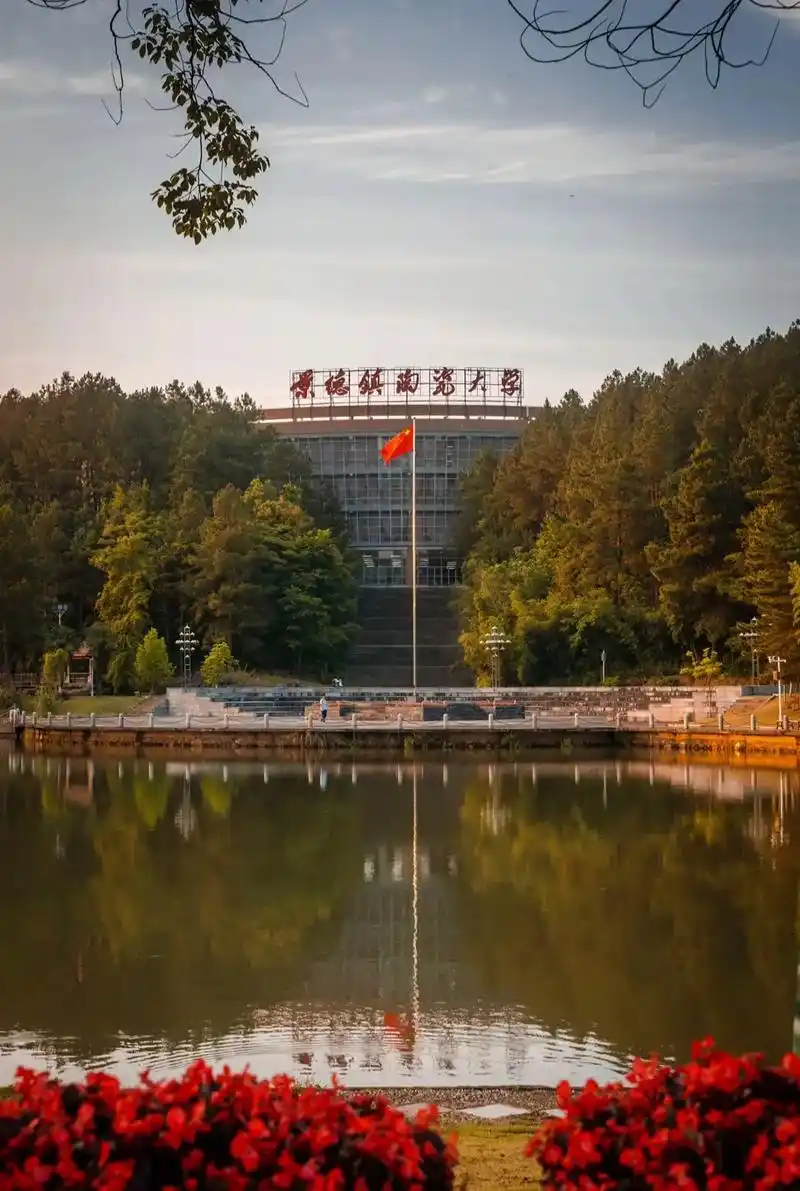
Jingdezhen Ceramic University (abbreviated as JCU), commonly known as "Tao Da", is located in Xianghu Town, Fuliang County, Jingdezhen City, Jiangxi Province. It is a full-time undergraduate institution jointly established by the central and local governments, primarily under the administration of the Jiangxi Provincial People's Government. As the only multidisciplinary university in China named after ceramics, it is a member of the Ministry of Education's Excellence Engineer Education and Training Program, one of the first participants in the Ministry of Culture and Tourism's Intangible Cultural Heritage Inheritance Training Program, and is authorized by the Ministry of Education to recommend graduates for postgraduate study without entrance exams. Jingdezhen Ceramic University originated from the China Ceramic Industry School founded in 1910 (located in Poyang, Jiangxi). It was renamed Jiangxi Provincial Raozhou Ceramic Industry School in 1912, Jiangxi Provincial Kiln Industry School in 1925, Jiangxi Provincial Ceramic Industry School in 1927, moved to Jiujiang, Jiangxi in 1934 and renamed Jiangxi Provincial Jiujiang Ceramic Vocational School, upgraded to Jiangxi Provincial Ceramic Junior College in 1948 (the first ceramic higher education institution in China), established as Jingdezhen Ceramic Institute (undergraduate level) in 1958 with approval from the Jiangxi Provincial People's Committee, merged with the China Light Industry Ceramic Research Institute in 1999, and officially renamed Jingdezhen Ceramic University in 2016. As of March 2025, the university has the Xianghu Campus, Xinchang Campus, the China Light Industry Ceramic Research Institute, and the Ancient Ceramics Research Center, covering an area of 1,970 mu (approx. 131 hectares) with a building area of 758,000 square meters. It comprises 11 teaching colleges (departments), a Graduate School, an Entrepreneurship College, a Continuing Education College, and an International College, offering 53 undergraduate programs covering 9 disciplines including engineering, arts, and education. The university has 2 postdoctoral research stations, 1 postdoctoral research workstation, 3 first-level doctoral degree programs, 1 professional doctoral degree program, 13 first-level master's degree programs, and 11 professional master's degree programs. It has over 23,000 full-time students and more than 1,000 full-time faculty members. In 1896, Zhang Zhidong, Governor-General of Liangjiang, first proposed to Emperor Guangxu the establishment of a ceramic school in Jiangxi. In 1903, Ke Fengshi, then Governor of Jiangxi, submitted a proposal to the Ministry of Internal Affairs and the Ministry of Revenue regarding the establishment of a Jingdezhen Ceramics Company, and subsequently, together with Wei Guangtao, Governor-General of Liangjiang and Minister of Trade for Nanyang, petitioned Empress Dowager Cixi and Emperor Guangxu to establish a government-merchant joint venture ceramics company in Jingdezhen. After its establishment, the company declined due to funding issues. In 1906, Li Jiade, a candidate official in Jiangxi, requested to rename the Jingdezhen Ceramics Company as the Jiangxi Ceramics Company and went to Shanghai to seek investment from Rui Cheng, the Shanghai Circuit Intendant. Rui Cheng invited Zhang Jian, who immediately expressed support. In 1907, Duanfang, Governor-General of Liangjiang, proposed that the company be converted to private operation for better prospects, with a planned capital of 200,000 yuan (5 yuan per share, totaling 40,000 shares). The founders Zhang Jian, Rui Cheng, Li Jiade, and Kang Tezhang subscribed to 15,000 shares, with the remaining 25,000 shares to be offered after approval. In March 1909, the Ministry of Agriculture, Industry, and Commerce of the Qing court approved the registration. In October, the four founders established the China Ceramic Industry School as an affiliate of the Jiangxi Ceramics Company. The company was based in Jingdezhen, and the school was originally planned to be located there as well, but due to collective resistance from conservative forces in Jingdezhen's handicraft industry, it had to be relocated. In 1910, the Jiangxi Ceramics Company established the China Ceramic Industry School as a secondary vocational school within its branch factory in Raozhou Prefecture (Poyang). In 1912, the school was renamed Jiangxi Provincial Raozhou Ceramic Industry School, with Zhang Hao appointed as principal. In 1915, it was renamed Jiangxi Provincial Second Class A Industrial School. In 1916, a branch school was established, named the Affiliated Class B Industrial School of Jiangxi Provincial Second Class A Industrial School, with Zhang Hao as concurrent principal and Tang Youguang as academic director. In 1918, Zhang Hao was transferred, and Zou Rugui became principal. In 1925, following provincial orders, the school changed its name three times to Jiangxi Provincial Kiln Industry School for greater development. Zou Rugui was transferred to the Jiangxi Industrial Experiment Station as a senior engineer, and Zhang Hao returned as principal. In 1926, with provincial government approval, the school was relocated to Jingdezhen and renamed for the fourth time as Jiangxi Provincial Jingdezhen Ceramic Industry School, with plans for relocation. That same year, the Northern Expeditionary Army arrived in Jiangxi; most teachers and students joined the revolutionary movement, the school's funding was interrupted three times, and operations ceased informally, with no hope of relocation. In 1926, Zhang Hao was transferred again to the Nanchang Industrial Experiment Station, and the school adopted a committee system with Zhang Jinan as chairman. Zhang Jinan left the school for Jiangsu at the end of 1926, succeeded by Shu Xinwei. In 1927, the school was renamed Jiangxi Provincial Ceramic Industry School, restored the principal system, and the Provincial Education Department appointed Zou Junzhang as principal. In 1929, the school had 32 faculty and staff, including 7 full-time teachers and 5 technicians besides Principal Zou Junzhang. On April 3 of that year, the Provincial Education Department approved the school's relocation plan to Jingdezhen, allocating the first installment of 15,000 yuan, and construction of a teaching building began at Bagushan. In 1930, Chen Lijiang, the Provincial Education Department Director, left office; Zou Junzhang was unable to turn things around and died of overwork in the spring of 1931. The relocation and upgrade efforts failed. Zou Rugui succeeded as principal. Soon after, Zhang Hao returned as principal and dismantled the newly built building at Licun Bagushan and moved it to Poyang. In 1932, the Jiangxi Ceramic Experiment Station was established in Nanchang as a branch of the Jiangxi Industrial Experiment Station, with Li Fangchun as its first director and Zhang Hao as senior engineer. The station initially focused on chemical analysis related to ceramics, such as testing whether Lichuan white clay contained toxic substances and testing refractory clay and clay from Ma'anshan in Fuliang, and gradually began developing chemical porcelain and electrical porcelain products. In 1934, the Jiangxi Ceramic Experiment Station moved to the Jiangxi Ceramic Administration Bureau in Jingdezhen. In 1935, the school moved to Jiujiang and was renamed Jiangxi Provincial Jiujiang Ceramic Vocational School, hoping for renewed development. After the Marco Polo Bridge Incident on July 7, 1937, the full-scale Japanese invasion of China began, and the situation deteriorated rapidly. The school moved to Jing'an and then to Pingxiang, facing harsh conditions and hardship. Given that Jiangxi had only one ceramic school at the time and the ceramic industry was crucial to the provincial economy, the Provincial Education Department proposed moving the school to Jingdezhen and merging it with the Fuliang County Junior Ceramic Vocational School. On October 28, 1944, upon the proposal of the Provincial Education Department Director (also a provincial government member), the provincial council decided to approve Shu Xinwei's resignation and appoint Wang Fan as principal, renaming the school Jiangxi Provincial Ceramic Vocational School and relocating it to Jingdezhen.
Sources & verification
- Verification
- Not verified
- Verified on
- 2026-09-21
- Last updated
- 2026-09-24
- Source link
- studyinchina.net ↗
- Source notes
- Compiled from public StudyInChina information (source ID: 95070fb9-29e5-4b31-80da-df7efc6ccbf5)
Confirm requirements, funding and deadlines in the admissions office’s current announcement.