
Government/University Scholarship
Hefei University of Technology Scholarship
Application status unknownNot verified
Hefei University of Technology Scholarship offers full support for Master's and PhD degrees, including tuition, accommodation, insurance, and living expenses.
TuitionAccommodationMedical insurance
- Scholarship type
- Government/University Scholarship
- Degree level
- Bachelor / Master / PhD
- Location
- Anhui · Hefei
- Application deadline
- Date to be confirmed
Overview
Hefei University of Technology Scholarship offers full support for Master's and PhD degrees
including tuition
accommodation
insurance
and living expenses.
Funding coverage
Funding tiers
Eligibility may differ by tier. Check the applicable degree and requirements.
Master’s funding tier
- Eligible degree
- Master’s
- Funding
- Master’s
- Tier requirements
- Meets the visa, health and academic requirements for study in China
Doctoral · Category A
- Eligible degree
- Doctoral
- Funding
- Type A scholarship: tuition, accommodation and insurance fee waivers, plus a living allowance
- Tier requirements
- Meets the visa, health and academic requirements for study in China
Doctoral · Category B
- Eligible degree
- Doctoral
- Funding
- Type B scholarship: tuition, accommodation and insurance fee waivers
- Tier requirements
- Meets the visa, health and academic requirements for study in China
Doctoral · Category C
- Eligible degree
- Doctoral
- Funding
- Category C: 50% tuition waiver, plus full accommodation and insurance waivers. Notes: Recipients undergo annual assessment to determine eligibility for the next academic year. Failure leads to suspension or cancellation. Master’s and doctoral students with excellent annual assessment results may receive Hefei University of Technology’s Outstanding International Student Scholarship, RMB 3,000–8,000/person. Application Deadline and Enrollment The Freshman Scholarship deadline is usually June 30 each year. Recipients enroll in September. Note: deadlines may change with the annual admissions plan; check the latest admissions information. Eligibility for Hefei University of Technology’s Freshman Scholarship Basic Requirements Non-Chinese nationality and good physical and mental health; Comply with Chinese laws and university rules; Not receiving another Chinese Government Scholarship. Age and Education Master’s: undergraduate graduation certificate, excellent academic performance and no older than 35; Doctoral: master’s degree, excellent academic performance and no older than 40. Language requirements Chinese-taught applicants need an HSK Level 4 certificate; English-taught applicants need IELTS 6.0, TOEFL 85 (or TOEFL Essential), or Duolingo at least 100. Application materials Applicants must prepare: Passport meeting the stipulated validity requirements; Recent identification photograph; Graduation certificate; those who have not graduated must provide current enrollment certification issued by their school; Academic transcripts; Two recommendation letters from referees holding the rank of associate professor or higher, or equivalent professional titles. Letters must be in Chinese or English and address study objectives in China, overall abilities and future development potential; Foreign language proficiency certificate; Admission notice; Study and research plan in China, written in Chinese or English; Foreigner physical examination form, valid within six months; Certificate of no criminal record, valid within six months; Notes: All materials must be in English or Chinese. Documents in another language require notarized English or Chinese translations. Uploaded materials must be clear, authentic and valid; applicants bear full responsibility for clarity and authenticity. Scholarship Application Procedure Step 1: Register an account at http://admission.hfut.edu.cn and upload the required materials. Step 2: Complete the online form and submit materials through the system. Step 3: The university reviews all materials and communicates results. Admitted applicants receive admission notices. Step 4: Admitted students arrange visas and other preparations before coming to China. Contact details Email: hanyy@hfut.edu.cn Telephone: +86-551-62901697 Address: Office 21, School of International Education, Hefei University of Technology, 193 Tunxi Road, Hefei, Anhui, China; postal code: 230009 Hefei University of Technology is a key university focused on engineering. Its Freshman Scholarship is presented as an attractive and valuable opportunity for international students. However, because of its high funding standards, Hefei University of Technology’s Freshman Scholarship... [source ends before completing this statement]
- Tier requirements
- Meets the visa, health and academic requirements for study in China
Doctoral · Category A
- Eligible degree
- Doctoral
- Funding
- Category A is highly competitive. Prepare strong materials and academic capabilities to stand out in master’s and doctoral applications. How to Improve Hefei University of Technology New Student Scholarship Chances If you lack time to handle procedures, contact Riba Study Abroad, described here as a leading Chinese scholarship application support service, for professional advice and assistance. Riba Contact Information: Official website: https://riba.vn Hotline: +84 888 666 350 / +84 888 666 152 Compiled by studyinchina.net. Explore the scholarship search section for more opportunities.
- Tier requirements
- Meets the visa, health and academic requirements for study in China
Requirements & documents
Application dates & process
Review Cycle: As specified in each host university’s admissions brochure
Universities & programs
Universities
About the university
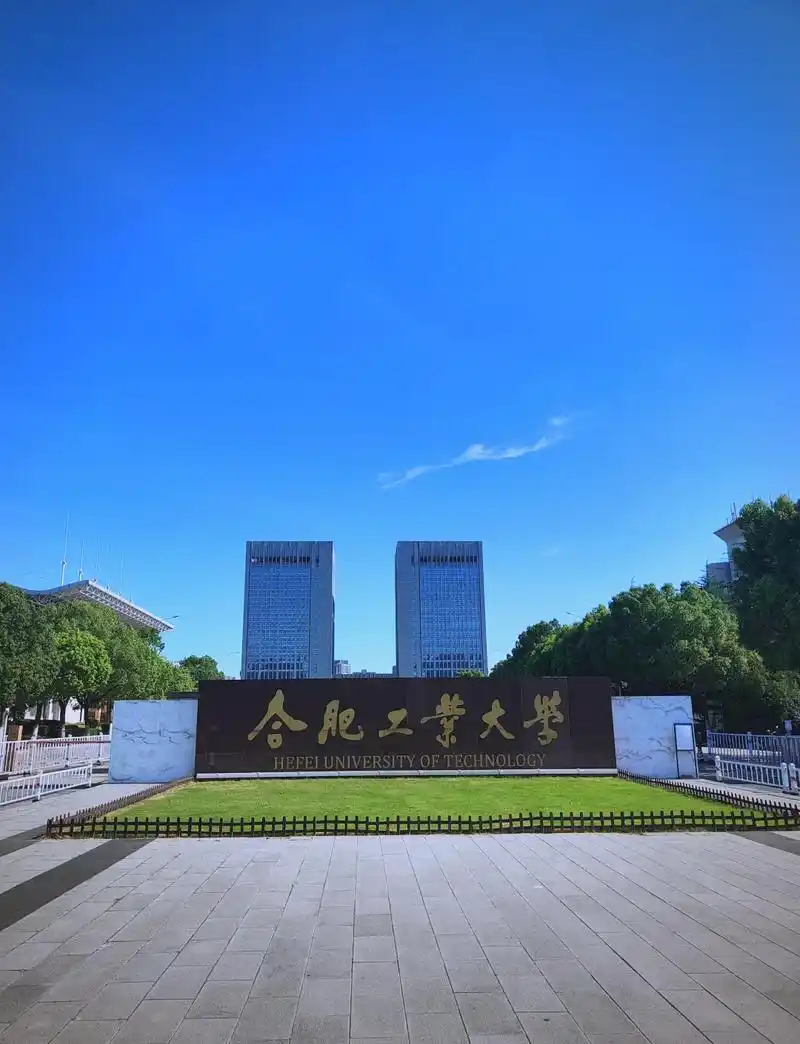
Hefei University of Technology (HFUT), headquartered in Hefei, Anhui Province, is a national key university directly under the Ministry of Education of the People's Republic of China. It is jointly established by the Ministry of Education, the Ministry of Industry and Information Technology, and the Anhui Provincial Government, as well as jointly built by the Ministry of Education and the State Administration of Science, Technology and Industry for National Defense. The university is part of the "Double First-Class" initiative, a national "Project 211" key university, and a participant in the "985 Project Advantage Discipline Innovation Platform." It has been selected for the "2011 Plan," the "111 Plan," the Excellent Engineer Education and Training Program, the National College Student Innovation Experimental Program, the National College Student Innovation and Entrepreneurship Training Program, the National University Practice Education Innovation and Entrepreneurship Base, the first batch of National Demonstration Universities for Deepening Innovation and Entrepreneurship Education Reform, and the National Typical Experience Universities for Innovation and Entrepreneurship. Since its founding, the university has been visited by senior proletarian revolutionaries such as Liu Shaoqi, Zhu De, Dong Biwu, Chen Yi, and Deng Xiaoping, who provided guidance. In 1979, Comrade Deng Xiaoping personally inscribed the university's name. The university became a national "Project 211" key university in 2005, a "985 Project Advantage Discipline Innovation Platform" university in 2009, and entered the national "Double First-Class" construction in 2017. As of June 2025, the university has four campuses: Tunxi Road, Liu'an Road, Feicui Lake, and Xuancheng, covering a total area of over 4.08 million square meters. It comprises 23 schools (departments), 84 undergraduate programs (as of December 2024), 20 first-level doctoral degree authorization points, 5 professional doctoral degree authorization points, 38 first-level master's degree authorization points, and 23 professional master's degree authorization points. The university has over 32,500 undergraduate students, over 15,000 master's and doctoral students, and more than 2,400 full-time teachers. After the victory of the Anti-Japanese War in 1945, the Education Department of the Anhui Provincial Government decided to establish Anhui Provincial Bengbu Industrial Vocational School based on the Provincial Seventh Secondary Vocational School and the Provincial Bengbu Junior Industrial Vocational School. In September 1946, it was renamed Anhui Provincial Bengbu Senior Industrial Vocational School. Following the war, the Anhui Provincial Government took over the Huainan Railway and Coal Mining Company from the Japanese. Recognizing the urgent need for industrial technical talent, local dignitaries Chang Hengfang and Ma Jingchang wrote to the provincial government requesting the establishment of an industrial college in northern Anhui. The provincial government approved and decided to build upon the existing Bengbu Senior Industrial Vocational School. On June 3, 1947, the school moved from Bengbu to a new site in Dongshan, Huainan. On August 8, 1947, Anhui Provincial Industrial College was officially established in Dongshan, Huainan, with the mission of "teaching applied sciences and cultivating technical talent," offering programs in civil engineering, mechanical engineering, and electrical engineering. In January 1949, Huainan was liberated, and on February 2, the Huainan Coal Mine Special Zone Government took over the college. In 1950, the school was renamed Huainan Industrial College, under the leadership of the East China Military and Political Committee's Ministry of Industry. It added a mining department to the existing three departments. In October 1950, it was renamed Huainan Industrial College, and in November, Huainan Coal Industry College. From 1951 to 1953, the school experienced rapid development, with student enrollment reaching over 1,400 by March 1953. The faculty expanded significantly, with the number of teachers in 1952 being 3.2 times that of 1951. The school also made great progress in book acquisition, equipment purchase, and infrastructure construction. On October 23, 1954, the Central People's Government's Ministry of Fuel Industry decided to rename the school as East China Mining Institute and relocate it to Hefei. In January 1955, the Ministry of Higher Education instructed that the "East China Mining Institute Construction Committee" be renamed the "Hefei Mining Institute Construction Committee." In February 1955, the Ministry of Higher Education and the Ministry of Fuel Industry approved the new site in Hefei. On March 9, 1955, the State Council approved the transformation of Huainan Coal Mine Industrial College into Hefei Mining Institute. On April 2, 1955, the Ministry of Higher Education notified that the State Council had approved the change to Hefei Mining Institute, with a planned final enrollment of 6,000 students. On May 14, 1955, Hefei Mining Institute was officially inaugurated in Dongshan, Huainan. In August 1958, Hefei Mining Institute formally applied to change its name to Hefei University of Technology. On September 16, 1958, the Central Committee of the Communist Party replied to the Anhui Provincial Party Committee, approving the name change. On October 22, 1960, the Central Committee of the Communist Party issued a decision to add Hefei University of Technology to the list of national key universities. Around 1960, party and state leaders paid close attention to the university's development, visiting and guiding its work. During the Cultural Revolution, Anhui Institute of Technology and Anhui Water Conservancy and Electric Power College merged into Hefei University of Technology, while the mining and coal geology departments were separated to form Huainan Coal College. In 1961, five institutions—Anhui Mechanical College, Bengbu Mechanical College, Wuhu Electric Motor Manufacturing College, Ma'anshan Iron and Steel College, and Tongguanshan Nonferrous Metals College—merged to form Anhui Institute of Technology. In 1969, Anhui Institute of Technology and Anhui Water Conservancy and Electric Power College merged into Hefei University of Technology. During the Cultural Revolution, education was severely affected, and the mining and coal geology departments were separated to form Huainan Coal College. In 1978, the agricultural machinery department was separated to restore Anhui Institute of Technology, renamed Anhui Agricultural Machinery Institute, and later restored to Anhui Institute of Technology. On January 22, 1997, the original Hefei University of Technology and Anhui Institute of Technology merged to form the new Hefei University of Technology. The university adopted a guiding principle centered on discipline construction, teaching, research, and social service, formulated discipline development plans, and formed discipline clusters with distinctive features. In 1998, the university returned to being directly under the Ministry of Education. In 2001, construction began on the new Feicui Lake campus. In September 2002, the first batch of 5,600 freshmen moved into the new campus, and by August 2003, the Feicui Lake campus was fully completed and operational. In 2005, Hefei University of Technology entered the national "Project 211" key university ranks. In 2009, it was included in the national "985 Project Advantage Discipline Innovation Platform" construction plan. In 2011, the university jointly established the Xuancheng campus with the Xuancheng Municipal People's Government. In May 2012, the university was rated by the Ministry of Education as a "National Typical Experience University for Graduate Employment." In 2014, with support from the Ministry of Education, the Ministry of Industry and Information Technology, and the Anhui Provincial Government, Hefei Municipal Government and Hefei University of Technology jointly established the Hefei University of Technology Intelligent Manufacturing Technology Research Institute. In July 2015, the university was selected as one of the first batch of National University Practice Education Innovation and Entrepreneurship Bases. In October 2016, the new Hefei University of Technology Automotive Engineering Technology Research Institute was established. In 2017, the university entered the national "Double First-Class" construction ranks. In 2018, it was selected for the Ministry of Education's first batch of national new engineering research and practice projects.
Sources & verification
- Verification
- Not verified
- Verified on
- 2026-09-21
- Last updated
- 2026-09-24
- Source link
- studyinchina.net ↗
- Source notes
- Compiled from public StudyInChina information (source ID: 82b9b3ea-889c-4046-915c-9730cd9e443f)
Confirm requirements, funding and deadlines in the admissions office’s current announcement.