
Government/University Scholarship
Guangdong University of Foreign Studies Scholarship
Application status unknownNot verified
Guangdong University of Foreign Studies Scholarship offers international students excellent opportunities to study at a top-tier university in China.
Tuition
- Scholarship type
- Government/University Scholarship
- Degree level
- Bachelor / Master / PhD
- Location
- Guangdong · Guangzhou
- Application deadline
- Date to be confirmed
Overview
Guangdong University of Foreign Studies Scholarship offers international students excellent opportunities to study at a top-tier university in China.
Funding coverage
Funding tiers
Eligibility may differ by tier. Check the applicable degree and requirements.
Bachelor’s · Full scholarship
- Eligible degree
- Bachelor’s
- Funding
- Full scholarship and [source fragment]
- Tier requirements
- Meets the visa, health and academic requirements for study in China
Bachelor’s · Partial scholarship
- Eligible degree
- Bachelor’s
- Funding
- Partial scholarship, applicable to all education programs. For new students
- Tier requirements
- Meets the visa, health and academic requirements for study in China
Bachelor’s · Full scholarship
- Eligible degree
- Bachelor’s
- Funding
- Full scholarship: 100% tuition waiver for the first academic year
- Tier requirements
- Meets the visa, health and academic requirements for study in China
Bachelor’s · Partial scholarship
- Eligible degree
- Bachelor’s
- Funding
- Partial scholarship: 50% tuition reduction for the first academic year. For current international students
- Tier requirements
- Meets the visa, health and academic requirements for study in China
Bachelor’s · Full scholarship
- Eligible degree
- Bachelor’s
- Funding
- Full scholarship: 100% tuition waiver for the next academic year
- Tier requirements
- Meets the visa, health and academic requirements for study in China
Bachelor’s · Partial scholarship
- Eligible degree
- Bachelor’s
- Funding
- Partial scholarship: 50% tuition waiver for the next academic year. Application period and enrollment Applications to Guangdong University of Foreign Studies are accepted from April to June each year; consult its latest enrollment information for the exact deadline. New scholarship students enroll in September. Basic eligibility Non-Chinese nationality and a valid passport; good physical and mental health; friendly toward China; compliance with Chinese laws and university rules; no criminal record. Excellent academic performance: enrolled students need an average of at least 90%, a class ranking in the top 30%, and no individual course score below 80. No other Chinese government-funded scholarship. Age and education requirements
- Tier requirements
- Meets the visa, health and academic requirements for study in China
Bachelor’s funding tier
- Eligible degree
- Bachelor’s
- Funding
- Undergraduate: must hold a high school graduation certificate and be aged 30 or younger. Master's: must hold an undergraduate graduation certificate and be aged 35 or younger. Doctoral: must hold a master's degree and be aged 40 or younger. Language requirements Chinese-taught programs:
- Tier requirements
- Meets the visa, health and academic requirements for study in China
Bachelor’s funding tier
- Eligible degree
- Bachelor’s
- Funding
- Undergraduates: HSK Level 4 with at least 180 points; Master’s: HSK Level 5 with at least 180 points; International Chinese Language Education master’s applicants need at least 210; Doctoral: HSK Level 5 with at least 180 points. English-taught undergraduate programs: IELTS 5.5 / TOEFL at least 70. Applicants without language certificates may also be admitted after passing the entrance examination and interview organized by the Institute for International Education. Note: all applicants to Guangdong University of Foreign Studies educational programs must take an entrance examination. Required materials New scholarship applicants must prepare: Passport copy; Identification photograph; Graduation certificate; current graduating students may submit proof of graduation or student status; Transcripts or academic records; Foreigner Physical Examination Form, valid within six months; Certificate of no criminal record, valid within six months; Language certificate; Recommendation Letters:
- Tier requirements
- Meets the visa, health and academic requirements for study in China
Bachelor’s funding tier
- Eligible degree
- Bachelor’s
- Funding
- Undergraduates: two recommendation letters from a secondary school principal or teachers; master’s/doctoral students: two letters from professors or associate professors. Study/research plan; Visa page, if applicable; Other supplementary materials, if any. Note: all materials must be in Chinese or English; materials in other languages require notarized translations. Application Procedure For New Students During the application period, register an account at https://gdufs.17gz.org/, Guangdong University of Foreign Studies’ International Student Online Application System, upload materials and complete the online application. Confirm completion of the online application. Take the university’s entrance examination and interview, if required. The university comprehensively reviews application materials. Receive the scholarship review result. For Current International Students Download and complete the scholarship application form from the International Student Online Application System; During the application period, submit the form and the preceding academic year’s transcripts to the Admissions Office of the Institute for International Education; The university reviews materials; Receive the scholarship review result. Contact details Address: Room 102, Institute for International Education, Teaching Building 7, North Campus, Guangdong University of Foreign Studies Contact: Teacher Wu Telephone: +86-20-36207141 / +86-20-36207142 Email: iie@gdufs.edu.cn Economically developed Guangdong is home to leading Chinese universities. Guangdong University of Foreign Studies scholarships offer a good starting point for study in China. Although funding is limited, they are presented as ideal for students with some financial resources who wish to study at a leading university in Guangdong. All application procedures are completed online, described as ensuring fairness and transparency. Prepare complete materials in advance and submit before the deadline to improve your chances. How to Apply for Guangdong University of Foreign Studies Scholarships? If you lack time or experience for the application, contact Riba, described here as Vietnam’s leading China study-abroad consulting service, for professional help. Contact Riba: Website: https://riba.vn Hotline: +84-888-666-350 / +84-888-666-152
- Tier requirements
- Meets the visa, health and academic requirements for study in China
Requirements & documents
Application dates & process
Review Cycle: As specified in each host university’s admissions brochure
Universities & programs
Universities
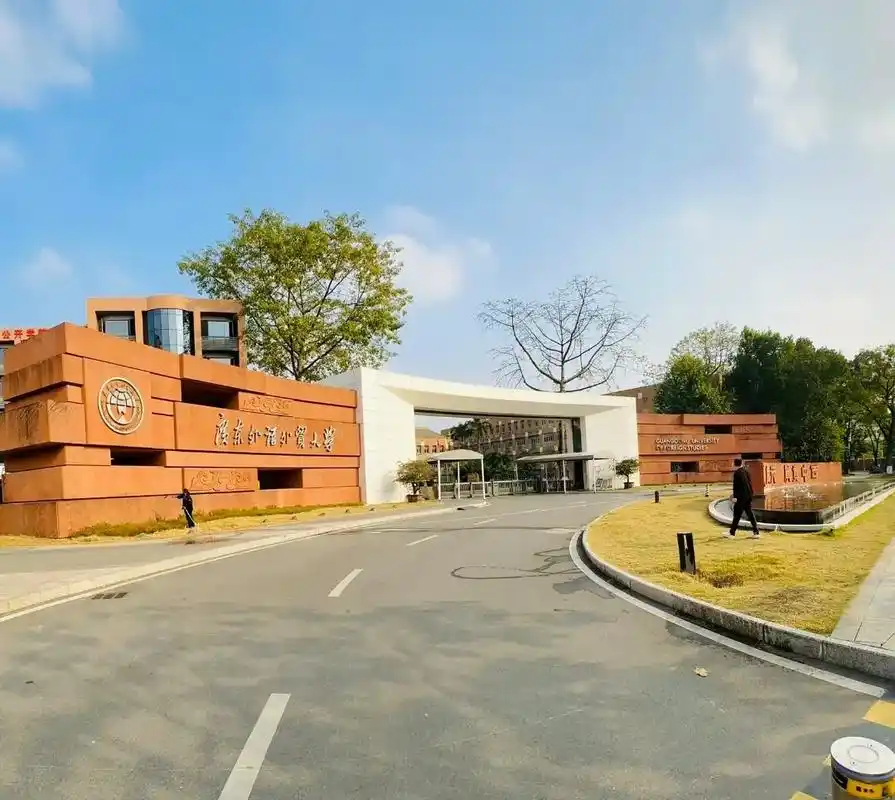
About the university
Guangdong University of Foreign Studies (GDUFS), located in Guangzhou, Guangdong Province, is a key institution under the Guangdong Provincial Department of Education. It is a key university in the Guangdong Province High-Level University Development Initiative and a founding member of the World Interpreter and Translator Training Association (WITTA). It has been selected for the Guangdong Province 211 Project Phase III Key Discipline Construction Program. The university traces its origins to the Guangzhou Institute of Foreign Languages, established in November 1964 and officially enrolling students in July 1965, and the Guangzhou Institute of Foreign Trade, founded in December 1980. The Guangzhou Institute of Foreign Trade and the Guangzhou Institute of Foreign Languages were transferred to the management of Guangdong Province by the Ministry of Foreign Trade and Economic Cooperation and the State Education Commission in September 1994 and January 1995, respectively. In 1978, the university began enrolling master's students in English. In 1986, the Linguistics and Applied Linguistics program was authorized to confer doctoral degrees. In May 1995, the People's Government of Guangdong Province merged the two institutes to form Guangdong University of Foreign Studies. In October 2008, the Guangdong Provincial Government incorporated the Guangdong Vocational College of Finance and Economics, established in April 1996, into GDUFS. In 2011, the university was selected for the Ministry of Education's '2011 Plan'. As of December 2024, the university has three campuses: Baiyun Mountain, University Town, and Dalang, covering a total area of 2,292 mu (approximately 152.8 hectares). It comprises 26 teaching units, one independent college (Nan Guo Business School), and 74 undergraduate programs. The university has 3 post-doctoral research stations, 1 post-doctoral workstation, 3 first-level doctoral degree programs, 24 second-level doctoral degree programs, 13 first-level master's degree programs, 59 second-level master's degree programs, and 21 professional master's degree programs. It has a total of 2,183 faculty and staff, including 1,403 full-time teachers. There are 21,176 full-time undergraduate students, 5,773 doctoral and master's students, and over 10,000 students in various adult education, continuing education, and training programs. Five disciplines have been selected as key construction disciplines for high-level university development. Social Sciences (General) and Engineering rank among the top 1% globally in ESI. In 1964, the central government decided to establish the Guangzhou Institute of Foreign Languages, to be run by Guangdong Province; in November of that year, the institute was approved. In July 1965, the Guangzhou Institute of Foreign Languages officially enrolled students. In October 1970, the Guangdong Provincial Revolutionary Committee made decisions to 'adjust, merge, relocate, and reform' higher education institutions in the province: the Department of Foreign Languages (English, French, German, Russian) of Sun Yat-sen University, the Department of Foreign Languages (English, Russian) and the Department of Foreign Trade of Jinan University, and the Guangzhou Foreign Languages School were merged into the Guangzhou Institute of Foreign Languages, which was renamed 'Guangdong Institute of Foreign Languages' and relocated to the former site of the Central South Forestry College in Huangpodong, northern suburbs of Guangzhou. In 1977, the national college entrance examination system was restored; in November of that year, with approval from higher authorities, the institute resumed the name 'Guangzhou Institute of Foreign Languages' and was placed back under the management of the Ministry of Education. In December 1980, with the approval of the State Council, the Guangzhou Institute of Foreign Trade was established. In 1981, two programs—Linguistics and Applied Linguistics, and English Language and Literature—were authorized to confer master's degrees, making the university one of the first institutions to receive master's degree authorization. In 1986, German Language and Literature, Russian Language and Literature, and Indonesian Language and Literature (trial) were authorized to confer master's degrees, and Linguistics and Applied Linguistics was authorized to confer doctoral degrees. In 1987, the Department of Chinese as a Foreign Language was established to admit international students. In 1988, Linguistics and Applied Linguistics was designated by the State Education Commission as one of the five key foreign language disciplines nationwide, and the Institute of Foreign Cultures (renamed the Institute of International Studies in 1992) was established. In 1989, the Department of Foreign Trade (renamed the Department of International Trade in 1991) and the Department of Foreign-Related Secretarial Studies were established. In 1992, the Board of Directors of the Guangzhou Institute of Foreign Languages was established. In December 1980, the Guangzhou Institute of Foreign Trade was officially established in Dalang, northern suburbs of Guangzhou, with one department, two divisions, and two teaching and research offices. (In 1979, with approval from the Ministry of Foreign Trade and Economic Cooperation, preparatory work for the Guangzhou Institute of Foreign Trade began.) In 1981, the institute officially enrolled students from the central, southern, and southwestern provinces and regions, including Tibet, admitting 80 new students. In 1984, the Department of Foreign Trade Enterprise Management was added. In 1985, a pilot system of presidential responsibility was implemented, and an evening university was established to admit two-year associate degree students. In 1990, the institute's structure was adjusted to include three departments and two divisions. In 1991, the Department of Adult Education was established, and the Board of Directors of the Guangzhou Institute of Foreign Trade was formed. From September 1, 1994, the institute was officially placed under the management of Guangdong Province. In 1995, it had three departments, five undergraduate programs, one undergraduate program direction, and two associate degree programs. In mid-January 1995, the Standing Committee of the People's Government of Guangdong Province decided to merge the Guangzhou Institute of Foreign Languages and the Guangzhou Institute of Foreign Trade to form Guangdong University of Foreign Studies; in May of that year, GDUFS was officially established; in August, it enrolled students under the new name for the first time, admitting 676 undergraduates and 164 associate degree students; in October, the first University Affairs Committee, Degree Committee, Academic Committee, and Professional Technical Title Evaluation Committee of the new university were successively established; on November 14, the Board of Directors of Guangdong University of Foreign Studies was established. In June 1999, the Open College was established.
Sources & verification
- Verification
- Not verified
- Verified on
- 2026-09-21
- Last updated
- 2026-09-24
- Source link
- studyinchina.net ↗
- Source notes
- Compiled from public StudyInChina information (source ID: 663daf06-9bb9-41eb-ab99-d04b402df639)
Confirm requirements, funding and deadlines in the admissions office’s current announcement.