
Government/University Scholarship
Hebei Province Government Scholarship
Application status unknownNot verified
Discover the Hebei Provincial Government Scholarship, offering financial support for international students to study in China's Hebei province. Apply now!
Funding details pending.
- Scholarship type
- Government/University Scholarship
- Degree level
- Bachelor / Master / PhD
- Location
- Hebei · Baoding
- Application deadline
- Date to be confirmed
Overview
Discover the Hebei Provincial Government Scholarship
offering financial support for international students to study in China's Hebei province. Apply now!
Funding coverage
Funding tiers
Eligibility may differ by tier. Check the applicable degree and requirements.
Bachelor’s funding tier
- Eligible degree
- Bachelor’s
- Funding
- Bachelor’s
- Tier requirements
- Meets the visa, health and academic requirements for study in China
Master’s funding tier
- Eligible degree
- Master’s
- Funding
- Master’s
- Tier requirements
- Meets the visa, health and academic requirements for study in China
Doctoral funding tier
- Eligible degree
- Doctoral
- Funding
- Doctoral Scholarship content Hebei Provincial Government scholarships for international students are as follows:
- Tier requirements
- Meets the visa, health and academic requirements for study in China
Bachelor’s funding tier
- Eligible degree
- Bachelor’s
- Funding
- Undergraduates: RMB 8,000 per year
- Tier requirements
- Meets the visa, health and academic requirements for study in China
Master’s funding tier
- Eligible degree
- Master’s
- Funding
- Master’s students: RMB 20,000 per year
- Tier requirements
- Meets the visa, health and academic requirements for study in China
Doctoral funding tier
- Eligible degree
- Doctoral
- Funding
- Doctoral students: RMB 30,000 per year Application Deadline and Enrollment Application deadline: before June 30 Enrollment: September each year Note: the precise deadline may vary with each year’s university admissions plan. Application materials Applicants for the Hebei Provincial Government Scholarship must prepare and submit: Hebei Provincial Government Scholarship Application Form Passport Recent photograph Highest educational qualification graduation certificate (or provisional proof of graduation), translated into English or Chinese and notarized Transcripts (translated into English or Chinese and notarized) Foreign language proficiency certificate Study or research plan for China (written in English or Chinese) Recommendation letters: master’s and doctoral applicants must submit two letters from professors or associate professors, written in English or Chinese Music applicants must submit a CD of their own work. Fine arts applicants must submit a CD containing two sketches, two color paintings and two other works Applicants under 18 must provide legal documents from a legal guardian in China Other materials, if any, and additional materials required by the university Note: all documents in languages other than Chinese or English must include notarized Chinese or English translations. Application Procedure Check scholarship admissions information for the university and major Prepare materials and apply as required by the university Track application progress and take entrance examinations or interviews if required Receive the scholarship result and enroll Contact details Admissions Office, College of International Education, Hebei University [institution name as supplied in the source] Address: 20 Nanhuan Road, Shijiazhuang, Hebei; postal code: 050024 Telephone: +86-311-80981381, 80981382 Fax: +86-311-80981383 Email: scholarship@mail.hebtu.edu.cn The Hebei Provincial Government Scholarship is presented as an excellent opportunity for international students to attend universities in Hebei. Its annual funding can reduce part of the financial pressure of studying in China. For students seeking a high-quality academic environment with relatively low living costs, the Hebei Provincial Government Scholarship is presented as an option worth considering. How to Improve Your Chances of Receiving the Hebei Provincial Government Scholarship If you wish to apply for a scholarship to study in China but lack time to handle the materials, contact RIBA International Cooperation Co., Ltd., described here as a leading scholarship application support provider, for professional advice and assistance to improve your chances of success. Website: https://riba.vn Hotline: +84 888 666 350 Hotline: +84 888 666 152 The above information was compiled by studyinchina.net. Visit Scholarship Search to learn about further types of scholarship.
- Tier requirements
- Meets the visa, health and academic requirements for study in China
Requirements & documents
Application dates & process
Review Cycle: As specified in each host university’s admissions brochure
Universities & programs
Universities
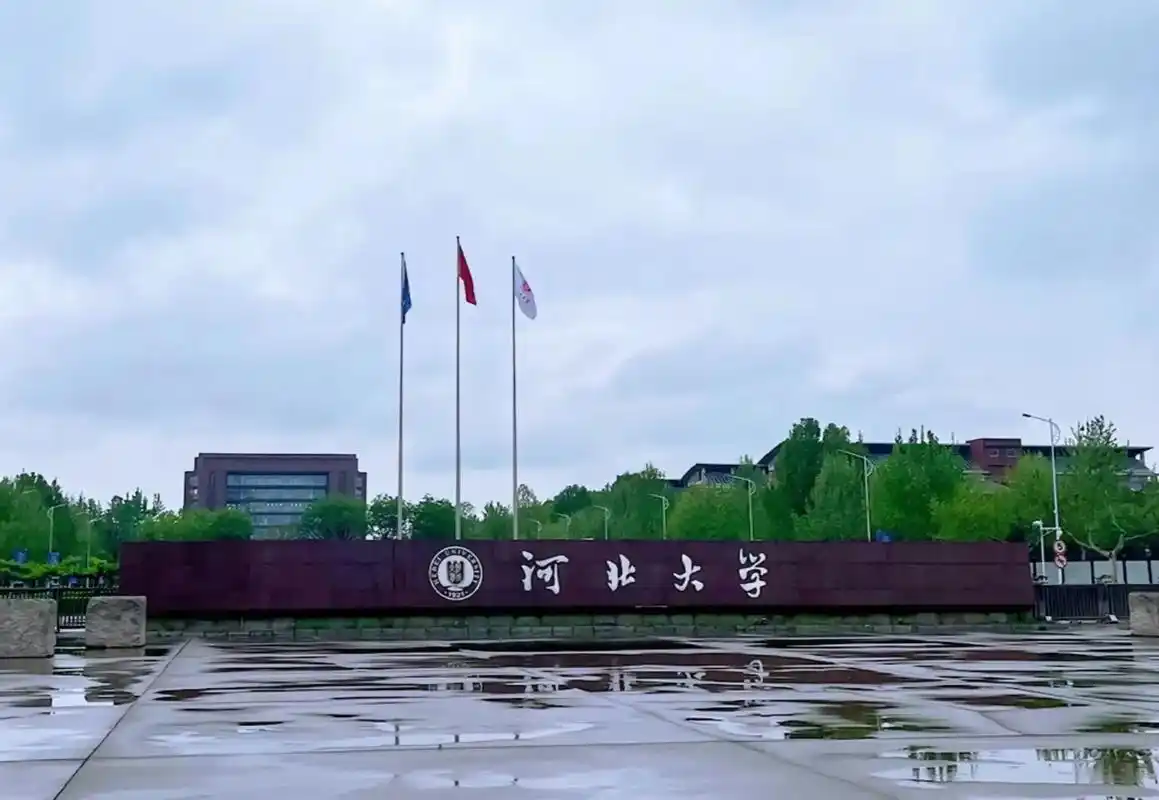
About the university
Hebei University, abbreviated as Hebei University, is located in Baoding City, Hebei Province. It is under the administration of the Hebei Provincial Department of Education and is a co-established university by the Ministry of Education and the Hebei Provincial People's Government. It is a first-tier university under the national first-class university construction plan supported by Hebei Province, a pilot university for the 'Training and Research Center for Overseas Study Personnel' of the Ministry of Education, and has been selected into the National Project for Enhancing the Comprehensive Strength of Universities in Central and Western China, becoming a key construction university under the 'One Province, One University' initiative for central and western regions. It is also recognized as a national model university for innovation and entrepreneurship. The university was founded in 1921, originally named Tianjin University of Commerce and Industry; in 1933, it was renamed Tianjin Institute of Commerce and Industry; it went through various periods such as Private Jingu University, National Jingu University, Tianjin Normal College, and Tianjin Normal University; in 1960, it was restructured into Hebei University; in 1970, it moved to Baoding City, Hebei Province. In 2005, Hebei Provincial Staff Medical College and its affiliated hospital were merged into Hebei University; in 2012, it became one of the 14 universities selected for the 'Project to Enhance Comprehensive Strength of Universities in Central and Western China'; in 2016, it became a key construction university under the national 'One Province, One University' initiative for central and western regions, and was listed by Hebei Province as a key supported university for first-class university and first-class discipline construction; in 2017, it was selected as one of the first batch of national demonstration universities for deepening innovation and entrepreneurship education reform. As of September 2025, the university has three campuses: Wusi Road Campus, Qiyi Road Campus, and Yuhua Road Campus, with 30 teaching units, 87 undergraduate programs, 18 first-level doctoral degree authorization disciplines, 2 professional doctoral degree authorization points, 44 first-level master's degree authorization disciplines, 38 types of professional master's degree authorization categories, 13 postdoctoral research stations, and 1 postdoctoral research workstation. Eight disciplines rank among the top 1% in ESI worldwide. The university has 3,409 faculty and staff, including 2,265 full-time teachers, and 28,556 undergraduate students, 12,945 doctoral and master's students. Hebei University is a comprehensive university originally established in Tianjin and relocated to Baoding, Hebei Province in 1970. Its names have included Tianjin University of Commerce and Industry, Tianjin Institute of Commerce and Industry, Jingu University, Tianjin Normal College, and Tianjin Normal University, and it was officially named Hebei University in 1960. Founded in 1921 as Tianjin University of Commerce and Industry, it was established by French Jesuits of the Catholic Diocese of Zhili Southeast at Qingming Terrace on Machang Road in Tianjin, initially named 'Tianjin Agricultural, Industrial and Commercial University' and later renamed 'Tianjin University of Commerce and Industry'. The university initially had two faculties: Commerce and Industry, dedicated to cultivating technical and business talents. On July 21, Father Yu Puze was declared the acting dean for the establishment of the university in Tianjin, responsible for preparatory work; on July 25, Father Yu Puze went to Tianjin to survey the site at Qingming Terrace on Machang Road, supervise construction, purchase equipment, and recruit professors. In August 1933, the Ministry of Education of the National Government approved the registration via Order No. 7923, but because the departments did not meet the standard of three colleges and nine departments for a university, the school was renamed Hebei Private 'Tianjin Institute of Commerce and Industry'. In 1937, the institute established the College of Engineering and the College of Commerce. In 1943, the Women's College of Arts was added. In 1944, the institute approved a plan to upgrade to a university. In August 1945, the Women's College of Arts was renamed the College of Arts, with departments of Literature, History and Geography, and Home Economics; that same year, it met the standard of three colleges and nine departments, fully preparing for the upgrade to a university. In August 1952, during the nationwide adjustment of higher education institutions, the three departments of the College of Engineering of Jingu University were merged into the former Peiyang University (now Tianjin University); the College of Finance and Economics of Jingu University was merged into Nankai University. The remaining Normal College of Jingu University, along with the former Tianjin Teachers College, was merged to establish 'Tianjin Normal College' on the original site of National Jingu University.
Sources & verification
- Verification
- Not verified
- Verified on
- 2026-09-21
- Last updated
- 2026-09-24
- Source link
- studyinchina.net ↗
- Source notes
- Compiled from public StudyInChina information (source ID: 076489e3-41b1-4c0d-af3d-36427a3f976b)
Confirm requirements, funding and deadlines in the admissions office’s current announcement.