
Confucius Institute Scholarship
Confucius Institute Scholarship at East China Normal University
Application status unknownPartly verified
Scholarship Categories and Application Requirements 1. Master's Degree in Teaching Chinese to Speakers of Other Languages (MTCSOL) Enrollment: September 2018. Duration: 2 years. Requirements: Bachelor's degree. HSK Level 5 score of 210 or above, HSKK Intermediate score of 60 or above. Priority given to applicants who provide a work agreement or relevant certification from a proposed teaching institution after graduation. 2. Bachelor's Degree in Teaching Chinese to Speakers of Other Languages Enrollment: September 2018. Duration: 4 years. Requirements: High school diploma. HSK Level 4 score of 210 or above, HSKK Intermediate score of 60 or above. 3. One-Year Study Program Enrollment: September 2018. Duration: 11 months. Not open to international students already studying in China. 3.1 Teaching Chinese to Speakers of Other Languages HSK Level 3 score of 270 or above, with HSKK score. 3.2 Chinese Language and Literature, Chinese History, Chinese Philosophy
TuitionAccommodationMedical insurance
- Scholarship type
- Confucius Institute Scholarship
- Degree level
- Bachelor / Master / PhD / Visiting Students
- Location
- Shanghai · Shanghai
- Application deadline
- Date to be confirmed
Overview
Scholarship Categories and Application Requirements
1. Master's Degree in Teaching Chinese to Speakers of Other Languages (MTCSOL)
Enrollment: September 2018. Duration: 2 years.
Requirements: Bachelor's degree. HSK Level 5 score of 210 or above
HSKK Intermediate score of 60 or above. Priority given to applicants who provide a work agreement or relevant certification from a proposed teaching institution after graduation.
2. Bachelor's Degree in Teaching Chinese to Speakers of Other Languages
Funding coverage
Funding tiers
Eligibility may differ by tier. Check the applicable degree and requirements.
Full funding
- Eligible degree
- Bachelor’s, Master’s, Doctoral, Visiting students
- Funding
- Coverage includes tuition, accommodation, living expenses except for four-week students, and comprehensive medical insurance. 1. Host uses tuition for training/management, cultural activities and Chinese tests; excludes textbooks and tourist-attraction admission. 2. Free dormitory, usually twin room. Approved off-campus residence receives RMB 700/month, paid monthly/quarterly. 3. Monthly living allowance: undergraduate/one-year/one-semester RMB 2500; Teaching Chinese to Speakers of Other Languages master’s RMB 3000. Register as stated in admission notice or eligibility canceled; registration on/before 15th(inclusive) gets full month, after 15th half month. During study(excluding winter/summer holidays), personal absence from China longer than 15 days suspends allowance during absence. Personal suspension/withdrawal or host disciplinary penalty stops allowance from effective/notification date. Graduates/completers receive allowance through half a month after the institution’s designated completion date. 4. Host purchases insurance under Ministry of Education rules: four-week RMB 160/person, one-semester RMB 400/person, one academic year or longer RMB 800/person/year. **Application period** 1. April 20 for July entry. 2. June 1 for September entry. 3. September 20 for December entry. 4. December 20 for March 2019 entry. Hanban centralized competitive review completed2 months before entry; results published. **Application method** 1. From March 1,2018 apply simultaneously at [university application.php](http://lxs.ecnu.edu.cn/application.php) and [http://cis.chinese.cn](http://cis.chinese.cn/), register/complete scholarship form/upload scans. University application fee RMB 800. 2. Contact recommending institution for online recommendation. Hanban appoints Confucius Institutes, independently operated Confucius Classrooms and some Chinese test centers, such as East China Normal University, as recommending institutions. They select local applicants on merit, review materials, contact host institutions, and collect and forward scholarship admission documents. 3. The host institution reviews the application materials to assess admission eligibility (applicants to degree programs at our university must attend an interview) and submits preliminary admission candidates to Hanban. This generally takes 20 working days. 4. Hanban conducts a comprehensive assessment of eligible applicants and selects the best candidates. Hanban will complete the scholarship assessment two months before students enroll. 5. After confirming scholarship recipients’ intention to study, the host institution will send the Admission Notice and Visa Application for Study in China (Form JW202). Students may print their scholarship award certificate online. 6. Confucius Institute Scholarship benefits begin after student registration is completed within the prescribed period. **Disclaimer** 1. Applicants may consult our university in advance about the training plans and courses for relevant majors. 2. Applicants must understand our university’s specific admission requirements and application deadline, and submit application materials in accordance with the relevant rules. 3. Incomplete applications and applications that do not meet the admission requirements will not be accepted. 4. If materials are falsified or not personally completed and submitted by the applicant, once verified, [source ends before stating the consequence]
- Tier requirements
- ** **1. Master’s in Teaching Chinese to Speakers of Other Languages** September 2018 entry,2 years’ funding. Undergraduate qualification; HSK5,210 and HSKK Intermediate,60; intended teaching-institution work agreement/evidence preferred. **2. Undergraduate Teaching Chinese to Speakers of Other Languages** September 2018 entry,4 years’ funding. High school qualification; HSK4,210 and HSKK Intermediate,60. **3. One-academic-year study** September 2018 entry,11 months’ funding; students already in China ineligible. **3.1 Teaching Chinese to Speakers of Other Languages** HSK3,270, with HSKK results. **3.2 Chinese Language and Literature, Chinese History, Chinese Philosophy** HSK4,180 and HSKK Intermediate,60. **3.3 Chinese language study** HSK3,180. **4. One-semester study** September 2018/March 2019 entry,5 months’ funding; passport holders with X1/X2 visas ineligible. **4.1 Teaching Chinese to Speakers of Other Languages, Chinese Language and Literature, Chinese History, Chinese Philosophy** HSK3,210, with HSKK results. **4.2 Chinese Medicine, Tai Chi Culture** HSK results required. **5. Four-week study** July/December 2018 entry,4 weeks’ funding; passport holders with X1/X2 visas ineligible. **5.1 Chinese Medicine, Tai Chi Culture** HSK results required. **5.2 Chinese Language + Chinese Family Experience** HSK results required; Confucius Institute organizes applications, contacts host in advance to agree study plan, and seeks headquarters approval;10-15 per group. **5.3 Confucius Institute Special Four-Week Program** HSK results required; Confucius Institute organizes applications,10-15 per group. **Scholarship content** Confucius Institute Scholarship covers tuition, accommodation, living allowance(except four-week study) and comprehensive medical insurance. 1. Host uses tuition for training/management, cultural activities and Chinese tests; excludes textbooks and tourist-attraction admission. 2. Free dormitory, usually twin room. Approved off-campus residence receives RMB 700/month, paid monthly/quarterly. 3. Monthly living allowance: undergraduate/one-year/one-semester RMB 2500; Teaching Chinese to Speakers of Other Languages master’s RMB 3000. Register as stated in admission notice or eligibility canceled; registration on/before 15th(inclusive) gets full month, after 15th half month. During study(excluding winter/summer holidays), personal absence from China longer than 15 days suspends allowance during absence. Personal suspension/withdrawal or host disciplinary penalty stops allowance from effective/notification date. Graduates/completers receive allowance through half a month after the institution’s designated completion date. 4. Host purchases insurance under Ministry of Education rules: four-week RMB 160/person, one-semester RMB 400/person, one academic year or longer RMB 800/person/year. **Application period** 1. April 20 for July entry. 2. June 1 for September entry. 3. September 20 for December entry. 4. December 20 for March 2019 entry. Hanban centralized competitive review completed2 months before entry; results published. **Application method** 1. From March 1,2018 apply simultaneously at [university application.php](http://lxs.ecnu.edu.cn/application.php) and [http://cis.chinese.cn](http://cis.chinese.cn/), register/complete scholarship form/upload scans. University application fee RMB 800. 2. Contact recommending institution for online recommendation. Hanban authorizes Confucius Institutes(independent Classrooms) and selected Chinese test centers, such as ECNU, to select local applicants and review [source ends here]
Requirements & documents
Application dates & process
Review Cycle: Joint review by the China Scholarship Council and host university takes approximately 6–8 weeks
Universities & programs
Universities
About the university
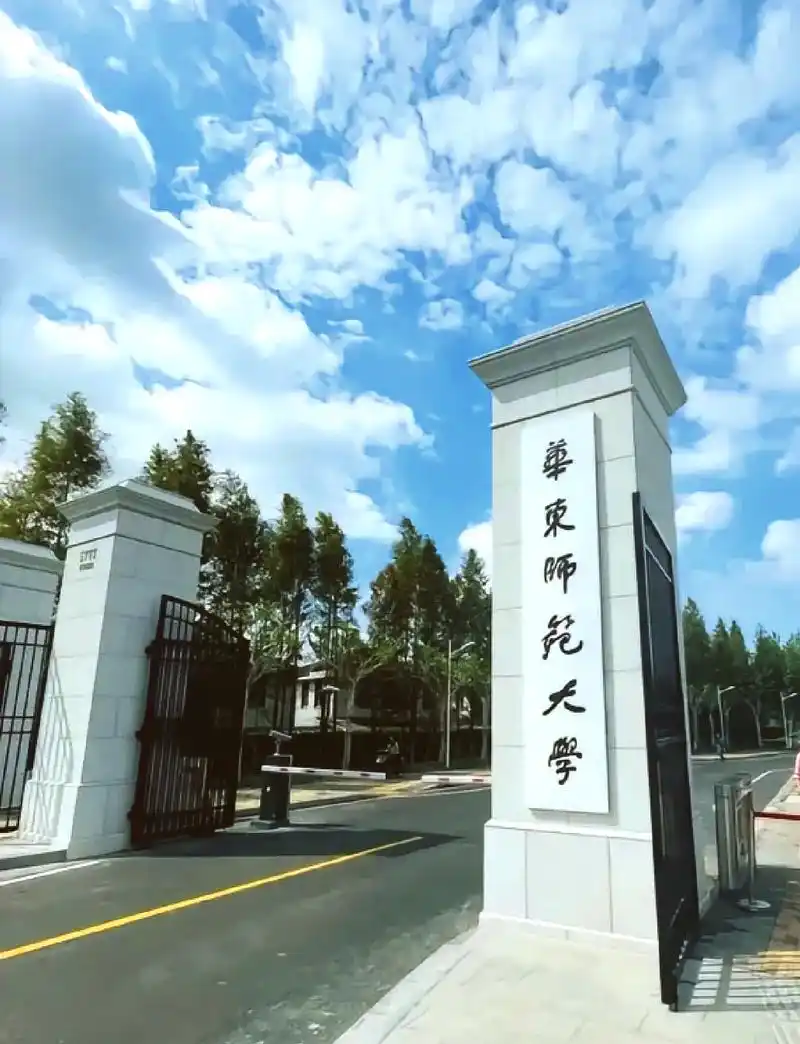
East China Normal University (ECNU), commonly known as Huadong Shida, is a comprehensive research university located in Shanghai, China. It is directly under the Ministry of Education and is jointly supported by the Ministry and the Shanghai Municipal People's Government. Founded on October 16, 1951, ECNU was established on the original site of Daxia University, incorporating departments from Daxia, Guanghua, St. John's, Fudan, Tongji, and Zhejiang universities. In 1959, it was designated as one of the 16 key national universities by the Central Committee of the Communist Party of China. In 1972, it merged with Shanghai Normal College and Shanghai Institute of Physical Education to form Shanghai Normal University, but regained its original name in 1980. ECNU was included in the national '211 Project' in 1996, the '985 Project' in 2006, and was selected as a Class A institution in the national 'World-Class Universities' initiative in 2017. Notable scholars such as Hu Shi, Li Linsi, Xu Zhimo, and Huang Yanpei have taught at the university. As of October 2024, ECNU has two campuses, Putuo and Minhang, covering a total area of 207 hectares, with a library collection of over 5.388 million volumes. It comprises 4 faculties, 34 schools and departments, 63 undergraduate programs, 36 first-level doctoral programs, 37 first-level master's programs, 3 second-level master's programs, 36 professional master's programs, 8 professional doctoral programs, and 27 postdoctoral research stations. The university has over 4,200 faculty and staff, more than 15,900 undergraduate students, over 4,000 doctoral students, over 17,000 master's students, and over 2,500 international students (including non-degree students). ECNU's predecessor institutions include Daxia University, founded in 1924 after a student exodus from Xiamen University, and Guanghua University, established in 1925 by Chinese faculty and students leaving St. John's University in protest. These institutions merged to form ECNU, which has since evolved into a leading university in China.
Sources & verification
- Verification
- Partly verified
- Verified on
- 2026-05-10
- Last updated
- 2026-09-24
- Source link
- www.campuschina.org ↗
- Source notes
- Official CampusChina guide (program code: 120257)
Confirm requirements, funding and deadlines in the admissions office’s current announcement.