
Government/University Scholarship
CSC Type B Scholarship — Silk Road
Application status unknownNot verified
If you are looking for a scholarship to study in China, the Chinese Government Scholarship is a major option. The CSC Type B — Silk Road scholarship is described in the source as a prestigious Chinese Government Scholarship for international students with generous benefits.
TuitionAccommodationMedical insurance
- Scholarship type
- Government/University Scholarship
- Degree level
- Bachelor / Master / PhD
- Location
- Zhejiang · Hangzhou
- Application deadline
- Date to be confirmed
Overview
If you are looking for a scholarship to study in China
the Chinese Government Scholarship is a major option. The CSC Type B — Silk Road scholarship is described in the source as a prestigious Chinese Government Scholarship for international students with generous benefits.
Funding coverage
Funding tiers
Eligibility may differ by tier. Check the applicable degree and requirements.
Bachelor’s funding tier
- Eligible degree
- Bachelor’s
- Funding
- Bachelor’s
- Tier requirements
- Meets the visa, health and academic requirements for study in China
Master’s funding tier
- Eligible degree
- Master’s
- Funding
- Master’s
- Tier requirements
- Meets the visa, health and academic requirements for study in China
Doctoral funding tier
- Eligible degree
- Doctoral
- Funding
- Doctoral Coverage and Rates Bachelor’s Degree Tuition waived Accommodation waived Insurance waived Monthly allowance: RMB 2,500, twelve months annually. Funding duration: four to five years. Master’s Degree Tuition waived Accommodation waived Insurance waived Monthly allowance: RMB 3,000, twelve months annually. Funding duration: two to four years. Doctoral Degree Tuition waived Accommodation waived Insurance waived Monthly allowance: RMB 3,500, twelve months annually. Funding duration: four to six years. Note: All CSC recipients must pass annual assessment to retain funding the following year. Application Deadline and Enrollment Silk Road deadlines vary by university, generally April–May. Check the latest admission plan or contact the intended university. Results are announced in July; recipients enroll in September. Chinese Government Scholarship Silk Road Program Eligibility Basic Requirements Non-Chinese citizenship and good health; Good character, clean background and no criminal record; Friendly toward China. Educational Qualification and Age Undergraduates: high school graduation, excellent results and no older than 25; Master’s applicants: bachelor’s degree, excellent results and no older than 35; Doctoral applicants: master’s degree, excellent results and no older than 40. Notes: High school graduates and final-year undergraduates may apply. Recipients must obtain graduation certificates before enrollment. Language requirements For Chinese-Taught Programs: Undergraduate applicants require HSK Level 3; Master’s and doctoral applicants require HSK Level 4; Those below the language certificate requirement may undertake one year of Chinese preparatory study if appropriate to the major and approved by the scholarship agency. For English-Taught Programs: English proficiency evidence is required, generally IELTS 6.5 or TOEFL 85 or higher. Meet all other university requirements, including language and academic ability. Application materials Required Materials: Chinese Government Scholarship Application Form, completed online through the referenced link; Passport Recent passport photograph Highest educational qualification certificate; those not yet graduated provide provisional graduation or enrollment evidence stating the expected graduation date; Transcripts or student-status evidence covering at least 70% of courses; final-year high school students must provide five semesters of transcripts; Language evidence Graduate admission letter where required by the university; Study or research plan in Chinese or English; Two teacher recommendation letters for undergraduates; two professor or associate professor letters for master’s and doctoral applicants; Medical examination form, valid within six months; Certificate of no criminal record, valid within six months; Portfolio for arts or related majors; Other relevant materials, including research achievements, papers, academic certificates and extracurricular evidence; Legal guardian evidence for applicants under 18. Notes: All other-language documents must be translated into English or Chinese and notarized. Materials vary by university; follow its specific requirements. Application Procedure Step 1: Identify CSC institutions and majors at http://www.campuschina.org and consult university websites for current, accurate admissions information. Step 2: Prepare materials according to scholarship instructions. Step 3: Submit in both the CSC and university systems: Create an account at https://studyinchina.csc.edu.cn/, enter personal and application information, choose institutions and majors and upload materials. Save the completed CSC application form. Then submit through the university website. Some universities also require “hardware materials” [source wording unclear]; submit on time. Step 4: Interview and Entrance Examination After preliminary review, universities arrange interviews, an important opportunity to demonstrate strengths and fit with the institution and major. Many undergraduate programs require entrance examinations, with results an important basis for scholarship approval. Step 5: Await results. See Also: CSC Scholarship Application Guide Contact details Contact the CSC scholarship administrator through: Asia Telephone: 0086-10-66093584 Email: asia-admission@csc.edu.cn Africa Telephone: 0086-10-66093928 Email: africa-admission@csc.edu.cn Europe Telephone: 0086-10-66093921 Email: europe-admission@csc.edu.cn Americas and Oceania Telephone: 0086-10-66093578 Email: americas-admission@csc.edu.cn oceania-admission@csc.edu.cn Fax: 0086-10-66093972 Website: http://www.campuschina.org Address: Department of Admissions and International Cooperation, China Scholarship Council, 13th Floor, Building A3, 9 Chegongzhuang Avenue, Xicheng District, Beijing, China Postal code: 100044 Contact the intended university’s admissions office directly for application procedures, progress and document processing. How to Improve Application Chances If you lack time to research and handle Silk Road or other CSC applications, contact RIBA International Cooperation Co., Ltd. for professional advice and support to maximize your chances. RIBA Contact Information: Facebook: Du học Trung Quốc Riba.vn Website: https://riba.vn Hotline: +84 888 666 350 Hotline: +84 888 666 152 You May Also Be Interested In: Riba 2024 Scholarship Admission Statistics Riba Chinese Scholarship Application Support Services The above Silk Road program information is compiled by studyinchina.net. Visit the scholarship search section for more opportunities.
- Tier requirements
- Meets the visa, health and academic requirements for study in China
Requirements & documents
Application dates & process
Review Cycle: As specified in each host university’s admissions brochure
Universities & programs
Universities
About the university
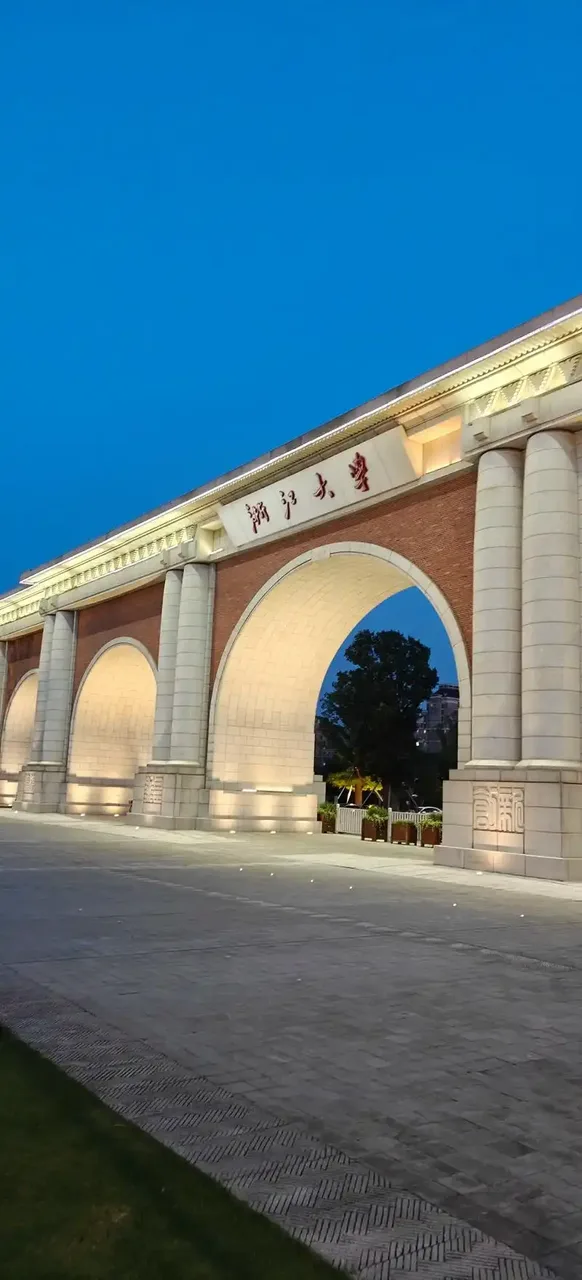
Zhejiang University, abbreviated as ZJU, is located in Hangzhou, Zhejiang Province. It is a national key university directly under the central government, administered by the Ministry of Education of the People's Republic of China and jointly established with the People's Government of Zhejiang Province. It is a member of the national "Double First-Class" initiative, "Project 211," and "Project 985." It has been selected for the Everest Plan, the Outstanding Talent Plan, the 101 Plan, the Strengthening Basic Disciplines Plan, the 2011 Plan, the Excellence in Engineering Education Training Plan, the Excellence in Medical Education Training Plan, the Excellence in Legal Education Training Plan, the Excellence in Agriculture and Forestry Education Training Plan, and is among the first batch of demonstration universities for deepening innovation and entrepreneurship education reform. It is a member of the C9 League, the Association of Pacific Rim Universities, the International Alliance for Engineering Education under the Belt and Road Initiative, the China University Planetary Science Alliance, and the Medical "Double First-Class" Construction Alliance. Its predecessor was Qiushi Academy, founded in 1897, which closed in 1914. In 1928, National Zhejiang University was established on the original site of Qiushi Academy. In 1937, the university moved westward to Zunyi and Meitan for operation. In the autumn of 1946, it moved back to Hangzhou. In 1952, some departments were transferred to the Chinese Academy of Sciences and other universities, while the main body was reorganized into several institutions in Hangzhou, which later developed into the original Zhejiang University, Hangzhou University, Zhejiang Agricultural University, and Zhejiang Medical University. In 1998, these four universities merged to form the new Zhejiang University. As of December 2025, the university has 7 campuses, covering an area of 7,392,273 square meters, with a building area of 4,701,128 square meters and a collection of 8.22 million books. It comprises 7 faculties, 41 professional colleges (departments), and offers 103 undergraduate programs. It has 59 postdoctoral research stations, 62 first-level doctoral degree authorization points, 18 professional doctoral degree authorization categories, 62 first-level master's degree authorization points, and 35 professional master's degree authorization categories. There are 70,918 full-time students and 9,787 faculty and staff members. In March 1911, Zhejiang Secondary Industrial School officially opened, located at Baoguo Temple (formerly the Copper Yuan Bureau) in Yangguan Lane, Puchang Lane. In October of the same year, it was temporarily closed due to war. In 1845, the American Presbyterian Mission (a foreign missionary organization of the American Christian church) founded Chongxin Yishu (Chongxin Charity School) in Ningbo, Zhejiang, under the leadership of medical doctor and missionary D.B. McCartee. In the autumn of 1867, Chongxin Yishu moved from Ningbo to Pishi Lane in Hangzhou (and two years later to Da Ta'er Lane), and was renamed Hangzhou Yuying Yishu (Presbyterian Boys' School). In February 1911, 117 students of Yuying College moved from the old campus on Da Ta'er Lane to the new campus, and the school was renamed Zhijiang Academy. In 1914, the Northern and Southern Presbyterian Missions and the university board unanimously passed a resolution to upgrade Zhijiang Academy to a university, officially naming it Zhijiang University.
Sources & verification
- Verification
- Not verified
- Verified on
- 2026-09-21
- Last updated
- 2026-11-06
- Source link
- studyinchina.net ↗
- Source notes
- Compiled from public StudyInChina information (source ID: 84f473bb-46a4-4865-93b7-f09ec9351b9a)
Confirm requirements, funding and deadlines in the admissions office’s current announcement.