
Government/University Scholarship
Jiangxi Provincial Government Scholarship
Application status unknownNot verified
Jiangxi Provincial Government Scholarship is an opportunity to help you realize your dream of studying in China, studying in one of the provinces with great development potential and a reasonable standard of living. The program sponsors undergraduate, master's, doctoral degrees and 1 year of language in the form of an annual financial support.
Tuition
- Scholarship type
- Government/University Scholarship
- Degree level
- Bachelor / Master / PhD
- Location
- Jiangxi · Nanchang
- Application deadline
- Date to be confirmed
Overview
Jiangxi Provincial Government Scholarship is an opportunity to help you realize your dream of studying in China
studying in one of the provinces with great development potential and a reasonable standard of living. The program sponsors undergraduate
master's
doctoral degrees and 1 year of language in the form of an annual financial support.
Funding coverage
Funding tiers
Eligibility may differ by tier. Check the applicable degree and requirements.
Bachelor’s funding tier
- Eligible degree
- Bachelor’s
- Funding
- Undergraduate students
- Tier requirements
- Meets the visa, health and academic requirements for study in China
Master’s funding tier
- Eligible degree
- Master’s
- Funding
- Master’s students
- Tier requirements
- Meets the visa, health and academic requirements for study in China
Doctoral · Category A
- Eligible degree
- Doctoral
- Funding
- Type A scholarship: for master’s and doctoral students, with funding of RMB 25,000 per year
- Tier requirements
- Meets the visa, health and academic requirements for study in China
Doctoral · Category B
- Eligible degree
- Doctoral
- Funding
- Type B scholarship: for undergraduates, with funding of RMB 20,000 per year
- Tier requirements
- Meets the visa, health and academic requirements for study in China
Doctoral · Category C
- Eligible degree
- Doctoral
- Funding
- Category C scholarship: for one-year language course students, RMB 6,000/year. These awards reduce part of students’ financial burden and are described as covering tuition at a minimum. Although less generous than some comprehensive scholarships, they are described as less competitive and suitable for applicants with less outstanding academic backgrounds, improving their chances of an award. Success still depends on thorough preparation, including complete materials, a clear study plan and language proficiency. Application deadline Deadlines vary by university. Consult the latest admissions plan for accurate application information. Application requirements Basic Requirements Non-Chinese nationality and a valid foreign passport; Friendly toward China and in good physical and mental health; Good moral character, no criminal record and excellent academic performance; Applicants must not concurrently receive other scholarship funding. Age and Educational Qualification Requirements
- Tier requirements
- Meets the visa, health and academic requirements for study in China
Bachelor’s funding tier
- Eligible degree
- Bachelor’s
- Funding
- Undergraduates: at least a high-school qualification is required, usually with an age limit of 25 (some universities accept applicants aged 28 or younger);
- Tier requirements
- Meets the visa, health and academic requirements for study in China
Master’s funding tier
- Eligible degree
- Master’s
- Funding
- Master’s students: a bachelor’s degree is required, and the age limit is usually 35;
- Tier requirements
- Meets the visa, health and academic requirements for study in China
Doctoral funding tier
- Eligible degree
- Doctoral
- Funding
- Doctoral: master’s degree and generally no older than 45; Language courses: at least high school graduation and enrollment for at least six months. Language requirements Provide HSK/HSKK certificates meeting the chosen institution’s international admission language policy. Application materials Complete materials in Chinese or English; other-language materials require notarized translations. Using one language consistently is recommended. Jiangxi Provincial Government Scholarship Application Form in Chinese or English; Passport; Identification photograph; Foreigner Physical Examination Form, valid within six months; Certificate of no criminal record, valid within six months; Graduation certificate; Academic transcripts; Recommendation letters for master’s and doctoral applicants; HSK certificate, if available; Study plan for master’s and doctoral applicants; Other supplementary materials, if any. Note: Incomplete applications are not accepted. Application Procedure Step 1: Identify participating universities; Step 2: Prepare compliant materials; Step 3: Submit the scholarship application and documents under university instructions; Step 4: Track status and maintain contact; Step 5: Receive results. Notes: Paper materials may be required by the university; Check email regularly for notifications and feedback. How to Improve Application Chances If you lack preparation time, contact Riba, described here as Vietnam’s leading Chinese scholarship application support service, for professional guidance. Riba Contact Information Official website: https://riba.vn Hotline: +84 888 666 350 | +84 888 666 152 Visit studyinchina.net’s scholarship directory for further Jiangxi and other scholarship information.
- Tier requirements
- Meets the visa, health and academic requirements for study in China
Requirements & documents
Application dates & process
Review Cycle: As specified in each host university’s admissions brochure
Universities & programs
Universities
About the university
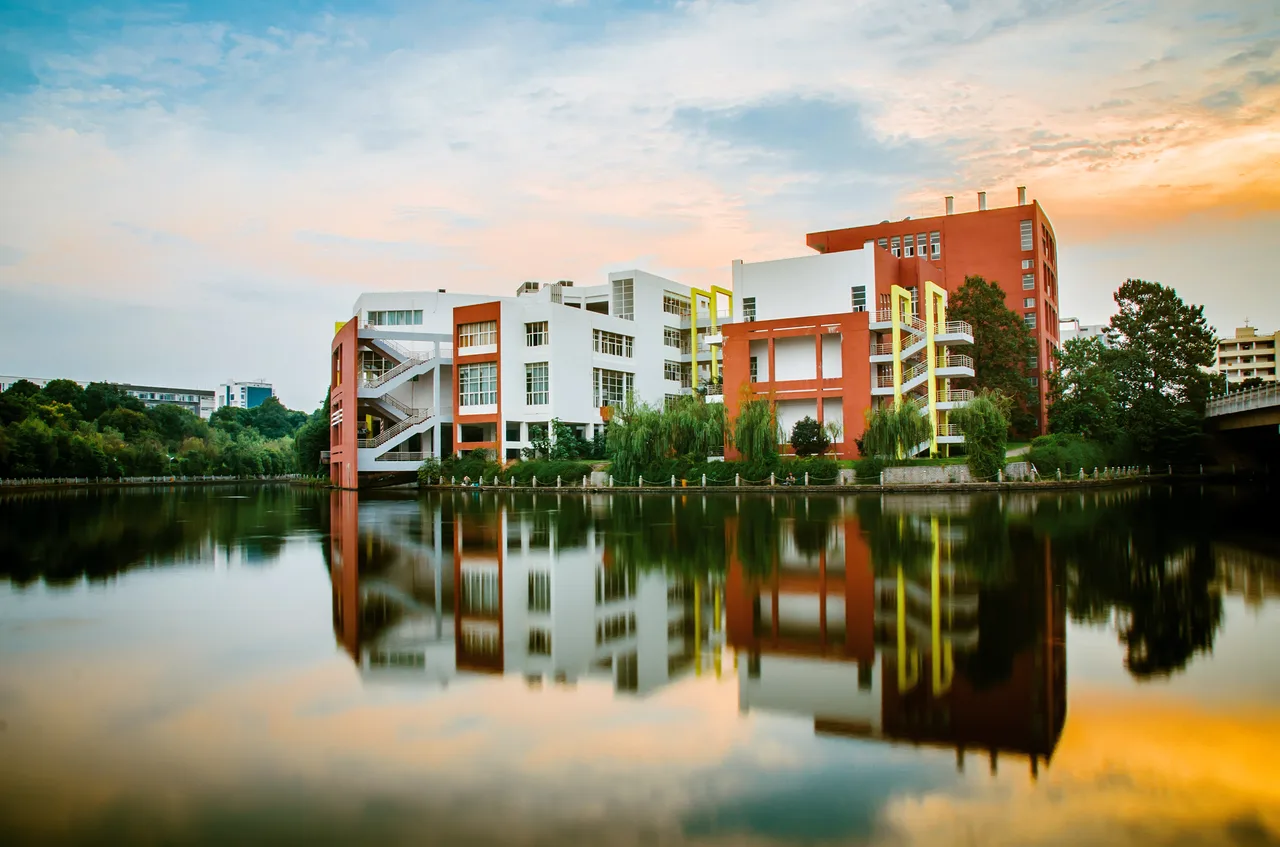
Nanchang University (NCU), located in Nanchang City, Jiangxi Province, is under the administration of the Jiangxi Provincial Government. It is a national Double First-Class and Project 211 university. The university serves as the Jiangxi main node of the China Education and Research Network (CERNET) under the Ministry of Education. It is also selected for the national "Midwest Universities Comprehensive Strength Promotion Plan" and the "Midwest Universities Basic Capacity Building Project," and is a "Ministry-Province Co-built University" by the Ministry of Education and the Jiangxi Provincial People's Government. Its predecessors—Jiangxi Medical College, Jiangxi University, and Jiangxi Institute of Technology—originated from Jiangxi Public Medical School founded in 1921, National Chung Cheng University founded in 1940, and Jiangxi Institute of Technology founded in 1958, respectively. In 1993, the Jiangxi Provincial Party Committee and the Provincial People's Government decided to merge Jiangxi University and Jiangxi Institute of Technology to form Nanchang University. In 1997, Nanchang University was listed by the Ministry of Education as a key university under the national "Project 211." In 2004, it became a university jointly built by the Ministry of Education and the Jiangxi Provincial People's Government. In 2005, Nanchang University merged with the former Jiangxi Medical College to form the new Nanchang University. As of November 2025, the university has three campuses: Qianhu, Qingshanhu, and Donghu. The main Qianhu campus covers an area of over 4,260 mu (approximately 284 hectares), with a building area of over 1.49 million square meters. The total campus area exceeds 5,460 mu (approximately 364 hectares), with a total building area of over 2.02 million square meters. It has 42 teaching units, 13 academic disciplines, 96 undergraduate programs, 27 first-level doctoral degree authorization points, 4 professional doctoral degree categories, 18 postdoctoral research stations, 50 first-level master's degree authorization points, and 36 professional master's degree categories. The university has 4,240 faculty and staff, including 3 academicians of the Chinese Academy of Sciences and 2 academicians of the Chinese Academy of Engineering. It has over 36,200 full-time undergraduate students, including 994 international students, and over 20,590 graduate students, including 78 international students. In the early 20th century, due to warlord conflicts and increasing casualties, patriotic figure He Huankui founded Jiangxi Public Medical School in 1921. In February 1927, the public medical school was attached to Jiangxi Zhongshan University and renamed as the Medical Department of Zhongshan University. After the Nanchang Uprising, Jiangxi Zhongshan University was closed, and the Medical Department was renamed Jiangxi Provincial Medical School. In August 1931, it was renamed Provincial Medical College, offering a five-year program. During the Japanese invasion, the provincial medical college moved successively to Xinyu, Ganxian, Nankang, Yudu, and Ningdu counties. After the end of the Anti-Japanese War in the second half of 1945, the school gradually moved back to Nanchang and was rebuilt. After the liberation of Nanchang, the Military Control Commission took over the provincial medical college. In August 1949, the former provincial medical college merged with the former provincial midwifery school and provincial nursing school to form the Provincial Medical College. After the outbreak of the Anti-Japanese War, the college was relocated to Ji'an, Yongxin, Kunming, Zhenning, Taihe, Yongxin, Nankang, and Changting. In 1946, it moved back to its original site in Nanchang. In May 1949, after the liberation of Nanchang, National Chung Cheng Medical College was renamed Nanchang Medical College and soon taken over by the Military Control Commission. Subsequently, the college underwent several splits and mergers, with frequent changes in affiliation and name, successively renamed as the Chinese People's Liberation Army Central China Medical College, Central South Military Region Medical College, Fourth Military Medical College, and Sixth Military Medical University. In March 1954, the Sixth Military Medical University moved away from Nanchang, and its teaching hospital was renamed 173 Hospital, successively under the Jiangxi Military District and the Eighth Military Medical School. In August 1958, the Eighth Military Medical School merged with Jiangxi Medical College, and 173 Hospital became the First Affiliated Hospital of Jiangxi Medical College. On January 1, 1952, Jiangxi Provincial Medical College was renamed Jiangxi Medical College. In June of the following year, the Ministry of Health of the Central People's Government approved the removal of the word "Provincial," and the school was renamed "Jiangxi Medical College." In June 1958, the Eighth Military Medical School merged with Jiangxi Medical College, still retaining the name Jiangxi Medical College. On May 29, 1969, Jiangxi Medical College merged with Jiangxi College of Traditional Chinese Medicine to form Jiangxi Medical University. In February 1970, the campus of Jiangxi Medical University was relocated from Nanchang to the former Rehabilitation Hospital and Qingyuan Ancient Temple in the Qingyuan Mountain area of Ji'an suburbs, implementing open-door education oriented toward rural areas. In April 1972, it moved back to its original site in Nanchang, and in November of the same year, it was renamed Jiangxi Medical College again. In November 1977, Jiangxi Medical College restored the five-year undergraduate medical program. In September 1979, it resumed graduate enrollment. In 1981, it was listed among the first batch of master's degree-granting units in the country. In 1982, it was listed among the first batch of bachelor's degree-granting units. In 1995, its first and second affiliated hospitals were rated as the first batch of "Grade III Class A hospitals" in Jiangxi Province. In 1998, Jiangxi Medical College was placed under the administration of the Jiangxi Provincial Education Commission. In November of the same year, the State Council approved Jiangxi Medical College as a doctoral degree-granting unit, with the authorized discipline of surgery (burns).
Sources & verification
- Verification
- Not verified
- Verified on
- 2026-09-21
- Last updated
- 2026-09-24
- Source link
- studyinchina.net ↗
- Source notes
- Compiled from public StudyInChina information (source ID: 5655af37-c008-4f89-9562-e9f139097fe6)
Confirm requirements, funding and deadlines in the admissions office’s current announcement.