
Government/University Scholarship
Gansu Province Silk Road Special Scholarship
Application status unknownNot verified
Are you eager to study in a region rich in cultural history and deeply connected to the Belt and Road Initiative? The Gansu Province Silk Road Special Scholarship offers an excellent opportunity for you. With attractive benefits and diverse academic programs, this scholarship is an ideal choice for international students seeking to explore and study in China.
TuitionAccommodation
- Scholarship type
- Government/University Scholarship
- Degree level
- Bachelor / Master / PhD
- Location
- Gansu · Lanzhou
- Application deadline
- Date to be confirmed
Overview
Are you eager to study in a region rich in cultural history and deeply connected to the Belt and Road Initiative? The Gansu Province Silk Road Special Scholarship offers an excellent opportunity for you. With attractive benefits and diverse academic programs
this scholarship is an ideal choice for international students seeking to explore and study in China.
Funding coverage
Funding tiers
Eligibility may differ by tier. Check the applicable degree and requirements.
Bachelor’s funding tier
- Eligible degree
- Bachelor’s
- Funding
- Bachelor’s
- Tier requirements
- Meets the visa, health and academic requirements for study in China
Master’s funding tier
- Eligible degree
- Master’s
- Funding
- Master’s
- Tier requirements
- Meets the visa, health and academic requirements for study in China
Doctoral funding tier
- Eligible degree
- Doctoral
- Funding
- Doctoral Note: each university offers different degree levels and programs according to its enrollment and international student training plans. Scholarship coverage First-tier scholarship Tuition waived Accommodation fees waived Living allowance (10 months per year) Undergraduate students, … [source ends here]
- Tier requirements
- Meets the visa, health and academic requirements for study in China
Master’s funding tier
- Eligible degree
- Master’s
- Funding
- Master’s students: RMB 1,500 per month
- Tier requirements
- Meets the visa, health and academic requirements for study in China
Doctoral funding tier
- Eligible degree
- Doctoral
- Funding
- Doctoral students: RMB 3,500/month Second-tier scholarship Tuition waived Accommodation waived for 10 months Notes This policy applies to all study levels. Recipients must undergo annual review as required by the university to determine eligibility for the following year. Students failing review have their scholarship eligibility suspended. These policies are for reference, based on Lanzhou Jiaotong University scholarship information. Consult university admissions information for specific policies. Application Deadline and Enrollment Admissions plans and scholarship deadlines vary by university. Monitor the latest notice or contact the chosen university for the precise deadline. Recipients enroll in September. Eligibility for the Gansu Province Silk Road Scholarship Basic Requirements Non-Chinese nationality and a valid ordinary passport; Good physical and mental health; Do not concurrently receive other scholarship funding. Educational Qualification and Age Undergraduate: high school graduation, excellent academic performance and aged 17–25; Master’s: bachelor’s degree, excellent academic performance and no older than 28; Doctoral: master’s degree, excellent academic performance and no older than 35. Language requirements Undergraduate: HSK Level 4 or higher; Master’s and doctoral: HSK Level 5 or higher. Note: meet the specific age, education and language requirements of the chosen university and major. Consult its official website. Application materials Applicants must prepare the following materials in Chinese or English: Passport ID photograph Previous visitors to China must provide visa pages and entry/exit records Graduation certificate (those who have not graduated must provide provisional proof of graduation or current enrollment) Transcripts Language proficiency certificates Foreigner physical examination form (valid within six months) Certificate of no criminal record, valid within six months Study or research plan in China Master’s and doctoral applicants must provide two recommendation letters from professors or associate professors, in Chinese or English Applicants under 18 must provide legal documents concerning their legal guardian in China Other relevant materials (if any) Note: originals in other languages require notarized translations. Application Procedure Step 1: Identify participating universities and majors. Step 2: Prepare all required materials. Step 3: Submit the application and materials as instructed by the university. Step 4: The university reviews materials. Check and update application status regularly during this period. Step 5: Receive the scholarship admission result. Scholarship Assessment Gansu, in northwestern China, is known for natural scenery and rich cultural heritage. A historic Silk Road center, it bears the marks of diverse cultures and international trade. Although Gansu’s universities are described as ranking below Project 985 or 211 institutions in Beijing or Shanghai, they offer an environment combining theory and practice, particularly in culture, history, natural sciences and agriculture. Living costs, from food and accommodation to everyday services, are described as substantially lower than in Beijing or Shanghai. The scholarship is presented as a sensible choice for reducing financial burdens while experiencing a culturally rich learning environment. Those prioritizing education and career opportunities in economic centers may consider scholarships in other major cities. How to Successfully Apply for the Gansu Province Silk Road Scholarship If you lack time to research and handle the application, contact Riba—Study in China Application Specialists, described here as Vietnam’s leading study-abroad application service, for professional guidance and support to improve your chances of success. Official website: https://riba.vn Service hotline: +84 888 666 350 / +84 888 666 152 The above scholarship details were compiled by studyinchina.net. Visit our Scholarship Search section to explore further opportunities.
- Tier requirements
- Meets the visa, health and academic requirements for study in China
Requirements & documents
Application dates & process
Review Cycle: As specified in each host university’s admissions brochure
Universities & programs
Universities
About the university
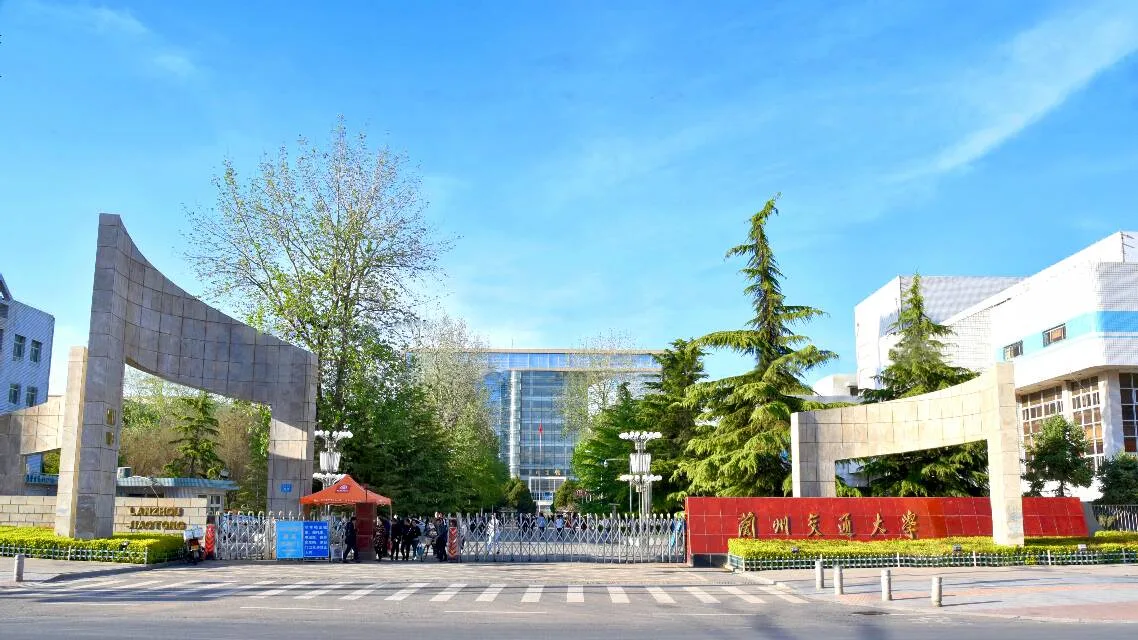
Lanzhou Jiaotong University, located in Lanzhou City, Gansu Province, is a high-level university jointly established by China State Railway Group Co., Ltd., the National Railway Administration, and the Gansu Provincial Government. It receives counterpart support from Tianjin University, Beijing Jiaotong University, and Southwest Jiaotong University. The university is part of the Midwestern Higher Education Revitalization Plan, the Excellent Engineer Education and Training Program, the National Demonstration University for Deepening Innovation and Entrepreneurship Education Reform, and the Gansu Provincial First-Class Discipline Breakthrough Project for provincial universities. It is also a member of the Belt and Road University Alliance and the Sino-Russian Union of Transport Universities. Its origins can be traced back to the Shanhaiguan Beiyang Railway Official School founded in 1896 and the Beijing Railway Management Training Institute founded in 1909. In 1958, departments from Tangshan Railway Institute (now Southwest Jiaotong University) and Beijing Railway Institute (now Beijing Jiaotong University) were relocated to Lanzhou to establish the third railway university in China, Lanzhou Railway Institute, under the leadership of the Ministry of Railways. In 2000, the university adopted a management system of 'central-local co-construction with local government as the main manager,' and in 2003, it was renamed Lanzhou Jiaotong University. As of January 2026, the university has two campuses covering an area of 1,405 mu (about 93.7 hectares), with a building area of approximately 872,900 square meters. The library holds 2.21 million books, and there is one national university science park. It has 21 directly affiliated schools (departments), offering 67 undergraduate programs (63 enrolling students), 28 first-level master's degree disciplines, 16 professional master's degree programs, 7 first-level doctoral degree disciplines, 1 professional doctoral degree program, and 5 postdoctoral research stations. The university has 2,319 faculty and staff members, and a total of 31,029 full-time students, including 22,128 undergraduates, 7,801 master's students, 602 doctoral students, 328 international students, and 1,013 vocational college students. The historical origins of the university can be traced back to the Shanhaiguan Beiyang Railway Official School (predecessor of Tangshan Railway Institute) founded in 1896 and the Beijing Railway Management Training Institute (predecessor of Beijing Railway Institute) founded in 1909. The predecessor of Lanzhou Jiaotong University, Lanzhou Railway Institute, was formed in 1958. In the winter of 1946, the Northeast Railway Staff School was established in the Northeast Liberated Area, later renamed Northeast Railway Institute and then Harbin Railway Institute, which was later merged into Beijing Railway Institute. In the summer of 1949, the Ministry of Railways of the Central Military Commission decided to merge the Tangshan Engineering College of Jiaotong University, the Beijing Railway Institute, and the newly established North China Communications Institute to form China Jiaotong University. In September 1950, the Government Administration Council of the Central People's Government decided to rename China Jiaotong University as Northern Jiaotong University, with the Beijing Management Institute of Jiaotong University renamed Beijing Railway Institute and the Tangshan Engineering College renamed Tangshan Railway Institute. In 1956, the Government Administration Council decided to relocate Tangshan Railway Institute to Lanzhou for construction, and the Ministry of Education designated the school to be built in Lanzhou with a planned capacity of 9,000 students. From 1956 onward, the Government Administration Council decided to move Tangshan Railway Institute to Lanzhou for construction.
Sources & verification
- Verification
- Not verified
- Verified on
- 2026-09-21
- Last updated
- 2026-09-24
- Source link
- studyinchina.net ↗
- Source notes
- Compiled from public StudyInChina information (source ID: 1844d57c-6c7a-4dd1-b98f-0d22fca7448a)
Confirm requirements, funding and deadlines in the admissions office’s current announcement.