
Government/University Scholarship
Chinese Government Scholarship Great Wall Program
Application status unknownNot verified
Explore the Chinese Government Scholarship Great Wall Program, a CSC Type A category offering attractive benefits for international students. Learn more now!
TuitionAccommodationMedical insurance
- Scholarship type
- Government/University Scholarship
- Degree level
- Bachelor / Master / PhD
- Location
- Chongqing · Chongqing
- Application deadline
- Date to be confirmed
Overview
Explore the Chinese Government Scholarship Great Wall Program
a CSC Type A category offering attractive benefits for international students. Learn more now!
Funding coverage
Funding tiers
Eligibility may differ by tier. Check the applicable degree and requirements.
Visiting students funding tier
- Eligible degree
- Visiting students
- Funding
- Visiting students Advanced [source fragment]
- Tier requirements
- Meets the visa, health and academic requirements for study in China
Visiting students funding tier
- Eligible degree
- Visiting students
- Funding
- Visiting students The program does not support degree courses such as bachelor’s, master’s or doctoral degrees. Study and funding duration: one year Instruction is generally in English. Applicants wishing to study in Chinese who do not meet language requirements may apply for one year of preparatory Chinese, subject to UNESCO and CSC confirmation. Note: choose one preferred major and three preferred institutions from Ministry of Education-designated higher education institutions, referring to the Chinese Government Scholarship Universities and Majors List at https://campuschina.org. Scholarship Coverage Application, tuition, laboratory, internship and basic textbook fees waived; Free on-campus accommodation; Living allowance: RMB 3,000/month for general visiting scholars and RMB 3,500/month for senior visiting scholars; One-time subsidy for the first residence permit application after entry; Free medical insurance; One interprovincial transport subsidy for travel from the entry airport to the university. Application and Enrollment Dates Application period: January–April each year Enrollment: September each year Application requirements Basic Requirements Healthy non-Chinese citizens from developing countries. Age and Educational Qualification Requirements General visiting program: currently enrolled undergraduates in at least their second year, no older than 45; Senior visiting program: master’s degree or associate professor rank, no older than 50. Application materials Provide these complete and authentic materials: Chinese Government Scholarship Application Form, completed online through the indicated link; Passport; Identification photograph; Highest educational qualification graduation certificate with notarized Chinese or English translation; Transcripts with notarized Chinese or English translation; Language proficiency evidence, if available; Study or research plan written in Chinese or English; Senior visiting applicants: two recommendation letters from professors or associate professors; Foreigner Physical Examination Form completed as required; Valid certificate of no criminal record; Music applicants: CD of their own work. Art applicants: two original sketches, two color paintings and two other works; Applicants under 18: legal guardianship certification; Acceptance letters from a host institution or professor may be submitted for priority consideration. Notes: Materials in languages other than Chinese or English require notarized Chinese or English translations. Specific material requirements may vary by institution; verify and prepare accordingly. Application Procedure Step 1: Obtain a Recommendation Apply for a recommendation letter from your country’s National Commission for UNESCO. Step 2: Register in the CSC System After obtaining the National Commission’s recommendation, eligible applicants complete the online form through http://www.campuschina.org within the specified period. Step 3: Submit to the Great Wall Scholarship Administration Before the stipulated deadline, email the recommendation letter, copy of the scholarship application form and passport copy to thegreatwall@unesco.org. Each member state may recommend at most two candidates, at least one female. Clearly state the online application form number and include it in the submission to UNESCO. Step 4: Receive the Scholarship Result Chinese universities select recipients, followed by approval from the Chinese Government and UNESCO under fairness and gender-balance principles. How to Improve Application Chances If you lack time to prepare and handle the Great Wall or another CSC scholarship application, contact Riba Study Abroad Services, described here as a leading Chinese scholarship application agency, for professional advice and support to maximize your chances of success. Riba Contact Details Website: https://riba.vn Hotline: +84 888 666 350 / +84 888 666 152 studyinchina.net is presented as a trusted portal for Chinese university and scholarship information. Visit Scholarship Search to discover further opportunities.
- Tier requirements
- Meets the visa, health and academic requirements for study in China
Requirements & documents
Application dates & process
Review Cycle: As specified in each host university’s admissions brochure
Universities & programs
Universities
About the university
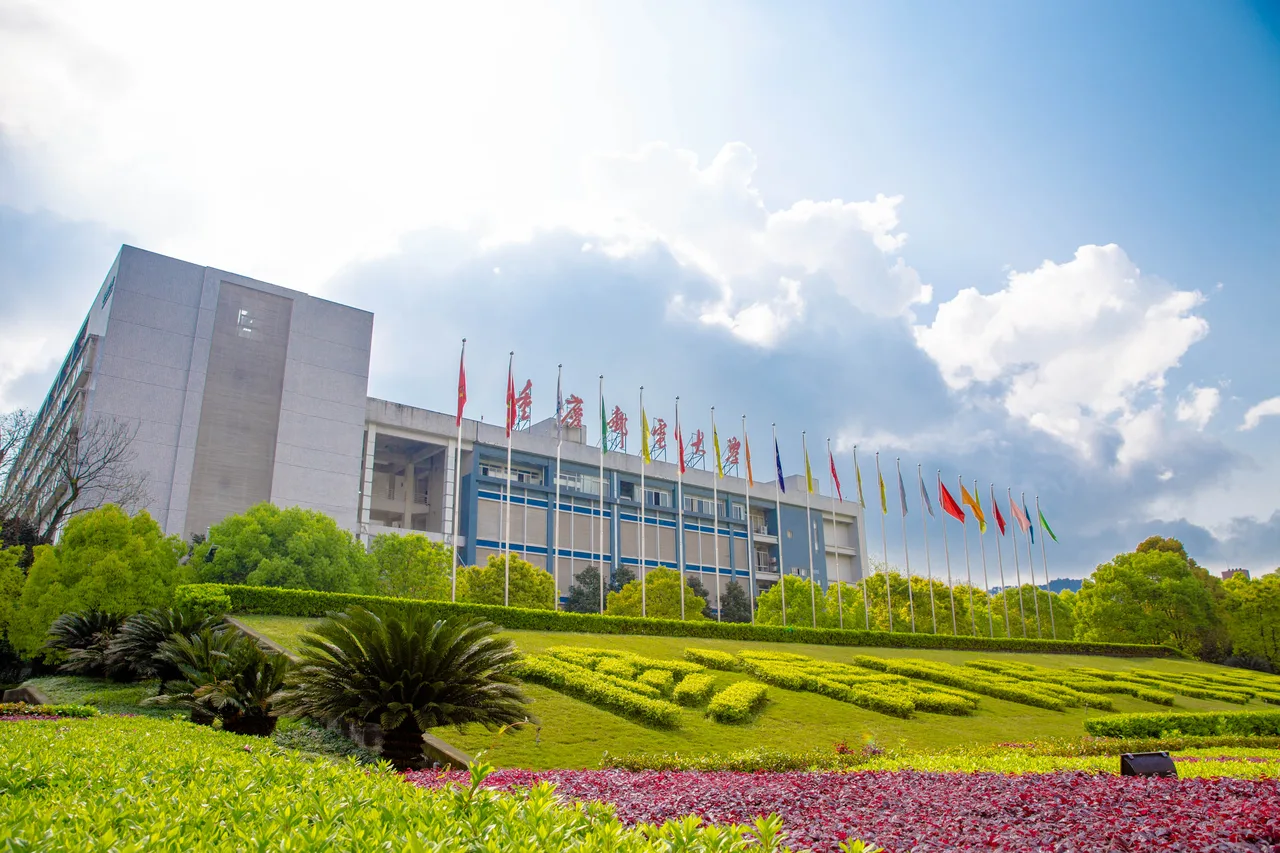
Chongqing University of Posts and Telecommunications (CQUPT), located in the municipality of Chongqing, is established by the Chongqing Municipal People's Government and jointly built with the Ministry of Industry and Information Technology of the People's Republic of China. It is one of the key universities for posts and telecommunications designated and prioritized by the state. The university is selected for the Basic Capacity Building Project for Universities in Central and Western China, a pilot institution for the Ministry of Education's 'Excellent Engineer Education and Training Program', a pilot university for the national reform of engineering master's and doctoral training, a high-level new engineering university in Chongqing, a pilot university for the Chongqing Excellent Engineer College, a national model university for graduate employment, and one of the first national demonstration universities for deepening innovation and entrepreneurship education reform. CQUPT originated in 1950, when a postal staff training class was established on the former site of the Directorate General of Posts under the Ministry of Transport during the Anti-Japanese War. Based on this, the Southwest Postal Branch, Chongqing Postal School, and Chongqing Telecommunications School were successively established. In 1959, it was approved by the State Council to become Chongqing Institute of Posts and Telecommunications and began undergraduate education. In 1965, it became one of the 10 universities in Sichuan Province to recruit graduate students. In 1970, it was converted into Factory 529 under the Directorate General of Telecommunications; in 1973, it was restructured as the Ninth Research Institute of the Ministry of Posts and Telecommunications; in 1979, it resumed operation; in 2000, it was transferred from the former Ministry of Information Industry to the management of Chongqing Municipality, implementing a ministry-municipality co-construction model; in 2006, it was renamed Chongqing University of Posts and Telecommunications; in 2013, it was approved as a doctoral degree-granting institution. As of September 2025, the university covers an area of 4,034 mu, with a building area of over 890,000 square meters and a library collection of more than 4.3 million volumes. It has 17 secondary colleges, 61 undergraduate programs, 2 postdoctoral research stations, 10 postdoctoral research workstations, 4 first-level doctoral degree authorization points, 1 professional doctoral degree authorization category, 21 first-level master's degree authorization points, and 28 professional master's degree authorization categories and fields. The university has over 32,000 enrolled students, including more than 8,300 graduate students, and over 2,100 faculty and staff, including over 900 with senior professional titles and over 1,200 doctoral and master's supervisors. After the Third Plenary Session of the 11th Central Committee of the Communist Party of China, the Ministry of Posts and Telecommunications of China, considering the requirements of the new era's general task for the development of posts and telecommunications and the contributions made by the university to the development of the posts and telecommunications industry, decided to restore Chongqing Institute of Posts and Telecommunications. In April 2022, the university officially launched the 'Chongqing University of Posts and Telecommunications Nanshan Research Foundation Strengthening Project Implementation Plan', investing 500 million yuan during the '14th Five-Year Plan' period to support scientific and technological innovation. On July 8, 2023, the Chongqing Young Scientists Innovation Alliance, initiated by Chongqing University and jointly formed with Chongqing University of Posts and Telecommunications and other units, was officially established in Chongqing. On November 4, 2025, the Sino-foreign cooperative education institution jointly declared by Chongqing University of Posts and Telecommunications and Far Eastern Federal University of Russia—the Chongqing University of Posts and Telecommunications Far Eastern Federal University Joint College—was officially inaugurated.
Sources & verification
- Verification
- Not verified
- Verified on
- 2026-09-21
- Last updated
- 2026-09-24
- Source link
- studyinchina.net ↗
- Source notes
- Compiled from public StudyInChina information (source ID: e2ec8ec7-0d52-4dba-92ee-fc072202092f)
Confirm requirements, funding and deadlines in the admissions office’s current announcement.