
University Scholarship
International Chinese Language Teacher Scholarship — International College English Website
ClosedNot verified
International Chinese Language Teacher Scholarship Application Guidelines for International Chinese Language Teachers Scholarship 2025 To meet the growing demand of internation...
Funding details pending.
- Scholarship type
- University Scholarship
- Degree level
- Bachelor / Master / PhD
- Location
- Chongqing · Chongqing
- Application deadline
- 2026-05-03
Overview
International Chinese Language Teacher Scholarship Application Guidelines for International Chinese Language Teachers Scholarship 2025 To meet the growing demand of internation...
Funding coverage
Funding tiers
Eligibility may differ by tier. Check the applicable degree and requirements.
Standard funding
- Eligible degree
- All eligible study levels
- Funding
- Funding amounts are determined by that year’s assessment results from the university or funder
- Tier requirements
- Good academic performance and eligibility under that year’s application requirements
Requirements & documents
Application dates & process
Application Opens: 12/1 Application Deadline: 5/3 Review Cycle: 1-2 months
Universities & programs
Universities
About the university
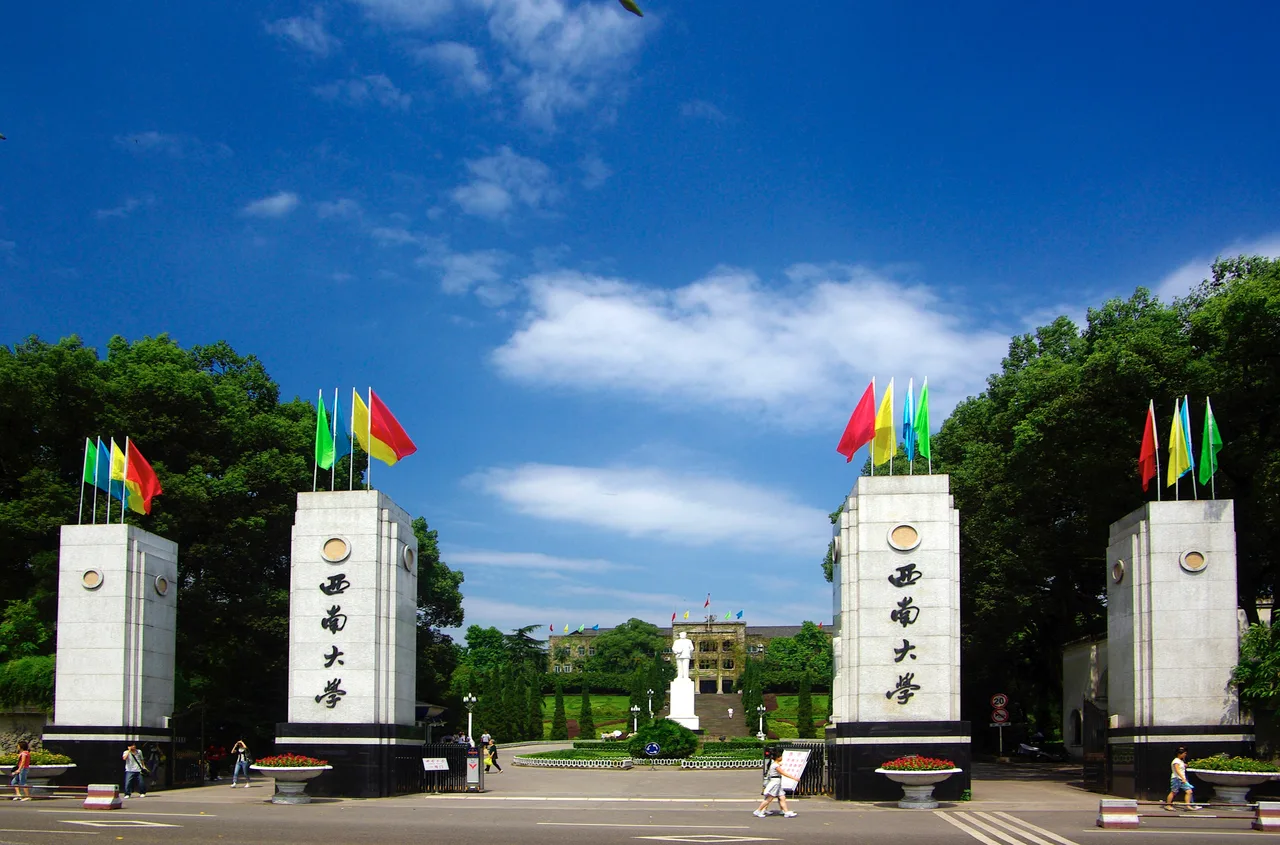
Southwest University is a comprehensive key university directly under the Ministry of Education, jointly built by the Ministry of Education, the Ministry of Agriculture and Rural Affairs, and Chongqing Municipality. It is among the first batch of universities selected for the national "Double First-Class" initiative, and is also a member of the "211 Project" and the "985 Project Advantage Discipline Innovation Platform." Southwest University traces its roots to the Eastern Sichuan Normal School founded in 1906, which was renamed Sichuan Provincial College of Education in 1936. In 1950, the Sichuan Provincial College of Education merged with the National Women's Normal College to form Southwest Normal College, while its departments of agronomy, horticulture, and agricultural product manufacturing merged with the private Xianghui College (founded in 1946) to establish Southwest Agricultural College. In 1985, the two institutions were renamed Southwest Normal University and Southwest Agricultural University, respectively. In 2000, Chongqing Light Industry Vocational University merged into Southwest Normal University; in 2001, Southwest Agricultural University, Sichuan College of Animal Husbandry and Veterinary Medicine, and the Citrus Research Institute of the Chinese Academy of Agricultural Sciences merged to form the new Southwest Agricultural University. In 2005, Southwest Normal University and Southwest Agricultural University merged to form Southwest University. In the same year, it was designated as a national "211 Project" key university. In 2017, the university was selected for the national "Double First-Class" initiative. As of December 14, 2025, the university has two campuses: Beibei and Rongchang in Chongqing, covering an area of over 8,200 mu (about 1,353 acres), with a building area of 1.99 million square meters. It offers 30 first-level doctoral degree programs, 5 types of professional doctoral degrees, 51 first-level master's degree programs, 35 types of professional master's degrees, and 30 postdoctoral research stations. The university has 3,287 full-time teachers and over 59,600 enrolled students. On April 18, 1906, the Qing government established the first formal normal school in Chongqing—the Government-run Eastern Sichuan Normal School. In 1906, the school enrolled its first class of 23 students in a one-year simplified normal program, and by the Xinhai Revolution, it had graduated over 230 students. In 1914, the school was renamed Eastern Sichuan United County Normal School, funded by the 36 counties under the Eastern Sichuan Circuit. In 1916, it rented the Guanyinliang Boat Guild Hall and nearby houses, moving back to its original site in the autumn of that year. In the autumn of 1917, it moved to the Confucian Temple in Baxian County. In 1920, the school moved back to its original site, selling the old site to plan for a new campus. In the spring of 1930, it rented the former site of Baxian County Agricultural Middle School at Zengjiayan and Longquan Temple as temporary classrooms, and in late 1930, it moved to Shimagang, now the Cultural Palace at Lianglukou. In January 1931, the Eastern Sichuan United County Normal School was ordered to be renamed "Eastern Sichuan Common Normal School." The school once faced closure due to war. Liu Xiang, then governor of Chongqing, decided to shut it down and appointed Gan Jiyong, the newly appointed Eastern Sichuan Circuit Intendant, to handle the closure. However, this faced strong opposition from teachers, students, and the community. Gan Jiyong, who was passionate about education, assessed the situation, convened a maintenance meeting, and discussed the school's future. The meeting decided to continue the school, reorganizing the maintenance committee into a board of directors, with the circuit intendant as chairman. The board unanimously elected Gan Jiyong as principal, thus preserving the Eastern Sichuan Normal School. In 1932, the Eastern Sichuan Common Normal School established a regular senior high school, and in August, it launched a rural normal specialization (starting junior college classes) and prepared an agricultural experiment station. In February 1933, the rural normal specialization moved from the Cultural Palace to Ciqikou, Shapingba. This was a key point of separation from the Eastern Sichuan Normal School. The Eastern Sichuan Normal School, as a secondary vocational school, continued to exist until the liberation of Chongqing, later becoming Chongqing No. 1 Normal School, the predecessor of the Elementary Education College of Chongqing Normal University. In July 1933, the rural normal specialization and the central experimental farm formed the Sichuan Rural Construction College, abbreviated as Xiangjian Yuan. This was the earliest government-run higher education institution named after "rural construction" in China, regarded by historians as one of the important bases of the Chinese rural construction movement in the 1920s and 1930s. In 1940, the pioneer of China's rural construction movement and renowned mass educator Yan Yangchu founded the China Rural Construction Talent Training Institute at Xiema Damotan in Beibei (then part of Baxian County), with Yan as its president, as a higher education institution under the Chinese Association for the Promotion of Mass Education to cultivate rural talents. In 1945, it was renamed "China Rural Construction College." In 1951, it was taken over and renamed "Eastern Sichuan Education College." In 1952, during the restructuring of colleges and departments, it was merged into Southwest Normal College and other institutions. In 1946, the renowned scholar and Confucian master Liang Shuming, also an important figure in the rural construction movement, founded Mianren National Studies Vocational School, renamed Mianren College of Arts in 1948. In early 1950, Liang Shuming was invited by Mao Zedong and Zhou Enlai to participate in political affairs in Beijing. Mianren College of Arts was merged into Southwest Normal College. In August 1936, the Sichuan Rural Construction College was restructured into the Sichuan Provincial College of Education, initially offering two four-year undergraduate programs: Rural Education and Agricultural Education. It gradually developed into a comprehensive university with normal, liberal arts, sciences, and agricultural disciplines. In September 1940, to address the higher education needs of the children of relocated units and a large number of relocated civilians, especially girls, the National Women's Normal College (abbreviated as Nüshiyuan) was officially established in Baisha Town, Jiangjin, a key cultural hub during the War of Resistance. It was the only women's normal university in China at that time, after the Beijing Women's Normal College had merged into Beijing Normal University. The National Women's Normal College gathered many renowned scholars, including Wei Jiangong, the Chinese classics master Hu Xiaoshi, musician Wu Bochao (later president of the National Conservatory of Music), Lu Xun's disciples Li Jiye and Tai Jingnong (later president of Taiwan Normal University), as well as He Lu and Shang Chengzuo. In 1946, the college moved to Huangjueping, the future site of Sichuan Fine Arts Institute. The school became one of the contact points for the famous Red Rock martyr Sister Jiang, developing over ten underground party members, one of whom later became a famous red agent in Taiwan. After the liberation of Chongqing, over ten female students joined the army and went to the front lines of the Korean War; one sacrificed her life and still rests in a foreign land. The second president of the college, Lao Junzhan, was an early member of Mao Zedong's Xinmin Society in Hunan, studied at the University of Lyon in France, and was the only Chinese student of Marie Curie. Her husband was Xu Deheng, a student leader of the May Fourth Movement and founder of the Jiusan Society, and her son-in-law was Deng Jiaxian, the "father of China's atomic bomb." During Mao Zedong's Chongqing negotiations, he specially met with Lao Junzhan and her husband, as well as Professor Xie Lihui, then a professor at the college and later the first president of Southwest Normal College and one of the earliest initiators of the China Association for Science and Technology.
Sources & verification
- Verification
- Not verified
- Verified on
- 2026-09-22
- Last updated
- 2026-11-06
- Source link
- admissions.swu.edu.cn ↗
- Source notes
- From an official admissions announcement by the international education school at Southwest University
Confirm requirements, funding and deadlines in the admissions office’s current announcement.