
University Scholarship
Chinese Government Scholarship — Bilateral Program — Graduate School
ClosedNot verified
Chinese Government Scholarship-Bilateral Program includes a full or partial scholarship established by MOE in accordance with educational exchange agreements or consensus between C...
Funding details pending.
- Scholarship type
- University Scholarship
- Degree level
- Bachelor / Master / PhD
- Location
- Hubei · Wuhan
- Application deadline
- 2026-05-03
Overview
Chinese Government Scholarship-Bilateral Program includes a full or partial scholarship established by MOE in accordance with educational exchange agreements or consensus between C...
Funding coverage
Funding tiers
Eligibility may differ by tier. Check the applicable degree and requirements.
Standard funding
- Eligible degree
- All eligible study levels
- Funding
- Funding amounts are determined by that year’s assessment results from the university or funder
- Tier requirements
- Good academic performance and eligibility under that year’s application requirements
Requirements & documents
Application dates & process
Application Opens: 12/1 Application Deadline: 5/3 Review Cycle: 1-2 months
Universities & programs
Universities
About the university
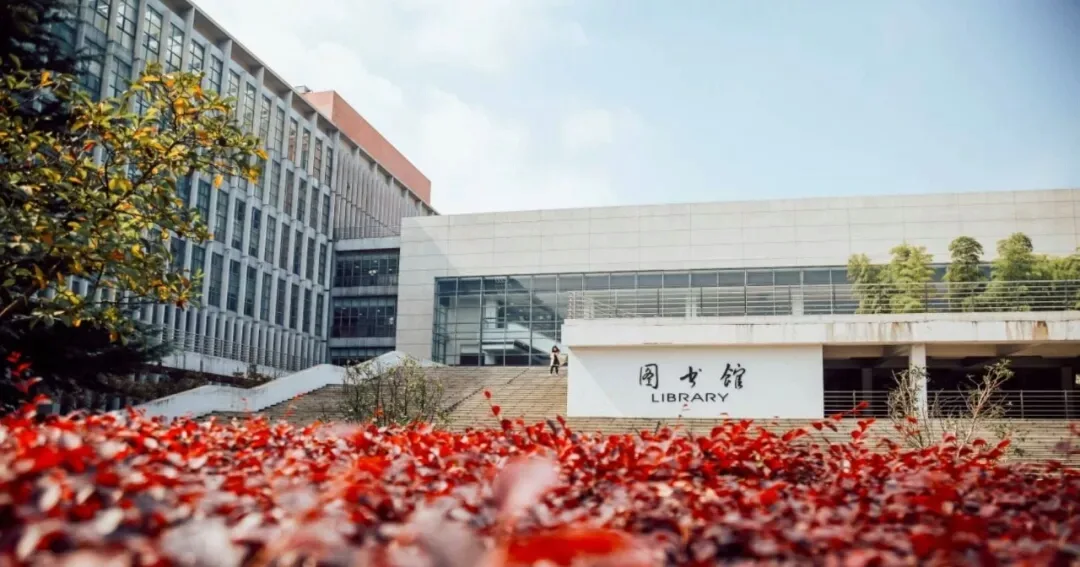
Huazhong Agricultural University (HZAU), also known as Huazhong Agricultural University, is located in Wuhan, Hubei Province. It is a full-time regular institution of higher education sponsored by the state, under the administration of the State Council's education department. It is a national key university directly under the Ministry of Education of the People's Republic of China, a national "Double First-Class" construction university, and a key university under the national "211 Project" and "985 Project Advantage Discipline Innovation Platform." The predecessor of Huazhong Agricultural University was the Hubei Agricultural School, founded in 1898 by Zhang Zhidong, the Governor-General of Huguang, during the reign of Emperor Guangxu of the Qing Dynasty. After several transformations, in 1952, the entire departments of the Agricultural College of Wuhan University and Hubei Agricultural College, along with some departments from six comprehensive universities including Sun Yat-sen University, were merged to form Huazhong Agricultural College. In 1979, it was approved by the State Council as a national key university, directly under the Ministry of Agriculture. In 1985, it was renamed Huazhong Agricultural University. In 2000, it was transferred from the Ministry of Agriculture to the direct leadership of the Ministry of Education. In 2005, it entered the national "211 Project" construction ranks. In 2017, it was included in the national "Double First-Class" construction ranks. As of May 2025, the university covers a total area of 4.8251 million square meters, with a total building area of 1.98 million square meters. It has 17 colleges (departments) and offers 67 undergraduate programs. It has 27 first-level master's degree authorization disciplines, 18 master's professional degree authorization categories, 15 first-level doctoral degree authorization disciplines, 5 doctoral professional degree authorization categories, and 15 postdoctoral research stations. There are 3,022 faculty and staff, including 1,701 teachers. The total number of full-time students is 34,048, including 19,451 undergraduates, 10,418 master's students, 3,747 doctoral students, and 432 international students. In 1897, Brill, a graduate of the Class of 1888 from Cornell University's College of Agriculture, accepted a contract from Zhang Zhidong, Governor-General of Huguang, which included round-trip travel expenses, accommodation, and an annual salary of $3,000 for three years, to serve as an agricultural instructor in Hubei Province, Qing Empire. In 1898, with the approval of Emperor Guangxu, Zhang Zhidong, with the assistance of American instructor Brill, founded the earliest agricultural school in China—Hubei Agricultural School—at the Sichuan Guild Hall in Wuchang City, pioneering modern higher agricultural education in China and marking the beginning of Huazhong Agricultural University's history. In 1904, the school moved to Baoji'an in the north of Wuchang City, renamed Hubei Higher Agricultural School, and successively hired more than ten Japanese instructors, starting higher-level education. In October 1911, the Xinhai Revolution broke out, the school buildings were burned, and all instruments and equipment were destroyed, ending the Higher Agricultural School. In 1912, the school was rebuilt as Hubei Provincial Class A Agricultural School, later evolving into Hubei Provincial First Senior Agricultural School and Hubei Provincial Second Senior Agricultural School, until it was discontinued in 1928. In 1930, Hubei Province planned to establish Hubei Provincial Rural Normal College, and in 1931, Hubei Provincial Education College was formally established at the original site of Baoji'an, offering undergraduate education. In 1933, National Wuhan University set up a preparatory office for the College of Agriculture, and in the autumn of 1935, it held a "Simple Agricultural Class" at the Xujiapeng Cotton Farm. In 1936, National Wuhan University formally established the College of Agriculture. In the summer of that year, the Hubei Provincial Government discontinued Hubei Provincial Education College, and subsequently, in 1937, Hubei Provincial Agricultural College was established at the original site. In 1938, Japanese forces invaded Wuhan, National Wuhan University moved westward to Leshan, and its College of Agriculture was ordered by the Ministry of Education to merge into the College of Agriculture of National Central University; Hubei Provincial Agricultural College was ordered by the Hubei Provincial Government to move westward to Enshi and merge into Hubei Provincial United Secondary and Higher Schools, renamed Wufeng Agricultural College Branch of Hubei Provincial United Secondary and Higher Schools. In November 1940, Hubei Provincial Agricultural College was restructured into Hubei Provincial Agricultural College. In 1945, after the victory of the Anti-Japanese War, Hubei Provincial Agricultural College moved back from Enshi to the original site of Baoji'an in Wuchang in December of that year. In May 1946, the College of Agriculture of National Wuhan University was also ordered by the Ministry of Education to be restored. In 1949, Wuhan was liberated. In 1950, both schools removed the words "National" and "Provincial" from their names. Starting in 1952, with the nationwide adjustment of higher education institutions, Hubei Provincial Agricultural College and the College of Agriculture of Wuhan University were completely merged, and some departments from Nanchang University, Henan University, Guangxi University, Sun Yat-sen University, Hunan Agricultural College, and Jiangxi Agricultural College were also incorporated to form Huazhong Agricultural College, with the campus located at the original site of Hubei Provincial Agricultural College in Baoji'an. In the summer of 1957, Huazhong Agricultural College moved from Baoji'an to the south bank of the lake, ushering in its new era on Lion Mountain. In its early stages, Huazhong Agricultural University took the College of Agriculture of Cornell University as a model for running the school, cultivating the earliest batch of agricultural talents for Hubei Province and even the whole of China. The university took rural revitalization as its mission, repeatedly starting and stopping, repeatedly stopping and starting, changing names several times, and relocating multiple times. During the westward migration in the Anti-Japanese War, teachers and students continued to work and study despite hardships, living in earthen houses, eating coarse grains, and using oil lamps, sharing the difficulties with high spirits, persisting in learning and work, which enabled the school to continuously develop. One of its main sources, the College of Agriculture of Wuhan University, after its restoration after the victory of the Anti-Japanese War, gathered a group of famous professors such as Ye Yage, Li Fengsun, Jiao Qiyuan, and Hu Zhongzi, becoming one of the well-known agricultural colleges in the country. In 1985, it was officially renamed Huazhong Agricultural University. In July 1986, Huazhong Agricultural University established the Hubei Provincial Feed Quality Supervision and Inspection Center Station. In October 1996, the State Education Commission approved Huazhong Agricultural University to establish the fourth batch of "National Basic Science Research and Teaching Talent Training Bases." In 2000, Huazhong Agricultural University was transferred from the Ministry of Agriculture to the direct leadership of the Ministry of Education. In July 2002, it was approved to build a National Life Science and Technology Talent Training Base, becoming one of the first 36 national bases approved. In 2003, it became one of the first pilot units in the country for "High-level Experts Cultivating High-level International Students." In 2005, Huazhong Agricultural University officially entered the national "211 Project" key construction university ranks. In 2007, the university was first selected for the "University Discipline Innovation and Talent Introduction Plan" ("111 Plan"). In September 2009, the Affiliated Primary School and Affiliated Middle School of Huazhong Agricultural University were merged to form the Affiliated School of Huazhong Agricultural University. In 2010, Huazhong Agricultural University was rated by the Ministry of Education as a "National Typical Experience University for Graduate Employment." In 2011, Huazhong Agricultural University entered the "985 Project Advantage Discipline Innovation Platform"; in the same year, the Graduate School was established. In 2013, Huazhong Agricultural University was selected for the national "Excellent Engineer Education and Training Plan." In October 2014, Huazhong Agricultural University was selected for the first batch of the national "Excellent Agricultural and Forestry Talent Education and Training Plan." In December 2016, the Biomedical Center of Huazhong Agricultural University was established. In July 2017, Huazhong Agricultural University was recognized as the "Second Batch of National Demonstration Universities for Deepening Innovation and Entrepreneurship Education Reform." In September, Huazhong Agricultural University was selected as a national "Double First-Class" construction university; in November, Huazhong Agricultural University was rated as the first batch of National Civilized Campuses. In March 2018, the university was selected for the first batch of the Ministry of Education's "New Engineering" Research and Practice Projects. In February 2019, the university was recognized by the Ministry of Education as the first batch of Higher Education Institutions' Scientific and Technological Achievements Transformation and Technology Transfer Bases. In August, the university was rated by the Ministry of Education as a "National Typical Experience University for Innovation and Entrepreneurship." In May 2020, Huazhong Agricultural University signed a strategic cooperation agreement with Xiangyang Municipal People's Government. In May 2021, it served as the chair unit of the Higher Agricultural and Forestry Colleges Curriculum Ideological and Political Alliance; on December 3, the National Rural Revitalization University Alliance was established at the International Conference Center of China Agricultural University. In February 2022, it was selected for the second round of "Double First-Class" construction universities and disciplines; in October, the construction of the Xiangyang campus of Huazhong Agricultural University entered the sprint stage, with the first batch of teachers and students moving in in the spring of 2023. Programs: Agricultural and Forestry Economic Management, International Economics and Trade, Marketing, Accounting, Economics, Business Administration, Rural Regional Development, Human Resource Management, Economic Statistics, Financial Management, Big Data Management and Application.
Sources & verification
- Verification
- Not verified
- Verified on
- 2026-09-22
- Last updated
- 2026-11-06
- Source link
- ic.hzau.edu.cn ↗
- Source notes
- From an official admissions announcement by the international education school at Huazhong Agricultural University
Confirm requirements, funding and deadlines in the admissions office’s current announcement.