
University Scholarship
Chinese Government Scholarship(CSC)
ClosedNot verified
2026/2027 Academic Year USST Independent Enrollment of Chinese Government Scholarship (Type-B, High-Level Program) / (Chinese-taught program) Please download the 2026 Major list for CSC...
Funding details pending.
- Scholarship type
- University Scholarship
- Degree level
- Bachelor / Master / PhD
- Location
- Shanghai · Shanghai
- Application deadline
- 2026-05-03
Overview
2026/2027 Academic Year USST Independent Enrollment of Chinese Government Scholarship (Type-B
High-Level Program) / (Chinese-taught program) Please download the 2026 Major list for CSC...
Funding coverage
Funding tiers
Eligibility may differ by tier. Check the applicable degree and requirements.
Standard funding
- Eligible degree
- All eligible study levels
- Funding
- Funding amounts are determined by that year’s assessment results from the university or funder
- Tier requirements
- Good academic performance and eligibility under that year’s application requirements
Requirements & documents
Application dates & process
Application Opens: 12/1 Application Deadline: 5/3 Review Cycle: 1-2 months
Universities & programs
Universities
About the university
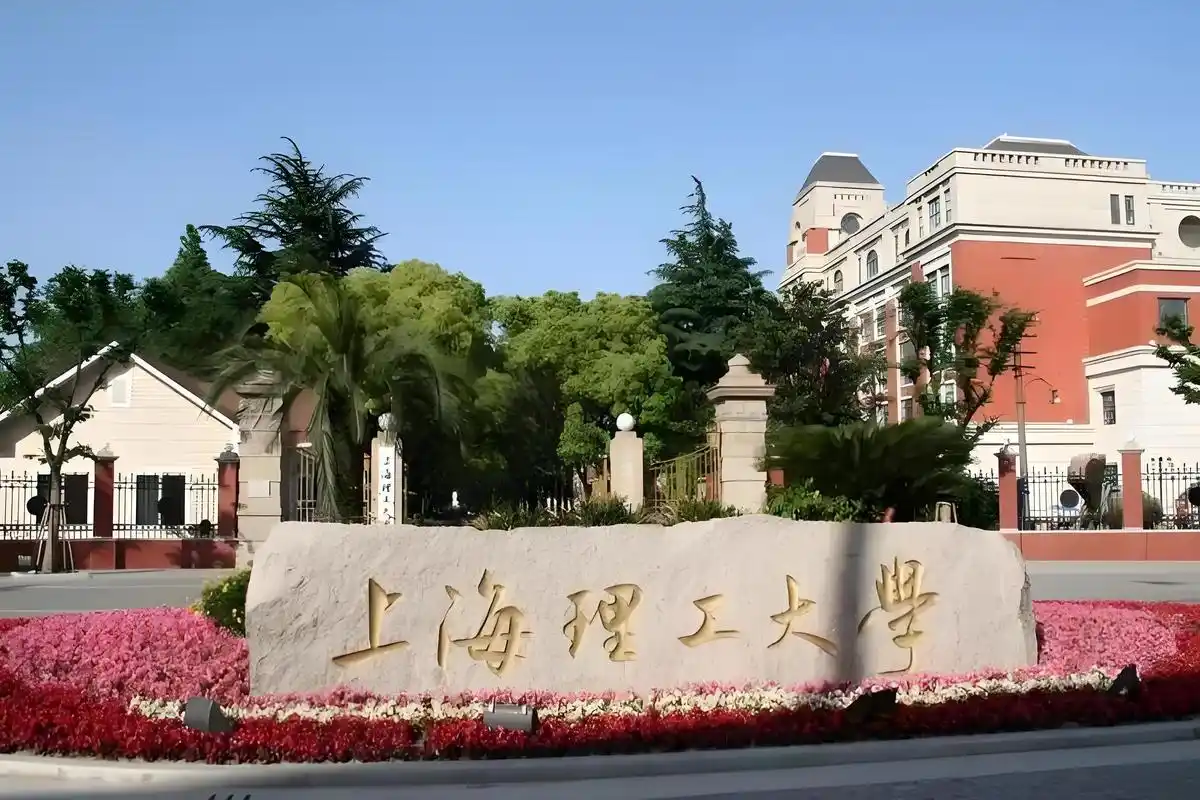
The University of Shanghai for Science and Technology (USST) is a key municipal university in Shanghai and one of the first pilot units for high-level local university construction in the city. It has been selected for the Ministry of Education's Excellent Engineer Education and Training Program, the National 111 Program, the first batch of the Ministry of Education's University Science and Technology Achievement Transformation and Technology Transfer Bases, the first batch of national-level innovation and entrepreneurship education practice bases, the National Innovation Talent Training Demonstration Base, the National Demonstration University for Deepening Innovation and Entrepreneurship Education Reform, and the first batch of Shanghai's demonstration universities for deepening innovation and entrepreneurship education reform. It serves as a standing director unit of the China Intellectual Property Development Alliance, a vice-chairman unit of the Shanghai-Hong Kong University Alliance, and a founding member of the Yangtze River Delta Higher Engineering Education Alliance. The university's academic lineage can be traced back to Hujiang University, founded in 1906, and the German Medical School, founded in 1907. In the early 1950s, Hujiang University and the former National Shanghai Advanced Mechanical Vocational School (located on the original site of the German Medical School) were restructured into two new engineering schools. Subsequently, these two schools were renamed Shanghai Institute of Mechanical Engineering (East China University of Technology, 1993–1996) and Shanghai Mechanical College, respectively. In 1996, they merged to form the University of Shanghai for Science and Technology. In 1998, the university was transferred from the former Ministry of Machinery Industry to the administration of Shanghai Municipality. In 2003, Shanghai Medical Instrument College (spun off in 2015 to form Shanghai University of Medicine and Health Sciences) and Shanghai Publishing and Printing College were placed under the management of USST. As of February 2025, the university has two campuses, Jungong Road and Fuxing Road, covering an area of 655,700 square meters, with a total building area of 681,300 square meters. It comprises 19 colleges (departments) and offers 64 undergraduate programs. The university has 9 first-level doctoral degree authorization points, 2 professional doctoral degree authorization points, 29 first-level master's degree authorization points, 20 professional master's degree authorization points, and 8 postdoctoral research stations. It has over 2,700 faculty and staff members and more than 28,000 full-time students. In 1900, due to the Boxer Rebellion, members of the Southern Baptist Convention's Central China Mission (working in Jiangsu) and the American Baptist Foreign Mission Society's East China Mission (working in Zhejiang) took refuge in Shanghai. During this time, they reached a consensus to jointly establish a higher education institution in Shanghai. In 1906, the Shanghai Baptist Theological Seminary was first established at the northern end of North Sichuan Road, with Dr. W. B. Johnson as its president. In 1909, Shanghai Baptist College was founded, with Dr. J. T. Proctor as its president, and its campus was selected on Jungong Road in eastern Shanghai. In 1911, the Shanghai Baptist Theological Seminary and Shanghai Baptist College merged to form Shanghai Baptist College and Theological Seminary, with Dr. F. J. White as its president. In 1914, the board of directors resolved to officially name the institution in Chinese as Hujiang University, with the English abbreviation Shanghai College, and established the four-character motto 'Faith, Righteousness, Diligence, Love,' adopting a departmental system in accordance with the Ministry of Education's regulations. On December 3, 1917, the university was registered in Virginia, USA, and was granted the authority to confer master's and bachelor's degrees. In the same year, it established the Hujiang Community on Meizhou Road in Yangshupu, which was the first sociological experimental base and the first social work service institution in China.
Sources & verification
- Verification
- Not verified
- Verified on
- 2026-09-22
- Last updated
- 2026-09-24
- Source link
- isoe.usst.edu.cn ↗
- Source notes
- From an official admissions announcement by the international education school at University of Shanghai for Science and Technology
Confirm requirements, funding and deadlines in the admissions office’s current announcement.