
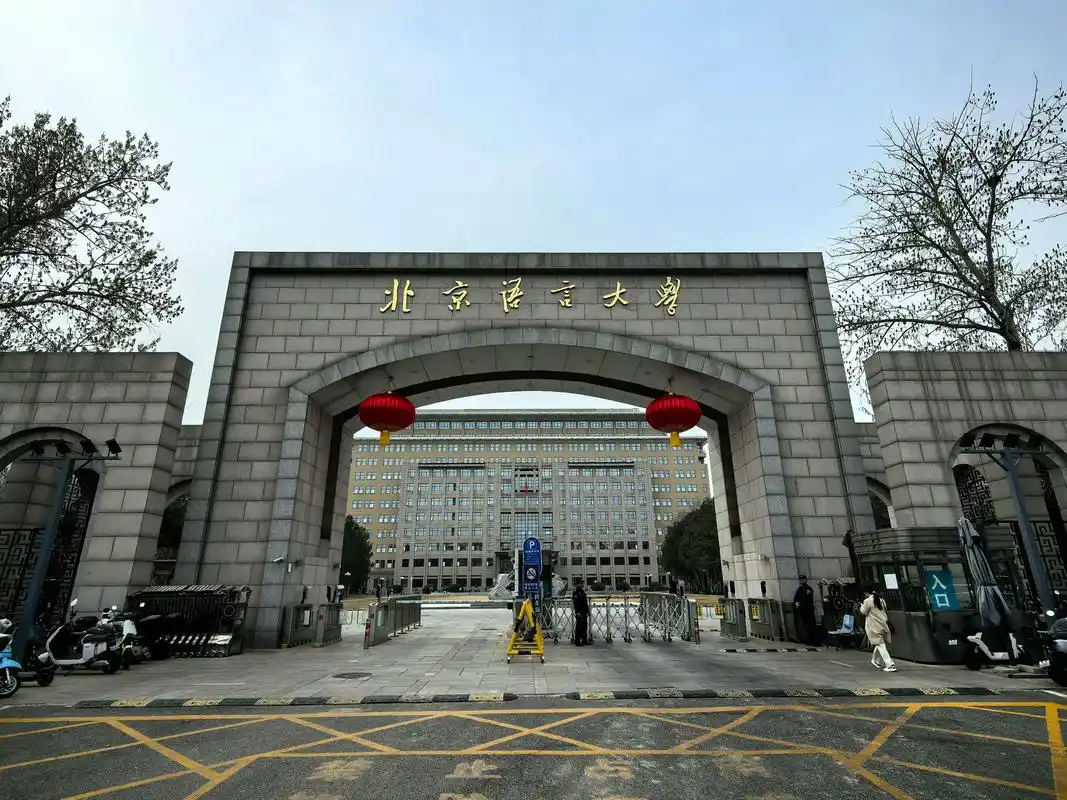
University Scholarship
Beijing Language and Culture University 2026 Campus and Dormitory Allocation Information for New Scholarship Students
ClosedNot verified
Beijing Language and Culture University: 2026 Scholarship Freshman Study Campus and Dormitory Allocation Arrangements. Under the university’s coordinated plan, some new Chinese Government Scholarship students will study at the Hainan campus and return to the Beijing campus after completing half of their study-stage courses to finish the remaining courses. Under the university’s One University, Two Locations initiative, students can learn about the development history of the Hainan Free Trade Island and experience its distinctive interethnic cultural exchanges, then explore the historic capital and experience the Chinese nation’s historical changes and vigorous develop... [source ends here]
Funding details pending.
- Scholarship type
- University Scholarship
- Degree level
- Bachelor / Master / PhD
- Location
- Beijing · Beijing
- Application deadline
- 2026-05-03
Overview
Beijing Language and Culture University: 2026 Scholarship Freshman Study Campus and Dormitory Allocation Arrangements. Under the university’s coordinated plan
some new Chinese Government Scholarship students will study at the Hainan campus and return to the Beijing campus after completing half of their study-stage courses to finish the remaining courses. Under the university’s One University
Two Locations initiative
students can learn about the development history of the Hainan Free Trade Island and experience its distinctive interethnic cultural exchanges
then explore the historic capital and experience the Chinese nation’s historical changes and vigorous develop... source ends here
Funding coverage
Funding tiers
Eligibility may differ by tier. Check the applicable degree and requirements.
Standard funding
- Eligible degree
- All eligible study levels
- Funding
- Funding amounts are determined by that year’s assessment results from the university or funder
- Tier requirements
- Good academic performance and eligibility under that year’s application requirements
Requirements & documents
Application dates & process
Application Opens: 12/1 Application Deadline: 5/3 Review Cycle: 1-2 months
Universities & programs
Universities
About the university
Beijing Language and Culture University (BLCU), located in Beijing, is a key university directly under the Ministry of Education of the People's Republic of China. It is the only international university founded by New China that is named after "language" and takes the dissemination of Chinese language and culture as its primary mission. It has been selected for the Special Key Discipline Project, the National High-Level University Graduate Public Scholarship Project, the Ministry of Education's Demonstration Base for Studying in China, and the Chinese Government Scholarship Institution for International Students, earning the reputation of "Little United Nations." BLCU was established in 1962, initially named the "Advanced Preparatory School for Foreign Students," formed by merging relevant departments of Peking University and Beijing Foreign Languages Institute. In 1964, it was renamed Beijing Language Institute. In 1972, the institute was rebuilt. In 1996, it was renamed Beijing Language and Culture University. In 2002, the name was simplified to Beijing Language and Culture University. The university was founded to meet the objective needs of foreign students learning Chinese and pre-departure language training for Chinese students studying abroad. Over time, BLCU has expanded, adding new colleges and programs, such as the Department of Language and Literature and the Teaching Chinese as a Foreign Language program. As of December 2024, the university covers an area of 330,288.73 square meters, with a building area of 427,441.83 square meters and total fixed assets of 1,711.5046 million yuan. It has 27 teaching units, 1,674 faculty and staff members (including 780 full-time teachers and 146 researchers), and 9,866 students (5,945 undergraduates, of whom 4,938 are Chinese and 1,007 are international students). As of October 2024, the university offers 51 undergraduate programs, 2 postdoctoral research stations, 4 first-level doctoral degree authorization points and professional doctoral degree authorization points in International Chinese Language Education, 12 first-level master's degree authorization points, and 12 professional master's degree authorization points. In July 1950, Tsinghua University began preparing the "Chinese Language Special Class for Exchange Students from Eastern Europe," enrolling 23 Eastern European students in its first academic year. In 1952, during the nationwide restructuring of higher education institutions, the class was transferred to Peking University and renamed the "Chinese Language Special Class for Foreign Students at Peking University." In March of the same year, Beijing Russian Specialized School established a preparatory department for students going to the Soviet Union, named "Second Department of Beijing Russian Specialized School." In 1955, it was renamed the "Preparatory Department for Studying in the Soviet Union." As the number of destination countries increased, the training languages expanded from a single language to multiple languages. By the end of 1960, it was renamed the "Training Department for Personnel Going Abroad," commonly referred to as the "Going Abroad Department." From 1950 to 1960, China admitted 2,844 foreign students from 60 countries and regions, who typically first studied Chinese at Peking University's Chinese Language Special Class before being assigned to various institutions for specialized studies. In the early 1960s, exchanges between China and Africa expanded. Following Premier Zhou Enlai's directive that "Africa requests to send students to China for study, and we should accept and arrange this, establishing a dedicated institution," the "African Students Office" was set up at Beijing Foreign Languages Institute in September 1960. In July 1961, most of the faculty from Peking University's "Chinese Language Special Class for Foreign Students" were transferred to Beijing Foreign Languages Institute, merging with the "African Students Office" to form the "Foreign Students Office." In June 1962, Beijing Language and Culture University was founded, initially named the "Advanced Preparatory School for Foreign Students," formed by combining Peking University's "Chinese Language Special Class for Foreign Students," Beijing Foreign Languages Institute's "Foreign Students Office," and the "Preparatory Department for Studying in the Soviet Union." In June 1962, the Ministry of Education decided to separate the "Foreign Students Office" and the "Training Department for Personnel Going Abroad" from Beijing Foreign Languages Institute to establish an independent institution directly under the ministry, named the "Advanced Preparatory School for Foreign Students," located at Suzhou Street in western Beijing. That summer, teachers from Peking University's "Chinese Language Special Class for Foreign Students" were transferred to the new school. At its founding, the school established the Chinese Language Department for International Students and the Training Department for Students Going Abroad, responsible for preparatory Chinese education for international students and preparatory foreign language education for Chinese students going abroad, respectively. In 1964, as the school's scale could no longer meet the needs of the developing situation and expanding tasks, on June 5, the Ministry of Education studied and approved the "Report on the Development Direction, Campus, and Name of the Advanced Preparatory School for Foreign Students," submitted to the Foreign Affairs Office of the State Council. On January 9, 1965, the State Council agreed to change the name and expand the tasks. On July 9, 1964, Minister of Education Jiang Nanxiang visited the school, encouraging all faculty and staff to work hard to run the school well and improve Chinese language teaching. In February 1965, Guo Moruo, President of the Chinese Academy of Sciences, inscribed the school name for Beijing Language Institute. In October 1972, as China's diplomatic relations with various countries continued to develop, nearly 40 countries requested to send students to China. Premier Zhou Enlai personally approved the restoration of Beijing Language Institute. On September 9, 1974, Chairman Mao Zedong personally inscribed the school name for Beijing Language Institute. In 1977, the Foreign Languages Department resumed enrolling the first batch of four-year undergraduate students to study foreign languages. With the rapid development of teaching Chinese as a foreign language, Beijing Language Institute took on the task of specifically training teachers for this field. In 1978, the school began accepting short-term Chinese language students. In 1982, the Short-Term Chinese Language Training Department for Foreign Students was established. From 1984, this department operated year-round. In September 1985, based on the Chinese Language Teaching and Research Section of the Foreign Languages Department, the Department of Language and Literature was established, enrolling undergraduates. Starting in 1986, it began enrolling master's students in the Teaching Chinese as a Foreign Language program.
Sources & verification
- Verification
- Not verified
- Verified on
- 2026-09-22
- Last updated
- 2026-11-06
- Source link
- admission.blcu.edu.cn ↗
- Source notes
- From an official admissions announcement by the international education school at Beijing Language and Culture University
Confirm requirements, funding and deadlines in the admissions office’s current announcement.