
University Scholarship
Notice on Registration for Beihang University Chinese Government Scholarship Students for the 2026/2027 Academic Year
ClosedNot verified
Dear Chinese Government Scholarship students: Under China Scholarship Council rules, all scholarship students reporting to the university in academic year 2026/2027 must register student-status information. Read this notice carefully and complete registration within the prescribed time and requirements. Before registration, students must independently purchase comprehensive medical insurance for 2026–2027, selecting the RMB 800 annual plan with one year of coverage. See the attached Operating Guide for purchase instructions...
Medical insurance
- Scholarship type
- University Scholarship
- Degree level
- Bachelor / Master / PhD
- Location
- Beijing · Beijing
- Application deadline
- 2026-09-03
Overview
Dear Chinese Government Scholarship students: Under China Scholarship Council rules
all scholarship students reporting to the university in academic year 2026/2027 must register student-status information. Read this notice carefully and complete registration within the prescribed time and requirements. Before registration
students must independently purchase comprehensive medical insurance for 2026–2027
selecting the RMB 800 annual plan with one year of coverage. See the attached Operating Guide for purchase instructions...
Funding coverage
Funding tiers
Eligibility may differ by tier. Check the applicable degree and requirements.
Standard funding
- Eligible degree
- All eligible study levels
- Funding
- Funding amounts are determined by that year’s assessment results from the university or funder
- Tier requirements
- Good academic performance and eligibility under that year’s application requirements
Requirements & documents
Application dates & process
Application Opens: 12/1 Application Deadline: 9/3 Review Cycle: 1-2 months
Universities & programs
Universities
About the university
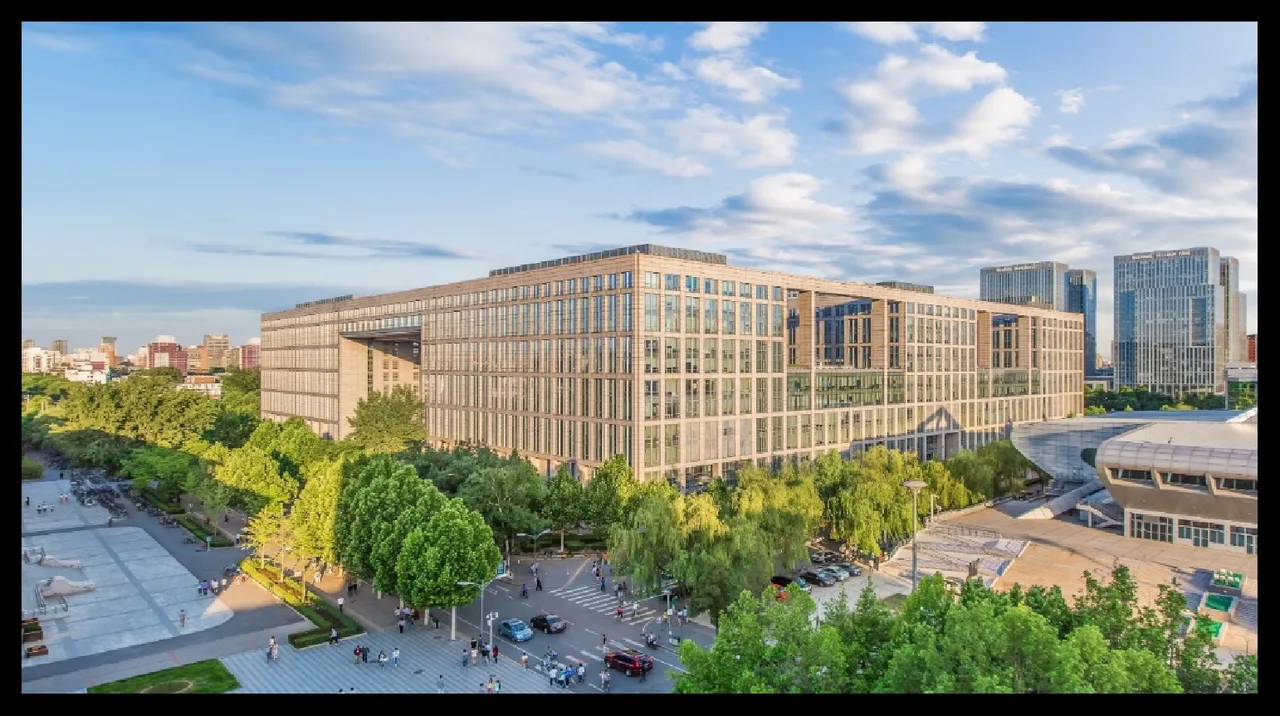
Beihang University, abbreviated as BUAA, is located in Beijing, the capital of China. It is one of the first 16 key universities directly under the Ministry of Industry and Information Technology of the People's Republic of China, a central government-administered university, and a Class A key construction university under the national "211 Project," "985 Project," and "Double First-Class" initiative. It has been selected for the National Excellent Engineer Education and Training Program, the "2011 Plan," the "Strengthening Basic Disciplines Plan," the "Summit Plan," and the "111 Plan." It has been approved as one of the first National Excellent Engineer Colleges, the first Future Technology Colleges, the first National Integrated Circuit Colleges, the first Characteristic Demonstration Software Colleges, and a new round of "First-Class Cybersecurity College Construction Demonstration Project Universities." In 1951, the state decided to merge the aeronautical departments of Peiyang University, Xiamen University, and Northwest Institute of Technology into the Department of Aeronautical Engineering of Tsinghua University to form the School of Aeronautical Engineering of Tsinghua University; the Department of Aeronautical Engineering of Yunnan University was merged into the Department of Aeronautics of Sichuan University; and the Aeronautical Specialization of Southwest Industrial College was merged into the Department of Aeronautical Engineering of North China University of Technology. In 1952, according to the requirements of the nationwide adjustment of higher education institutions, the Beijing Institute of Aeronautics was established, formed by merging the Department of Aeronautics of Beijing Institute of Technology, the School of Aeronautical Engineering of Tsinghua University, and the Department of Aeronautics of Sichuan University. On October 25, 1952, the founding ceremony of the Beijing Institute of Aeronautics was held in the auditorium of Beijing Institute of Technology (the former site of Sino-French University). In 1988, the school was renamed Beihang University. As of May 2025, the university has three campuses: Xueyuan Road Campus, Shahe Campus, and Hangzhou International Campus, covering a total area of approximately 4,000 mu. It has 39 teaching and research institutions, offering 81 undergraduate programs; 36 first-level disciplines (including 34 doctoral degree authorization points and 36 master's degree authorization points), and 26 postdoctoral research stations. The university has 6,284 faculty and staff members and 39,864 enrolled students. In 1952, according to the requirements of the nationwide adjustment of higher education institutions, the Beijing Institute of Aeronautics was established. On October 24 of the same year, the Ministry of Education issued an approval for the establishment of the Beijing Institute of Aeronautics (officially named the Beijing Institute of Aeronautics, abbreviated as BUAA) and signed the "Decision on the Formal Establishment of the Beijing Institute of Aeronautics and Its Direct Leadership by the Second Ministry of Machine Building of the Central People's Government." The institute was formed by merging the aeronautical departments of eight universities, making it the first aerospace science and technology university in New China. The eight universities that participated in the formation of the Beijing Institute of Aeronautics were Tsinghua University, Peiyang University (Tianjin University), Northwest Institute of Technology (now Northwestern Polytechnical University), Xiamen University, North China University of Technology (now Beijing Institute of Technology), Southwest Industrial College (now Chongqing University), Sichuan University, and Yunnan University. The founding ceremony of the Beijing Institute of Aeronautics was held on October 25 at the auditorium of Beijing Institute of Technology (the auditorium of the former Sino-French University). In May 1953, the Beijing Institute of Aeronautics selected a site in Baiyan Village, Haidian District, in the northwestern suburbs. In October, all students and some faculty and staff moved to the new campus. In 1958, the institute launched a work-study program, advocating and practicing the integration of teaching, research, design, and production, and began developing aircraft models. It successively developed the "Beijing No. 1" light passenger aircraft, China's first sounding rocket—"Beijing No. 2," and China's first unmanned aircraft—"Beijing No. 5." In May 1959, the Central Committee of the Communist Party of China issued the "Decision on Designating a Group of Key Schools among Higher Education Institutions," making the school one of the first 16 key universities in the country.
Sources & verification
- Verification
- Not verified
- Verified on
- 2026-09-22
- Last updated
- 2026-11-06
- Source link
- is.buaa.edu.cn ↗
- Source notes
- From an official admissions announcement by the international education school at Beihang University
Confirm requirements, funding and deadlines in the admissions office’s current announcement.