
University Scholarship
Xiamen University International Student Freshman Scholarship
Application status unknownPartly verified
I. Scholarship Introduction Xiamen University established the "International Student Freshman Scholarship" in 2006. Each year, a number of outstanding undergraduate, master's, and doctoral candidates are selected from applicants and awarded a tuition waiver (4 years for doctoral students, 2 or 3 years for master's students, and 4 or 5 years for undergraduate students). Additionally, excellent international master's and doctoral students are provided with a monthly living allowance based on the Chinese Government Scholarship standards. The university will conduct an annual review based on the recipients' performance during their studies, and only those who meet the requirements can continue to receive the scholarship for the next academic year. II. Applicant Eligibility 1. Applicants must be non-Chinese citizens in good health. 2. Educational background and age requirements: (1) Undergraduate: High school graduates or above, age not exceeding 25 years. (2) Master's: Bachelor
Tuition
- Scholarship type
- University Scholarship
- Degree level
- Bachelor / Master / PhD / Visiting Students
- Location
- Fujian · Xiamen
- Application deadline
- Date to be confirmed
Overview
I. Scholarship Introduction
Xiamen University established the International Student Freshman Scholarship in 2006. Each year
a number of outstanding undergraduate
master's
and doctoral candidates are selected from applicants and awarded a tuition waiver (4 years for doctoral students
2 or 3 years for master's students
Funding coverage
Funding tiers
Eligibility may differ by tier. Check the applicable degree and requirements.
Standard funding
- Eligible degree
- Bachelor’s, Master’s, Doctoral, Visiting students
- Funding
- I. Scholarship overview Xiamen University established its New International Student Scholarship in 2006. Each year, it selects outstanding undergraduate, master's and doctoral applicants for tuition waivers: 4 years for doctoral, 2 or 3 years for master's and 4 or 5 years for undergraduate study. Outstanding master's and doctoral recipients also receive monthly living allowances at Chinese Government Scholarship rates. Annual performance reviews determine eligibility for continued funding in the next academic year. II. Eligibility 1. Non-Chinese citizens in good health. 2. Applicants… [source ends here]
- Tier requirements
- 1. Non-Chinese citizens in good health; 2. Educational and age requirements: ① Undergraduate: current-year high school graduates or high school graduation or above, no older than 25; ② Master’s: current-year undergraduate graduates or undergraduate graduation or above, no older than 40; ③ Doctoral: current-year master’s graduates or master’s graduation or above, no older than 45.
Requirements & documents
Application dates & process
Review Cycle: Joint review by the China Scholarship Council and host university takes approximately 6–8 weeks
Universities & programs
Universities
About the university
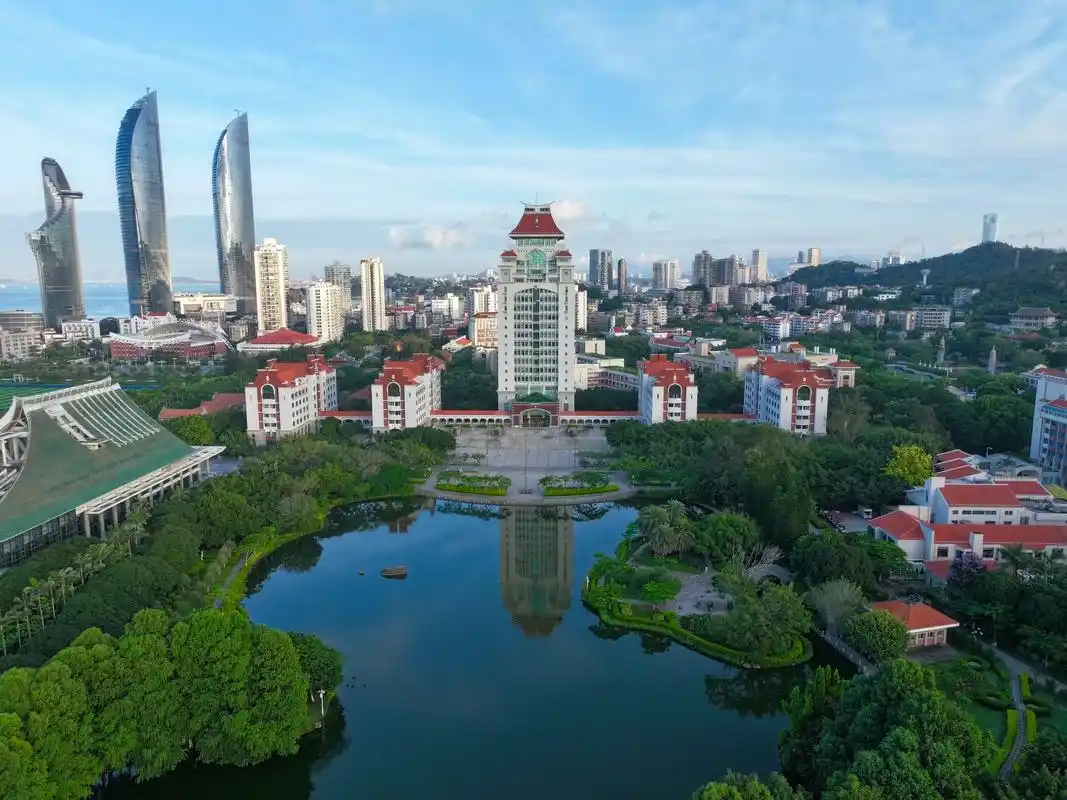
Xiamen University (XMU), located at 422 Siming South Road, Siming District, Xiamen City, Fujian Province (main campus), is a comprehensive research-oriented national key university directly under the Ministry of Education of the People's Republic of China and a central government-administered university. It is a national "Double First-Class" university, the leading university of the national "2011 Plan," and a key institution under the national "211 Project" and "985 Project." It is also the first university founded by overseas Chinese in modern Chinese educational history and one of the earliest universities in China to admit graduate students. Xiamen University was founded in 1921 by Mr. Tan Kah Kee, a patriotic overseas Chinese leader. In March 1928, it obtained government registration as a private university. From 1929 to 1933, due to the global economic crisis, Tan Kah Kee's enterprises were forced to close, and he could no longer sustain the university; he unconditionally donated it to the government. On July 1, 1937, Xiamen University was nationalized. In September of the same year, due to the war, the university relocated to Changting. In 1984, it was authorized to confer master's degrees, and in 1986, doctoral degrees. In 1997, it was included in the national "211 Project" as a key institution, and in 1998, it was included in the "985 Project" key construction plan. As of December 2024, the university has four campuses: Siming Campus, Zhangzhou Campus, Xiang'an Campus, and the Malaysia Campus. It comprises 6 academic divisions, 35 colleges (directly affiliated departments and centers), and 17 research institutes, offering 106 undergraduate programs. It has 36 postdoctoral research stations, 42 first-level doctoral degree authorization disciplines, 4 first-level master's degree authorization disciplines, 8 independently established second-level interdisciplinary disciplines, 4 professional doctoral degree authorization categories, and 35 professional master's degree authorization categories. The university has nearly 3,000 full-time faculty members and over 47,000 enrolled students, including more than 21,000 undergraduates, over 20,000 master's students, and over 6,000 doctoral students. Starting from January 20, 2026, visitors to the main campus of Xiamen University must use an "online reservation + random lottery" system. In early July 1919, Tan Kah Kee issued the "Announcement on the Establishment of Xiamen University and Affiliated Higher Normal School" in Xiamen. In 1920, the site was approved. In August of the same year, the "Organizational Outline of Xiamen University" was drafted, a board of directors was established, and Deng Cuiying was elected as the first president of Xiamen University. On April 6, 1921, Xiamen University was officially established. In its early years, it comprised 5 colleges (Arts, Science, Law, Business, and Education) with 21 departments. On October 10, 1926, the Institute of Chinese Classics of Xiamen University was established. In March 1928, Xiamen University obtained government registration as a private university. From 1929 to 1933, due to the global economic crisis, Tan Kah Kee's enterprises were forced to close, and he could no longer sustain the university; he unconditionally donated it to the government. On July 1, 1937, Xiamen University was nationalized. On July 6 of the same year, the Ministry of Education of the National Government appointed Sa Bendong as the president of National Xiamen University. On September 4, 1937, due to the Japanese invasion of Xiamen, the university moved to Gulangyu; on December 24, the relocation began; on January 12, 1938, it safely arrived. On January 17, classes began; on March 10, registration for the new semester started. Xiamen University became the institution closest to the war zone that continued to operate. Changting, located in the rear area of the war, facilitated the enrollment of students from southeastern provinces. Young students from Jiangsu, Zhejiang, Shanghai, Hunan, Jiangxi, and Guangdong applied to Xiamen University and traveled to Changting to study. During its stay in Changting, western Fujian, faculty and students overcame numerous difficulties to maintain teaching, and the university continued to expand. In August of the same year, the Department of Civil Engineering was established, with Sa Bendong serving as its concurrent chair. In early 1940, the Ministry of Education of the National Government, based on the opinion of the Fujian Provincial Department of Education, merged the newly established Fujian University into Xiamen University, which had relocated to Changting, and proposed renaming Xiamen University to Fujian University. However, due to opposition and negotiations from faculty and students, the name Xiamen University was retained.
Sources & verification
- Verification
- Partly verified
- Verified on
- 2026-05-10
- Last updated
- 2026-09-24
- Source link
- www.campuschina.org ↗
- Source notes
- Official CampusChina guide (program code: 119469)
Confirm requirements, funding and deadlines in the admissions office’s current announcement.