
University Scholarship
Xiamen University Tan Kah Kee Scholarship
Application status unknownPartly verified
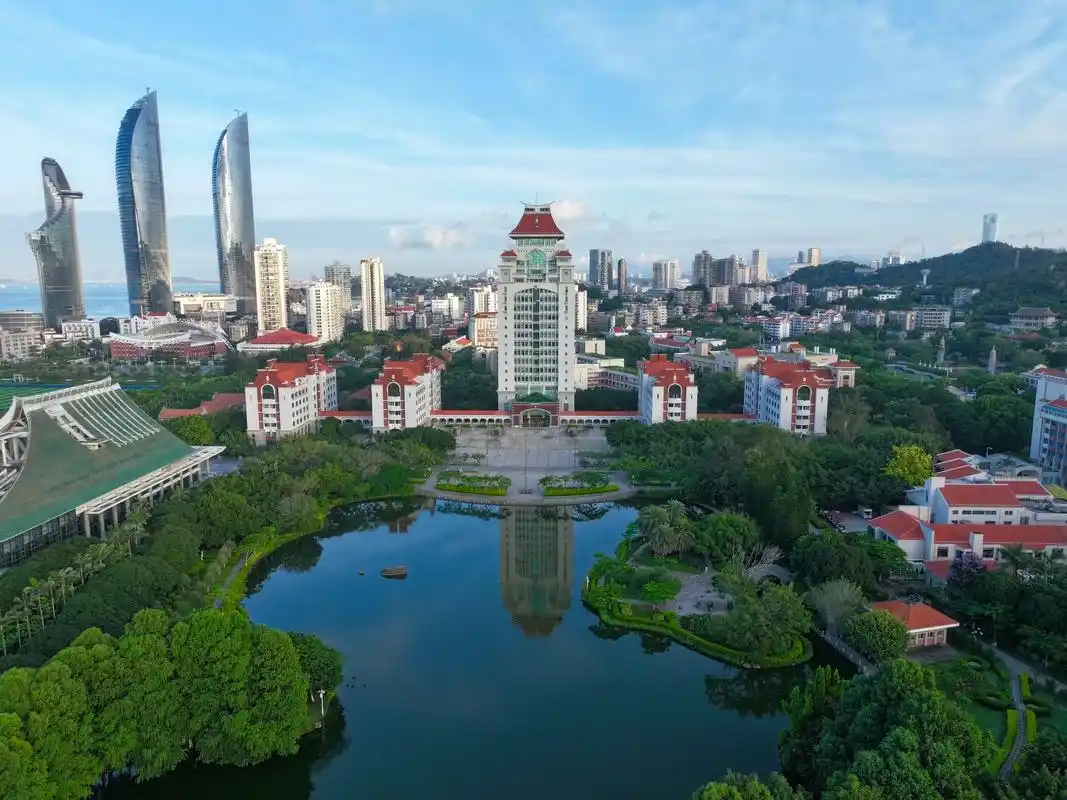
Xiamen University was founded in 1921 by the renowned patriotic overseas Chinese leader Mr. Tan Kah Kee, making it the first university established by overseas Chinese in modern Chinese educational history. With its unique geographical advantage in the Fujian-Taiwan region and irreplaceable cultural strengths, Xiamen University has become a key hub for educational and cultural exchanges along the Maritime Silk Road. In 2017, Xiamen University was selected for China's "World-Class Universities and First-Class Disciplines" (Double First-Class) initiative. According to recent comprehensive world university rankings such as U.S. News, Xiamen University ranks 12th among mainland Chinese universities. The university currently has over 40,000 students (including nearly 1,500 international degree-seeking students), comprising 19,782 undergraduates, 16,390 master's students, and 3,229 doctoral students. The campus surrounds Xiamen Bay, nestled between mountains and sea, and is renowned as one o
TuitionAccommodationMedical insurance
- Scholarship type
- University Scholarship
- Degree level
- Bachelor / Master / PhD / Visiting Students
- Location
- Fujian · Xiamen
- Application deadline
- Date to be confirmed
Overview
Xiamen University was founded in 1921 by the renowned patriotic overseas Chinese leader Mr. Tan Kah Kee
making it the first university established by overseas Chinese in modern Chinese educational history. With its unique geographical advantage in the Fujian-Taiwan region and irreplaceable cultural strengths
Xiamen University has become a key hub for educational and cultural exchanges along the Maritime Silk Road. In 2017
Xiamen University was selected for China's World-Class Universities and First-Class Disciplines (Double First-Class) initiative. According to recent comprehensive world university rankings such as U.S. News
Xiamen University ranks 12th among mainland Chinese universities. The university currently has over 40
000 students (including nearly 1
Funding coverage
Funding tiers
Eligibility may differ by tier. Check the applicable degree and requirements.
Bachelor’s funding tier
- Eligible degree
- Bachelor’s
- Funding
- Undergraduates: 30 places;
- Tier requirements
- ** 1. Healthy ethnic Chinese with valid ordinary passport from Maritime Silk Road countries, mainly Southeast/South/West Asia, North Africa and European route countries. Former mainland/Hong Kong/Macao/Taiwan residents applying as foreign undergraduates require valid foreign passport held≥4 years(inclusive), actual overseas residence≥2 of latest4 years up to April 30,2018;9 months abroad may count as one year, based on stamps. 2. Support One China, friendly toward ancestral China, compliance with Chinese laws/regulations. 3. Education/age: (1) Bachelor’s: high school diploma or above, in principle≤30; (2) Master’s: bachelor’s degree or above, in principle≤35; (3) Doctoral: master’s degree or above, in principle≤40; Other scholarship/grant recipients may not receive Tan Kah Kee Scholarship. **
Master’s funding tier
- Eligible degree
- Master’s
- Funding
- Master’s students: 30–35 places;
- Tier requirements
- ** 1. Healthy ethnic Chinese with valid ordinary passport from Maritime Silk Road countries, mainly Southeast/South/West Asia, North Africa and European route countries. Former mainland/Hong Kong/Macao/Taiwan residents applying as foreign undergraduates require valid foreign passport held≥4 years(inclusive), actual overseas residence≥2 of latest4 years up to April 30,2018;9 months abroad may count as one year, based on stamps. 2. Support One China, friendly toward ancestral China, compliance with Chinese laws/regulations. 3. Education/age: (1) Bachelor’s: high school diploma or above, in principle≤30; (2) Master’s: bachelor’s degree or above, in principle≤35; (3) Doctoral: master’s degree or above, in principle≤40; Other scholarship/grant recipients may not receive Tan Kah Kee Scholarship. **
Doctoral funding tier
- Eligible degree
- Doctoral
- Funding
- Doctoral students: three to five places. The Tan Kah Kee Scholarship working leadership group may adjust final quotas according to actual applications. 2. Coverage includes tuition, accommodation, living expenses and insurance. Funding rates are: ① Doctoral students: RMB 70,000 per person per academic year (funding duration: 3–4 years) ② Master’s students: RMB 60,000 per person per academic year (funding duration: 2–3 years) ③ Undergraduates: RMB 50,000 per person per academic year (funding duration: 4–5 years) **VI. Scholarship Review** Selection follows principles of openness, fairness, impartiality and merit. Our university selects nominees based on academic results, language proficiency, academic ability, supervisors’ opinions, recommendation letters and overall qualities, and submits them to the Tan Kah Kee Education Foundation for centralized assessment in mid-June. After assessment, the Tan Kah Kee Scholarship Working Leadership Group conducts the final review and determines recipients. Our university notifies successful students. **VII. Annual Assessment and Administration of Recipients** Our university assesses recipients’ performance annually during their studies. Those who pass retain funding for the following academic year; otherwise eligibility is canceled. In principle, recipients may not change their university or major or extend their study period after beginning studies in Xiamen. In special circumstances requiring a change of major, transfer or extension, the university must first review and approve the request, then apply to the foundation. The change, transfer or extension is permitted only after foundation approval. Scholarship eligibility is canceled for unauthorized changes of major, transfers or extensions, withdrawal during studies or suspension of studies. **VIII. Contact** Telephone: +86 (0)592 2184792; fax: +86 (0)592 2180256 Email: admissions@xmu.edu.cn; website: [http://admissions.xmu.edu.cn](http://admissions.xmu.edu.cn/) Mailing address: Admissions Office, Xiamen University, 422 South Siming Road, Siming District, Xiamen, Fujian, China Postal code: 361005
- Tier requirements
- ** 1. Healthy ethnic Chinese with valid ordinary passport from Maritime Silk Road countries, mainly Southeast/South/West Asia, North Africa and European route countries. Former mainland/Hong Kong/Macao/Taiwan residents applying as foreign undergraduates require valid foreign passport held≥4 years(inclusive), actual overseas residence≥2 of latest4 years up to April 30,2018;9 months abroad may count as one year, based on stamps. 2. Support One China, friendly toward ancestral China, compliance with Chinese laws/regulations. 3. Education/age: (1) Bachelor’s: high school diploma or above, in principle≤30; (2) Master’s: bachelor’s degree or above, in principle≤35; (3) Doctoral: master’s degree or above, in principle≤40; Other scholarship/grant recipients may not receive Tan Kah Kee Scholarship. **
Requirements & documents
Application dates & process
Review Cycle: Joint review by the China Scholarship Council and host university takes approximately 6–8 weeks
Universities & programs
Universities
About the university
Xiamen University (XMU), located at 422 Siming South Road, Siming District, Xiamen City, Fujian Province (main campus), is a comprehensive research-oriented national key university directly under the Ministry of Education of the People's Republic of China and a central government-administered university. It is a national "Double First-Class" university, the leading university of the national "2011 Plan," and a key institution under the national "211 Project" and "985 Project." It is also the first university founded by overseas Chinese in modern Chinese educational history and one of the earliest universities in China to admit graduate students. Xiamen University was founded in 1921 by Mr. Tan Kah Kee, a patriotic overseas Chinese leader. In March 1928, it obtained government registration as a private university. From 1929 to 1933, due to the global economic crisis, Tan Kah Kee's enterprises were forced to close, and he could no longer sustain the university; he unconditionally donated it to the government. On July 1, 1937, Xiamen University was nationalized. In September of the same year, due to the war, the university relocated to Changting. In 1984, it was authorized to confer master's degrees, and in 1986, doctoral degrees. In 1997, it was included in the national "211 Project" as a key institution, and in 1998, it was included in the "985 Project" key construction plan. As of December 2024, the university has four campuses: Siming Campus, Zhangzhou Campus, Xiang'an Campus, and the Malaysia Campus. It comprises 6 academic divisions, 35 colleges (directly affiliated departments and centers), and 17 research institutes, offering 106 undergraduate programs. It has 36 postdoctoral research stations, 42 first-level doctoral degree authorization disciplines, 4 first-level master's degree authorization disciplines, 8 independently established second-level interdisciplinary disciplines, 4 professional doctoral degree authorization categories, and 35 professional master's degree authorization categories. The university has nearly 3,000 full-time faculty members and over 47,000 enrolled students, including more than 21,000 undergraduates, over 20,000 master's students, and over 6,000 doctoral students. Starting from January 20, 2026, visitors to the main campus of Xiamen University must use an "online reservation + random lottery" system. In early July 1919, Tan Kah Kee issued the "Announcement on the Establishment of Xiamen University and Affiliated Higher Normal School" in Xiamen. In 1920, the site was approved. In August of the same year, the "Organizational Outline of Xiamen University" was drafted, a board of directors was established, and Deng Cuiying was elected as the first president of Xiamen University. On April 6, 1921, Xiamen University was officially established. In its early years, it comprised 5 colleges (Arts, Science, Law, Business, and Education) with 21 departments. On October 10, 1926, the Institute of Chinese Classics of Xiamen University was established. In March 1928, Xiamen University obtained government registration as a private university. From 1929 to 1933, due to the global economic crisis, Tan Kah Kee's enterprises were forced to close, and he could no longer sustain the university; he unconditionally donated it to the government. On July 1, 1937, Xiamen University was nationalized. On July 6 of the same year, the Ministry of Education of the National Government appointed Sa Bendong as the president of National Xiamen University. On September 4, 1937, due to the Japanese invasion of Xiamen, the university moved to Gulangyu; on December 24, the relocation began; on January 12, 1938, it safely arrived. On January 17, classes began; on March 10, registration for the new semester started. Xiamen University became the institution closest to the war zone that continued to operate. Changting, located in the rear area of the war, facilitated the enrollment of students from southeastern provinces. Young students from Jiangsu, Zhejiang, Shanghai, Hunan, Jiangxi, and Guangdong applied to Xiamen University and traveled to Changting to study. During its stay in Changting, western Fujian, faculty and students overcame numerous difficulties to maintain teaching, and the university continued to expand. In August of the same year, the Department of Civil Engineering was established, with Sa Bendong serving as its concurrent chair. In early 1940, the Ministry of Education of the National Government, based on the opinion of the Fujian Provincial Department of Education, merged the newly established Fujian University into Xiamen University, which had relocated to Changting, and proposed renaming Xiamen University to Fujian University. However, due to opposition and negotiations from faculty and students, the name Xiamen University was retained.
Sources & verification
- Verification
- Partly verified
- Verified on
- 2026-05-10
- Last updated
- 2026-09-24
- Source link
- www.campuschina.org ↗
- Source notes
- Official CampusChina guide (program code: 119470)
Confirm requirements, funding and deadlines in the admissions office’s current announcement.