
University Scholarship
Taiyuan University of Technology Belt and Road Special Scholarship
Application status unknownPartly verified
In response to the national Belt and Road Initiative, our university established the Taiyuan University of Technology Belt and Road Special Scholarship in 2015 and enrolled the first batch of international students. This scholarship aims to cultivate outstanding international talents from countries and regions along the Belt and Road. The scholarship covers tuition waiver and a monthly living allowance of 500 RMB (disbursed for 10 months per year). Other expenses are to be borne by the students themselves. Applicants can register and apply at the following website: http://is.tyut.edu.cn/. Contact: ciee@tyut.edu.cn. Contact person: Li Kailin, felixgo0509@126.com. Office phone: 0086-351-6010602. Fax: 0086-351-6018632. Address: College of International Education Exchange, Taiyuan University of Technology (Yingxi Campus), No. 79 Yingze West Street, Taiyuan, Shanxi, China. Postcode: 030024.
Tuition
- Scholarship type
- University Scholarship
- Degree level
- Bachelor / Master / PhD / Visiting Students
- Location
- Shanxi · Taiyuan
- Application deadline
- Date to be confirmed
Overview
In response to the national Belt and Road Initiative
our university established the Taiyuan University of Technology Belt and Road Special Scholarship in 2015 and enrolled the first batch of international students. This scholarship aims to cultivate outstanding international talents from countries and regions along the Belt and Road. The scholarship covers tuition waiver and a monthly living allowance of 500 RMB (disbursed for 10 months per year). Other expenses are to be borne by the students themselves. Applicants can register and apply at the following website: http://is.tyut.edu.cn/. Contact: ciee@tyut.edu.cn. Contact person: Li Kailin
felixgo0509@126.com. Office phone: 0086-351-6010602. Fax: 0086-351-6018632. Address: College of International Education Exchange
Taiyuan University of Technology (Yingxi Campus)
No. 79 Yingze West Street
Taiyuan
Funding coverage
Funding tiers
Eligibility may differ by tier. Check the applicable degree and requirements.
Standard funding
- Eligible degree
- Bachelor’s, Master’s, Doctoral, Visiting students
- Funding
- Coverage: tuition waiver and a living allowance of RMB 500/month (paid for 10 months each year); all other costs are borne by the applicant. Register and apply at: http://is.tyut.edu.cn/ Contact email: ciee@tyut.edu.cn Contact: Li Kailin, felixgo0509@126.com Office telephone: 0086-351-6010602 Fax: 0086-351-6018632 Address: Taiyuan University of Technology (Yingxi Campus), 79 Yingze West Street, Taiyuan, Shanxi, China College of International Education and Exchange Postal code: 030024
- Tier requirements
- Non-Chinese citizens in good physical and mental health who meet educational and age requirements
Requirements & documents
Application dates & process
Review Cycle: Joint review by the China Scholarship Council and host university takes approximately 6–8 weeks
Universities & programs
Universities
About the university
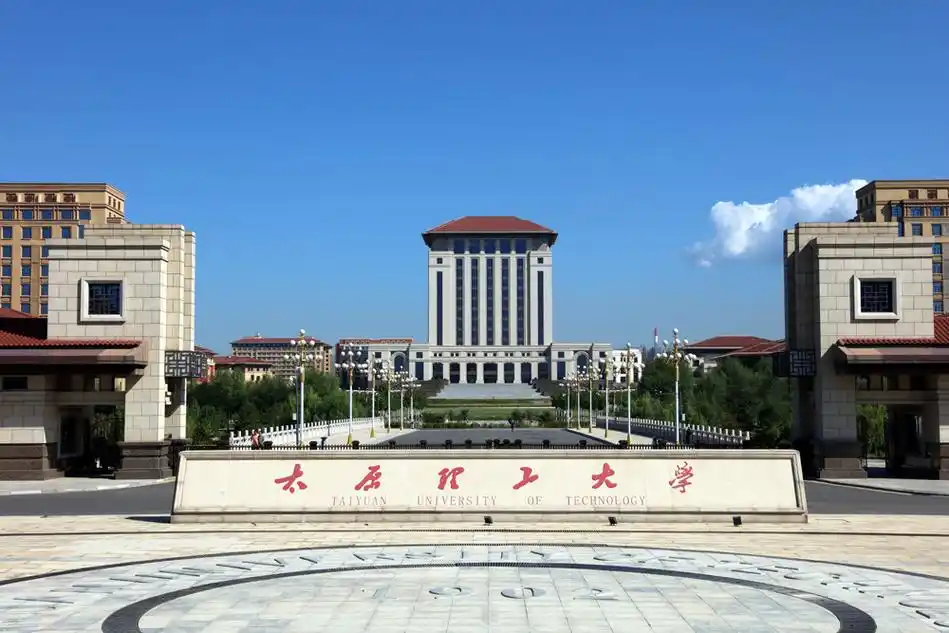
Taiyuan University of Technology (TUT), abbreviated as "Taiyuan Ligong," is located in Taiyuan, Shanxi Province. It is established by the People's Government of Shanxi Province and is under the jurisdiction of Shanxi Province. The university focuses on engineering, integrates science and engineering, and promotes coordinated development across multiple disciplines. It is a national "Double First-Class" construction university, a key university under the "211 Project," one of the first batch of national demonstration universities for deepening innovation and entrepreneurship education reform, and is selected into the "Excellent Engineer Education and Training Plan," the "111 Plan," and the Sino-Russian University of Technology Alliance. The predecessor of the university was the Western Learning Academy of Shanxi University Hall, founded in 1902, which was one of the three earliest national university halls in China. In 1953, the university was independently established and named Taiyuan Institute of Technology, directly under the Ministry of Higher Education; in 1962, it was placed under the management of Shanxi Province; in 1984, it was renamed Taiyuan University of Technology. In 1997, Taiyuan University of Technology merged with Shanxi Mining Institute (founded in 1958), which was directly under the Ministry of Coal Industry, to form Taiyuan University of Technology, and in the same year, it became a key university under the national "211 Project," opening a new chapter of reform and development. In 2017, the university was selected as a national "Double First-Class" construction university, ushering in a new era of development. As of January 2025, the university has four campuses: Mingxiang, Yingxi, Huyu, and Berlin, covering a total area of 3,330 mu, with a total building area of 2,505 mu. It has 15 postdoctoral research stations, 41 national first-class undergraduate program construction points, 15 provincial first-class undergraduate program construction points, 5 pilot programs for the Ministry of Education's Excellent Engineer Education and Training Plan, and 11 provincial-level excellent and top-notch pilot programs. It has 24 professional colleges, with 46,170 enrolled students, 449 international students, and 3,906 faculty and staff. As of December 2024, the university offers 95 undergraduate programs, 17 first-level doctoral degree authorization points, 3 professional doctoral degree authorization points, 2 interdisciplinary doctoral degree points, 36 first-level master's degree authorization points, and 17 professional master's degree authorization points. In 1900, Shanxi Governor Cen Chunxuan telegraphed Timothy Richard, a Jesuit missionary who had earlier preached in Shanxi and was then the general secretary of the Shanghai Christian Literature Society, to come to Shanxi to resolve the "missionary case." Richard submitted a charter to Qing government official Li Hongzhang for resolving the "Shanxi Missionary Case," suggesting using the indemnity from the Boxer Incident to establish a university in Taiyuan, Shanxi. Li Hongzhang adopted this suggestion and agreed to let Richard prepare for the establishment of Shanxi Zhongxi University Hall in Taiyuan. On April 30, 1902, Richard arrived in Taiyuan and proposed merging Zhongxi University Hall with Shanxi University Hall. Cen Chunxuan sent Shen Dunhe to negotiate with Richard. After 40 days of discussion, both parties agreed and signed a 23-article contract. Zhongxi University Hall was renamed the Western Learning Academy, specializing in Western learning, presided over by Richard for a term of ten years, after which it would be handed over to Chinese management. The original Shanxi University Hall was renamed the Chinese Learning Academy, specializing in Chinese studies, managed by Chinese personnel. The two academies coexisted, with separate academic affairs, collectively called Shanxi University Hall. In the same year, Richard allocated 10,000 taels of silver annually from the operating funds of the Western Learning Academy to establish the Translation Academy of Shanxi University Hall at Huiyuanli Kou, Jiangxi Road, Shanghai. By early 1903, the total number of students in the Western Learning Academy reached 353, far exceeding the 200-student limit stipulated in Article 23 of the contract. In November 1910, as the ten-year term was about to expire, Richard returned the management rights of the Western Learning Academy to Shanxi ahead of schedule. On November 13, Richard handed over the management rights of the Western Learning Academy of Shanxi University Hall to Ding Baoquan (then Shanxi Governor), who promised to honor the contracts signed with the Western Academy's faculty and continue to expand the academy's scale. In March 1911, William Edward Soothill formally handed over the academic affairs of the Western Academy. In July, Liang Shanji, chairman of the Provincial Consultative Council, wrote "The Complete Record of the Establishment of the Western Learning Academy of Shanxi University Hall" and "The Inscription of Faculty and Staff of the Western Learning Academy of Shanxi University Hall," which were inscribed by Liu Dujing, vice chairman of the council, on the walls on both sides of the entrance on the first floor of the main building. In January 1912, the Provisional Government of the Republic of China was established in Nanjing, with Cai Yuanpei as Minister of Education. Following the educational aims and the "Renzi-Guichou Educational System" promulgated by the Ministry of Education of the Republic of China, Shanxi University Hall was renamed Shanxi University, with the supervisor title changed to president, and the terms "Chinese Academy" and "Western Academy" were abolished. Undergraduate and preparatory courses were established. Undergraduate programs were divided into three faculties: Arts, Law, and Engineering, each led by a dean. Preparatory courses were divided into Part One (Arts and Law) and Part Two (Science and Engineering). In September 1913, the university launched the Civil Engineering program in the Engineering Faculty. In September 1914, the Shanxi Provincial Industrial Specialized School was merged into the Engineering Faculty, establishing a specialized department with three divisions: Civil Engineering, Electrical and Mechanical Engineering, and Mining and Metallurgy. In May 1918, Shanxi University was included in the national scope and listed as one of the seven major universities in the country, then known as the "Third National University." In July 1931, the Shanxi Provincial Government reorganized the university, changing Shanxi University to Shanxi University, with disciplines renamed as colleges and programs as departments. It established the College of Engineering, College of Science, College of Arts, College of Law, and College of Education. Wang Xian served as Dean of the College of Engineering, which included the Departments of Civil Engineering, Mechanical Engineering, Mining Engineering, and Electrical Engineering, with department heads Lan Xikui, Zhang Jingshan, Chang Kexun, and Wang Meng, respectively. After the reorganization, a university council was established, and President Wang Luxun presided over the approval of the "Shanxi University Council Meeting Charter," followed by the introduction of 15 types of rules and regulations. In September 1932, the College of Engineering added a new Department of Metallurgical Engineering, with Wang Xian concurrently serving as department head. At that time, the College of Engineering had 23 faculty members, most of whom had studied in the UK, and all course materials were in English or based on English reference books. In August 1937, the three main forces of the Eighth Route Army marched to the anti-Japanese front. After negotiations between Zhou Enlai and Yan Xishan, the Second War Zone National Revolutionary War Field Mobilization Committee (abbreviated as the War Mobilization Committee) was established. On September 20, the founding meeting was held in the auditorium of Shanxi University. On February 22, 1949, representatives of the Cultural and Educational Takeover Committee of the Beijing Military Control Commission, including Zhang Zonglin and liaison officers Wen An and Su Zhe, formally took over National Shanxi University. On April 24, Taiyuan was liberated. On June 1, the Student Union of National Shanxi University was established. In the winter of 1950, the private Mingxian College (a missionary school funded by foreign subsidies) moved back to Taigu, Shanxi, from Jintang County, Sichuan. At the time, the Korean War had broken out, and amid the nationwide anti-American patriotic movement, the Shanxi Provincial Government formally took over the college in January 1951 in accordance with the instructions of the Government Administration Council and the Ministry of Education, deciding to merge its Mechanical Engineering and Textile Engineering departments into the College of Engineering of Shanxi University. In June 1951, the Central Ministry of Education instructed that from August onward, the school would no longer be called National Shanxi University but simply Shanxi University, under the specific leadership of the Shanxi Provincial People's Government. On August 10, following the decision of the Central Ministry of Education and the Shanxi Provincial People's Government, the Mechanical Engineering and Textile Engineering departments of private Mingxian College were merged into the College of Engineering of Shanxi University. In August 1952, President Zheng Wenhua attended the National Conference of Higher Engineering Institutions convened by the Central Ministry of Education in Beijing. On August 12, 1953, the Central Higher Education Ministry issued a national plan for the adjustment of departments and faculties, which stipulated for Shanxi that "the name of Shanxi University shall be abolished, and its College of Engineering and College of Education shall become independent as Taiyuan Institute of Technology and Shanxi Normal College, respectively." On August 12, 1954, the Central Ministry of Higher Education issued a document clearly stating that "Taiyuan Institute of Technology shall be directly managed by the Central Ministry of Higher Education." On November 8, the Party General Branch Committee of Taiyuan Institute of Technology was established, with Comrade Chen Huamin as Secretary and nine members including Zhao Zongfu. The China New Democratic Youth League Committee of Taiyuan Institute of Technology was also established, with Comrade Cao Yuli as Secretary. In September 1956, the Evening School Department and Correspondence Department of Taiyuan Institute of Technology were formally established, with Comrade Zhang Fuzhen as the head. Programs in "Mechanical Manufacturing Technology," "Power Plants, Power Networks, and Power Systems," and "Industrial and Civil Construction" were offered, with durations of five and six years.
Sources & verification
- Verification
- Partly verified
- Verified on
- 2026-05-10
- Last updated
- 2026-09-24
- Source link
- www.campuschina.org ↗
- Source notes
- Official CampusChina guide (program code: 120394)
Confirm requirements, funding and deadlines in the admissions office’s current announcement.