
University Scholarship
Shanghai Jiao Tong University Scholarship
Application status unknownPartly verified
Our university offers a variety of scholarships for outstanding international undergraduate students, such as the Chinese Government Scholarship, Shanghai Municipal Government Scholarship, and Shanghai Jiao Tong University Scholarship. Application Methods - Applicants for the Chinese Government Scholarship should apply directly through the local embassy or consulate. When filling out the Chinese Government Scholarship Application Form, please list 'Shanghai Jiao Tong University' as the first choice under 'Preferred Institution'. It is recommended that applicants confirm their admission to our university before submitting the application to the overseas embassy or consulate. - Applicants for the Shanghai Jiao Tong University Scholarship can select the scholarship option when filling out the online application form. Outstanding students will have the opportunity to receive the following scholarships. | Level | Scholarship Benefits | Selection Criteria | | --- | --- | --- | | First Cl
Living allowance 1000 CNYMedical insurance
- Scholarship type
- University Scholarship
- Degree level
- Bachelor / Master / PhD / Visiting Students
- Location
- Shanghai · Shanghai
- Application deadline
- Date to be confirmed
Overview
Our university offers a variety of scholarships for outstanding international undergraduate students
such as the Chinese Government Scholarship
Shanghai Municipal Government Scholarship
and Shanghai Jiao Tong University Scholarship.
Application Methods
- Applicants for the Chinese Government Scholarship should apply directly through the local embassy or consulate. When filling out the Chinese Government Scholarship Application Form
Funding coverage
Funding tiers
Eligibility may differ by tier. Check the applicable degree and requirements.
Standard funding
- Eligible degree
- Bachelor’s, Master’s, Doctoral, Visiting students
- Funding
- Our university offers outstanding international undergraduates scholarships including Chinese Government, Shanghai Government and Shanghai Jiao Tong University scholarships. Application Methods ● Apply for Chinese Government Scholarships directly through the local Chinese embassy or consulate-general. List Shanghai Jiao Tong University as first choice under Intended Institution. Applicants are advised to apply to the diplomatic mission after confirming admission eligibility at our university. ● Select scholarship application when completing the online university application form for Shanghai Jiao Tong University scholarships. [Source ends at the beginning of the next word.]
- Tier requirements
- Non-Chinese citizens in good physical and mental health who meet educational and age requirements
Requirements & documents
Application dates & process
Review Cycle: Joint review by the China Scholarship Council and host university takes approximately 6–8 weeks
Universities & programs
Universities
About the university
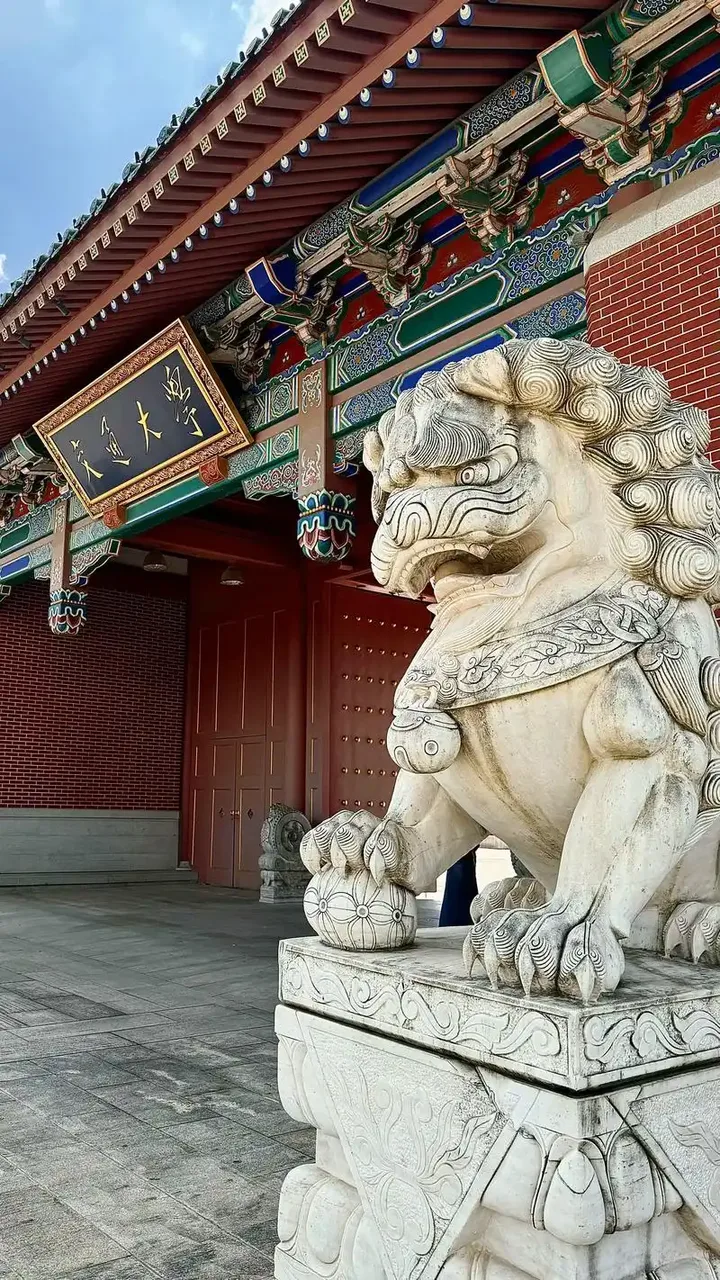
Shanghai Jiao Tong University (SJTU), commonly referred to as Shanghai Jiao Tong, is a national key university located in Shanghai. It is directly managed by the central government, affiliated with the Ministry of Education, and jointly established with the Shanghai Municipal Government. As one of the oldest institutions of higher education in China, it is a member of the national "Double First-Class" initiative, the "985 Project," and the "211 Project." The university is also part of the Everest Plan, the Strong Foundation Plan, the 111 Plan, the Outstanding Talent Plan, the 2011 Plan, the Excellent Doctor Education and Training Plan, the Excellent Legal Talent Education and Training Plan, the Excellent Engineer Education and Training Plan, the Excellent Agriculture and Forestry Talent Education and Training Plan, the National High-Level University Public-Sponsored Graduate Program, the Chinese Government Scholarship Institution for International Students, and the Independent Degree Authorization Unit. It is a member of the C9 League, the Association of Pacific Rim Universities, the 21st Century Academic Consortium, the China University Presidents Association, Universitas 21, the International Association of Science and Technology Development and Collaboration, the International Alliance for New Engineering Education, and the Asian Campus. Founded in 1896 as Nanyang Public School, it was renamed Nanyang University in 1911, Jiaotong University Shanghai School in 1921, National Jiaotong University Shanghai Headquarters in 1928, and Jiaotong University in 1949. In 1956, following a decision by the Central Committee of the Communist Party, the university began its westward relocation. In 1957, it was divided into the Shanghai and Xi'an sections, and in 1959, the Shanghai section was officially named Shanghai Jiao Tong University. In 1999, the former Shanghai Agricultural College was merged into the university, and in 2005, it merged with the former Shanghai Second Medical University. As of June 2025, the university has campuses in Xuhui, Minhang, Huangpu, Changning, Pudong, and Chongming, covering a total area of over 3 million square meters. It comprises 40 schools and colleges, 77 undergraduate programs, 52 first-level doctoral degree authorization points, 57 first-level master's degree authorization points, 13 professional doctoral degree authorization points, 34 professional master's degree authorization points, and 44 postdoctoral research stations. The university has 11,451 faculty and staff members and 18,584 full-time undergraduate students. In 1896, Li Duanfen, the Left Vice Minister of the Board of Punishments of the Qing government, submitted a memorial titled "Promoting Schools," recommending the establishment of schools in the capital, provinces, prefectures, and counties. In October, Sheng Xuanhuai formally submitted a memorial to the Qing government titled "A Comprehensive Proposal for Self-Strengthening," along with an attached memorial "Request for Establishing Schools," informing the Viceroy of Liangjiang, Liu Kunyi, of his plan to donate land in Shanghai to establish Nanyang Public School, with funding from the China Merchants Steam Navigation Company and the Telegraph Administration, and appointing He Sikun as the principal. In December, Emperor Guangxu granted approval, marking the official founding of Nanyang Public School. Because the school was located in Nanyang (a term referring to Jiangsu, Zhejiang, Fujian, and Guangdong at the time), and following the Western model where "half of the funds are donated by merchants and half by the government for public schools," it was named Nanyang Public School. Initially, the school aimed to cultivate high-end legal and political talent, establishing a Normal School, an Elementary School, a Middle School, and a Higher School, followed by a Railway Class, a Special Class, a Political Class, a Translation Institute, and a Japanese Language School. In 1897, Sheng Xuanhuai submitted a memorial titled "Planning for the Construction of Nanyang Public School and Dacheng Halls," proposing that both Nanyang Public School and Dacheng Halls could be funded through donations from the China Merchants Steam Navigation Company and the Telegraph Administration. He appointed Zhang Huanlun as the Chinese Head Teacher and John C. Ferguson as the Superintendent. The school rented premises in Xujiahui, Shanghai. The first batch of 30 normal school students was admitted, and classes began on April 8, with a five-tier training system. On November 9, the Elementary School was established, with normal school students serving as teachers. The normal school students compiled the "Elementary School Textbook," which became popular across China. He Sikun drafted the school's first charter, the "Nanyang Public School Charter." The China Merchants Steam Navigation Company contributed 60,000 taels of silver, and the Telegraph Administration contributed 40,000 taels of silver as operating funds. In 1905, the school was placed under the jurisdiction of the Ministry of Commerce and renamed the Shanghai Higher Industrial School of the Ministry of Commerce, shifting its focus to cultivating high-level engineering and management talent. In 1907, it was transferred to the Ministry of Posts and Communications and renamed the Shanghai Higher Industrial School of the Ministry of Posts and Communications. In October of the same year, the school's first engineering specialty, a three-year railway program, was officially established. In 1909, the Navigation Department of the Shanghai Higher Industrial School of the Ministry of Posts and Communications was established, which later became the Shanghai Higher Merchant Marine School in 1911.
Sources & verification
- Verification
- Partly verified
- Verified on
- 2026-05-10
- Last updated
- 2026-09-24
- Source link
- www.campuschina.org ↗
- Source notes
- Official CampusChina guide (program code: 338777)
Confirm requirements, funding and deadlines in the admissions office’s current announcement.