
University Scholarship
University of Electronic Science and Technology of China International Freshman Scholarship
Application status unknownPartly verified
Scholarship Introduction Only open to graduate applicants. 1. First-Class Scholarship (Full Scholarship): Includes tuition, on-campus accommodation, medical insurance, and living allowance (1,500 RMB/month). (Open to master's and doctoral applicants) 2. Second-Class Scholarship (Partial Scholarship): Includes tuition, on-campus accommodation, and medical insurance. (Open only to doctoral applicants) 3. Third-Class Scholarship (Partial Scholarship): Includes tuition and medical insurance. (Open only to master's applicants) Eligible Candidates Outstanding international students who come to our university to pursue graduate degrees (master's and doctoral programs) and apply for the scholarship. Scholarship recipients must complete their studies within the specified period. The scholarship duration is the length of study determined at the time of admission, and in principle, no extension will be granted after the student arrives in China. (Master's: 2 years, Doctoral: 3 years) Appli
TuitionAccommodationLiving allowance 1500 CNYMedical insurance
- Scholarship type
- University Scholarship
- Degree level
- Bachelor / Master / PhD / Visiting Students
- Location
- Sichuan · Chengdu
- Application deadline
- Date to be confirmed
Overview
Scholarship Introduction
Only open to graduate applicants.
1. First-Class Scholarship (Full Scholarship): Includes tuition
on-campus accommodation
medical insurance
and living allowance (1
Funding coverage
Funding tiers
Eligibility may differ by tier. Check the applicable degree and requirements.
First-tier award
- Eligible degree
- Bachelor’s, Master’s, Doctoral, Visiting students
- Funding
- First-tier scholarship ( [source fragment]
- Tier requirements
- ** 1. Foreign citizens meeting university admission conditions; 2. Good physical/mental health, able to adapt to study/life at University of Electronic Science and Technology of China; 3. Compliance with Chinese laws/regulations and university management rules; 4. Proper learning attitude and good grades; 5. Not concurrently receiving any other scholarship; 6. Recipients determined with new-student admission; current students may not apply and no additional places; 7. Applicants must carefully/truthfully complete and submit the required series of [source ends here]
Full scholarship
- Eligible degree
- Doctoral
- Funding
- Full scholarship): includes tuition, on-campus accommodation, medical insurance and a living allowance (RMB 1,500 per month); open to master’s and doctoral applicants 2.
- Tier requirements
- ** 1. Foreign citizens meeting university admission conditions; 2. Good physical/mental health, able to adapt to study/life at University of Electronic Science and Technology of China; 3. Compliance with Chinese laws/regulations and university management rules; 4. Proper learning attitude and good grades; 5. Not concurrently receiving any other scholarship; 6. Recipients determined with new-student admission; current students may not apply and no additional places; 7. Applicants must carefully/truthfully complete and submit the required series of [source ends here]
Second-tier award
- Eligible degree
- Bachelor’s, Master’s, Doctoral, Visiting students
- Funding
- Second-tier scholarship ( [source fragment]
- Tier requirements
- ** 1. Foreign citizens meeting university admission conditions; 2. Good physical/mental health, able to adapt to study/life at University of Electronic Science and Technology of China; 3. Compliance with Chinese laws/regulations and university management rules; 4. Proper learning attitude and good grades; 5. Not concurrently receiving any other scholarship; 6. Recipients determined with new-student admission; current students may not apply and no additional places; 7. Applicants must carefully/truthfully complete and submit the required series of [source ends here]
Partial scholarship
- Eligible degree
- Doctoral
- Funding
- Partial scholarship): includes tuition, on-campus accommodation and medical insurance; open only to doctoral applicants 3.
- Tier requirements
- ** 1. Foreign citizens meeting university admission conditions; 2. Good physical/mental health, able to adapt to study/life at University of Electronic Science and Technology of China; 3. Compliance with Chinese laws/regulations and university management rules; 4. Proper learning attitude and good grades; 5. Not concurrently receiving any other scholarship; 6. Recipients determined with new-student admission; current students may not apply and no additional places; 7. Applicants must carefully/truthfully complete and submit the required series of [source ends here]
Third-tier award
- Eligible degree
- Bachelor’s, Master’s, Doctoral, Visiting students
- Funding
- Third-tier scholarship ( [source fragment]
- Tier requirements
- ** 1. Foreign citizens meeting university admission conditions; 2. Good physical/mental health, able to adapt to study/life at University of Electronic Science and Technology of China; 3. Compliance with Chinese laws/regulations and university management rules; 4. Proper learning attitude and good grades; 5. Not concurrently receiving any other scholarship; 6. Recipients determined with new-student admission; current students may not apply and no additional places; 7. Applicants must carefully/truthfully complete and submit the required series of [source ends here]
Partial scholarship
- Eligible degree
- Doctoral
- Funding
- Partial scholarship): includes tuition and medical insurance; open only to master’s applicants **Scholarship recipients** Students pursuing a graduate degree at our university (master’s and doctoral programs) [scope as stated in the source]
- Tier requirements
- ** 1. Foreign citizens meeting university admission conditions; 2. Good physical/mental health, able to adapt to study/life at University of Electronic Science and Technology of China; 3. Compliance with Chinese laws/regulations and university management rules; 4. Proper learning attitude and good grades; 5. Not concurrently receiving any other scholarship; 6. Recipients determined with new-student admission; current students may not apply and no additional places; 7. Applicants must carefully/truthfully complete and submit the required series of [source ends here]
Requirements & documents
Application dates & process
Review Cycle: Joint review by the China Scholarship Council and host university takes approximately 6–8 weeks
Universities & programs
Universities
About the university
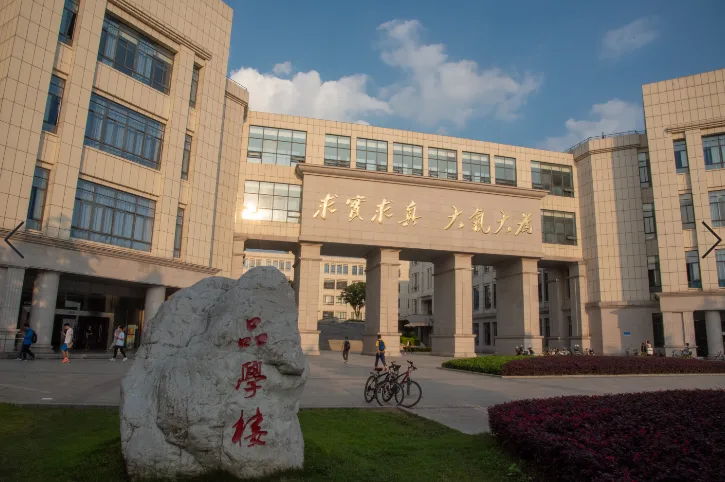
University of Electronic Science and Technology of China (UESTC), abbreviated as 'Chengdian' (UESTC), is located in Chengdu, Sichuan Province. It is a national key university directly under the Ministry of Education of the People's Republic of China, one of the first batch of universities under the national '211 Project' and '985 Project', and among the first batch of national 'Double First-Class' construction universities. It has been selected for the 111 Project, 101 Plan, Strengthening Basic Disciplines Plan, Everest Plan, Elite Plan, Excellent Engineer Education and Training Plan, National High-Level University Graduate Scholarship Program, and National Excellent Engineer College Construction University. It is a multidisciplinary research university with a focus on electronic information science and technology, engineering as its core, integration of science and engineering, and coordinated development of science, engineering, management, arts, and medicine. It is renowned as the 'Cradle of China's National Electronic Industry' and the 'Pacesetter of China's Electronic Institutions'. The university was founded in September 1956 as Chengdu Institute of Radio Engineering, personally arranged by Premier Zhou Enlai, through the merger of the Telecommunication Engineering Department of Jiaotong University, the Telecommunication Department of South China Institute of Technology, and the Radio Department of Nanjing Institute of Technology. It was the first radio university in New China. In 1960, it was designated as a national key university. In 1961, it was placed under the management of the National Defense Science and Technology Commission of the Ministry of National Defense and designated as one of the seven defense industry universities. In 1988, it was renamed University of Electronic Science and Technology of China. In 2000, it was transferred from the former Ministry of Information Industry to the Ministry of Education. In 2017, it entered the national 'World-Class University' construction list as a Class A university. As of August 2025, the university has three campuses: Qingshuihe, Shahe, and Jiulidi, with a total building area of over 1.49 million square meters. The library holds a total of 6.05 million volumes (including digital books). It has over 40 teaching and research units and research institutes, 65 undergraduate programs, 18 postdoctoral research stations, 22 first-level doctoral degree authorization points, 32 first-level master's degree authorization points, 4 professional doctoral degree categories, and 13 professional master's degree categories. It has over 3,800 faculty and staff, and over 44,000 enrolled undergraduate, master's, and doctoral students. In September 1956, under the personal deployment of Premier Zhou Enlai, the Telecommunication Engineering Department of Jiaotong University (now Shanghai Jiao Tong University and Xi'an Jiaotong University), the Telecommunication Department of South China Institute of Technology (now South China University of Technology), and the Radio Department of Nanjing Institute of Technology (now Southeast University) were merged to form Chengdu Institute of Radio Engineering, the first radio university in New China. Two months later, the Department of Electronic Vacuum Technology, the Department of Radio Components and Insulating Materials were added, and the Department of Computer Device Manufacturing began preparation. Its semiconductor and computer majors were among the first established in China. The university was successively managed by the Second Ministry of Machine Building, the First Ministry of Machine Building, the Third Ministry of Machine Building, the Fourth Ministry of Machine Building, the Ministry of Electronics Industry, the Ministry of Machine-Building and Electronics Industry, the China Electronics Corporation, and the Ministry of Information Industry. In 1958, the institute established a night school and founded a night university. In 1960, it was designated as a national key university. In 1961, it was placed under the management of the National Defense Science and Technology Commission of the Ministry of National Defense and designated as one of the seven defense industry universities. By 1966, it had 6 departments with 12 majors. In 1970, the institute was jointly managed by the Fourth Ministry of Machine Building and the Signal Corps of the People's Liberation Army General Staff. In 1971, it enrolled worker-peasant-soldier students. In 1977, the institute resumed enrollment through the national college entrance examination, and in 1978, it resumed graduate education. By the late 1980s, it had developed into 13 departments with 30 majors. In 1988, Chengdu Institute of Radio Engineering was renamed University of Electronic Science and Technology of China, becoming a comprehensive key university focusing on electronic science and technology, integrating science, engineering, management, and arts. In the same year, the School of Adult Education was established. In 1992, the School of Electronic Engineering and the School of Information Materials Engineering were established. In 1993, the School of Management and the School of Humanities and Social Sciences were established. In 1994, the School of Communication and Information Engineering and the School of Computer Science and Engineering were established. In 1997, it became one of the first batch of universities under the national '211 Project', and the Department of Physical Education was established. In 1998, the Chengdu Metallurgical Management Cadre College under the Ministry of Metallurgical Industry was merged into UESTC. In 2000, UESTC was transferred from the Ministry of Information Industry to the Ministry of Education, and the Graduate School was established. In 2001, it became a national '985 Project' key university, and the School of Microelectronics and Solid-State Electronics, the School of Physical Electronics, the School of Optoelectronic Information, the School of Automation, the School of Mechatronics Engineering, the School of Life Science and Technology, the School of Applied Mathematics, the School of Foreign Languages, the Model Software School, and the Department of Physical Education were established. In 2002, Zhongshan College of UESTC was established. In 2003, the Research Institute of Electronic Science and Technology was established. In 2004, Chengdu College of UESTC was established. In 2006, the School of Political Science and Public Administration and the Institute of Aerospace Science and Technology were established. In 2007, the School of Economics and Management and the Dongguan UESTC Institute of Electronic Information Engineering were established, and the Qingshuihe Campus covering over 3,000 mu was put into use. In 2008, the School of International Education was established. In 2009, the Elite Experimental College, the School of Marxist Education, and the School of Mathematical Sciences were established.
Sources & verification
- Verification
- Partly verified
- Verified on
- 2026-05-10
- Last updated
- 2026-09-24
- Source link
- www.campuschina.org ↗
- Source notes
- Official CampusChina guide (program code: 120271)
Confirm requirements, funding and deadlines in the admissions office’s current announcement.