
University Scholarship
Shanghai Maritime University Chinese Government Scholarship
Application status unknownPartly verified
To enhance mutual understanding and friendship between the Chinese people and people of all countries, and to develop exchanges and cooperation between China and other countries in various fields, the Chinese government has established scholarships to fund outstanding students, teachers, and scholars from around the world to study or conduct research at Chinese universities. The Ministry of Education of China has entrusted the China Scholarship Council (hereinafter referred to as "CSC") with the responsibility of recruiting, admitting, and managing Chinese Government Scholarship students. I. Scholarship Coverage: 1.1. Tuition waiver 1.2. Accommodation fee waiver 1.3. Living allowance (distributed monthly for 12 months per year: 2,500 RMB per month for undergraduate students, 3,000 RMB per month for master's students, 3,500 RMB per month for doctoral students) 1.4. Comprehensive medical insurance II. Eligibility: 2.1. Applicants must be non-Chinese citizens in good health. 2.2.
TuitionAccommodationMedical insurance
- Scholarship type
- University Scholarship
- Degree level
- Bachelor / Master / PhD / Visiting Students
- Location
- Shanghai · Shanghai
- Application deadline
- Date to be confirmed
Overview
To enhance mutual understanding and friendship between the Chinese people and people of all countries
and to develop exchanges and cooperation between China and other countries in various fields
the Chinese government has established scholarships to fund outstanding students
teachers
and scholars from around the world to study or conduct research at Chinese universities. The Ministry of Education of China has entrusted the China Scholarship Council (hereinafter referred to as CSC) with the responsibility of recruiting
admitting
Funding coverage
Funding tiers
Eligibility may differ by tier. Check the applicable degree and requirements.
Standard funding
- Eligible degree
- Bachelor’s, Master’s, Doctoral, Visiting students
- Funding
- To promote mutual understanding and friendship between the Chinese people and people worldwide and develop exchanges and cooperation in all fields, the Chinese Government established scholarships for outstanding students, teachers and scholars from around the world to study or conduct research at Chinese universities. The Ministry of Education entrusts the China Scholarship Council (CSC) with recruitment, admission and administration of scholarship students. I. Scholarship Coverage: 1.1 Tuition waived 1.2 Accommodation fees waived 1.3 Living expenses waived [source wording; the following text describes payments] (paid for 12 months each year, undergraduates receive 2,500 per month... [source ends before the currency unit or remainder]
- Tier requirements
- 2.1. Non-Chinese citizens in good health. 2.2. Meet educational and age admission requirements: doctoral applicants must already hold a master’s degree and generally be no older than 40; master’s applicants must already hold a bachelor’s degree and generally be no older than 35; bachelor’s applicants must have graduated from high school and generally be aged 18-25. 2.3. Excellent academic and overall performance. 2.4. Not concurrently receiving any other Chinese Government Scholarship.
Requirements & documents
Application dates & process
Review Cycle: Joint review by the China Scholarship Council and host university takes approximately 6–8 weeks
Universities & programs
Universities
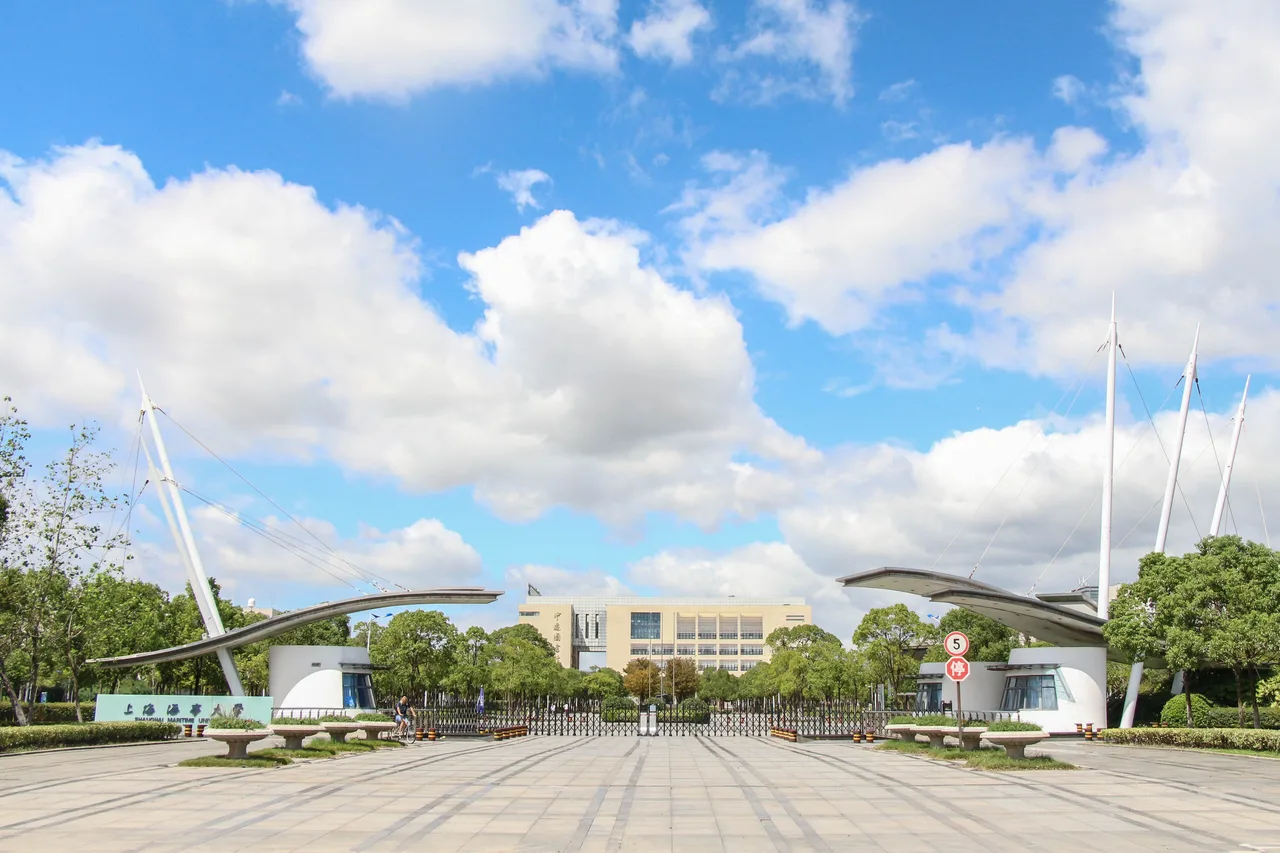
About the university
Shanghai Maritime University (SMU), located in Shanghai, is a full-time regular institution of higher education established by the Shanghai Municipal People's Government and under the administration of Shanghai Municipality. The university is characterized by its focus on shipping, logistics, and ocean-related disciplines, offering programs in engineering, management, economics, law, literature, science, and arts. It is one of the few universities in China to have obtained both the Crew Education and Training Quality System Certificate from the People's Republic of China and the ISO9001 Quality Assurance Certificate from Det Norske Veritas (DNV). SMU has been selected for the Ministry of Education's 'Excellent Engineer Education and Training Program,' designated as a host institution for Chinese Government Scholarship international students, and recognized as a model university for deepening innovation and entrepreneurship education reform in Shanghai. The predecessor of Shanghai Maritime University was the Navigation Section of the Shanghai Higher Industrial School (Nanyang Public School) under the Ministry of Posts and Communications in the late Qing Dynasty, established in 1909. In 1912, the Wusong Merchant Marine School was founded, renamed Wusong Merchant Marine College in 1933. In 1959, the Ministry of Communications established Shanghai Maritime College in Shanghai. In 2000, the college was transferred from the Ministry of Communications to the administration of the Shanghai Municipal People's Government. In 2004, it was renamed Shanghai Maritime University with approval from the Ministry of Education. In 2008, the main campus of SMU relocated to Lingang New City (now the Lingang Special Area of the Shanghai Free Trade Zone). In 2012, the university was officially approved by the Ministry of Education as a host institution for Chinese Government Scholarship international students. In 2018, SMU was included in the Shanghai high-level local university construction plan. As of June 2025, the university has three campuses: Lingang (main campus), Gangwan, and Minsheng Road Gaohang Building, with a total building area of 600,000 square meters. As of March 2025, SMU has 16 secondary academic departments, offering 52 undergraduate programs. It has 3 postdoctoral research stations, 4 first-level doctoral degree programs, 17 first-level master's degree programs, and 14 professional master's degree categories. The university has nearly 1,200 full-time teachers and over 26,000 students, including more than 16,000 full-time undergraduates and nearly 8,000 graduate students. In 1896, Sheng Xuanhuai founded Nanyang Public School in Shanghai. In 1903, the late Qing government established the Ministry of Commerce. In 1905, the school was renamed the Shanghai Higher Industrial School under the Ministry of Commerce. In 1906, the 'Regulations of the Shanghai Higher Industrial School under the Ministry of Commerce' planned four departments, including Navigation and Marine Engineering: 'The undergraduate program is divided into four departments: Commerce, Navigation, Marine Engineering, and Electrical Engineering.' In the same year, the Qing government changed the Ministry of Commerce to the Ministry of Agriculture, Industry, and Commerce, and added the Ministry of Posts and Communications to oversee railways, shipping, postal services, and electricity. In the spring of 1907, the Shanghai Higher Industrial School was placed under the Ministry of Posts and Communications and renamed the Shanghai Higher Industrial School under the Ministry of Posts and Communications. In July 1909, the Navigation Section was established, marking the official start of higher maritime education in China. In 1911, over 3,000 people applied for admission, and 29 students from the second and third classes of the original Navigation Section were transferred to the school. In March 1912, the Ministry of Communications of the Republic of China appointed Sa Zhenbing, former Minister of Naval Affairs and Admiral of the late Qing, as the president of Wusong Merchant Marine School. In September 1912, the school was renamed the Wusong Merchant Marine School under the Ministry of Communications, and in 1914, it was renamed the Wusong Merchant Marine College under the Ministry of Communications. In 1915, the Wusong Merchant Marine School was ordered to close by the Republic of China government, and all buildings, training ships, books, and instruments were transferred to the Ministry of Navy to establish a naval school, named Wusong Naval School, for specialized training of graduates from Yantai Naval School. In 1921, Wusong Naval School was closed. In 1928, the Ministry of Communications of the Nationalist Government decided to reclaim the campus of Wusong Merchant Marine School and prepare for its reopening, using shipping surtax as funding. On September 1, 1929, the school officially reopened as the Wusong Merchant Marine School under the Ministry of Communications, with Minister of Communications Wang Boqun serving as concurrent president and Yang Zhixiong as vice president in charge of daily affairs. On October 8, the Wusong Merchant Marine College officially began classes. Upon reopening in the autumn of 1929, the school only offered a Navigation program for high school graduates. In the autumn of 1930, a Marine Engineering program was added, and a training factory was built. In 1932, during the 'January 28' Incident, the campus of Wusong Merchant Marine College was bombed by Japanese forces, and classes were held in rented buildings in Shanghai. In the spring of 1933, the campus was repaired and classes resumed, and the school was approved to establish an affiliated vocational school. The Merchant Marine Vocational School offered Navigation and Marine Engineering programs for junior high school graduates under 17. The Merchant Marine College also offered Navigation and Marine Engineering programs for high school and vocational school graduates under 20. Although nominally separate, the two schools were essentially integrated, with the same training methods and interconnected curricula. In 1937, with the outbreak of the War of Resistance Against Japan, the campus was destroyed by artillery fire during the 'August 13' Battle of Shanghai, and the school was forced to close.
Sources & verification
- Verification
- Partly verified
- Verified on
- 2026-05-10
- Last updated
- 2026-09-24
- Source link
- www.campuschina.org ↗
- Source notes
- Official CampusChina guide (program code: 328746)
Confirm requirements, funding and deadlines in the admissions office’s current announcement.