
University Scholarship
Xi'an Jiaotong University Siyuan International Student Scholarship
Application status unknownPartly verified
To further deepen the opening-up of higher education, promote the internationalization of education, leverage the advantages of Xi'an Jiaotong University's first-class disciplines, and build a global hub for science and education in western China, Xi'an Jiaotong University has established the Siyuan International Student Scholarship to support outstanding talents from around the world to pursue degrees at the university. **Categories of Support**: Bachelor's, Master's, and Doctoral degree programs. **Coverage**: Tuition waiver and living allowance. All degree students must undergo an annual review after enrollment. **Application Period**: For bachelor's programs: March 1 to June 30 each year; for master's and doctoral programs: mid-November to mid-March each year. **Application Method**: Applicants submit application materials directly to Xi'an Jiaotong University online. **Note**: 1. Applicants for master's or doctoral degrees only need to submit their applications online accordi
Tuition
- Scholarship type
- University Scholarship
- Degree level
- Bachelor / Master / PhD / Visiting Students
- Location
- Shaanxi · Xi'an
- Application deadline
- Date to be confirmed
Overview
To further deepen the opening-up of higher education
promote the internationalization of education
leverage the advantages of Xi'an Jiaotong University's first-class disciplines
and build a global hub for science and education in western China
Xi'an Jiaotong University has established the Siyuan International Student Scholarship to support outstanding talents from around the world to pursue degrees at the university.
**Categories of Support**: Bachelor's
Funding coverage
Funding tiers
Eligibility may differ by tier. Check the applicable degree and requirements.
Standard funding
- Eligible degree
- Bachelor’s, Master’s, Doctoral, Visiting students
- Funding
- **: Tuition waiver and living allowance. All degree students must participate in annual reviews after enrollment. **Application Period:** March 1–June 30 annually for undergraduates; mid-November–mid-March for master’s and doctoral applicants. **Application Method:** Submit materials directly online to Xi’an Jiaotong University. **Note:**1.Master’s/doctoral applicants need only apply online under university Chinese Government Scholarship independent-admissions dates/rules; no separate Siyuan International Student Scholarship application. See http://sie.xjtu.edu.cn/jxj/jxj/xajtdxsygjxsjxj.htm. 2.Undergraduate scholarship applications:[http://sie.xjtu.edu.cn/jxj/jxj/xajtdxsygjxsjxj.htm](http://sie.xjtu.edu.cn/system/_content/download.jsp?urltype=news.DownloadAttachUrl&owner=1553278648&wbfileid=4413448).
- Tier requirements
- Non-Chinese citizens in good physical and mental health who meet educational and age requirements
Requirements & documents
Application dates & process
Review Cycle: Joint review by the China Scholarship Council and host university takes approximately 6–8 weeks
Universities & programs
Universities
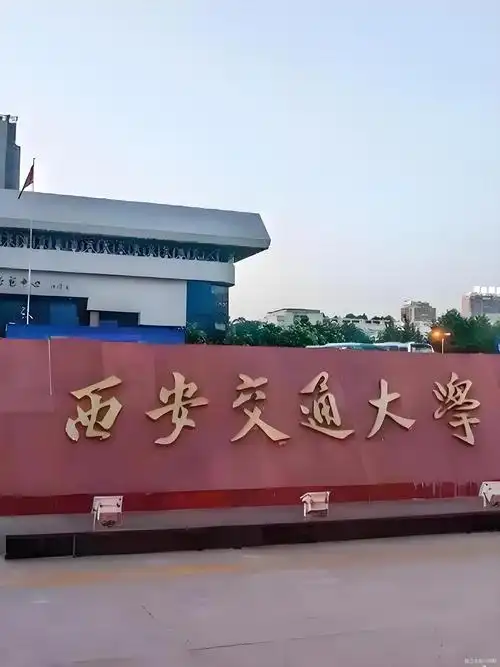
About the university
Xi'an Jiaotong University (XJTU), also known as Xi'an Jiaotong University, is located in Xi'an, Shaanxi Province. It is a national key comprehensive research university sponsored by the state, directly under the Ministry of Education of the People's Republic of China, and jointly established with the Shaanxi Provincial People's Government. It is a university directly under the central management, a key construction unit during the Seventh and Eighth Five-Year Plans, one of the first batch of universities under the "211 Project", "985 Project", and "Double First-Class" Category A initiative, one of the first institutions authorized to independently grant degrees, and a member of the C9 League. It has been selected for the national "111 Plan", "Summit Plan", "Strong Foundation Plan", the Excellent Engineer Education and Training Program, the Excellent Doctor Education and Training Program, and is the leading university for the "2011 Plan". The university originated from Nanyang Public School founded in Shanghai in 1896, and after going through stages such as Shanghai Higher Industrial School and the Ministry of Communications Shanghai Industrial Specialized School, it merged with three other specialized schools under the ministry in 1921 to form Jiaotong University. In 1956, the main body of Jiaotong University was relocated to Xi'an; in 1957, it was divided into two parts: Xi'an and Shanghai, under unified leadership; in 1959, the Xi'an part was officially named Xi'an Jiaotong University and was listed as one of the sixteen key universities in the country. In 2000, the State Council of the People's Republic of China decided to merge Xi'an Jiaotong University, Xi'an Medical University, and Shaanxi College of Finance and Economics to form the new Xi'an Jiaotong University. As of May 2025, the university has four campuses: Xingqing, Yanta, Qujiang, and the China Western Science and Technology Innovation Port, covering an area of approximately 5,000 mu. It has 35 colleges (departments, centers), offers 77 undergraduate programs, employs 6,754 faculty and staff, and has 25,595 undergraduate students, 32,565 graduate students, and 3,929 international students. There are 34 postdoctoral research stations. As of September 2025, it has 45 first-level doctoral degree authorization disciplines, 45 first-level master's degree authorization disciplines, 10 professional doctoral degree authorization categories, and 32 professional master's degree authorization categories. In 1894, the Qing army suffered a disastrous defeat in the Sino-Japanese War. Around the time of the war, some insightful individuals proposed learning from the West and Japan and establishing new-style schools to strengthen China. In 1895, Sheng Xuanhuai founded the Beiyang Western School while serving as the Tianjin Customs Daotai. The following year, he left Tianjin to oversee railway affairs in Shanghai. With the approval of Liu Kunyi, the Governor-General of Liangjiang and Minister of Nanyang, he planned to establish another new school, Nanyang Public School, along with an attached Dacheng Hall. In early November of the following year, Sheng Xuanhuai submitted a memorial to the Qing court titled "Request to Establish a School", proposing to model the new school after the Beiyang University he had founded while serving as Tianjin Customs Daotai, and to establish Nanyang Public School in Shanghai. In March 1897, Nanyang Public School established a Normal School, the first formal normal school in modern Chinese history. At the same time, it set up an External School (elementary school) taught by normal students, and the following year opened a Second-Class School (also called Middle School, i.e., secondary school). On April 8, 1897, Nanyang Public School officially opened, becoming the second modern university in China. In 1898, Nanyang Public School established a Translation Institute attached to the school, becoming the earliest private institution in China to engage in translating foreign books and periodicals. In 1899, Nanyang Public School launched a "Special Class", which selected adult scholars who had taken the imperial examinations through exams, focusing on teaching Chinese and Western politics, literature, law, and ethics, to cultivate talents for the economic special examination. On September 6, 1903, the Business School attached to Nanyang Public School officially opened, offering courses in finance, public law, commercial law, constitutional law, business, history, commerce, correspondence, French, business mathematics, and experimental chemistry. On September 29, Sheng Xuanhuai submitted a memorial to the Qing government titled "Request to Establish a Higher Business School", proposing to convert the upper school of Nanyang Public School into a business school, to promote graduates of the middle school to the upper school to study business for quicker results, and to request graduation diplomas for graduates. In October 1903, Nanyang Public School was proposed to be renamed "Nanyang Higher Business School", which was approved by the Qing government the following year, but the name was not actually used, and the school continued to be called Nanyang Public School.
Sources & verification
- Verification
- Partly verified
- Verified on
- 2026-05-10
- Last updated
- 2026-09-24
- Source link
- www.campuschina.org ↗
- Source notes
- Official CampusChina guide (program code: 790425)
Confirm requirements, funding and deadlines in the admissions office’s current announcement.