
University Scholarship
University of Science and Technology of China - CAS-TWAS President's Fellowship Programme
Application status unknownPartly verified
According to the agreement between the Chinese Academy of Sciences (CAS) and The World Academy of Sciences (TWAS), the two parties jointly established the "CAS-TWAS President's Fellowship Programme" to support students/scholars from around the world to pursue doctoral degrees at the University of Science and Technology of China, the University of Chinese Academy of Sciences, or various institutes of the Chinese Academy of Sciences. 1. Scholarship Content and Standards Tuition waiver; a living allowance (including accommodation, meals, transportation, insurance, and related expenses) of RMB 7,000 per month before passing the doctoral qualifying examination, and RMB 8,000 per month after passing. The scholarship duration is up to 4 years, with study conducted in stages: 1) Complete intensive training and coursework at our university, up to 1 year in total, including approximately 4 months of Chinese language, Chinese culture, and specialized courses; 2) Conduct research practice at the
TuitionMedical insurance
- Scholarship type
- University Scholarship
- Degree level
- Bachelor / Master / PhD / Visiting Students
- Location
- Anhui · Hefei
- Application deadline
- Date to be confirmed
Overview
According to the agreement between the Chinese Academy of Sciences (CAS) and The World Academy of Sciences (TWAS)
the two parties jointly established the CAS-TWAS President's Fellowship Programme to support students/scholars from around the world to pursue doctoral degrees at the University of Science and Technology of China
the University of Chinese Academy of Sciences
or various institutes of the Chinese Academy of Sciences.
1. Scholarship Content and Standards
Tuition waiver
Funding coverage
Funding tiers
Eligibility may differ by tier. Check the applicable degree and requirements.
Standard funding
- Eligible degree
- Bachelor’s, Master’s, Doctoral, Visiting students
- Funding
- Under their cooperation agreement, the Chinese Academy of Sciences and TWAS jointly establish the CAS–TWAS President’s Fellowship Program, supporting students and scholars worldwide pursuing doctorates at USTC, UCAS or CAS institutes. **1. Scholarship Coverage and Standards** Tuition waived; monthly living allowance includes food, accommodation, transport, insurance and related expenses: RMB 7,000 before passing doctoral qualification examinations and RMB 8,000 afterward. Funding lasts no more than four years, with study divided... [source ends mid-word]
- Tier requirements
- ** 1) Non-Chinese citizens; 2) No older than 35 before December 31,2018; 3) Master’s degree obtained or obtainable before September 1,2018; 4) English or Chinese proficiency evidence; 5) Full-time study during funding, no other work; 6) Undertake to return home to serve after completion. Notes: 1) Applicants already pursuing a doctorate in China ineligible; 2) May not apply to two universities simultaneously. **4. Application dates** December 15,2017–March 31,2018 **5. Process/materials** 1) Apply online at http://www.fellowship.cas.cn/dms/aonline/1958.jhtml 2) Also apply at http://isa.ustc.edu.cn/ 3) [source ends here]
Requirements & documents
Application dates & process
Review Cycle: Joint review by the China Scholarship Council and host university takes approximately 6–8 weeks
Universities & programs
Universities
About the university
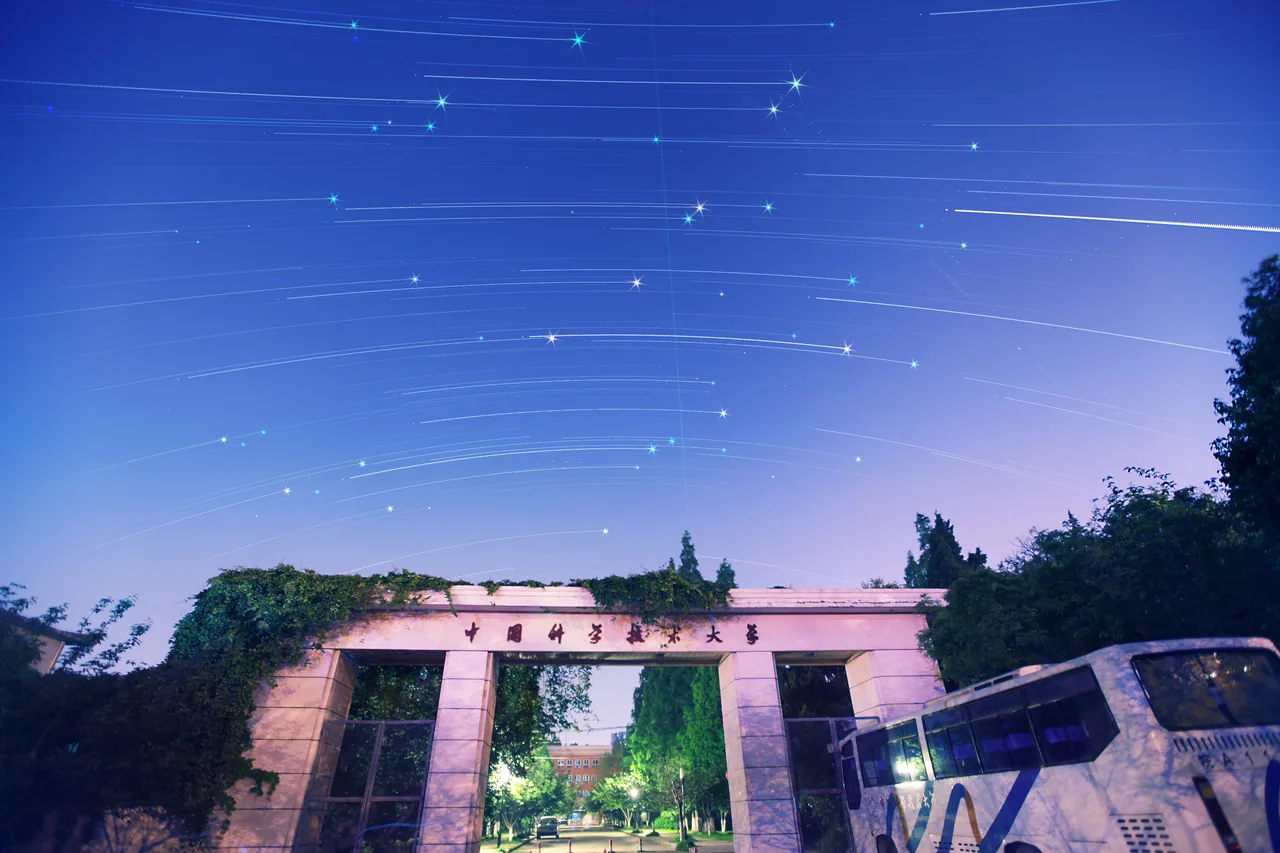
The University of Science and Technology of China (USTC), abbreviated as USTC or Zhongkeda, is located in Hefei, Anhui Province. It is a national key university directly under the central government and affiliated with the Chinese Academy of Sciences (CAS), jointly established by CAS, the Ministry of Education, and Anhui Province. It is a Class A institution under the national "Double First-Class" initiative, a key university under the "985 Project" and "211 Project," and an autonomous degree-granting unit. It is part of the Everest Plan, the 2011 Plan, the 111 Plan, and the Strengthening Basic Sciences Plan. It is one of the first Future Technology Colleges designated by the Ministry of Education, a member of the C9 League and the Association of Pacific Rim Universities. USTC is a science and engineering university focusing on cutting-edge science and high technology, while also encompassing medicine, distinctive management, and humanities. It was founded by the older generation of revolutionaries and scientists of the Communist Party of China for the "Two Bombs, One Satellite" cause, making it a red university. The university was established in Beijing in September 1958. In 1959, the China Scientific and Technical Information University merged into it. In early 1970, the university moved to Hefei, Anhui Province. In February 1978, it was reinstated as a key university. In November 1981, it was approved by the State Council as one of the first institutions authorized to confer doctoral and master's degrees. In October 2011, it was selected for the Ministry of Education's "Excellent Engineer Education and Training Program." In September 2017 and February 2022, it was twice selected as a national university for building world-class universities and world-class disciplines. In 2023, the university initiated the construction of the Hefei Advanced Light Source. As of June 2025, the university has 3,212 teaching and research staff, including 779 high-level talents (non-duplicate count) such as academicians of the Chinese Academy of Sciences and Chinese Academy of Engineering. It offers 44 undergraduate programs, 34 first-level doctoral degree authorization points (including interdisciplinary disciplines), 6 first-level master's degree authorization points, and 16 professional degree authorization points, including 6 professional doctoral degree authorization points. As of July 2025, the university has 34 schools, including 8 science-education integration schools. As of December 2024, the total value of teaching and research equipment assets is 7.868 billion yuan. In the 1950s, China's scientific and technological strength and comprehensive national power were very weak, making it difficult to meet the needs of national development and international competition. The Chinese Academy of Sciences, as the national academic and research center, had many high-level scientific talents but urgently needed excellent reserve forces, especially top-tier scientific and technological talents in emerging technical disciplines. At that time, graduates from higher education institutions could not meet the demand in terms of quantity or quality. Under these circumstances, leveraging the advantages of the Chinese Academy of Sciences to establish a new university that would cultivate top-tier scientific and technological talents in emerging, marginal, and interdisciplinary fields became a common vision among CAS leaders and many scientists. On March 18, 1958, at the third executive meeting of the CAS, President Guo Moruo proposed that the Academy could consider establishing a higher education institution to train cadres. On May 9, Zhang Jinfu, Secretary of the CAS Party Group, submitted a request on behalf of the CAS Party Group to Vice Premier Nie Rongzhen, who was in charge of national science and technology work, and the Propaganda Department, suggesting that the CAS pilot a university. Vice Premier Nie Rongzhen immediately reported the matter to Premier Zhou Enlai, who approved the idea. On May 21, Vice Premier Nie Rongzhen submitted a report to the Secretariat of the Central Committee of the Communist Party of China. On June 2, 1958, after discussion at a meeting of the Secretariat of the Central Committee, Deng Xiaoping, member of the Standing Committee of the Political Bureau and General Secretary, instructed: "The Secretariat meeting approved this report and decided to establish this university." Liu Shaoqi, Zhou Enlai, and Chen Yun also approved the decision of the Central Committee Secretariat. On June 8, 1958, CAS President Guo Moruo presided over the first meeting of the university preparatory committee, deciding to name the university "University of Science and Technology of China." The university preparatory committee was established, and the meeting approved the university-building plan and the 1958 enrollment brochure, clarifying that teaching equipment would be provided by the relevant CAS research institutes. The meeting decided to establish 12 departments: Department of Nuclear Physics and Nuclear Engineering, Department of Technical Physics, Department of Chemical Physics, Department of Physical Thermal Engineering, Department of Radio Electronics, Department of Automation, Department of Mechanics and Mechanical Engineering, Department of Radiochemistry and Radiation Chemistry, Department of Geochemistry and Rare Elements, Department of Polymer Chemistry and Polymer Physics, Department of Applied Mathematics and Computer Technology, and Department of Biophysics. It also established cooperative relations with Peking University and Tsinghua University. On June 18, the People's Daily, Guangming Daily, and China Youth Daily published the USTC enrollment brochure. On July 28, the preparatory committee held its first meeting of department heads, deciding to add a Department of Applied Geophysics and establish four groups: General Physics, General Chemistry, Mathematics, and Political Courses. According to Vice Premier Nie Rongzhen's instructions, the former second campus of the Central Party School at Yuquan Road was given to USTC as its campus. The CAS headquarters and various research institutes provided a large number of cadres, classrooms, workers, books, and experimental equipment. In early September, 150 newly admitted students from the Beijing examination area reported early to participate in voluntary labor such as cleaning the campus and building sports fields. On September 15, students from outside Beijing completed registration procedures, and a total of 1,634 students were admitted. Old North Gate. On the eve of the opening, Guo Moruo drafted the lyrics of the school song and widely solicited revisions. On September 19, Guo Moruo met with all students for the first time and invited the composer of the school song, Lv Ji, chairman of the National Music Association, to teach the students the school song "Eternal East Wind."
Sources & verification
- Verification
- Partly verified
- Verified on
- 2026-05-10
- Last updated
- 2026-09-24
- Source link
- www.campuschina.org ↗
- Source notes
- Official CampusChina guide (program code: 123343)
Confirm requirements, funding and deadlines in the admissions office’s current announcement.