
University Scholarship
President Scholarship for International Students at China Pharmaceutical University
Application status unknownPartly verified
The President Scholarship for International Students at China Pharmaceutical University was established in 2016 to fund outstanding students from around the world to study and conduct scientific research at the university, cultivate pharmaceutical talents for the world, and promote the development of international pharmaceutical education. **I. Admission Categories, Scholarship Standards, and Duration** | Admission Category | Scholarship Standard | Duration | | --- | --- | --- | | Undergraduate (Chinese-taught) | 19,000 CNY/year | 4 years | | Undergraduate (English-taught) | 20,000 CNY/year | 4 years | | Master's | 25,000 CNY/year | 3 years | | Doctoral | 30,000 CNY/year | 3 years | **Note: 1. This scholarship is a partial scholarship and does not cover accommodation, insurance, living expenses, etc.** **2. If the scholarship does not cover the full tuition, the difference shall be paid by the student.** **3. The scholarship standard during the Chinese language preparatory period is
Medical insurance
- Scholarship type
- University Scholarship
- Degree level
- Bachelor / Master / PhD / Visiting Students
- Location
- Jiangsu · Nanjing
- Application deadline
- Date to be confirmed
Overview
The President Scholarship for International Students at China Pharmaceutical University was established in 2016 to fund outstanding students from around the world to study and conduct scientific research at the university
cultivate pharmaceutical talents for the world
and promote the development of international pharmaceutical education.
**I. Admission Categories
Scholarship Standards
and Duration**
Funding coverage
Funding tiers
Eligibility may differ by tier. Check the applicable degree and requirements.
Standard funding
- Eligible degree
- Bachelor’s, Master’s, Doctoral, Visiting students
- Funding
- Is RMB 14,000 per year.** **
- Tier requirements
- ** **Applicants must meet:** 1. Foreign nationality, good physical/mental health; 2. Educational background/age: 2.1 Undergraduate: high school graduation, no older than 25; 2.2 Master’s: bachelor’s degree, no older than 35; 2.3 Doctoral: master’s degree, no older than 40. 3. Language 3.1 Chinese-taught: pass HSK5 or above; 3.2 English-taught: IELTS6.5 or above, TOEFL90 or above [source lists both without explicit conjunction]. 4. Excellent academic results and strong research ability. **
Requirements & documents
Application dates & process
Review Cycle: Joint review by the China Scholarship Council and host university takes approximately 6–8 weeks
Universities & programs
Universities
About the university
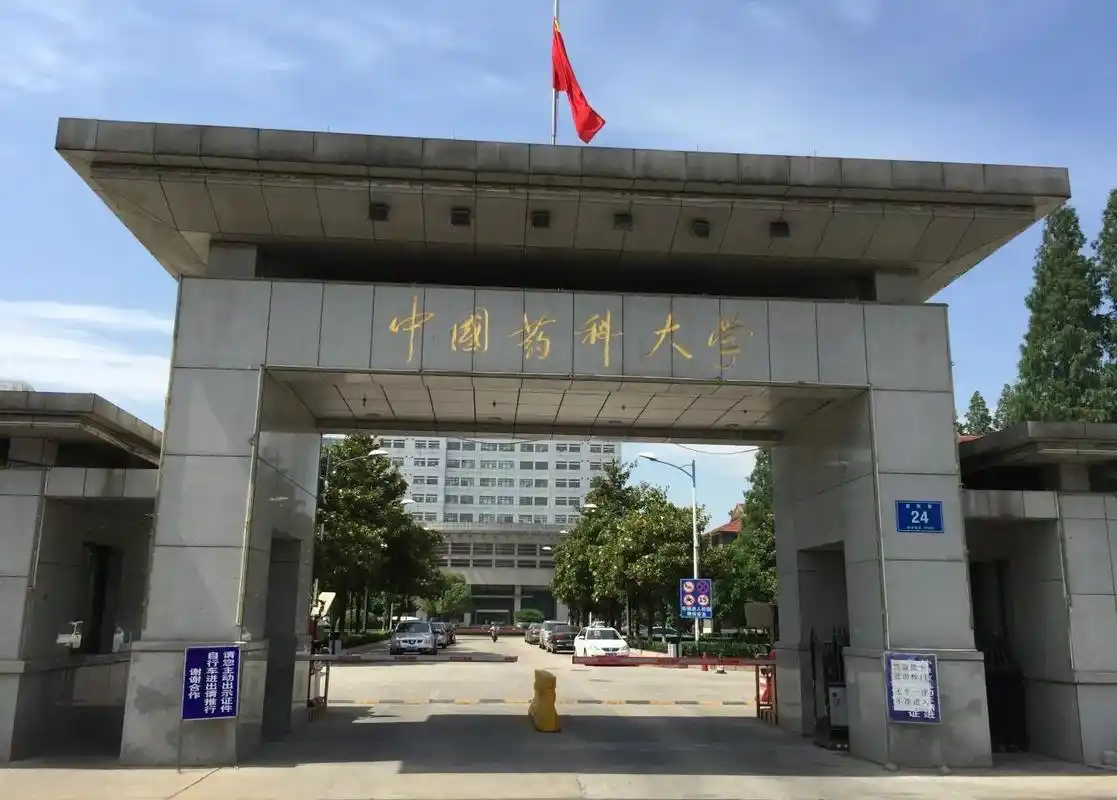
China Pharmaceutical University (CPU), located in Nanjing, Jiangsu Province, is a prestigious pharmaceutical institution directly under the Ministry of Education of the People's Republic of China. Co-established by the Ministry of Education and the Jiangsu Provincial People's Government, it is a national "Double First-Class" university, a member of the national "211 Project" and the "985 Project Advantage Discipline Innovation Platform." It has been selected for the national "111 Plan," the Ministry of Education's "Excellent Engineer Education and Training Plan," the National College Student Innovation Experimental Program, the National College Student Innovation and Entrepreneurship Training Program, the National High-Level University Graduate Scholarship Program, and the National New Engineering Research and Practice Project. It is the leading institution of the Global Pharmaceutical Development Alliance. The university's predecessor was the National Pharmaceutical College (four-year undergraduate program). In its early years, the college moved to Hankou and then to Chongqing before returning to Nanjing in 1946. In 1952, the Pharmacy Department of Cheeloo University and the Pharmacy Specialization of Soochow University merged into the college, forming the East China Pharmaceutical College. It began enrolling graduate students in 1955 and was renamed Nanjing Pharmaceutical College in 1956. In 1986, it merged with the preparatory Nanjing Chinese Materia Medica College to establish China Pharmaceutical University. In 1996, it became one of the first 100 universities under the national "211 Project." In 2000, the university was transferred from the State Drug Administration to the direct management of the Ministry of Education. In 2001, the Jiangsu Provincial Pharmaceutical School was fully integrated into the university. In 2017, it became a national "Double First-Class" university. As of June 2025, the university has two campuses, Xuanwumen and Jiangning, covering an area of over 2,100 mu (approximately 140 hectares), with a building area of 702,000 square meters and a library collection of over 1.189 million volumes. It comprises 16 schools and departments, offering 31 undergraduate programs (categories). It has 4 first-level doctoral degree authorization points, 2 professional doctoral degree authorization points, 8 first-level master's degree authorization points, 6 professional master's degree authorization points, and 2 postdoctoral research stations in pharmacy and Chinese materia medica. The university has 1,919 faculty and staff members and 20,029 full-time students. In July 1936, the Ministry of Education sent Meng Mudi, Xue Peiyuan, Zhu Zhanggeng, Chen Siyi, and others to prepare for the establishment of the Nanjing Pharmaceutical College. They rented the former site of the Salt Industry Bank on Baixia Road in Nanjing as a temporary campus and enrolled 40 students. Entrance exams were held in Beiping (Beijing) and Nanjing from August 21 to 23. On September 10, the Ministry of Education officially appointed Meng Mudi as the president. In March 1937, the Ministry of Education allocated the horticultural field of the National Central University's Agricultural College at Dingjiaqiao, Nanjing, as the campus site, and construction began. In August, as Nanjing came under threat, the college enrolled a new class and then hastily moved westward to Wuhan before the campus construction was completed, using 86 Siwei Road in Hankou as a temporary campus. In December, as Wuhan came under threat, the college, following orders from the Ministry of Education, decided to move to Chongqing, arriving on February 10. The college borrowed facilities from the Sichuan Provincial College of Education in Ciqikou for classes and offices, while male students were housed at Chongqing University in Shapingba. In the spring of 1940, the college purchased 47 mu of farmland on Geleshan, about seven or eight li from Ciqikou, and built its own campus. In July, the new campus was completed, and the original buildings in Ciqikou were used for an attached experimental pharmaceutical factory. In 1941, the college began offering two- or three-year secondary-level training classes in dispensing and pharmacy, which later developed into formal three-year advanced pharmacy vocational programs. During its stay in Chongqing, the college produced 175 graduates from six classes of the specialized program, 42 graduates from three classes of the advanced pharmacy vocational program, 28 graduates from two classes of the dispensing vocational program, and 19 graduates from one dispensing training class. Despite extreme difficulties, it established an experimental pharmaceutical factory and initiated preliminary pharmaceutical research, laying the foundation for the college's development.
Sources & verification
- Verification
- Partly verified
- Verified on
- 2026-05-10
- Last updated
- 2026-09-24
- Source link
- www.campuschina.org ↗
- Source notes
- Official CampusChina guide (program code: 120408)
Confirm requirements, funding and deadlines in the admissions office’s current announcement.