
University Scholarship
Lanzhou University of Technology President's Scholarship
Application status unknownPartly verified
**I. Scholarship Content and Standards** 1. Tuition for degree students: First-class scholarship covers 100% of the full academic year's tuition fee; second-class scholarship covers 50% of the full academic year's tuition fee. Living allowance for degree students: 10,000 RMB per person per year, distributed monthly over 10 months. 2. Single-item scholarship: 5,000 RMB per person per year. **II. Open Majors** For details, please visit http://wxy.lut.cn/Info/?id=78 **III. Applicant Eligibility** 1. Non-Chinese citizens holding a valid ordinary passport, in good health; 2. Comply with Chinese laws, regulations, and all school rules; 3. Educational background and age requirements: - Applicants for bachelor's degree: must have a high school diploma or equivalent, generally under 25 years of age; - Applicants for master's degree: must hold a bachelor's degree, generally under 35 years of age; - Applicants for doctoral degree: must hold a master's degree, generally under 40 y
Tuition
- Scholarship type
- University Scholarship
- Degree level
- Bachelor / Master / PhD / Visiting Students
- Location
- Gansu · Lanzhou
- Application deadline
- Date to be confirmed
Overview
**I. Scholarship Content and Standards**
1. Tuition for degree students: First-class scholarship covers 100% of the full academic year's tuition fee
second-class scholarship covers 50% of the full academic year's tuition fee. Living allowance for degree students: 10
000 RMB per person per year
distributed monthly over 10 months.
2. Single-item scholarship: 5
Funding coverage
Funding tiers
Eligibility may differ by tier. Check the applicable degree and requirements.
First-tier award
- Eligible degree
- Bachelor’s, Master’s, Doctoral, Visiting students
- Funding
- First-prize scholarship: 100% of the tuition payable for the full academic year,
- Tier requirements
- ** 1. Healthy non-Chinese citizens holding a valid ordinary passport; 2. Compliance with Chinese laws/regulations and university rules; 3. Educational and age requirements: Bachelor’s: high school or equivalent qualification, generally no older than 25; master’s: bachelor’s degree, generally no older than 35; doctoral: master’s degree, generally no older than 40. 4. No scholarship from China’s government or other institutions. **IV. Application dates** March 1–July 1 annually **V. Application process/pathway** Mail or submit paper materials to Lanzhou University of Technology’s School of International Education [source ends here]
Second-tier award
- Eligible degree
- Bachelor’s, Master’s, Doctoral, Visiting students
- Funding
- Second-tier scholarship: 50% of the tuition due for the full academic year. Living allowance for degree students: CNY 10,000 per person per year, paid over 10 months each year. 2. Individual Achievement Scholarship: CNY 5,000 per person per year. II. Available programs See http://wxy.lut.cn/Info/?id=78 III. Applicant eligibility 1. Non-Chinese citizens holding valid ordinary passports and in good health.
- Tier requirements
- ** 1. Healthy non-Chinese citizens holding a valid ordinary passport; 2. Compliance with Chinese laws/regulations and university rules; 3. Educational and age requirements: Bachelor’s: high school or equivalent qualification, generally no older than 25; master’s: bachelor’s degree, generally no older than 35; doctoral: master’s degree, generally no older than 40. 4. No scholarship from China’s government or other institutions. **IV. Application dates** March 1–July 1 annually **V. Application process/pathway** Mail or submit paper materials to Lanzhou University of Technology’s School of International Education [source ends here]
Requirements & documents
Application dates & process
Review Cycle: Joint review by the China Scholarship Council and host university takes approximately 6–8 weeks
Universities & programs
Universities
About the university
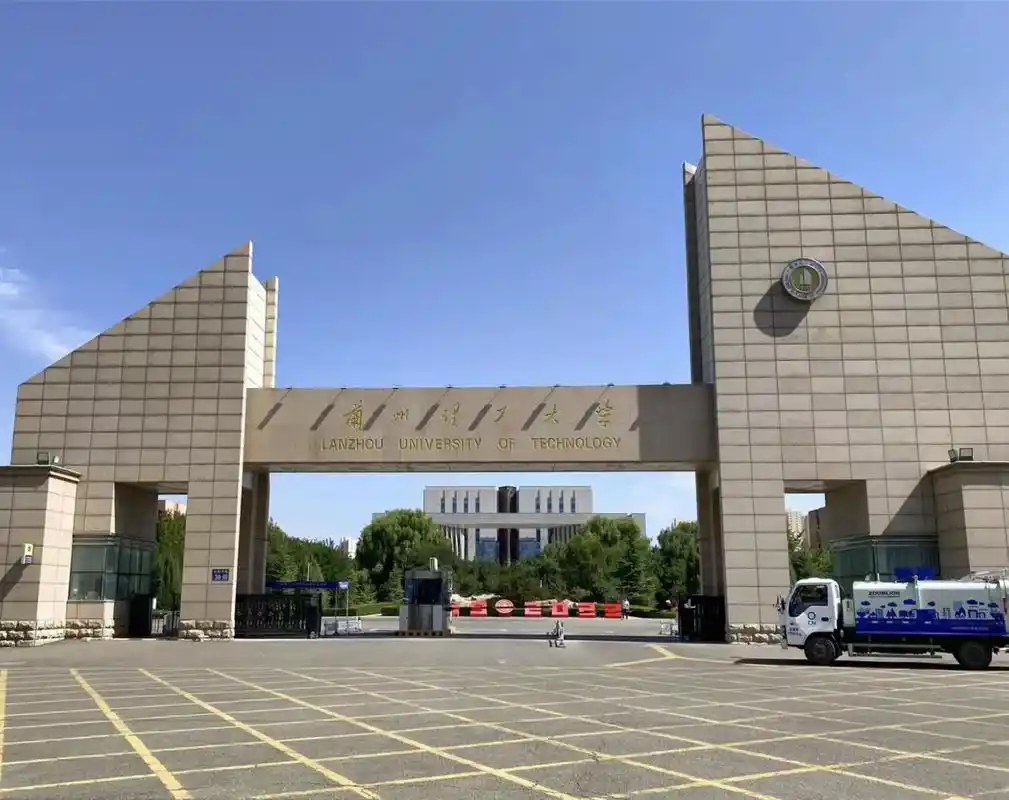
Lanzhou University of Technology (LUT), located in Lanzhou City, Gansu Province, is a full-time regular institution of higher education. It is jointly established by the Gansu Provincial People's Government, the Ministry of Education, and the State Administration of Science, Technology and Industry for National Defense, and is a member of the Gansu High-Level University Construction Project. The university is also part of the Basic Capacity Building Project for Central and Western Universities, the National College Student Innovative Experimental Program, the Ministry of Education's Excellent Engineer Program, and a key institution under the National Plan for Revitalizing Higher Education in Central and Western China. The predecessor of Lanzhou University of Technology was the Gansu Provincial Craft School, founded in 1919. In 1958, based on the establishment of Lanzhou Institute of Technology, Gansu Jiaotong University was merged into it, and it was named Gansu University of Technology. In 1965, the university was placed under the First Ministry of Machine Building, and some specialties from Northeast Heavy Machinery Institute and Beijing Machinery Institute were relocated here. In 1981, the university became one of the first institutions authorized to confer bachelor's and master's degrees. In 1998, it gained the authority to confer doctoral degrees and was restructured as a "central-local co-built institution with local management as the mainstay." In 2003, it was renamed Lanzhou University of Technology. In August 2015, the Gansu Provincial People's Government and the State Administration of Science, Technology and Industry for National Defense under the Ministry of Industry and Information Technology signed an agreement to jointly build Lanzhou University of Technology, making it the first key university in Gansu jointly built by the province and the administration. In July 2017, the Gansu Provincial Government, the Ministry of Education, and the State Administration of Science, Technology and Industry for National Defense jointly signed the "Opinions on Jointly Building Lanzhou University of Technology," making it the second province-ministry co-built university in Gansu and successfully selected as a National Defense Education Characteristic School. As of March 2025, the university has two campuses: Langongping Campus and Pengjiaping Campus, covering an area of 2,307 mu (about 153.8 hectares), with a building area of 1,260,500 square meters. The total value of teaching and scientific research equipment is approximately 811 million yuan. It has 17 colleges, 63 undergraduate programs, 6 first-level doctoral degree programs, and 25 first-level master's degree programs. There are 2,512 faculty and staff members and 31,401 enrolled students. In 1919 (the eighth year of the Republic of China), according to the National Government's "Industrial School Order" and "Industrial School Regulations," surveying expert Niu Zaikun founded the Gansu Provincial Craft School (the predecessor of Lanzhou University of Technology) on Zhongshan Road in Lanzhou, proposing the school motto "Hard Work and Self-Reliance." In 1921, it was renamed Class A Industrial School. In 1924, it became the Provincial Industrial School. In 1927, it was renamed the Provincial Vocational School of Engineering. In 1929, it was renamed the Provincial First Industrial School. In 1936, following the new academic system, it was renamed the Provincial Lanzhou Industrial Vocational School, offering one class each in textiles, dyeing and weaving, and leather making. In 1944, it was renamed the Provincial Lanzhou Senior Industrial Vocational School, offering one class each in senior civil engineering, mechanical engineering, textile engineering, chemical engineering, and telecommunications. By 1948, over 30 years, the school had organized a total of 54 classes and graduated more than 1,500 students. Niu Zaikun was appointed as the first principal of the Gansu Provincial Craft School. On August 26, 1949, Lanzhou was liberated, and the Provincial Lanzhou Senior Industrial Vocational School continued. In 1951, the school rented three residential compounds in Xiagou and Fujiaxiang in the city to address the shortage of classrooms, dormitories, and dining halls. In 1952, with approval from the Education Department of the Northwest Military and Political Committee, the school was renamed Gansu Provincial Lanzhou Industrial School (abbreviated as Lanzhou Industrial School) and placed under the leadership of the Gansu Provincial Department of Industry. In the same year, with approval from the Gansu Provincial Department of Industry and the Lanzhou Municipal Government, 420 mu of land was allocated in Langongping, Qilihe District, Lanzhou, for the construction of permanent school buildings. In October 1953, 24 third-year textile students and 8 faculty members were merged into the Shaanxi Xianyang Textile Industrial School. In September of the same year, the chemical engineering departments of Qin'an and Lintao County Industrial Schools were merged into the school. In 1954, the school was placed under the leadership of the National Electric Machinery Manufacturing Industry Ministry, shifting its affiliation from local to central. The school moved from its old site at Cuiyingmen to the new site at Langongping. In 1956, the Ministry of Urban Construction and the Electric Machinery Manufacturing Industry Ministry decided to separate the civil engineering department from Lanzhou Industrial School and establish the Lanzhou Urban Construction Engineering School, under the leadership of the Ministry of Urban Construction Industry and managed by the Urban Construction General Bureau. Capital construction funds were invested, the site was leveled, and the first teaching building (now Building 7) was constructed, marking the beginning of preparatory work. In April 1958, to meet the needs of industrial development, the Standing Committee of the Gansu Provincial Committee of the Communist Party of China decided to convert Lanzhou Industrial School into Lanzhou Institute of Technology. In September 1958, the Gansu Provincial Committee of the Communist Party of China and the Provincial People's Committee decided to merge Gansu Jiaotong University into Lanzhou Institute of Technology to form Gansu University of Technology. In October of the same year, Gansu University of Technology was officially named. In March 1965, with approval from the central government, Gansu University of Technology was placed under the leadership of the First Ministry of Machine Building. To fully implement the Party's eight-character policy of "adjustment, consolidation, enrichment, and improvement" centered on economic adjustment, overcome economic difficulties, and implement the Third Five-Year Plan, the state decided to accelerate the construction of the third front and gradually change the industrial layout strategy. The First Ministry of Machine Building decided to relocate some specialties from Northeast Heavy Machinery Institute and some specialties from Beijing Machinery Institute to Lanzhou in their entirety. These were combined with the three remaining specialties at Gansu University of Technology—mechanical manufacturing technology and equipment, casting technology and equipment, and industrial and civil construction—to form a new Gansu University of Technology focused on mechanical specialties. A number of outstanding basic course teachers were also transferred from key universities such as Hunan University and Hefei University of Technology to strengthen the faculty. The relocation was basically completed by late August of the same year.
Sources & verification
- Verification
- Partly verified
- Verified on
- 2026-05-10
- Last updated
- 2026-09-24
- Source link
- www.campuschina.org ↗
- Source notes
- Official CampusChina guide (program code: 119799)
Confirm requirements, funding and deadlines in the admissions office’s current announcement.